
If Le Corbusier were a client: architectural principles in 3D visualizations
The quality and realism of architectural renders and 360-degree panoramas rely on the seamless integration of modern tools and age-old principles. Modern visualizers, using advanced technology, unknowingly honor these principles while creating realistic digital models that help clients visualize projects before they’re even built.

What defines the quality and realism of architectural renders or 360-degree interior panoramas (any “volumetric” or virtual result)?
Had the renowned theorist of modernism and “denier” of ornamentation (which is inherent in those inspired by Greek motifs) been a 3D artist in the modern sense, the French “artist” would have eagerly sought the answer and likely even written his own treatise. In it, he would have found some kind of pattern between the fine-tuned light settings in Unreal Engine and textures, or perhaps discovered the best plugin for 3ds Max through practical experience that could make the leaves on trees indistinguishable from those created by nature itself. But...
In the end, this genius named Charles-Édouard Jeanneret-Gris (Le Corbusier being his pseudonym) not only became the author of the famous system of proportions, not only gifted the 20th century with the rules of functionalism in architectural design, but also unknowingly laid the foundation for the now-in-demand sphere of 3D. For those specialists whose product is shaped by technological progress. For the apologists of programming code, who, unknowingly, use the key truths of the “wise ones” to try to build a new world within the framework of a digital canvas. In essence, for modern visualizers, who, applying the principles of the great architects in their work, inadvertently pay homage to “traditions” while simultaneously focusing clients' attention on the feasibility of the project even before it’s built. That is, offering a demo version of a country villa or a commercial building (a restaurant, gym, or a food processing plant), embodied in any form, to protect the client’s budget from unexpected increases, and to make their doubts baseless even during the discussion of a “reckless” idea.
By the way, if Le Corbusier had been the client for these visualizations, his idea would likely have been considered imprudent, and the Zoomers, representing the generation of innovation, would hardly have managed to make dozens of revisions in time... But how great it is that today, the 3D field, intertwined with architecture, can guarantee a feasible result! It is precisely because of this connection that I decided to reflect on whose principles, in what form, and with what tools 3D artists use to portray authenticity in their work. Any authenticity that might come to your mind…
Proportions and scale of Le Corbusier in 3D
Le Corbusier’s “Machine for Living” – one of his key principles – is a frequent presence in the renders of contemporary artists, who use a computer mouse to create open layouts that comfortably accommodate tall individuals, often exceeding 6 feet. It is thanks to the idea of the "module" that 3D visualizations always clearly showcase proportions and scale that correspond to human comfort. This comfort is achieved not only through precise room measurements but also through functionality, which modern clients hold in high regard.
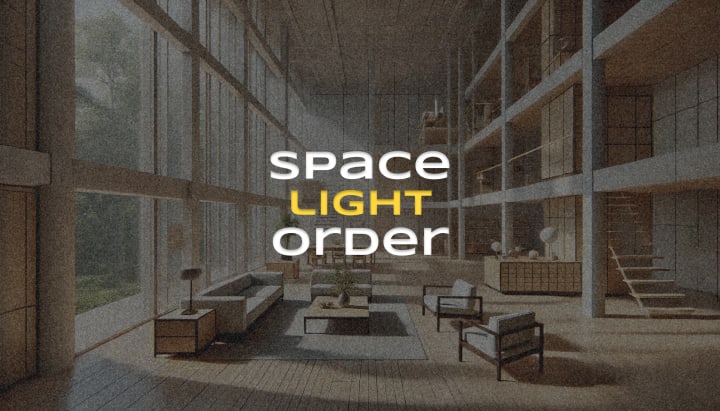
Space, light and order. These are the things that people need as much as they need bread or a place to sleep
Indeed, rationalism is increasingly evident in interior renders: from the use of natural materials to the very idea of reducing decorative elements that visually overwhelm spaces like bedrooms and kitchens. Simplicity takes center stage, deeply embedded in the style of popular minimalism.
Unity with nature and wright's organic architecture
The integration we refer to in projects, when we see the surrounding landscape through panoramic floor-to-ceiling windows, is the foundation for Lloyd. It serves as the basis for any visualization in which the goal is to demonstrate how to seamlessly place a building with a flat roof, or even a modular home, into a rocky landscape without harmful human intervention (such as deforestation). A precise representation of both the interior and exterior helps potential buyers make the decision to invest in a property in a picturesque location, generating demand long before construction is completed. This, in turn, helps create a buzz around the development company that skillfully uses innovative advertising techniques.
Moreover, architectural renders can serve as a compelling argument for obtaining approval from local authorities for project implementation (ensuring that the construction of a skyscraper won't require demolishing other residential buildings). After all, when one is certain that the design is “clean” and free of any violations or legal restrictions, the realization of the project can be considered 100% justified.
Being in sync with nature isn’t about yielding to nature – it’s about coexistence
– said Kotaro Ide of ARTechnic, discussing the iconic Shell House.
Thus, Wright's ideas not only find their expression in the renderings of any 3D artist but also act as a link that indirectly facilitates interaction between the parties interested in the project. They also have a significant impact on cultural and social aspects.
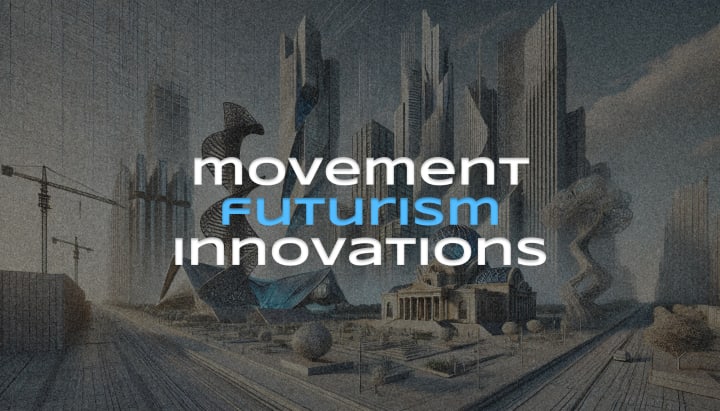
Futurism and dynamics – a given in modern architecture
Architects have long pondered the feasibility of projects (some of which remain only on the pages of books or in memory, still conveying the unconventional “perspective” of the designers) no less than investors (or the clients themselves), concerned about overly curvaceous forms that defy the laws of gravity.
What hindered the realization of these ideas was not just the limitations of construction or modeling technologies – sometimes it came down to simple politics, masking deeply conservative views and reluctance to restructure cities.
Had we not had parametric design software today (which, by the way, is also used by 3D visualizers), the innovative, futuristic, and dynamic forms of Zaha Hadid's buildings would also have been waiting for better times.
Anything that breaks with tradition is hard to grasp. More precisely, unconventional ideas struggle to find “space”. But… that was the case until the first legendary female architect emerged and BIM modeling was invented. With future software like Rhino (and the native Grasshopper plugin), creating “three-dimensional” worlds where avant-garde “Dancing Towers” or cultural centers with “shimmering” walls exist seems far more straightforward.
This once again proves the inseparable connection between the 3D and architectural realms. 3D visualization, as a specific case (which could also be a virtual tour, 360 panorama, or car configurator), highlights the possibility of adapting or interpreting any outlandish idea in the context of modern human needs, with powerful tools at hand to transform a concept into a physically "tangible" object (perhaps even a work of art in the future!). The integrity of perception, based on precise computational data, even regarding the amount of material used in the project, is never in question. And this is the result of the evolutionary symbiosis of two disciplines!
Architecture and 3D technologies do not merely coexist; they have become inseparable partners, whose mutually beneficial influence opens up new horizons for creativity. Visualization and other 3D tools not only help bring the boldest ideas to life, but also serve as a connecting link, making architectural concepts understandable, tangible, and accessible, transforming abstraction into a physically palpable object ready for realization in the real world
– said Alexander Kasperovich, founder of Studio57.
Architectural heritage: integrating old ideas and new technologies
The role of 3D is undeniable, and it holds significance not only when the pencil's graphite sketches rough outlines. 3D visualizations can breathe new life into an old structure, realistically reflecting its reconstructed elements. The result of such work can be anything: from a historically recreated “monument” of cultural value to an “enhanced” facade of an outdated building that needs to be sold.
The prospects of 3D visualizations in architecture
Transferring the ideas of past architects into the digital realm is not just a natural progression of current trends, but also an opportunity to create something entirely new. Something that, at this moment, may be perceived as controversial. Something that, after decades of rethinking, will be recognized as genius. What is crucial is that visualization in architecture offers unprecedented possibilities to ultimately be regarded as a work of genius.
About the Creator
'Till Death We Do Art
There would be nothing divine in this world without art. Nature may surpass the divine to all intents and purposes, but like everything it absorbs and is absorbed by, it remains here, stuck on the surface of this world, ever-present, physically bound to the universe.
By Avocado Nunzella BSc (Psych) -- M.A.P 19 days ago in Art
The Dress That Broke the Internet Was Gold and Nobody Could Agree on Why
She walked into the room and everything stopped. Not because of her confidence or music that was playing, though there was plenty of that. Everything stopped because of the dress. Floor-length, liquid, blazing gold, it caught every light in the room and threw it straight back.
By CurlsAndCommas3 days ago in Art



Comments
There are no comments for this story
Be the first to respond and start the conversation.