
How to Vanish by Appeasing a Predator
Mastering the Art of Survival in a World of Unseen Dangers

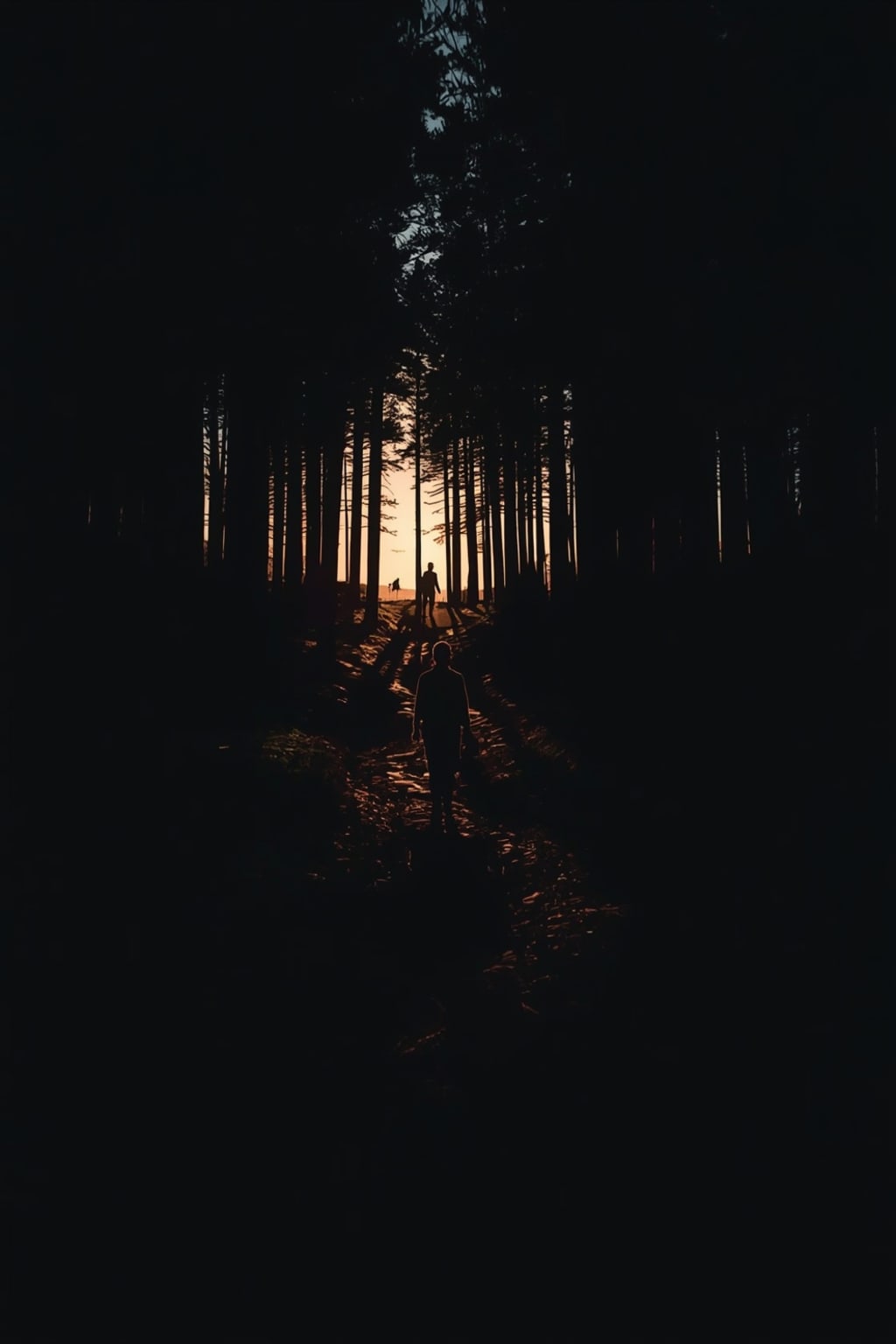
The air was thick with tension as I moved through the forest. The sun was setting, casting long shadows across the path. I could feel it—a presence, lurking just beyond my awareness, waiting for me to make a mistake. The predator was close, and every instinct I had screamed to run, to fight, to scream for help. But I knew better. Running would only trigger its chase. Fighting would only lead to my end. To survive, I had to disappear, to vanish from its gaze without ever drawing attention.
It wasn’t just an animal stalking me in the woods; it was something far more elusive, far more dangerous—a predator in human form, with its own instincts, its own desires, its own rules. The world we live in is full of these predators, unseen, often unspoken, but always lurking. They are not just in the wild but in every corner of our lives. And the key to surviving them? Learning to vanish.
The art of appeasing a predator is not one of confrontation or bravery, but one of quiet surrender—a surrender that doesn’t mean defeat but means survival. It means understanding that the greatest strength in the face of danger is often not to fight but to be still, to blend into the background, to become invisible.
I first learned this lesson in a small city where the predator took the form of a man who had power and influence. He didn’t wear a mask; he didn’t need to. His power was in the subtlety of his presence, in his ability to turn a room with a single glance, to control an outcome with a single word. He knew what people wanted, and he used that knowledge like a sharp knife. But he didn’t always get what he wanted. Sometimes, I was the target.
At first, I didn’t understand. I thought I could outwit him, overpower him with logic or charm. But soon, I realized that logic didn’t matter to a predator. His instincts were not driven by reason. They were driven by something more primal, something far harder to escape: a hunger, a desire, a need to control.
When I understood this, I stopped trying to outsmart him. I stopped trying to resist. Instead, I learned to appease him.
I didn’t give him what he wanted, not exactly. That would have been a mistake. I gave him just enough. Enough to make him believe that he was in control, enough to make him think I was his ally, enough to keep him satisfied for a time. I let him think he could manipulate me, but in truth, I was the one controlling the situation, making sure that every move I made left no trace, no evidence, no scent that could lead him back to me.
The first step in vanishing is to understand the predator. To know what drives them, what they need. The predator doesn’t hunt because it’s hungry. It hunts because it needs control, it needs power, it needs to feel superior. Once you understand this, you can begin to play the game without falling into its trap.
I remember the first time I disappeared right in front of him. We were in a crowded meeting, and he was speaking to the group, his voice low and commanding. Everyone hung on his words, myself included. But I wasn’t really listening. Instead, I was watching him—studying him, learning his patterns. I knew that if I could make myself invisible to his attention, he would lose interest.
At the right moment, I let my presence fade. I stopped making eye contact. I stopped trying to impress him with my knowledge or my wit. I stopped reacting when he spoke to me, and soon, he started looking past me, through me, as if I weren’t even there.
When the meeting ended, I didn’t rush to the door like the others. I remained seated, calm, quiet. I made myself a shadow. In his mind, I had already vanished.
Appeasing a predator requires patience. You cannot rush it, you cannot force it. If you do, you risk becoming a target again. The art of survival lies in waiting, in knowing when to make yourself invisible, when to withdraw, and when to give just enough to keep the predator satisfied.
In the weeks that followed, I refined my technique. I became more adept at disappearing into the crowd, at making myself just another face, another shadow. I learned the subtle art of body language—the way to hold yourself so that you seem unimportant, the way to lower your gaze so that you don’t seem to be a threat or a challenge. I stopped speaking in ways that drew attention, stopped acting in ways that invited curiosity.
And soon, he stopped noticing me at all.
It wasn’t that he stopped being dangerous. No, the predator was still there, still watching, still waiting. But he had moved on to another target. I had become a ghost in his world.
Vanish. It’s a simple word, but it carries so much weight in a world where danger is everywhere. We are surrounded by predators—some obvious, some hidden—but if we learn to appease them, to understand them, to disappear when necessary, we can survive. We don’t need to fight the world or challenge every force that threatens us. Sometimes, the best way to conquer a predator is to vanish before it even notices you.
About the Creator
wilson wong
Come near, sit a spell, and listen to tales of old as I sit and rock by my fire. I'll serve you some cocoa and cookies as I tell you of the time long gone by when your Greats-greats once lived.
Keep reading
More stories from wilson wong and writers in Art and other communities.
Welcome to Forest Park
It was nearly sunset when Maya stepped off the old bus with a faded green stripe, the only passenger left. She tightened her grip on the straps of her backpack and looked around. A rusted wooden sign greeted her: Welcome to Forest Park. Vines curled around the edges of the sign, and the paint was chipped, but the message was clear — she was finally here.
By wilson wong8 months ago in Art
'Till Death We Do Art
There would be nothing divine in this world without art. Nature may surpass the divine to all intents and purposes, but like everything it absorbs and is absorbed by, it remains here, stuck on the surface of this world, ever-present, physically bound to the universe.
By Avocado Nunzella BSc (Psych) -- M.A.P 20 days ago in Art
When Stone Meets Style
The first time I held a piece of raw gold still nestled in quartz, it did not shimmer politely. It caught the light in uneven flashes, like a secret smile from inside the stone. My fingers traced its rough ridges, and I realised that perfection can feel far more alive when it refuses to be polished smooth.
By CurlsAndCommas5 days ago in Art
The BAFTA Awards
By now, in a stunning departure from recent years, most of the world is aware of what happened at the BAFTA film awards. Social Media Headlines will tell you the bare bones: that John Davidson, a Tourette's Syndrome advocate, shouted a racial slur at two Actors of Colour, Michael B Jordan and Delroy Lindo.
By Natasja Rose5 days ago in Psyche




Comments
There are no comments for this story
Be the first to respond and start the conversation.