
How AI is Revolutionizing Creative Arts
Explore how artificial intelligence is transforming the world of creative arts, from music composition and digital painting to poetry and performance art. Discover the tools, trends, and ethical debates shaping this artistic evolution

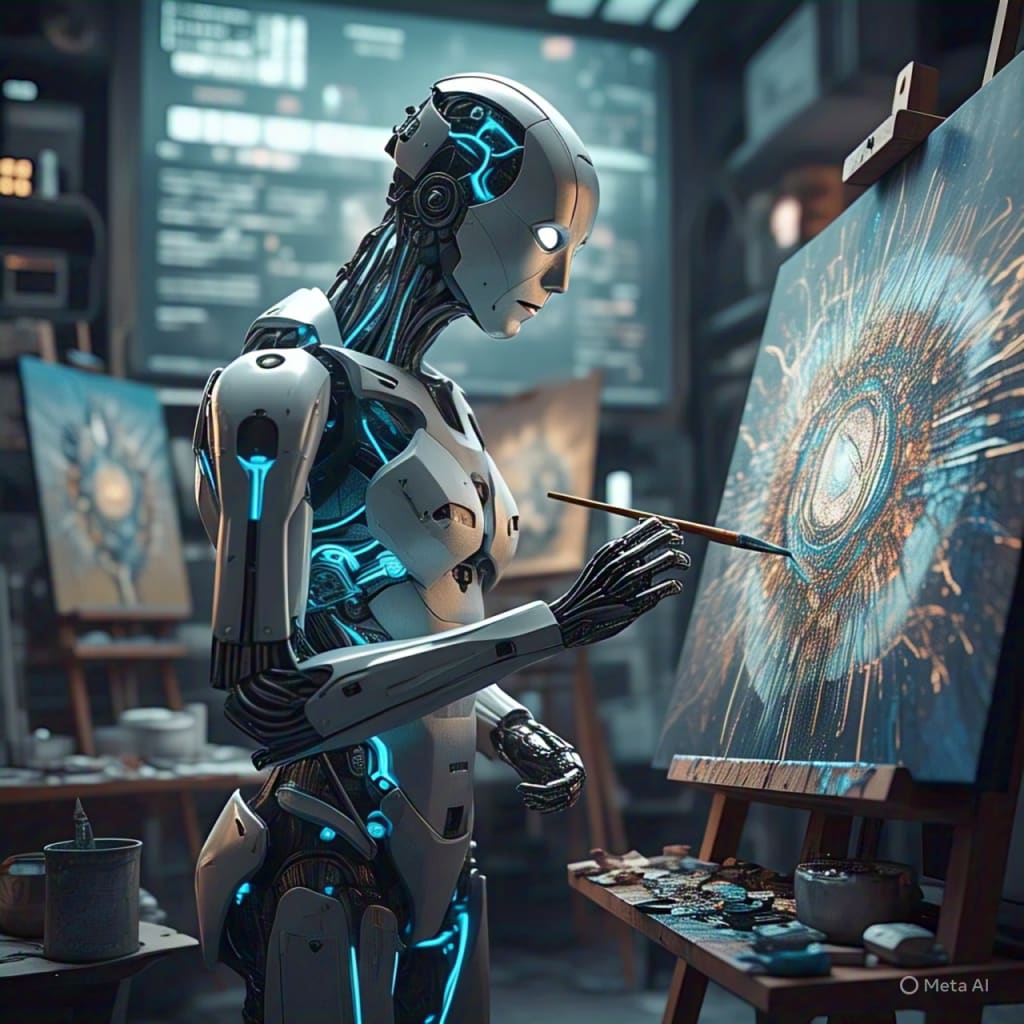
Introduction
Art has always been a deeply human endeavor — an expression of emotion, culture, and experience. But in recent years, artificial intelligence (AI) has stepped into the studio, concert hall, and gallery, challenging traditional notions of creativity. The intersection of AI and creative arts is no longer a futuristic concept; it's a dynamic reality reshaping how we create, consume, and understand art. From AI-generated symphonies to algorithmic paintings selling for thousands, the revolution is here — and it’s only just beginning.
AI in Visual Arts: Redefining Creativity on Canvas
The visual arts have seen some of the most dramatic transformations through AI technologies like generative adversarial networks (GANs) and diffusion models . Tools such as DALL·E , MidJourney , and Stable Diffusion allow users to generate stunning images with simple text prompts. Artists are now using these platforms not just as assistants but as collaborators.
AI can analyze thousands of artworks in seconds, learning styles and techniques that once took humans years to master. This has led to the rise of digital artists who co-create with AI , blending their vision with machine intelligence. Notably, AI-generated artwork like Edmond de Belamy , created by the Paris-based collective Obvious, sold at Christie’s for $432,500 in 2018 — a landmark moment signaling the commercial viability of AI art.
However, questions remain about authorship, originality, and copyright. Who owns a piece of art when the creator is a machine? These debates continue to fuel discussions in both the tech and art communities.
AI in Music Composition: The Rise of Algorithmic Melodies
Music, often described as the universal language, is also undergoing a transformation powered by AI. Platforms like AIVA (Artificial Intelligence Virtual Artist) and Amper Music enable users to compose original scores by simply selecting mood, genre, and tempo. These systems learn from vast libraries of classical and contemporary music, generating compositions that are increasingly difficult to distinguish from human-created works.
In pop music, artists are experimenting with AI to enhance production or even co-write lyrics. For example, Taryn Southern , a singer-songwriter, used AI to compose her album I AM AI . Similarly, Sony’s Flow Machines project helped produce “Daddy’s Car,” a song in the style of The Beatles.
Beyond composition, AI is being used for mastering tracks, analyzing listener preferences, and personalizing playlists on platforms like Spotify and Apple Music. While purists may argue that AI lacks the emotional depth of human composers, the technology continues to evolve — and so do our ears.
AI in Literature and Poetry: Writing with Machine Intelligence
Even the written word is not immune to AI’s influence. Natural Language Processing (NLP) algorithms like GPT-4 and Bard are capable of generating compelling stories, poems, and scripts. Writers are leveraging these tools to overcome creative blocks, brainstorm ideas, or explore new narrative structures.
AI-written novels like 1 the Road , generated by Ross Goodwin’s neural network during a cross-country road trip, blur the line between human and machine authorship. Meanwhile, poets are collaborating with AI to create hybrid verses that reflect both organic and synthetic sensibilities.
Yet, concerns about plagiarism, authenticity, and the erosion of literary craftsmanship persist. Can a poem written by AI evoke the same emotional response as one penned by a human? The answer may depend on how we define creativity itself.
Ethical Considerations and the Future of AI in Art
As AI becomes more integrated into the creative process, several ethical issues come to the forefront:
Copyright : Who owns AI-generated art — the developer, the user, or the AI itself?
Bias : AI systems often inherit biases present in their training data, which can affect the diversity and inclusivity of generated content.
Job Displacement : Will AI replace human artists, or will it serve as a tool to augment creativity?
Despite these concerns, many believe that AI is not here to replace artists but to empower them. By automating repetitive tasks, offering new perspectives, and enabling faster experimentation, AI acts as a creative partner rather than a competitor.
Conclusion: A New Renaissance of Human-AI Collaboration
The fusion of AI and creative arts marks the dawn of a new renaissance — one where machines don’t just replicate human creativity but help expand its boundaries. Whether it’s composing symphonies, painting portraits, or writing novels, AI is proving that creativity is not exclusive to humans.
About the Creator
Mehtab Ahmad
“Legally curious, I find purpose in untangling complex problems with clarity and conviction .My stories are inspired by real people and their experiences.I aim to spread love, kindness and positivity through my words."
Keep reading
More stories from Mehtab Ahmad and writers in Art and other communities.
The Smell of Beautiful
How perfumes unlock emotional and psychological triggers ? There’s something mysteriously powerful about scent. One whiff of jasmine, and you're transported to your grandmother’s garden. A trace of musk, and suddenly you're back in the arms of your first love. Perfume isn’t just about smelling good—it's memory bottled, emotion liquified, and psychology made wearable.
By Mehtab Ahmad9 months ago in Art
'Till Death We Do Art
There would be nothing divine in this world without art. Nature may surpass the divine to all intents and purposes, but like everything it absorbs and is absorbed by, it remains here, stuck on the surface of this world, ever-present, physically bound to the universe.
By Avocado Nunzella BSc (Psych) -- M.A.P 23 days ago in Art
Rewire Your Mind for Success
brilliant inventor and worked day and night in her small lab, filled with glowing screens and strange gadgets. Despite her talent, she struggled to find success. Her inventions were often overlooked, and her ideas remained trapped in her mind.
By Hamad Afridi a day ago in Art




Comments (1)
Ton of new info 💝