
How AI Changing the Way We Create Art
Blurring the Lines Between Human Imagination and Machine Intelligence

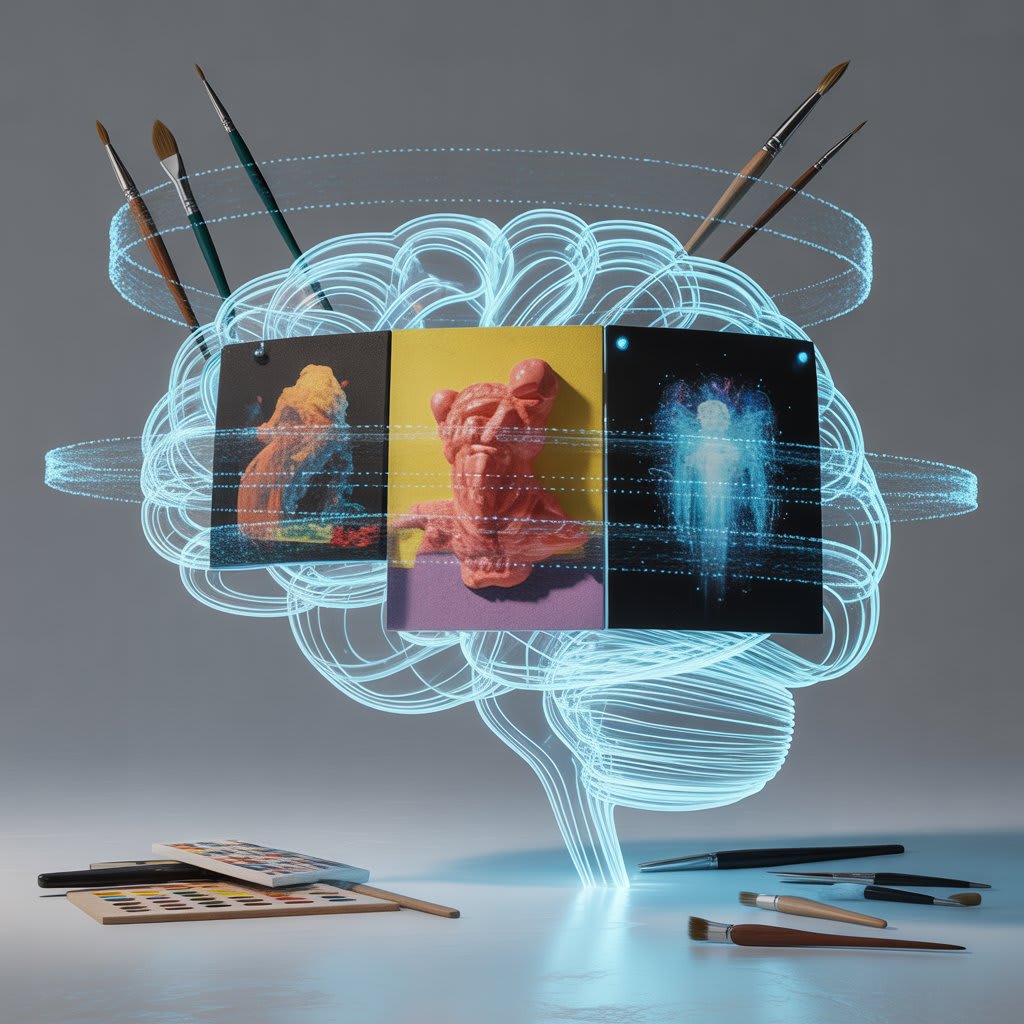
Art has always been a deeply human expression — a reflection of our emotions, culture, and identity. From ancient cave paintings to Renaissance masterpieces, art has evolved alongside humanity. But in the 21st century, a new force is reshaping the creative landscape: artificial intelligence.
What was once considered a cold, calculating tool of science is now stepping into the warm, chaotic realm of human creativity. Today, AI doesn’t just analyze data — it writes poetry, paints portraits, composes music, and generates entire video games. The question is no longer “Can AI make art?” but rather, “What does it mean when it does?”
A New Creative Partner
AI is not replacing artists; it’s becoming a collaborator. Tools like DALL·E, Midjourney, and Stable Diffusion allow artists to generate visuals from simple text prompts. A few years ago, if someone wanted to create a surreal painting of “a tree made of dreams under a crimson sky,” they needed to spend hours — or days — with a brush or a digital tablet. Now, with the right AI prompt, it can appear in seconds.
This isn't just about speed — it's about expanding imagination. Artists are using AI to break through creative blocks, test new styles, and explore concepts they couldn’t realize on their own. It’s like having an assistant who speaks in color and form instead of words.
Music, Writing, and Beyond
Visual art isn’t the only medium experiencing a revolution. In music, platforms like AIVA and Amper Music enable users to compose original scores for films, games, or personal projects — even without formal musical training.
Writers, too, are feeling the shift. Tools like ChatGPT (yes, like me!) are being used to brainstorm plot ideas, create outlines, or generate poetic language. Some authors co-write books with AI, allowing for unexpected turns in their stories.
Even filmmaking is changing. AI-generated scripts, voiceovers, and deepfake visual effects are turning traditional production methods upside-down — making it possible to create professional content with a fraction of the time and budget.
Democratizing Creativity
Perhaps one of the most exciting outcomes of AI in art is accessibility. People who previously lacked the skills, training, or resources to bring their ideas to life can now express themselves creatively.
You no longer need to be a classically trained painter to illustrate your imagination. You don’t need years of practice to produce ambient music for your meditation app. AI opens the doors for anyone with a vision — whether they're disabled, untrained, or simply time-constrained.
In this way, AI is not destroying art — it’s democratizing it.
The Controversy: Is AI Art… Real Art?
Of course, not everyone is celebrating. Many artists feel threatened — and rightfully so. If a machine can mimic a style in seconds that took someone years to master, does it devalue the human effort?
There are also ethical concerns. AI often trains on databases of existing human art — sometimes without the original artist’s permission. When a machine generates something "in the style of Van Gogh" or "like a Pixar film," who truly owns that image? The prompt creator? The original artists? Or the algorithm’s developers?
There’s also a philosophical dilemma: Is art still meaningful if no human made it? Or can art created by a machine still evoke emotion, spark thought, and carry meaning?
Co-Creation is the Future
The future of AI and art likely lies in co-creation. Instead of viewing AI as a threat, many artists are embracing it as a tool — just like the camera, the computer, or the internet once were.
We are entering an era where human emotion and machine precision can work hand-in-hand. AI doesn’t feel joy, sadness, or awe — but it can help us channel our emotions more vividly than ever before.
The artist’s role is evolving — from pure creator to curator, editor, and visionary. With AI, the brush may change, but the soul behind the stroke remains deeply human.
Final Thoughts
Art is not defined by the medium, but by the intention. Whether it's drawn by a hand, painted by a robot, or generated through an algorithm, what matters most is the story it tells, the emotion it stirs, and the connection it creates.
AI is not the end of art. It’s the next chapter — one filled with unknown possibilities, blurred boundaries, and new definitions of creativity. And just like every chapter before, it will be written by us — with a little help from our intelligent machines.
About the Creator
Muhammad ali
i write every story has a heartbeat
Every article starts with a story. I follow the thread and write what matters.
I write story-driven articles that cut through the noise. Clear. Sharp truths. No fluff.
Keep reading
More stories from Muhammad ali and writers in Art and other communities.
A Memory of Summer Nights
Where wonder glowed in the hands of a child and time stood still beneath the stars. There was a time when the world felt slower, softer, and somehow more magical. Before glowing screens replaced glowing skies, before we measured our worth in likes and follows, there were summer nights lit not by city lights but by something far gentler—fireflies.
By Muhammad ali6 months ago in Fiction
What Voice Cloning Technology Means for Creators and Digital Identity
The rise of artificial intelligence has reshaped the creative landscape in countless ways, from AI-generated visual art to automated music composition, and one of the most intriguing frontiers today is voice cloning. With tools that let users clone your voice using only a short sample of speech, creators and digital communicators are discovering new ways to produce audio content that feels natural and expressive.
By aliyashahzadi5 days ago in Art


Comments
There are no comments for this story
Be the first to respond and start the conversation.