
HOLDING BREATH UNDERWATER
Can you hold your breath for more than 10 mins underwater?

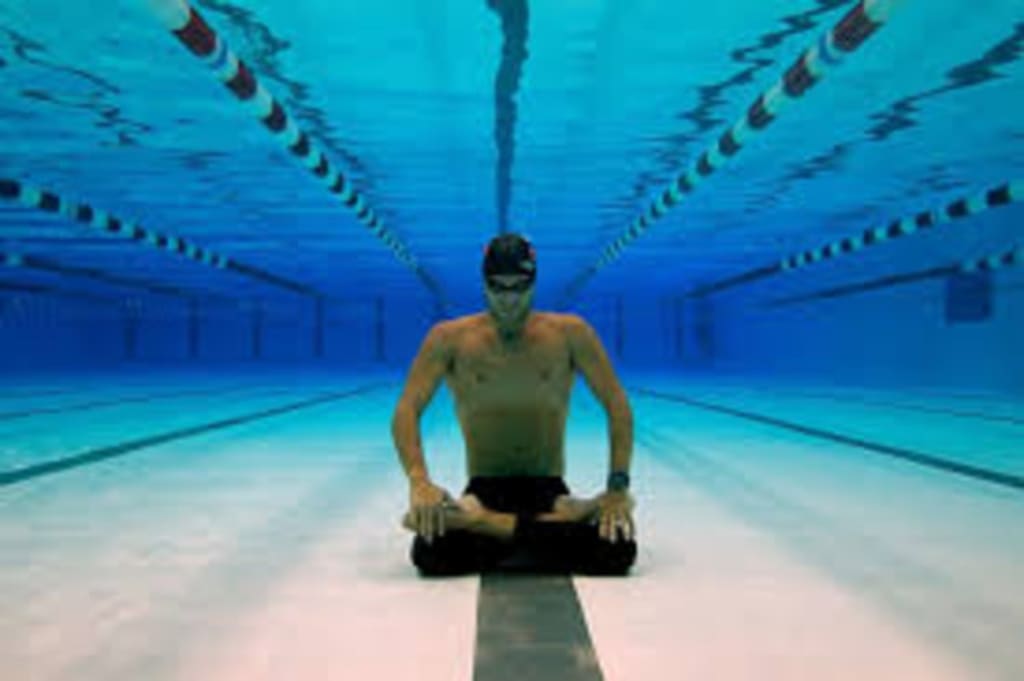
Is it possible that humans could be like fish and survive underwater? Surprisingly, evidence has emerged showing that this aquatic fact is kind of true! We’re a way off from being able to breathe underwater like mermaids, but one tribe certainly knows what they’re doing when it comes to spending long periods in the briny deep. The Bajau people were first mentioned in the 16th century via the journal of pioneering Venetian explorer Antonio Pigafetta. They’re native to Indonesia, as well as the southern Philippines and Malaysia. The tribe relies on the water for their way of life, collecting meals from the sea bed. This means they spend an awful lot of time submerged in the wet stuff! In fact, diving is a full-time occupation for them. The Bajau reportedly devote 8 hours a day to going underwater with only a mask and a weight to keep themselves in position. But how come they can last below the surface for longer than the average person? The answer lies in human biology.
You see, the Bajau possess a certain trait that makes them excellent at surviving in the water: an enlarged spleen. The spleen is a versatile organ found in your abdomen. It’s known for recycling old red blood cells, in addition to storing white blood cells. There are lots of other things it does too, but we’re in danger of being derailed here. The point is, the spleen plays an essential role in how the Bajau last in the drink.
Have you heard of the human dive response? It’s when you go through a process called “peripheral vasoconstriction.” In other words, your heart rate is reduced and your blood vessels shrink. This happens in the outer reaches of your body to keep oxygenated blood where it’s most needed—in your organs. The spleen then contracts, pumping out oxygenated red blood cells and supplying you with extra oxygen. With their larger-than-average spleens, the Bajau can push their limits during their underwater exploits.
Now, a logical explanation for these spleens is that the Bajau are always diving, so their bodies adapted accordingly, right? That’s a nice idea, but not strictly accurate. Scientific studies have shown that enlarged spleens are present in those who dive but also in those who don’t. However, there is a definite size difference between Bajau spleens and those of their neighbors. It could, of course, be that the diving has had an effect that’s passed down through all descendants, but this is possibly a subject for another time.
So if there are humans on the planet who are suited to undersea life, it makes you wonder if other types of “superhumans” are out there—maybe ones who can walk around in incredibly high temperatures or tolerate severe cold. This is starting to sound like an X-Men comic, so it’s best to let science do the talking and leave it there.
THANK YOU SO MUCH FOR READING!
About the Creator
Richchik Bardhan
A MBBS student,Love to read and write about science facts and sometimes sci-fic too because Some sci-fic can later be proven into facts someday.....
Keep reading
More stories from Richchik Bardhan and writers in Art and other communities.
EVOLUTION OF CELLPHONES
What if cellphones were so powerful that they could mutate the shape of our bones? This is a surprising new topic that’s recently been popping up all over the media. It stems from a scientific report suggesting that using phones and tablets can cause serious and long-lasting changes to our bodies, and not in a way that you might think.
By Richchik Bardhanabout a year ago in Humans
A Matter of Coincidence
Tuesday, 3 September 2024 Ayesha Fareed Ahmed, Mirpur Khas Sheeda was a simple and innocent man. One day, he was going to his wife’s village to bring her back. On the way, he saw some donkeys grazing on grass at a certain place. Eventually, he reached his in-laws’ house. His wife’s brother asked him to sit in the guest room.
By Sudais Zakwan2 days ago in Art
What Fine Line Tattoo Excellence Looks Like in Professional Practice
When you sit in the chair of one of the best fine line tattoo artists, you feel it straight away. The calm, the care, the way they handle your skin and your nerves at the same time. Fine line work looks light and effortless from the outside, but real excellence is anything but casual.
By Tools of Trade Studios6 days ago in Art
The Devil's Cut
“Comrade, finally you’re awake.” The voice was smooth, sensual. A flickering incandescent bar was all that lit the white, sterile room. All Vladimir remembered was everything going black. He tried to move his arms and found them strapped to the gurney.
By Matthew J. Fromm5 days ago in Fiction




Comments (3)
Wow! 10 minutes under water. An amazing, informative piece.
Marvellous guidance
Nice one