
Hoje Cedo," by Emicida (One of Brazil's Greatest Rappers)
What is the price of fame? I want to save the world, because I gave up on my family, and in a harder fight, frustration will be less.
Analysis of "Hoje Cedo" by Emicida (feat. Pitty)
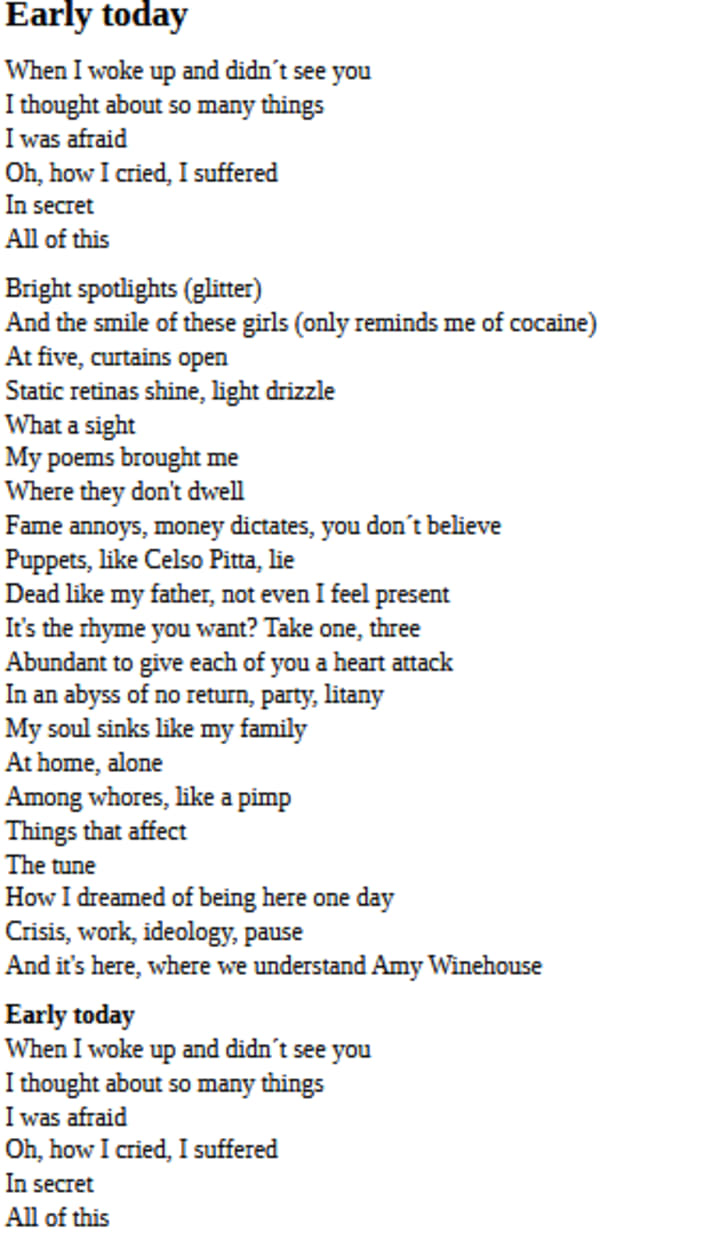
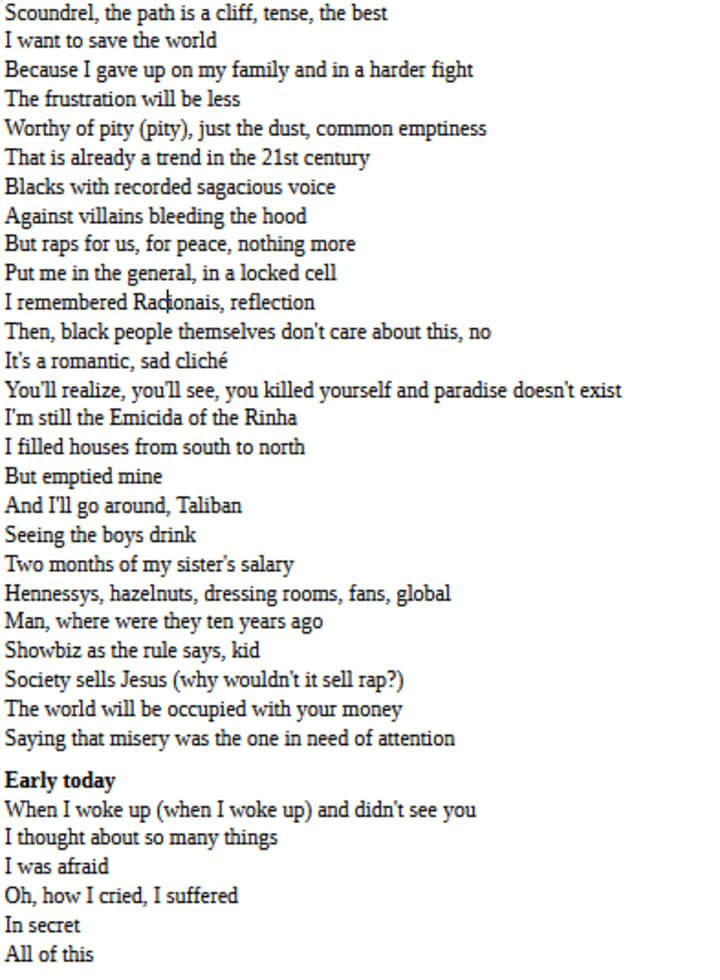
"Hoje Cedo" is one of Emicida's most introspective tracks from his 2013 album "O Glorioso Retorno de Quem Nunca Esteve Aqui". This song delves into themes of loss, inner turmoil, and the emotional consequences of fame, offering a raw glimpse into Emicida's personal struggles.
Exploring the Theme of Loss
The song opens with Emicida reflecting on the loss of someone dear: "When I woke up and didn't see you, I thought of so many things, I was afraid". This absence evokes a profound sense of grief, likely linked to the death of loved ones, such as his father. The theme of loss runs deeply through Emicida's work, echoing the universal experience of mourning and the void left by loved ones, a reality many Brazilians face from an early age.
The Reality of Fame and Its Personal Cost
As the track progresses, Emicida wrestles with the contrast between his public success and private despair. In the line "My soul sinks just like my family alone at home", he paints a stark picture of the emotional void behind the fame. Despite achieving stardom, there is a clear sense of alienation from his family and roots. This duality—fame versus loneliness—is a central theme of the song, illustrating that while success brings wealth and recognition, it often comes at the cost of personal relationships and emotional fulfillment.
The mention of Amy Winehouse, "And this is where we understand Amy Winehouse", serves as a poignant comparison. Winehouse, much like Emicida, had a meteoric rise to fame but was tragically overshadowed by her personal struggles. Emicida uses her story to highlight the emotional complexities that accompany public success.
Social Critique and Reflection on the "Quebrada"
Beyond personal reflection, Emicida also addresses broader societal issues. In the line "Blacks with sharp voices recorded, against villains who bleed the broken", he underscores the role of rap music as a powerful tool for resistance. Emicida speaks to the injustices faced by marginalized communities, emphasizing the importance of rap as a voice for the disenfranchised. His work serves as a powerful form of protest against the systemic oppression that affects Brazil’s favelas.
However, Emicida also critiques the lack of engagement within his own community, particularly when he says, "Even our own Black people don't care about this". This sentiment conveys his frustration with the apathy he perceives among some in the struggle for racial equality, further intensifying the disillusionment he feels about his society.
Loneliness in the Path to Success
In the poignant line "I sold out venues from the South to the North, but I emptied my home", Emicida reflects on the emotional cost of his career. While his success has allowed him to perform across Brazil, he reveals the personal sacrifices behind it. The fame that brought him public adoration also created an emotional void, leading to a profound sense of isolation.
About the Creator
Why John LoPinto Values Intentional Travel Over Speed and Volume
In a world that celebrates movement and accumulation, travel has increasingly become about speed and volume. More destinations, tighter itineraries, and constant motion are often seen as markers of experience. John LoPinto takes a different approach. He values intentional travel over rapid consumption, believing that depth of experience matters far more than distance covered. For him, travel is most meaningful when it creates understanding, not just memories.
By John LoPinto2 days ago in Art
“What If It Happens?”
Monday, 11 April 2022 Ishrat Jahan One of our friends, Mr. Farooq, is a middle-aged man, yet he has still not been able to free himself from his deeply suspicious and fearful nature. These days, I happened to have some free time, so I thought it would be a good idea to meet him and try to untangle the puzzle of his constant worries. By coincidence, he himself arrived at my humble home, jolting along in a rickshaw.
By Sudais Zakwan6 days ago in Art
Affection and Healing for Yourself
During the night of the last quarter moon, I gathered my ritual supplies. I carefully handled the chunk of black tourmaline that would protect me from your overall negative and narcissistic energy. I carefully walked the house with my stick of selenite in hand, asking the universe to cleanse our working space.
By Alisha Wilkins ✒️🦋🖋️4 days ago in Fiction




Comments
There are no comments for this story
Be the first to respond and start the conversation.