
Hex and Heritage:
Unveiling the Parallels Between Brujería and Braucherei in the Context of Amish Witches



When Lifetime’s Amish Witches: The True Story of Holmes County aired, audiences were lured by the promise of horror set in one of America’s most reclusive religious communities. Beneath the dramatized supernatural thrills lies a deeper truth — that folklore, magic, and spiritual resistance are not foreign to the Amish or their cultural cousins. The practice of Braucherei (also called Brauchau, or “Powwow”) among Pennsylvania Dutch Christians, often likened to folk healing or faith-based magic, has uncanny parallels with Brujería (Spanish/Latinx witchcraft) and Bruxaria (Portuguese/Brazilian witchcraft). These practices, though rooted in different ethnic traditions, share similar functions: healing, protection, justice, and spiritual intercession in communities where official religious institutions may offer little support for such needs.

Understanding these parallels requires pulling back the veil on both systems. Braucherei, often misrepresented or obscured in mainstream narratives, is a form of Christianized folk healing that has its origins in pre-Reformation European magical traditions, particularly those of Germanic and Swiss ancestry. Brujería, on the other hand, is a broader term that spans across Latin American spiritual practices and includes both indigenous, African diasporic, and Catholic influences. Despite their different origins, both systems stand as powerful responses to oppression, marginalization, and the yearning for spiritual agency in the face of doctrinal rigidity.

Braucherei: The Hexenmeister’s Heritage
In the documentary referenced, practitioners of Braucherei (sometimes called Powwow doctors) speak candidly about their work as healers, curse-breakers, and intermediaries between the sacred and mundane. Although most Braucher claim deep Christian faith, the practice sits uncomfortably close to the tabooed idea of “witchcraft” in both Amish and Mennonite circles. The Amish, with their Anabaptist roots, are generally wary of anything considered “worldly” or “unordained” by God. As a result, Braucherei exists both inside and outside Amish culture, operating quietly in the shadow of community norms.

Much like Brujería, Braucherei employs rituals, incantations, and household tools. One of the most famous texts associated with Braucherei is The Long Lost Friend by John George Hohman, first published in 1820. This grimoire-like book includes prayers for healing, blessings for livestock, and protections against witchcraft. Its pages echo the Psalms and invoke Christ as a divine healer, suggesting that the Braucher sees no contradiction between Christian faith and magical practice
This is key: Braucherei doesn’t identify itself as “witchcraft” in the malefic sense. Instead, it asserts itself as “white” or “good” magic. The practitioner, or Hexenmeister, uses divine names and scripture — particularly the Book of Psalms — to accomplish their work. Psalms, much like in Afro-Caribbean magical traditions, are often used as spellwork.

About the Creator
Sai Marie Johnson
A multi-genre author, poet, creative&creator. Resident of Oregon; where the flora, fauna, action & adventure that bred the Pioneer Spirit inspire, "Tantalizing, titillating and temptingly twisted" tales.
Pronouns: she/her
Keep reading
More stories from Sai Marie Johnson and writers in Art and other communities.
The New Celibacy: Not Religious-Centered
The conventional narrative of celibacy is often one of religious piety or a temporary state before marriage. But a new and powerful movement is emerging among young women, where celibacy is a conscious choice and a form of protest. This isn’t about shaming sexuality; it’s about exercising agency and autonomy in a world that often seeks to control them. This modern celibacy, or “volcel” (voluntary celibacy), is born from a desire for emotional safety and a rejection of transactional relationships.
By Sai Marie JohnsonExclusive • 6 months ago
'Till Death We Do Art
There would be nothing divine in this world without art. Nature may surpass the divine to all intents and purposes, but like everything it absorbs and is absorbed by, it remains here, stuck on the surface of this world, ever-present, physically bound to the universe.
By Avocado Nunzella BSc (Psych) -- M.A.P 15 days ago in Art
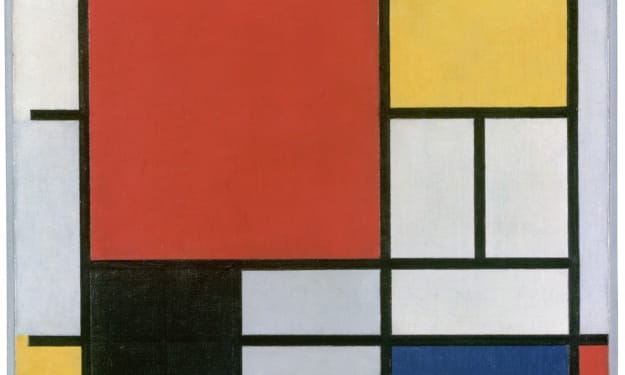
Best Artwork by Piet Mondrian
Dutch artist Piet Mondrian was a pioneer in the field of abstract art. His modern artwork was characterized by geometric shapes and primary colors. The artist is renowned for his distinctive style; his oeuvre reflects an amazing exploration of harmony, balance, and the essence of form. Mondrian not only revolutionized the visual arts but also laid the groundwork for the development of abstract expressionism and minimalist aesthetics in the 20th century.
By Rasma Raisters6 days ago in Art
Review of 'Man on the Run'
My wife and I saw Man on the Run, a nearly 2-hour documentary on Amazon Prime, about Wings, Paul McCartney's group that flew around the world from shortly after The Beatles broke up in early 1970 to shortly after John Lennon was murdered at the end of 1980, making a Beatles reunion forever impossible.
By Paul Levinson3 days ago in Beat



Comments