
Graphic Narratives: Echoes of Cultural Metamorphosis
Between Lines, Worlds Begin Their Conversation

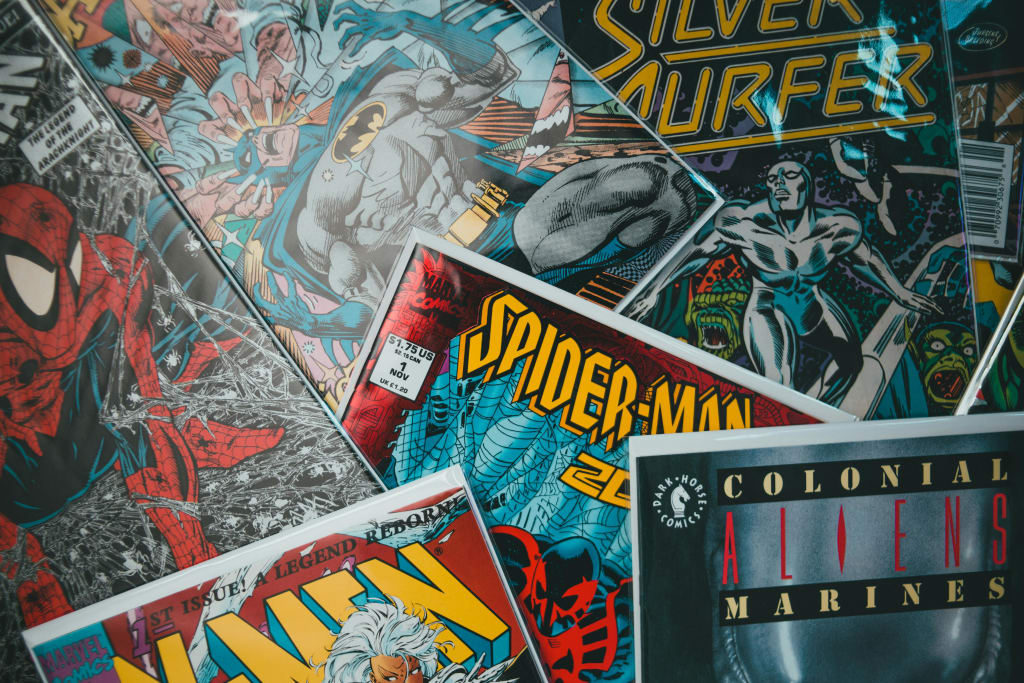
When we trace the trajectory of comics, we are not only following an art form but also watching a conversation between image, text, and human cognition unfold across decades. As a nerd, I find the evolution of comics especially revealing: the medium maps changes in technology, culture, and collective emotional life, and it simultaneously trains readers’ perceptual and narrative muscles in ways that other media rarely match.
At its core, comics operate in the space between frames. The reader is invited to perform “closure,” to mentally supply the movement, time, and causal links that connect one panel to the next. This cognitive leap is not trivial; it exercises imagination, predictive inference, and theory of mind — the ability to infer other minds’ intentions and feelings. Early comics, from serialized newspaper strips to the first mass-market comic books, relied on economical sequences and punchy visual cues to prompt this closure. Their brevity shaped a habit of rapid, efficient meaning-making that suited busy readers and mass circulation.
As printing and distribution technologies advanced, so did the formal language of comics. Color reproduction, larger page formats, and improved inks allowed artists to experiment with pacing and mood through palette and panel scale. The golden era of mainstream superhero comics emphasized bold iconography and clear, dramatic sequencing, creating archetypes that became culturally sticky. Those archetypes function as psychological shorthand; they let readers enter complex narratives quickly because the characters and their moral logics are already familiar.
But the medium’s expressive capacity expanded beyond spectacle. Mid-century and later underground and alternative comics brought personal voice, social critique, and experimental layout to the foreground. Here the gutter — the space between panels — became a site for ambiguity rather than mere connective tissue. Artists stretched time across consecutive thin panels or smashed several images into a single sprawling page to alter tempo and immerse readers in subjective states. From a psychological standpoint, these formal experiments engage higher-order cognitive processes: sustained attention, emotional simulation, and sometimes disorientation intended to mirror trauma, intoxication, or grief.
Cultural and institutional forces also shaped content and reception. Periods of censorship and regulation narrowed the kinds of stories that could be told aloud; when those constraints eased, comics rapidly diversified. The arrival of the graphic novel as a recognized literary form opened gallery and academic doors. Works that once might have been dismissed as ephemeral gained legitimacy, enabling serious explorations of history, memory, identity, and illness. This recognition mattered psychologically: it validated comics as a medium capable of conveying complex human experience and invited readers to approach them with the same reflective attention reserved for novels or films.
Parallel to these formal and cultural shifts, comics travelled and transformed across geographies. Japanese manga, with its distinctive pacing, panel rhythms, and genre breadth, altered global expectations about long-form serial storytelling and character-driven arcs. European bandes dessinées offered different sensibilities: sometimes more painterly, sometimes more satirical. Global exchange meant readers could encounter diverse visual grammars, which broadened cognitive flexibility — the ability to switch interpretive strategies depending on layout conventions and narrative cues.
The digital revolution introduced another major inflection point. Webcomics freed creators from page counts and print schedules. Infinite-scroll formats, animated panels, and hyperlinking changed how pacing and suspense could be engineered. Digital distribution also democratized production: creators could reach audiences directly, test new forms, and receive immediate feedback. Psychologically, this lowered gatekeeping allowed a wider range of voices and experiences to shape collective narratives, fostering identification and empathy among previously marginalized readers.
Comics also matured into tools for education and mental health. Visual narratives distill complex ideas into digestible sequences; they enhance comprehension for learners who struggle with dense text and provide alternative entry points for multilingual or neurodivergent readers. In clinical contexts, graphic memoirs and comics-based interventions have helped people externalize difficult experiences, process trauma, and communicate feelings that are otherwise hard to name. Images can bypass defensive verbal filters and tap into sensory and emotional memory, making comics uniquely suited to therapeutic storytelling.
Emotionally, comics occupy an intimate space. The juxtaposition of image and text can create cognitive dissonance — a smiling face paired with anguished dialogue, for instance — that prompts deeper reflection. This multimodal tension can be more persuasive than text alone because it engages both analytic and affective systems: we read narrative logic while simultaneously mirroring facial expressions and body language. Long-form comics build complex attachments to characters, and because the pace of reading is partly controlled by the reader, engagement feels participatory rather than passive.
Today, the boundaries between comics and other media blur further. Film adaptations, interactive apps, augmented reality overlays, and serialized podcasts inspired by graphic narratives make comics part of transmedia ecosystems. Artificial intelligence tools are beginning to assist with layouts or colorization, raising both opportunities and ethical questions about authorship and creative labor. Yet the core psychological dynamics remain: comics demand that readers assemble meaning across modalities, reflect on time and causality, and inhabit perspectives not their own.
Looking ahead, the art of comics will likely continue to evolve along two complementary axes: formal innovation and social breadth. Technological tools will open new affordances for movement, interactivity, and sensory integration, while a diversifying creator pool will expand the kinds of stories deemed worthy of visual-narrative treatment. From a psychological viewpoint, these trends are hopeful: they promise more ways to foster empathy, teach complex subjects, and offer solace through shared narrative.
The medium’s long arc — from punchy newspaper panels to sprawling digital epics and intimate graphic memoirs — tells a broader human story. Comics have repeatedly proven themselves resilient, adaptable, and deeply attuned to the needs of their audiences. They are not just entertainment; they are cognitive training grounds, therapeutic instruments, and cultural mirrors. As we read and create them, we are practicing an ancient human skill: using pictures and words together to make sense of who we are and what we feel.
About the Creator
Ben Alley
Noodle obsessed. Books lover. Cinema fan.
'Till Death We Do Art
There would be nothing divine in this world without art. Nature may surpass the divine to all intents and purposes, but like everything it absorbs and is absorbed by, it remains here, stuck on the surface of this world, ever-present, physically bound to the universe.
By Avocado Nunzella BSc (Psych) -- M.A.P 18 days ago in Art
The Dress That Broke the Internet Was Gold and Nobody Could Agree on Why
She walked into the room and everything stopped. Not because of her confidence or music that was playing, though there was plenty of that. Everything stopped because of the dress. Floor-length, liquid, blazing gold, it caught every light in the room and threw it straight back.
By CurlsAndCommas2 days ago in Art




Comments
There are no comments for this story
Be the first to respond and start the conversation.