
From Walls to White Walls: The Urban Artist's Ascent
How Street Art Transformed from Rebellion to Revered in the Modern Art Scene
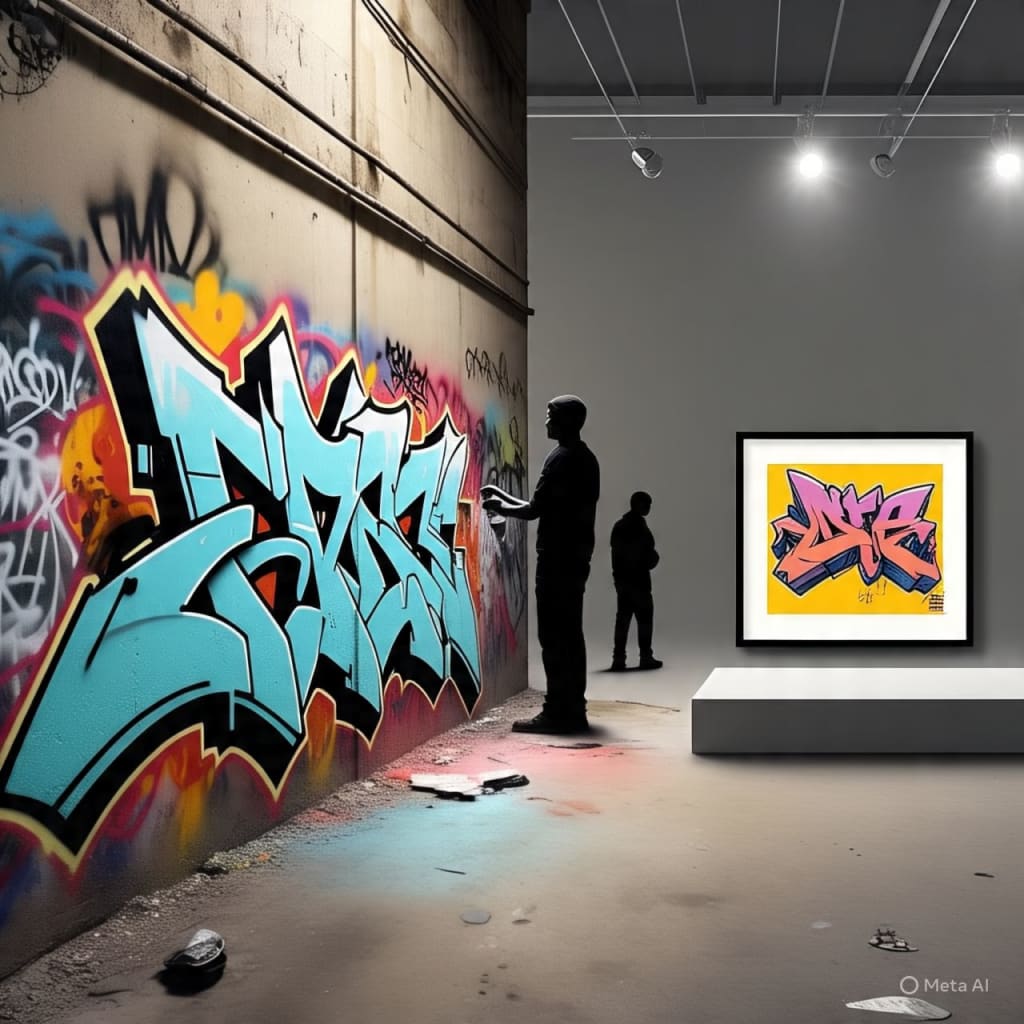
From Walls to White Walls: The Urban Artist's Ascent
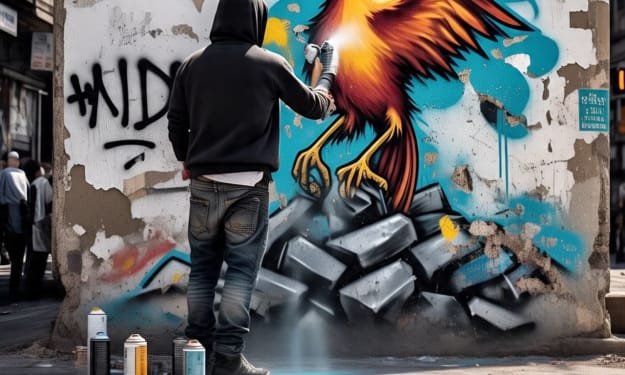
On the cracked concrete walls of a forgotten alley in East London, Malik Khan sprayed the final strokes of his piece—a phoenix bursting into flight. Neon reds and electric blues danced against the peeling gray. To passersby, it was just another rebellious tag in a city that had grown used to graffiti. But for Malik, it was a message—a declaration that beauty, resilience, and rebirth could emerge from the shadows.
Malik, like many street artists, had started with anonymity. The thrill of the forbidden and the rush of creation kept him awake at night. Armed with stencils, cans, and a hoodie pulled tight over his head, he would roam the city’s underbelly—tunnels, bridges, rooftops. He didn’t do it for fame. He did it because the streets were the only canvas he could afford. And in their raw chaos, he found freedom.
But times were changing.
Social media platforms like Instagram became unexpected galleries for street artists. Malik’s pieces—posted by fans who stumbled upon them—began circulating online. The phoenix, the astronaut clutching a wilting flower, the child blowing bubbles that became planets—they were no longer just alleyway whispers. They were viral symbols of modern urban life.
Gallery owners began to take notice. One of them, Serena Park, a curator from a contemporary art gallery in Soho, reached out to Malik through a direct message.
“I’ve been following your work,” she wrote. “Have you ever thought about showing it in a gallery setting?”
Malik was skeptical. Galleries were pristine spaces where the elite whispered about brushwork and symbolism over wine and cheese. His world was one of noise, spray cans, and the constant threat of arrest. Still, curiosity tugged at him.
He agreed to meet.
Serena welcomed him with a genuine smile and offered no pretentious art talk—just honest admiration.
“You have a voice,” she told him. “Street art is no longer just subversive—it’s powerful. It belongs in both the alley and the gallery.”
For the first time, Malik considered what that meant. Could street art retain its spirit when removed from its original context? Would it lose its rawness when framed behind glass?
He wrestled with the idea for weeks. Eventually, he realized something: art wasn't about location—it was about connection. Whether painted on a train car or stretched across canvas, if the message resonated, it had done its job.
With that, Malik agreed to participate in his first exhibition: Urban Echoes.
Preparing for a gallery was a different world. There were rules—no spraying indoors, no climbing on scaffolding in the middle of the night. But Malik adapted. He reimagined some of his outdoor pieces for canvas while staying true to his aesthetic. He even created a new series inspired by his journey: “Transitions,” a set of works that depicted the movement of street art from the margins to the mainstream.
The opening night was surreal.
Hundreds poured in. Critics, art lovers, influencers, and former street kids stood side by side, staring at the same pieces that once lived in forgotten corners of the city. A teenager pointed at one of Malik’s framed works and whispered, “I saw that one under the Old Kent Road bridge!”
Malik smiled. His art hadn’t changed—only its frame.
The exhibition was a success. Articles followed. Interviews came. Commissions started rolling in from cities worldwide, asking him to create public murals legally—on city walls, schools, hospitals. He even led workshops for young artists, teaching them how to use their creativity not just to rebel but to rebuild.
But Malik never abandoned the streets. Every few months, he’d slip out with a can and stencil, creating a surprise piece under moonlight. It wasn’t about defiance anymore—it was about roots. He knew that while galleries offered recognition, the streets had offered him his voice.
His story wasn’t unique. All over the world, urban artists were making similar journeys.
In New York, Ava Cruz turned subway graffiti into high-concept neon installations. In São Paulo, João “Nómada” painted massive murals celebrating indigenous culture. In Tokyo, Hikari transformed pixelated street stickers into digital art projections. These artists, like Malik, began in obscurity but rose to prominence, reshaping the art world’s boundaries.
What had once been dismissed as vandalism was now hailed as visionary. And while critics debated whether street art lost its soul in galleries, one thing was certain: it had earned its place.
Today, Malik’s phoenix hangs in the Tate Modern, but a faded version still lives in the East London alley where it was born. Locals protect it. New artists leave tribute pieces nearby. It has become a symbol—not just of art, but of evolution.
From walls to white walls, the journey of urban art continues—not as a replacement, but as a revolution. And in every spray, stroke, and stencil, the streets still speak.
About the Creator
Keep reading
More stories from Muhammad Ansar and writers in Art and other communities.
Urban Strokes: The Art of Resilience"
Urban Strokes: The Art of Resilience How Street Artists Breathe Life and Meaning into the City’s Forgotten Spaces In the heart of a city long bruised by neglect and indifference, a forgotten alleyway once reeked of decay—cracked bricks, garbage bins overflowing, and walls coated with years of vandalism and rain stains. Most people hurried past, heads down, avoiding the stench and sadness that clung to the space. But to Adeel, it was a blank canvas.
By Muhammad Ansar8 months ago in Art
The River and the Drops
High in the mountains, where no one watched and no one applauded, tiny drops of water slipped from melting snow. Each drop was small, almost invisible, and carried a quiet fear within itself. They began their journey without knowing where they were going, only knowing that they were moving away from where they began.
By Sudais Zakwan6 days ago in Art


Comments (1)
This is an interesting story. I can relate to starting with something on the down-low, like Malik with his street art. It's cool how social media changed things for him. Made me wonder, though, how do you think his style might've evolved if he'd stayed strictly street? And what challenges do you think he'll face in the gallery world compared to his street days?