
Feiyi Bird
The Omen of Drought and the Warning of Nature in Its Flight

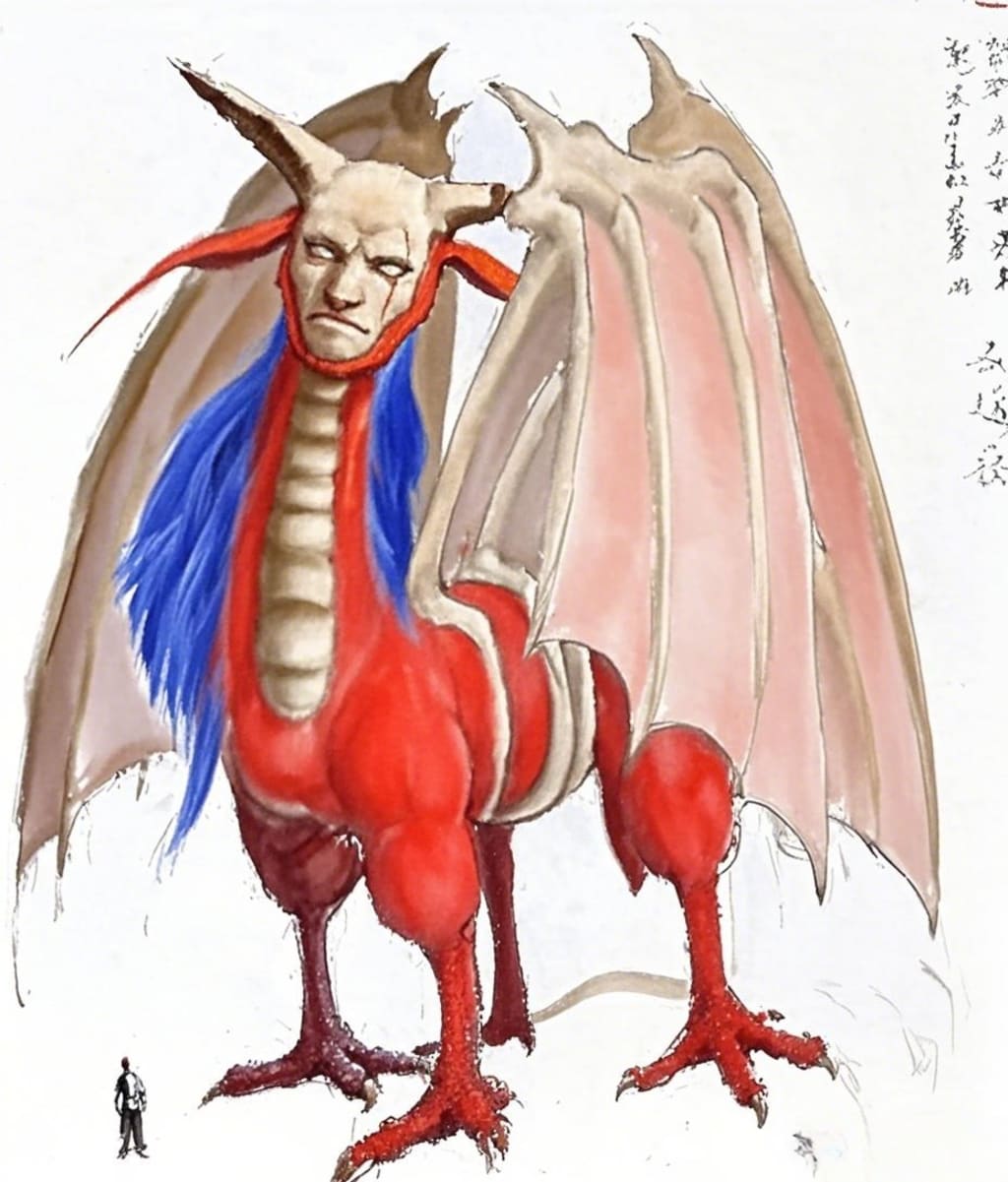
Among the bestiary of Shan Hai Jing (Classic of Mountains and Seas), the Feiyi bird stands as one of the most controversial creatures. Unlike the Zhulong, which controls the cycle of day and night, or the phoenix, which symbolizes auspiciousness, the Feiyi bird is regarded by ancient people as an omen of disaster due to its association with drought. This seemingly ordinary yellow bird has left a profound mark between myth and reality with each flap of its wings. Behind its legend lies the ancient people's rudimentary understanding of climate change and their eternal contemplation of the relationship between humanity and nature.
I. The Symbol of Drought in Ancient Texts: From Shan Hai Jing to the Culture of Calamity Omens
The Feiyi bird is mentioned in The Western Mountains of Shan Hai Jing: "Two hundred and twenty li further west lies Mount Taihua. Its steep cliffs form a square shape, rising five thousand ren high and spanning ten li wide; neither birds nor beasts inhabit it. There is a snake named Feiyi, with six legs and four wings. When it appears, a great drought will strike the land." However, this seems to be a mix-up. In fact, Shan Hai Jing records two types of "Feiyi": one is the snake-like creature with "six legs and four wings" from The Western Mountains, a harbinger of drought, and the other is the bird-like Feiyi from The Northern Mountains, which also symbolizes drought. The Feiyi bird we focus on in this article is described in The Northern Mountains: "One hundred and eighty li further north lies Mount Hunxi. It has no vegetation but is rich in copper and jade. The Xiao River originates here, flowing northwest into the sea. There is a bird whose shape resembles a quail, with a yellow body and a red beak. It is called Feiyi. Eating it can cure diseases and repel insects."
This passage reveals two key points:
Physical characteristics: Similar in size to a quail, it has yellow feathers all over its body and a reddish beak. It inhabits the barren Mount Hunxi, which implies an arid environment.
Dual nature: On one hand, it is seen as an omen of great drought; on the other hand, its meat can "cure diseases and repel insects," embodying the contradictory unity of "calamity and medicinal value" in ancient biological concepts.
In Han Dynasty texts on omens, such as Jiao's Book of Changes, the image of the Feiyi bird was further reinforced as an "envoy of the drought god." It echoes with historical narratives of drought, like King Tang of Shang praying for rain, and became an early illustration of the ancient Chinese idea of "correspondence between heaven and man."
II. The Climate Code in Its Feathers: The Deep Logic of the Drought Metaphor
Why was the Feiyi bird associated with drought? From the perspective of primitive thinking, its symbolism can be traced back to three levels of metaphor:
1. The Natural Association of Color Symbols
Yellow feathers: In the Five Elements system, yellow corresponds to earth and the late summer season. Earth's dry nature is often linked to drought.
Red beak: Red corresponds to fire, which is associated with scorching heat, visually reminiscent of the parched, red - tinted land during droughts.
This understanding that "color represents property" made the Feiyi bird a tangible symbol of "dry earth and intense fire," directly connected to abnormal climate conditions.
2. The Environmental Implication of Its Habitat
According to Shan Hai Jing, the Feiyi bird lives on Mount Hunxi, a barren mountain devoid of vegetation. Such desolate landscapes are often the result of drought and may also be a precursor to soil erosion. Ancient people observed that during long - term droughts, birds would migrate due to food scarcity. The appearance of the Feiyi bird (or the belief that it migrated there) was seen as a sign that drought was about to spread—an early and simple observation of the ecological chain.
3. The Social Function of Calamity Narratives
In the early days of agricultural civilization, drought directly threatened food security, and people needed to find "explanations" for disasters. The legend of the Feiyi bird is essentially a form of "disaster attribution." Its appearance was not considered a random natural phenomenon but a warning from the heavens about human actions, such as excessive land reclamation or disrespect for nature. This narrative helped ancient people develop a sense of awe towards nature and indirectly promoted the emergence of early environmental protection awareness.
III. From Calamity to Coexistence: The Cultural Evolution of the Feiyi Bird
Although the Feiyi bird entered mythology as a "messenger of drought," its image has developed complex connotations in later cultures:
1. The Discovery of Medicinal Value: The Dialectic of Danger and Gift
The Northern Mountains emphasizes that "eating it can cure diseases and repel insects," indicating that while ancient people feared its calamitous nature, they also tried to utilize its properties to combat diseases. This "turning harm into benefit" mindset reflects the practical wisdom of the ancients in dealing with nature—even creatures associated with disaster might hold the key to healing.
2. The Inverse Application in Rain - Praying Rituals
In oracle bone inscriptions from the Shang Dynasty, some rain - praying rituals involved "burning birds." Scholars speculate that this may be related to the legend of the Feiyi bird. By burning bird - shaped idols (or actual birds) symbolizing drought, people prayed for rain from the heavens. This ritual of "using the symbol of disaster to counter disaster" demonstrates humanity's proactive spirit in attempting to control nature.
3. A Reflection of Modern Environmental Protection: When Prophecy Meets Reality
In the context of intensifying climate change, the legend of the Feiyi bird has gained new interpretations. Its "ability to cause drought" is similar to the damage human activities inflict on the ecological environment. Deforestation leads to desertification (a modern parallel to Mount Hunxi), and excessive carbon emissions cause extreme heat (echoing the bird's yellow body and red beak). When large numbers of birds migrate due to wildfires in Australia or rare birds appear in drought - stricken areas of Africa, we are struck by how the ancient warning of "when it appears, great drought follows" resonates with modern environmental crises across time and space.
IV. The Wisdom of Survival Behind Mythical Creatures: Rethinking "Calamity Omens"
The legend of the Feiyi bird is essentially a microcosm of human civilization:
Fear stems from ignorance: When ancient people saw the yellow bird in drought - stricken areas and could not explain climate patterns, they regarded it as a symbol of disaster.
Wisdom emerges from adaptation: Through long - term observation, they discovered the Feiyi bird's medicinal value and learned to find opportunities for survival amidst disasters.
Warnings result from reflection: Ultimately, this image evolved into a restraint on human behavior—excessive exploitation of nature will inevitably lead to consequences.
This cognitive evolution from "fear - utilization - reflection" is the core value of the bestiary culture in Shan Hai Jing. Each mythical creature is a mirror reflecting humanity's attitude towards nature. The flapping of the Feiyi bird's wings is not a horn of doom but a reminder that, on the path of development, we must listen to the signals of nature.
Conclusion: When Yellow Feathers Skim Across the Wasteland
Thousands of years later, the Feiyi bird has long vanished into the mists of mythology, but the warnings it left behind endure. In the 21st century, where droughts occur more frequently, as we watch satellite images of expanding deserts and news reports of record - breaking high temperatures, we can better understand the intentions of ancient people who recorded the Feiyi bird in their texts. With their fantastical brushstrokes, they captured their instinctive awe of nature and left behind an earnest admonition for future generations: respecting climate laws and safeguarding ecological balance are the true keys to preventing "great droughts."
The next time you encounter a bird with yellow feathers and a red beak in the wilderness, take a moment to pause. It may not be a messenger of disaster but a messenger from nature, reminding us that every encounter with a living being is an opportunity to gain a deeper understanding of the world.
About the Creator
hello-word
As a Chinese person, love for the culture of my own country. Nowadays, the global exchange of information is becoming increasingly rapid. I also hope that more people can gain a deeper and more detailed understanding of Chinese culture.
Keep reading
More stories from hello-word and writers in Art and other communities.
Xiangliu
In the fantastical world constructed by Shan Hai Jing (Classic of Mountains and Seas), countless strange and bizarre mythical beasts roam through mountains, rivers, and seas, becoming the earliest codes of Chinese civilization's fantasy. Among them, Xiangliu, the nine-headed serpent monster coiled on the northern wilderness, stands out as a highly recognizable symbol of calamity in ancient Chinese mythology, thanks to its eerie appearance, terrifying destructive power, and mysterious legends. This monster that roamed the primordial era not only embodies the awe of ancient people towards the forces of nature but has also given rise to cultural metaphors that transcend time and space over thousands of years.
By hello-word11 months ago in Art
'Till Death We Do Art
There would be nothing divine in this world without art. Nature may surpass the divine to all intents and purposes, but like everything it absorbs and is absorbed by, it remains here, stuck on the surface of this world, ever-present, physically bound to the universe.
By Avocado Nunzella BSc (Psych) -- M.A.P 16 days ago in Art
When Acting Wasn’t Enough: The Journey of Andreas Szakacs
For Andreas Szakacs, that moment came after years in front of the camera. He had learned the craft, explored characters, and felt the thrill of live audiences. But behind every scene, he found himself watching the bigger picture. Directors shaping moments, cinematographers bending light, writers debating story — the world behind the lens fascinated him as much as the one in front of it.
By Andreas Szakacs2 days ago in Art




Comments
There are no comments for this story
Be the first to respond and start the conversation.