
Famous Romanticism Paintings
Artwork created during the Romanticism Movement

Romanticism was a movement during the 18th and 19th centuries. It peaked around the middle of the 1800s.
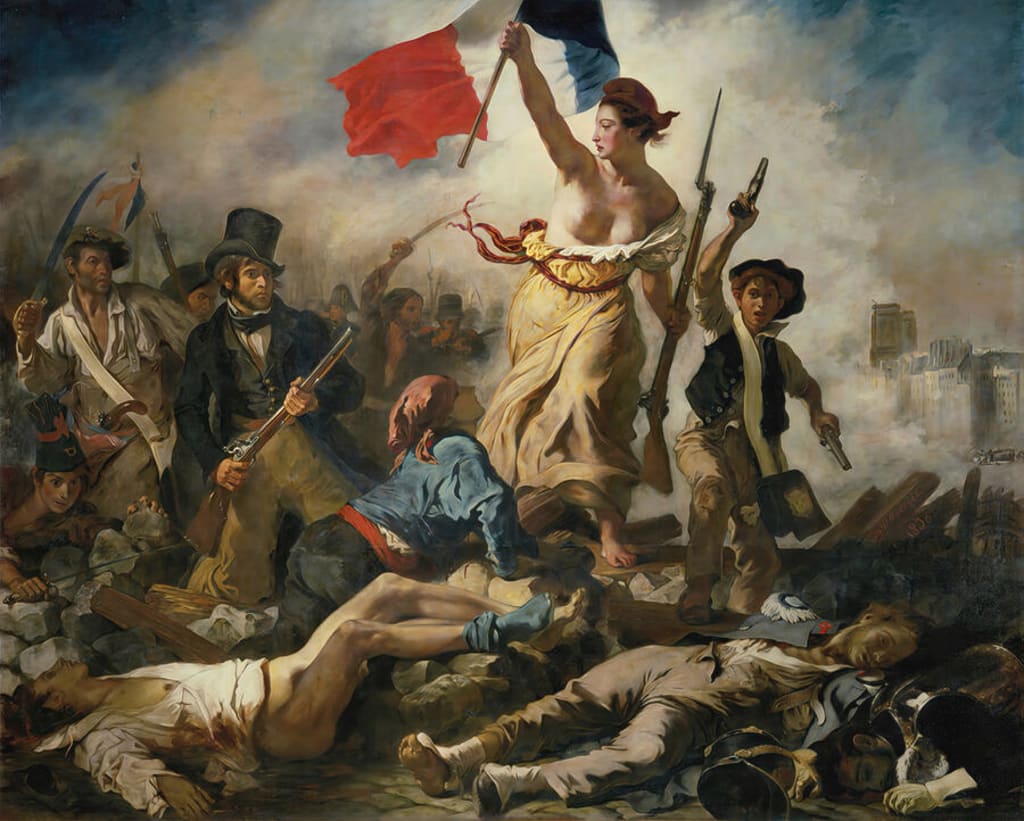
Liberty Leading the People Eugene Delacroix
French artist Eugene Delacroix created this artwork which is considered to be the most well-known painting of that period. Delacroix was one of the biggest supporters of the movement called the July Revolution. It occurred in France during the summer of 1830 when the nation’s lower-class citizens revolted against King Charles X. The artist painted this artwork shortly after the revolution to commemorate the overthrow of the King. In the painting, Liberty is represented by a beautiful woman, leading a charge toward the fray holding the French flag in one hand and a musket in the other.
Clorinda Rescues Olindo and Sophroni Eugene Delacroix
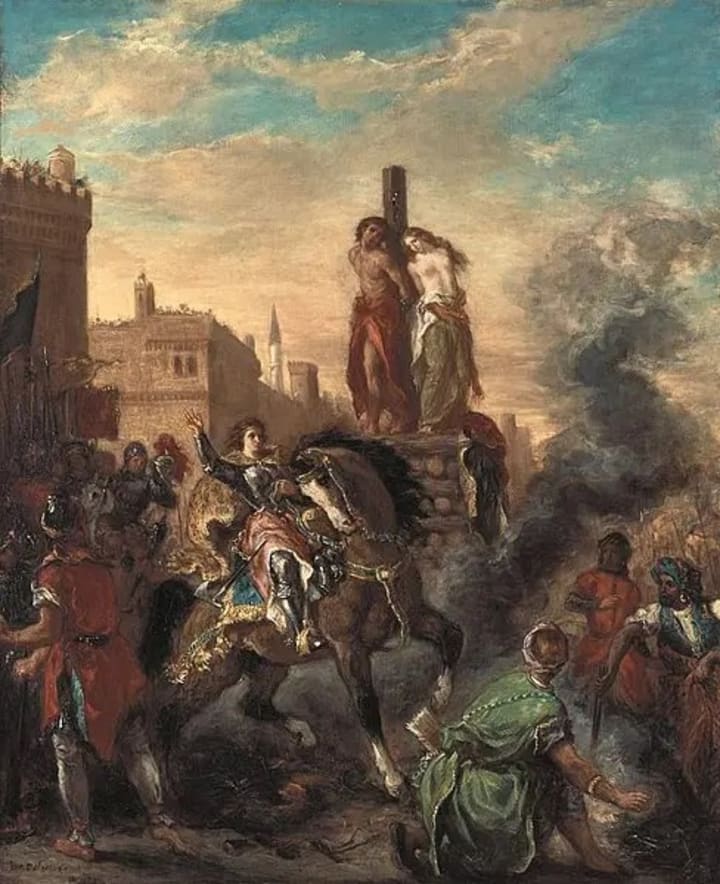
French artist Eugene Delacroix created this most noted artwork from a popular poem by Torquato Tasso in 1581. The poem centers on the story of Clorinda, a lady known for being a valiant warrior and great leader in the warlike culture of the Saracen Army in the desert areas near Jerusalem. The artist painted this in 1856. The painting depicts Clorinda riding into Jerusalem to stop the execution of two lovers from the opposing army. Clorinda is seen mounted on a warhorse riding into the crowd as flames start to lick the feet of the two lovers tied to a stake.
The Raft of Medusa Theodore Gericault
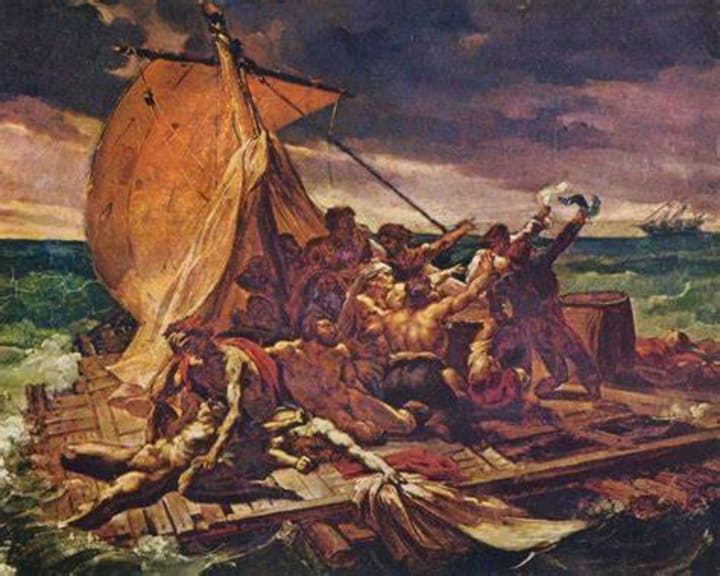
French artist Theodore Gericault created this artwork in 1816. It was painted to commemorate the bravery and perseverance of the men aboard a ship that would become one of the most tragic maritime disasters in French history. The Medusa was a French warship active during the Napoleonic Wars of the early 19th century and was lost after crashing into a large sandbank in the Atlantic Ocean in 1816. The original crew aboard the ship was 400 men. Only 151 could fit onto a makeshift raft constructed to save them. The raft was later found with only 15 men still alive.
Third of May 1808 Francisco Goya
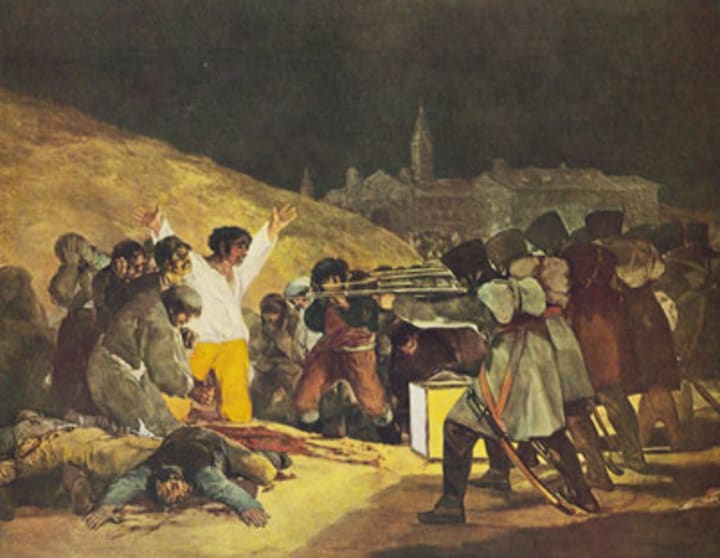
Spanish artist Francisco Goya created this painting which is considered to be one of the most iconic Spanish paintings. It commemorates the events that occurred in Madrid, Spain during the first few days of May 1808. The city was invaded and overtaken by the army led by Napoleon Bonaparte. The Spaniards left in the city rose up against the French occupying forces in a futile attempt to take Madrid back.
Isaac Newton William Blake
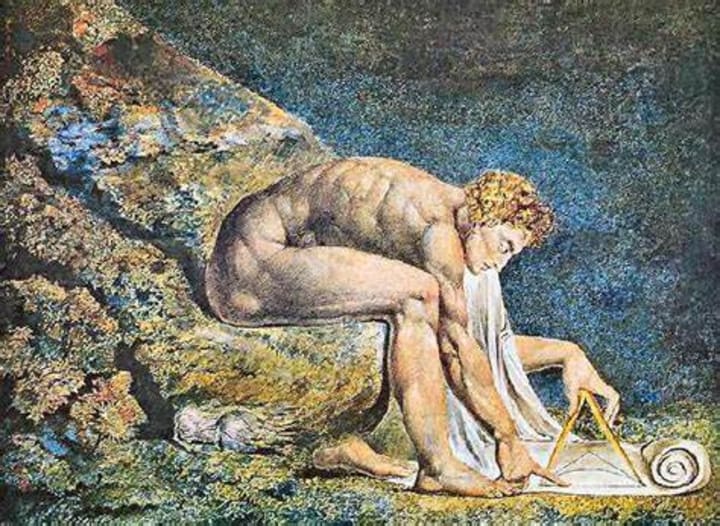
English artist William Blake created this artwork of the great intellectual figure of the 17th and 18th centuries, well-known meteorologist and physicist Isaac Newton. The artist depicts Newton as a young muscular figure sitting on a large rock. He is focused on a piece of parchment with geometric symbols.
The Kiss Francesco Hayez
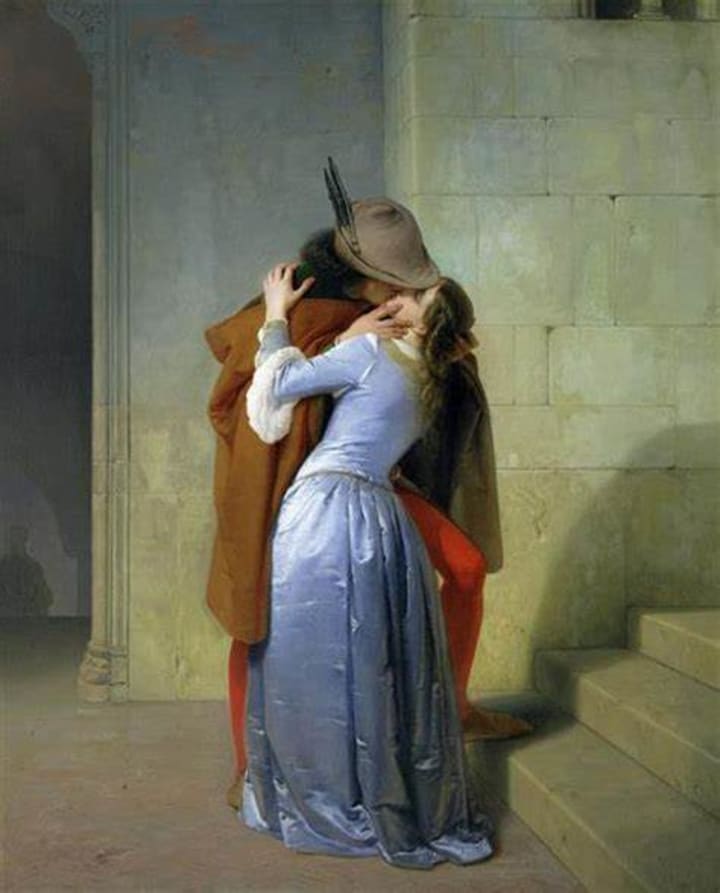
Italian artist Francesco Hayez created this artwork at the time Romanticism reached its peak in 1859. It is one of the most recognizable paintings of that era. The painting depicts a man and a woman embracing and sharing a sensual kiss. Their manner of dress indicates that this happened in the Middle Ages.
The Ninth Wave Ivan Aivazovsky
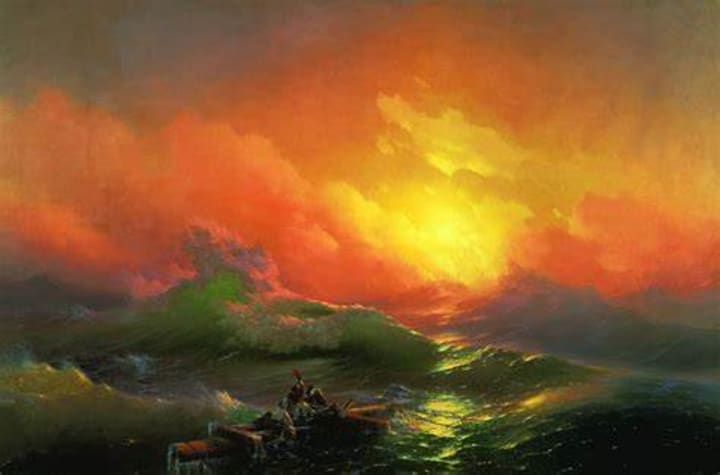
Russian artist Ivan Aivazovsky was known for creating some of the most iconic ocean paintings in history. The artist painted this artwork in 1850 and it is considered to be one of the great masterpieces of the Romanticism movement. The painting depicts large waves dashing across the ocean, the debris from a shipwreck can be seen in the foreground. Since the debris is shaped in the form of a cross it is clear that the artist meant to portray a religious meaning with a Christian emphasis. The theme and title of the artwork are based on an old tale that sailors held as being true in the centuries preceding the 1800s that large waves come in a series of nine different waves. In the series, the ninth wave is the largest of all of the others and the most destructive.
About the Creator
Rasma Raisters
My passions are writing and creating poetry. I write for several sites online and have four themed blogs on Wordpress. Please follow me on Twitter.
Keep reading
More stories from Rasma Raisters and writers in Art and other communities.
Famous Neo-Classical Paintings
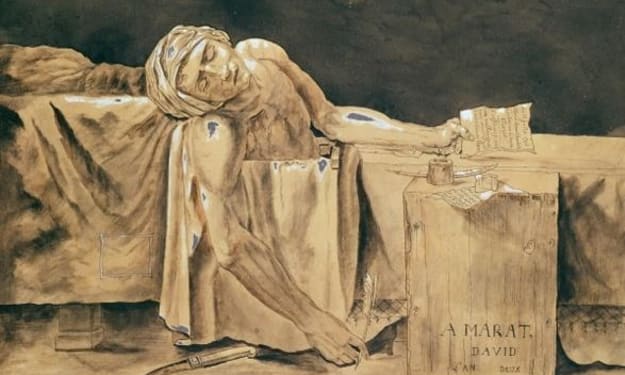
The Neo-Classical era began in the latter part of the 18th century, The Death of Marat Jacques-Louis David French artist Jacques-Louis David was one of the most prolific artists from the Neo-Classical era. His artwork centered around famous events in history.
By Rasma Raistersabout a year ago in Art
'Till Death We Do Art
There would be nothing divine in this world without art. Nature may surpass the divine to all intents and purposes, but like everything it absorbs and is absorbed by, it remains here, stuck on the surface of this world, ever-present, physically bound to the universe.
By Avocado Nunzella BSc (Psych) -- M.A.P 24 days ago in Art
Bomb Scare
It was 2027, and the world never thought it would happen. A missle hit the United States, but it wasn't where they had anticipated. A little town in the northeast was hit by a missile strike, they didn't know why, and they didn't know exactly where it hit, but they did know it was a coastal community, somewhere between Maine and Delaware.
By Gregory Payton7 days ago in Fiction



Comments
There are no comments for this story
Be the first to respond and start the conversation.