
Faith-Inspired Fashion
The Rise of Religious Symbolism on the Runway

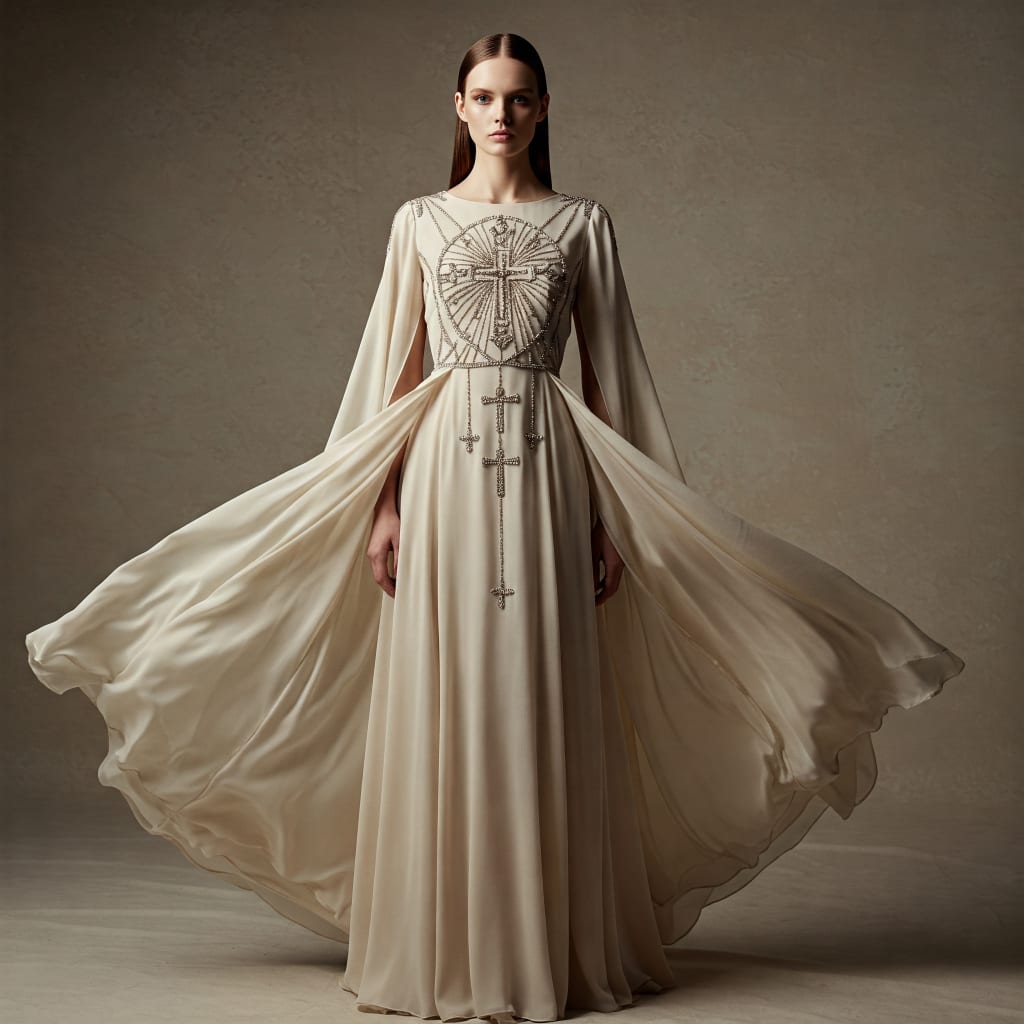
Faith and fashion, two seemingly disparate worlds, are increasingly finding common ground on the runway. What was once confined to personal devotion and religious spaces is now stepping into the spotlight of high fashion, with designers incorporating religious symbolism in their creations. This isn't just about fleeting trends; it reflects a deeper cultural shift where spirituality and identity are being expressed in new and visible ways.
For centuries, religious symbols have held profound meaning for individuals and communities. The cross, the crescent moon, the Star of David, and various other emblems evoke deep-seated beliefs, histories, and traditions. Their presence in fashion, therefore, carries a weight that goes beyond mere aesthetics. It speaks to a desire to outwardly express one's faith, connect with a larger community, or even make a statement about cultural heritage.
Several factors contribute to this growing trend. Globalization has fostered a greater awareness and appreciation for diverse cultures and religions. As the world becomes more interconnected, designers are drawing inspiration from a wider range of sources, including religious iconography. This can be seen in the incorporation of intricate patterns reminiscent of Islamic art, the use of colors traditionally associated with specific faiths, or the subtle integration of scriptural verses into garment designs.
Furthermore, there's a growing movement towards conscious consumerism and a desire for authenticity. People are increasingly seeking out brands and products that resonate with their values and beliefs. For individuals of faith, wearing clothing or accessories that feature religious symbols can be a powerful way to affirm their identity and connect with their spiritual side. It's a form of silent expression, a way to carry their beliefs with them in their daily lives.
The rise of social media has also played a significant role in amplifying this trend. Fashion influencers and everyday individuals are sharing their faith-inspired looks, creating online communities where such expressions are celebrated and normalized. This visibility can encourage others to embrace their own faith through fashion, breaking down traditional barriers and fostering a sense of inclusivity.
However, the incorporation of religious symbolism in fashion is not without its complexities and potential pitfalls. One of the main concerns revolves around cultural appropriation and the trivialization of sacred symbols. When religious imagery is used purely for its aesthetic appeal, without understanding or respecting its deeper meaning, it can be deeply offensive to those who hold these symbols sacred. Designers and brands must tread carefully, engaging with religious communities and scholars to ensure respectful and meaningful representation.
Another challenge lies in navigating the fine line between personal expression and potential proselytization. While individuals have the right to express their faith through clothing, the use of overtly religious symbols in mainstream fashion can sometimes be perceived as an attempt to impose religious beliefs on others. This requires a nuanced approach, focusing on subtle integration and artistic interpretation rather than blatant displays.
Despite these challenges, the trend of faith-inspired fashion offers exciting possibilities for creativity and cultural dialogue. When done respectfully and thoughtfully, it can foster understanding, celebrate diversity, and provide individuals with meaningful ways to express their identities. Designers who engage with religious symbolism with sensitivity and knowledge can create truly unique and impactful pieces that resonate with a wide audience.
For instance, a designer might draw inspiration from the flowing robes of monastic traditions, translating the sense of serenity and simplicity into a contemporary silhouette. Another might incorporate the intricate geometric patterns found in mosques or synagogues, showcasing the beauty and artistry inherent in religious architecture. The key lies in moving beyond superficial appropriation and engaging with the deeper cultural and spiritual significance of these symbols.
Ultimately, the rise of religious symbolism on the runway reflects a broader societal conversation about identity, spirituality, and the role of faith in the modern world. It highlights a desire to connect with something larger than oneself and to express those connections in tangible ways. As this trend continues to evolve, it will be crucial for the fashion industry to prioritize respect, understanding, and collaboration to ensure that these powerful symbols are honored and celebrated appropriately. The runway, in this context, becomes not just a platform for showcasing clothes, but also a space for meaningful cultural exchange and personal expression rooted in faith.
About the Creator
Saim Bill
I’m a passionate article writer who loves sharing ideas, stories, and insights with the world.
Why 316 stainless steel sculpture is the gold standard for coastal sculptures
If stainless steel sculptures are installed in coastal environments, corrosion caused by sea breezes becomes an important issue to consider. Salt in the air, high humidity, and frequent temperature changes can all accelerate surface deterioration if the material or finish is not suitable.
By Shenzhen Ruiheng Crafts5 days ago in Art




Comments
There are no comments for this story
Be the first to respond and start the conversation.