
Face lift: CANAN
Stitching Defiance

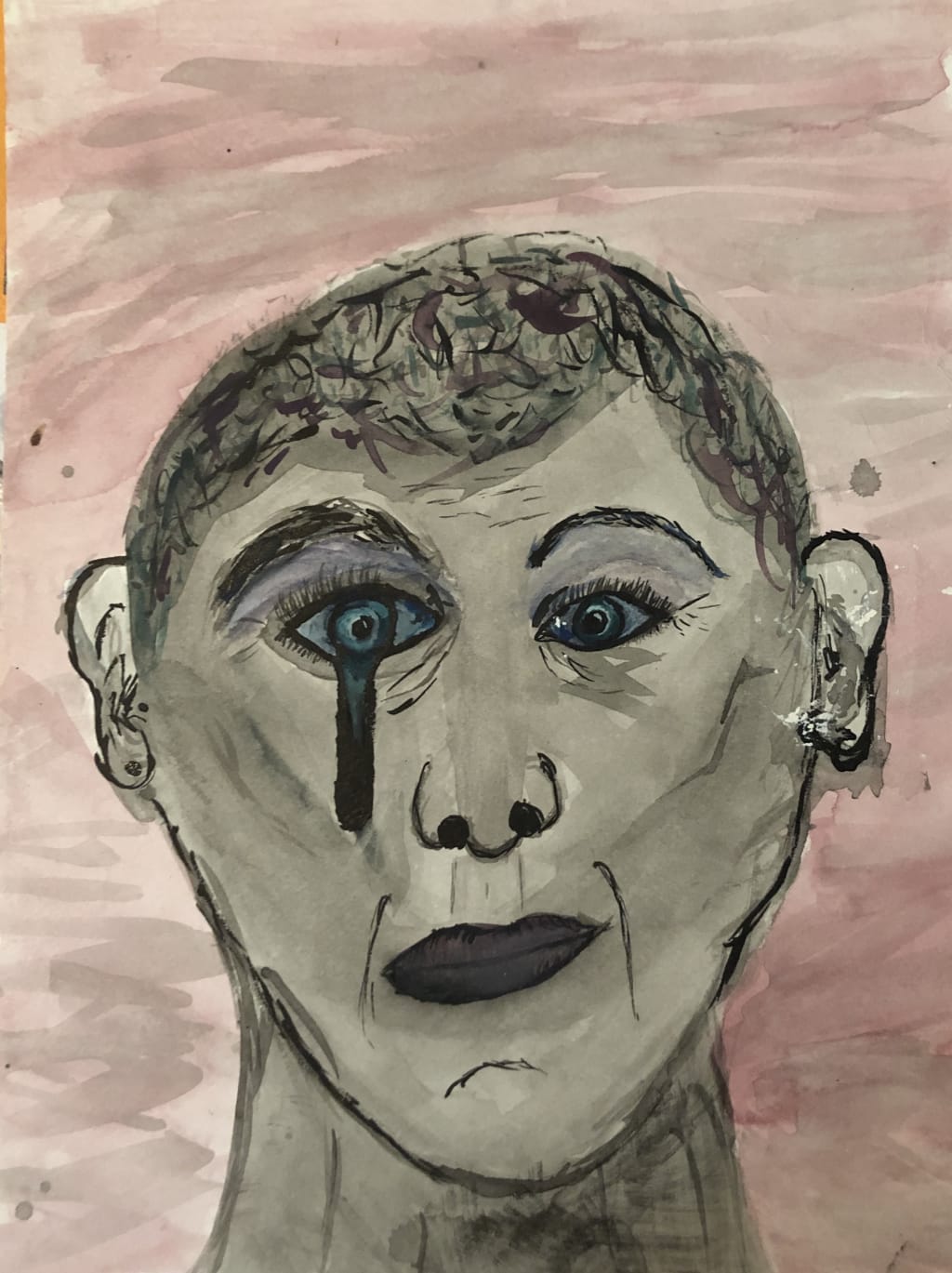

Adams and Eves (2020)
Ademler ve Havvalar
Miniature Sculpture / Minyatüre Heykel
Mixed media / Karışık teknik
48 x 31 x 49 cm
“Art is still a kind of magic for me. Not escape — transformation.”
-CANAN
We just got back from Turkey and it was interesting. There is an incredibly rich art history there so I figured we’d explore a Turkish artist this time around. When doing research I wanted an artist that represented both the opposite of AI art, and also the opposite of our experience in the very tourist focused area of Marmaris.
I settled on CANAN.
When I stood in Marmaris last week — a place with turquoise water, endless sunshine, and absolutely no soul — I started thinking about how easy it is to confuse an image for the real thing.
On paper, it was perfect. Beaches. Boats. Markets. "Turkish Nights" where you could watch a sanitized version of someone else's culture while holding a two-for-one cocktail and wearing a neon wristband. Marmaris wasn’t Turkey — it was Turkey repackaged, resold, and carefully sterilized for British holidaymakers. A theme park version of a country. A simulation.
And as strange as it sounds, that’s what brought me to CANAN.
Because when you come back from a place like that — when you peel off the glitter — you start craving something real again. Something messy, mythic, complicated. Not a souvenir, but a story.
CANAN’s art is a refusal to be packaged. It is bright and wild and personal and political all at once. Where AI-generated art tends to smooth over contradictions to create a “perfect” image, CANAN digs her hands into contradiction and builds from it. Her work isn’t trying to please a tourist. It isn’t trying to replicate something that already exists. It’s rooted in a culture, but it refuses to be frozen by it.
It breathes.
And after a week surrounded by pretty simulations, finding her work felt like waking up.

Hearts of Endearment (2018)
Gönül Dili
Installation
Fabric, thread and paillette on tulle
Dimensions variable
Even in censorship, even in violence, even when told we must be silent — we make new worlds with thread, with dreams, with defiance.
-CANAN
CANAN stands in a long, vital tradition of artists who refuse to separate the personal from the political.
Her work isn’t just resistance — it’s reclamation.
By weaving mythology, gender, faith, sexuality, and body politics into a singular, visceral form, she reminds us that the boundary between survival and creation was always an illusion.
In art theory, we talk endlessly about "authenticity," about "voice," about "disruption." CANAN lives these ideas rather than theorizing them.
She embodies what thinkers like Hélène Cixous called for in écriture féminine — a writing, a creating, that breaks language open from the inside.
Not to be understood, necessarily. But to insist on existence in a system that would rather erase.
In an age when so much imagery is generated, polished, and flattened by machines, CANAN’s work reminds us of something urgent:
True creation costs something.
True art bleeds, and stitches itself back together.
“I am labeled obscene, dangerous, radical — but I am only holding a mirror”
-CANAN
In Turkey, where censorship can feel less like an isolated act and more like a constant atmospheric pressure, CANAN’s refusal to self-censor is radical.
Her work doesn’t ask for permission.
It doesn’t soften itself for the sake of palatability.
It confronts — beauty and grotesque, sacred and profane, stitched side by side without apology.
In a government climate where artists are often pressured — overtly or subtly — to sanitize, to sidestep, to "behave," CANAN’s persistence is more than personal expression.
It is political survival.
By refusing to separate the body from the spirit, the erotic from the sacred, the mythical from the present, she collapses the tools of censorship before they can be weaponized against her.
Her art says: you cannot erase what refuses to be silent.
In doing so, CANAN reminds us that censorship isn’t just about what is banned.
It’s about what people internalize — the slow erosion of risk, the quiet withdrawal from saying what must be said.
She refuses that erosion.
And in every thread, every searing image, she stitches a louder future into being.
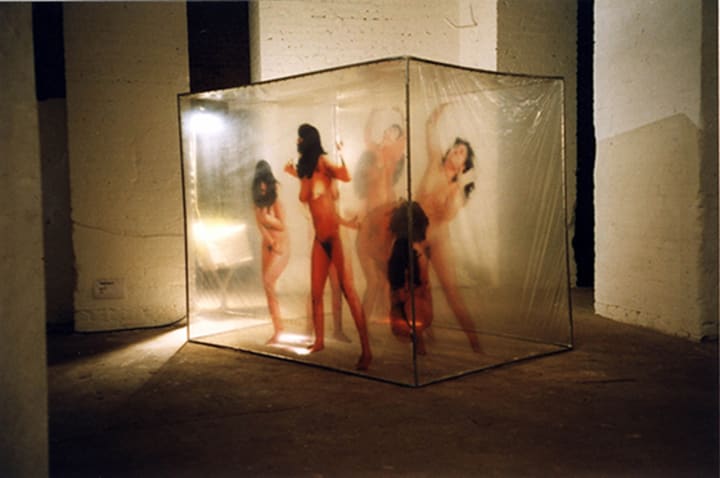
Odalisque (1998)
Odalık
Photography installation
Mixed media (photography on transparent film, aluminum, nylon)
220 x 170 x 150 cm
“The body — especially the female body — is a battleground. I embroider, I paint, I perform. I turn the battleground into a canvas.”
-CANAN
The body — especially the female body — is a battleground.
Fabric, thread, and embroidery have long been dismissed as “women’s work,” relegated to the domestic sphere, seen as craft rather than art.
But what happens when you take the tools of the home — needles, silk, beads — and weaponize them against the structures that sought to contain you?
Artists like CANAN answer that question without compromise.
By choosing mediums historically coded as feminine — and therefore, in the eyes of many, lesser — she refuses the hierarchy outright. She doesn’t elevate embroidery to fine art by making it more masculine.
She reminds us that it always was powerful. We were just taught not to see it.
Thread becomes muscle. Fabric becomes memory. Beads become defiance.
In her hands, the so-called "domestic" arts are insurgent, mythic, and utterly without apology. They are not decoration. They are declaration.
It’s easy to dismiss what is soft.
It’s easy to underestimate what is intricate.
That’s how empires fall — not with a grand battle, but with a slow, stitched rebellion that no one thought would matter.
Until it does.
In a world that demands louder, faster, sharper revolutions, there’s something radical about choosing slow work. About threading resistance into fabric. About trusting that tenderness can be a weapon.
CANAN doesn’t ask permission to exist in the art world. She doesn’t beg for entry into systems designed to erase her. She builds her own mythologies — stitched, painted, and performed — whether the gatekeepers are watching or not.
Art that resists censorship is never just about defiance.
It’s about survival.
It’s about inheritance.
It’s about remembering that even under the weight of control, people still find ways to speak. To mark. To dream.
A tapestry may seem fragile — but it endures longer than any regime.
And so will we.
About the Creator
River and Celia in Underland
Mad-hap shenanigans, scrawlings, art and stuff ;)
Poetry Collection, Is this All We Get?
Keep reading
More stories from River and Celia in Underland and writers in Art and other communities.
'Till Death We Do Art
There would be nothing divine in this world without art. Nature may surpass the divine to all intents and purposes, but like everything it absorbs and is absorbed by, it remains here, stuck on the surface of this world, ever-present, physically bound to the universe.
By Avocado Nunzella BSc (Psych) -- M.A.P 22 days ago in Art
Leadership Behind the Experience: The Role of Brandon Cody Verran at Big Sky
In the world of hospitality and resort management, great guest experiences rarely happen by accident. Behind every smooth operation, welcoming atmosphere, and memorable stay is a team of dedicated professionals working together. At Big Sky Resort, one of the most renowned mountain destinations in North America, leadership plays a key role in ensuring that guests receive the level of service they expect. Among those helping guide operations is Brandon Cody Verran, who serves as an assistant general manager within the larger organization of Boyne Resorts.
By ORM_Specialist2 days ago in Art




Comments (2)
Oh, wow, amazing images. Thanks for sharing them with us
That's some powerful artwork and total respect that she refuses to bow to political pressure and stay silent. This was such an interesting read and I'm glad you found the 'real Turkey' in Marmaris.