
ENCORE OF THE DAMNED
The Final Curtain Can't Fall Until the Theatre Feasts Again.
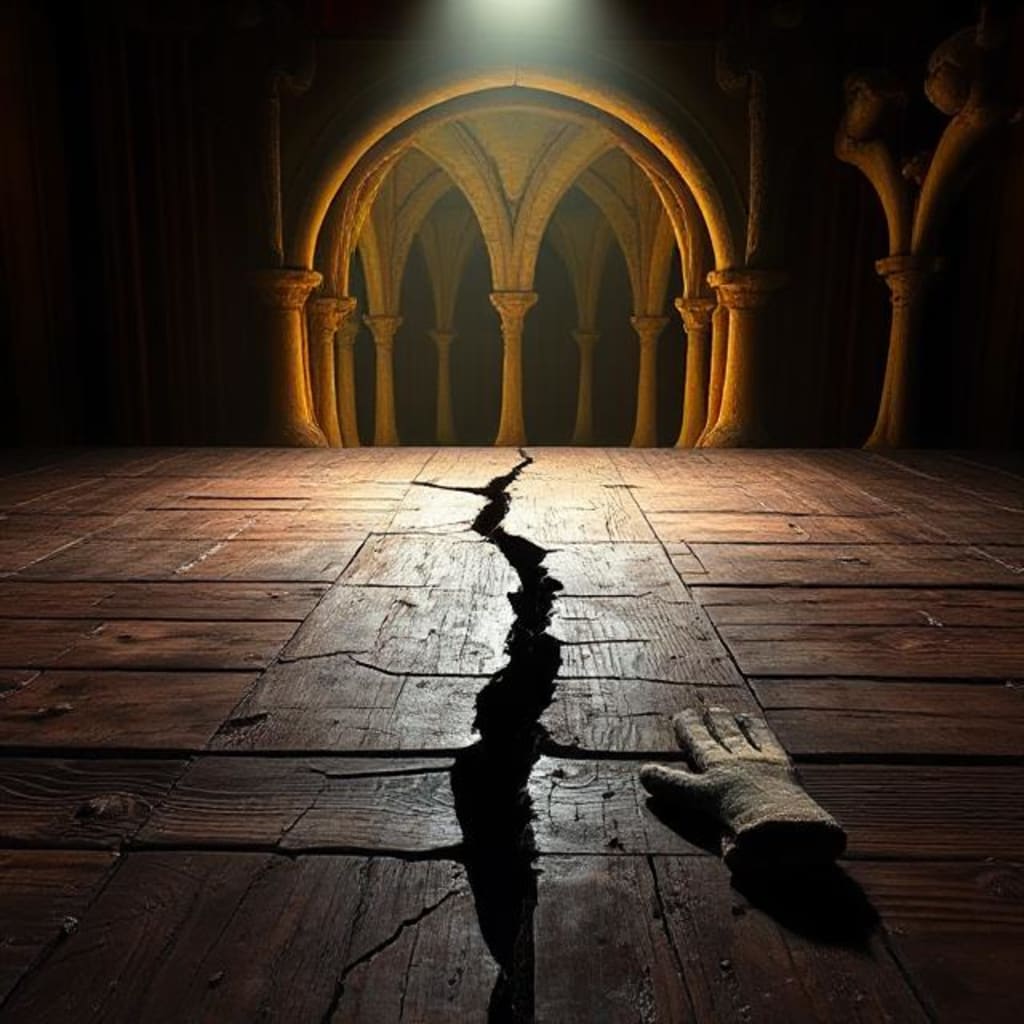
THE BONES BENEATH THE STAGE
BY ZAHIR SHAH
The first time I heard the walls breathe, I thought it was tinnitus – the high-pitched whine leftover from a decade of mixing live sound for bands that worshipped volume as a sacrament. But this was different. Lower. Resonant. A slow, rhythmic huuuhhhh… haaaahhhh that seemed to vibrate up through the worn soles of my boots from the very foundations of the old Grand Lyric Theatre. It wasn’t in my ears; it was in my bones.
I’d taken the restoration job out of desperation, frankly. After the implosion of my last touring gig – a synth-pop nightmare involving pyro mishaps and a lead singer’s very public breakdown – the steady, quiet work of coaxing the Lyric’s ancient sound system back to life felt like sanctuary. Dust motes danced in the shafts of weak afternoon light filtering through the high, grimy clerestory windows. The air smelled of damp plaster, aged velvet, and the ghost of a thousand forgotten performances. I loved it. Or I had, until the breathing started.
I knelt on the scarred wooden stage, tools scattered around me like surgical instruments. I’d been tracing a fault in the main stage-left speaker cluster, my fingers probing the cold, intricate guts of wiring hidden behind ornate plasterwork. That’s when the vibration intensified, syncing with the deep, impossible breath. A fine shower of plaster dust drifted down onto my shoulders.
"Okay, Lyric," I murmured, pressing my palm flat against the cool stage floor. "What’s your problem today?"
Silence. Then, a distinct, resonant thump. Not mechanical. Organic. Like a slow, heavy heartbeat transmitted through timber and stone. My own pulse kicked up a notch.
That night, alone in the echoing cavern of the auditorium with only the dim emergency exit lights casting long, distorted shadows, I set up my most sensitive field recorder. I placed it directly on the stage where the vibration had been strongest, nestled amongst my tools like an offering. I ran cables back to my mixing desk in the orchestra pit, donned my reference headphones, and hit record. Then I waited, the silence so profound it pressed against my eardrums.
For an hour, nothing. Just the faint hum of the building’s old electrical system and the distant groan of city traffic. I was about to pack it in, chalking the day’s events up to exhaustion and an overactive imagination fueled by too much dust inhalation, when it began.
First, the breathing. Huuuhhhh… haaaahhhh… Clearer now through the headphones, richer. It wasn't air moving through lungs; it was the sound of immense pressure shifting, of stone settling not over centuries, but seconds. Then, beneath it, layered like harmonics: whispers. Dozens, hundreds of them. Indistinct at first, a susurrus like dry leaves skittering across pavement. I cranked the gain, my fingers trembling slightly on the faders.
The whispers resolved. Not words, exactly. Fragments. Emotions. A soaring phrase of pure, crystalline joy that made my breath catch. A guttural sob of despair so profound my eyes stung. A sharp cry of terror, abruptly cut off. A lilting melody of love, tender and heartbreaking. They swirled together, a chaotic, beautiful, terrifying choir emanating from the stage itself. I felt dizzy, overwhelmed by the sheer tidal wave of raw, unfiltered feeling pouring into my headphones.
I ripped them off, gasping. The auditorium was silent again. But the feeling lingered – a residue of intense emotion clinging to the air, thick as stage fog. I stared at the recorder, its tiny red light blinking steadily. Proof. Or madness.
The next day, I brought in Elias, the gruff, pragmatic structural engineer overseeing the building’s restoration. I played him the recording, watching his weathered face. He listened intently, his bushy eyebrows knitting together. When the wave of fragmented emotion hit, he flinched, his hand instinctively going to the cold stone pillar beside him.
"Christ, Lena," he rasped when it finished, pulling off his own headphones. "That’s… unsettling. But explainable, right? Subsonics? Old pipes groaning? Resonance from the subway line two blocks over amplified through the foundations?"
"Maybe," I conceded, though I didn’t believe it. "But listen to the texture, Elias. That’s not machinery. That’s… experience."
He humphed, unconvinced but clearly disturbed. "Well, whatever it is, it’s coming from down below. The sub-basement level. We sealed it off years ago. Structural instability. Nothing down there but rats and forgotten scenery."
The sub-basement. A chill traced my spine. The breathing, the heartbeat… it felt subterranean. Ancient. "We need to look."
Elias protested, citing safety protocols, asbestos, the sheer folly of it. But I was relentless. The Lyric wasn’t just whispering; it was singing. A song woven from every laugh, every tear, every gasp of wonder or shock that had ever echoed within its walls during its century of operation. It felt vital. Important. And maybe, just maybe, it was in pain. That deep, resonant thump… it hadn’t sounded healthy.
It took three days of arguing, cajoling, and finally, exploiting Elias’s grudging curiosity about the "acoustic anomaly," to get the heavy steel door to the sub-basement unsealed. The air that rushed out was frigid, damp, and carried a scent beyond mildew and decay – ozone, like after a lightning strike, and something metallic, coppery. Blood? My imagination, surely.
Our headlamps cut weak cones of light into an oppressive darkness. The space was vast, low-ceilinged, filled with the skeletal remains of old stage sets – crumbling castle walls, a listing pirate ship, grotesque, painted faces leering from the shadows. Water dripped monotonously somewhere in the distance. And the cold… it bit deep, deeper than the temperature explained.
Then, we saw it. Dominating the center of the sub-basement, rising from the packed earth floor, wasn't rock. It was bone. Enormous, curved ribs, yellowed and porous like ancient ivory, arching towards the low ceiling. Vertebrae the size of beer kegs formed a sinuous, partially buried spine that vanished into the darkness at either end. Smaller bones – femurs, scapulae, fragments of skulls – were fused haphazardly into the structure, forming pillars and arches. It wasn't a skeleton; it was a cathedral built from ossified remains.
"The hell…?" Elias breathed, his voice barely a whisper, swallowed by the immensity.
The breathing was audible now without headphones. A deep, rhythmic huuuhhhh… haaaahhhh… emanating from the colossal structure. The bone cathedral pulsed faintly with a sickly, internal phosphorescence. As we watched, frozen in horror and awe, the whispers began again, louder, clearer, swirling around us like a physical force.
"...my only son, take the curtain call..." A woman’s voice, thick with grief.
"...spotlight like warm honey, the applause a drug..." A man’s voice, exultant.
"...don’t let him touch me again, please, not again..." A child’s terrified whimper.
"...kiss me, my love, here in the wings where no one sees..." A passionate murmur.
The voices weren't just recordings; they were presences, echoes trapped within the bone. The thumping heartbeat grew stronger, vibrating through the soles of our boots. Thump-thump… Thump-thump…
"It’s alive," I whispered, the realization crashing over me. "The theatre… it’s built on something. Or around it."
Elias, pale as the bone itself, shone his light along the base of the structure. Where bone met earth, thick, root-like tendrils of dark, fibrous material snaked outwards, disappearing into the surrounding soil and the theatre’s foundations. "It's integrated," he said, his voice hoarse with disbelief. "Fused with the building. Feeding on it… or sustaining it?"
Thump-thump… THUMP.
The heartbeat faltered, skipped, then resumed, weaker. The phosphorescence dimmed. A wave of profound exhaustion and sorrow washed over me, emanating from the bone cathedral. The whispers turned plaintive, desperate.
"...fading... the light dims..."
"...remember us... please..."
"...so cold... so dark..."
The Grand Lyric hadn't just absorbed the emotions of its performances; it had captured them. The sheer, raw intensity of human experience – joy, terror, love, despair – had bled into the foundations over decades, coalescing, giving form and a terrible, parasitic life to this ossified leviathan beneath the stage. It fed on applause, on gasps, on tears. And now, starved by years of neglect and silence, it was dying.
But dying didn't mean harmless. As the light within the bones flickered, the whispers twisted. The grief curdled into resentment. The joy soured into mania. The love warped into obsession. The air grew colder, sharper. The shadows cast by our headlamps seemed to deepen, to stretch towards us with hungry intent.
"...stay... play for us..." The voices hissed, overlapping, dissonant.
"...give us your song..."
"...your fear is sweet... your despair is sweeter..."
A skeletal hand, cobbled together from smaller finger bones wired together, scraped against the earth near my boot. Not part of the cathedral. A new thing. Assembling itself.
"Lena," Elias grabbed my arm, his grip vise-like. "We need to go. Now."
We scrambled back, stumbling over debris, our headlamps jerking wildly. The whispers became shrieks, a cacophony of trapped anguish and malice. More bone fragments skittered across the floor, drawn towards the central structure like iron filings to a magnet. The tendrils at the base pulsed angrily.
We slammed the heavy steel door shut behind us, throwing the old bolts with trembling hands. We leaned against it, gasping, listening to the furious, muffled pounding from the other side. The bone cathedral wasn't just dying; it was ravenous, lashing out in its death throes, trying to pull us down to join its chorus of trapped souls.
Back in the empty auditorium, the silence was deafening. But it was a fragile silence. The breathing was fainter now, the heartbeat irregular. The whispers were gone, replaced by a low, menacing hum resonating through the floorboards.
I knew what I had to do. Sanctuary had become a crypt. The Grand Lyric wasn’t just haunted; it was inhabited. And the thing beneath the stage, the hungry heart woven from stolen emotions and calcified despair, was waking up. It had tasted our fear. It wanted more.
The show, I realized with a cold dread that settled deep into my own bones, was far from over. The final act was about to begin. And the audience, whether they knew it or not, was already trapped inside the theatre. The bone cathedral demanded its encore. The only question was, what song would we be forced to sing? The restoration job was over. Now, it was about survival. The floor wasn't just my friend anymore; it was the thin barrier separating us from the maw of something ancient and ravenous, dreaming fitfully beneath our feet, waiting for its next feast of feeling. The stage lights, when they finally came back on, wouldn't illuminate actors. They would illuminate sacrifices. The true horror wasn't in the dark sub-basement; it was in realizing the entire theatre, every plush seat, every gilded balcony, every soaring arch, was merely the ornate ribcage of a slumbering beast. And we were already in its belly.
About the Creator
Zahir Shah
All stories are real, scientific, historical, journal, political and educational. Moreover, will try my best to include stories on contemporary affairs as well.
Keep reading
More stories from Zahir Shah and writers in Art and other communities.
Book Review, The Unbreakable Spirit: Nelson Mandela's Long Walk
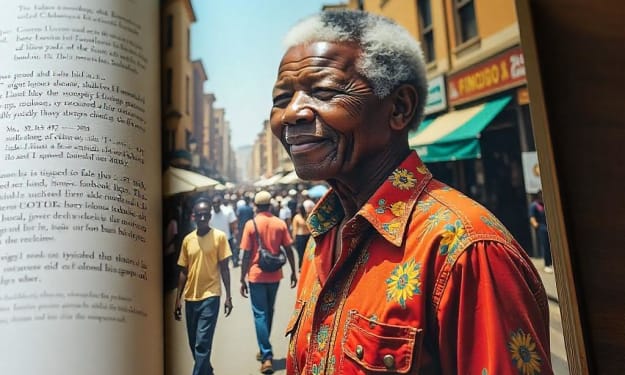
LONG WALK TO FREEDOM BOOK REVIEW BY ZAHIR SHAH The Genesis of a Lion: Roots, Ritual, and Rising Consciousness Mandela begins not with politics, but with place and tradition. His vivid recollections of his childhood in the rural Transkei – the rolling hills of Qunu, the strict but formative customs of the Thembu royal court where he was raised, the initiation rites marking his passage to manhood – establish the bedrock of his identity. This grounding in African culture, history, and communal values is crucial. It counters the apartheid regime’s narrative of African inferiority and rootlessness, presenting instead a rich tapestry of heritage and dignity. We meet the young "Rolihlahla" (meaning "troublemaker," prophetically), shaped by the wisdom of elders like Chief Jongintaba and the discipline of missionary education, which introduced him to both Western ideas and the harsh realities of racial prejudice under colonial rule.
By Zahir Shah8 months ago in BookClub
'Till Death We Do Art
There would be nothing divine in this world without art. Nature may surpass the divine to all intents and purposes, but like everything it absorbs and is absorbed by, it remains here, stuck on the surface of this world, ever-present, physically bound to the universe.
By Avocado Nunzella BSc (Psych) -- M.A.P 21 days ago in Art
The Dress That Broke the Internet Was Gold and Nobody Could Agree on Why
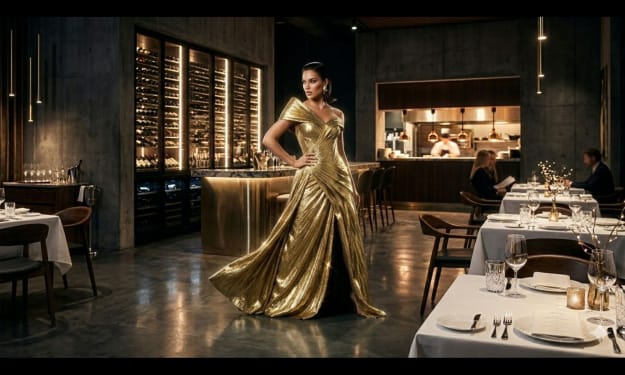
She walked into the room and everything stopped. Not because of her confidence or music that was playing, though there was plenty of that. Everything stopped because of the dress. Floor-length, liquid, blazing gold, it caught every light in the room and threw it straight back.
By CurlsAndCommas5 days ago in Art


Comments
There are no comments for this story
Be the first to respond and start the conversation.