
Book Review, The Unbreakable Spirit: Nelson Mandela's Long Walk
A Journey from Prison Cell to Presidential Palace, Forged in Courage, Sacrifice, and the Radical Power of Forgiveness
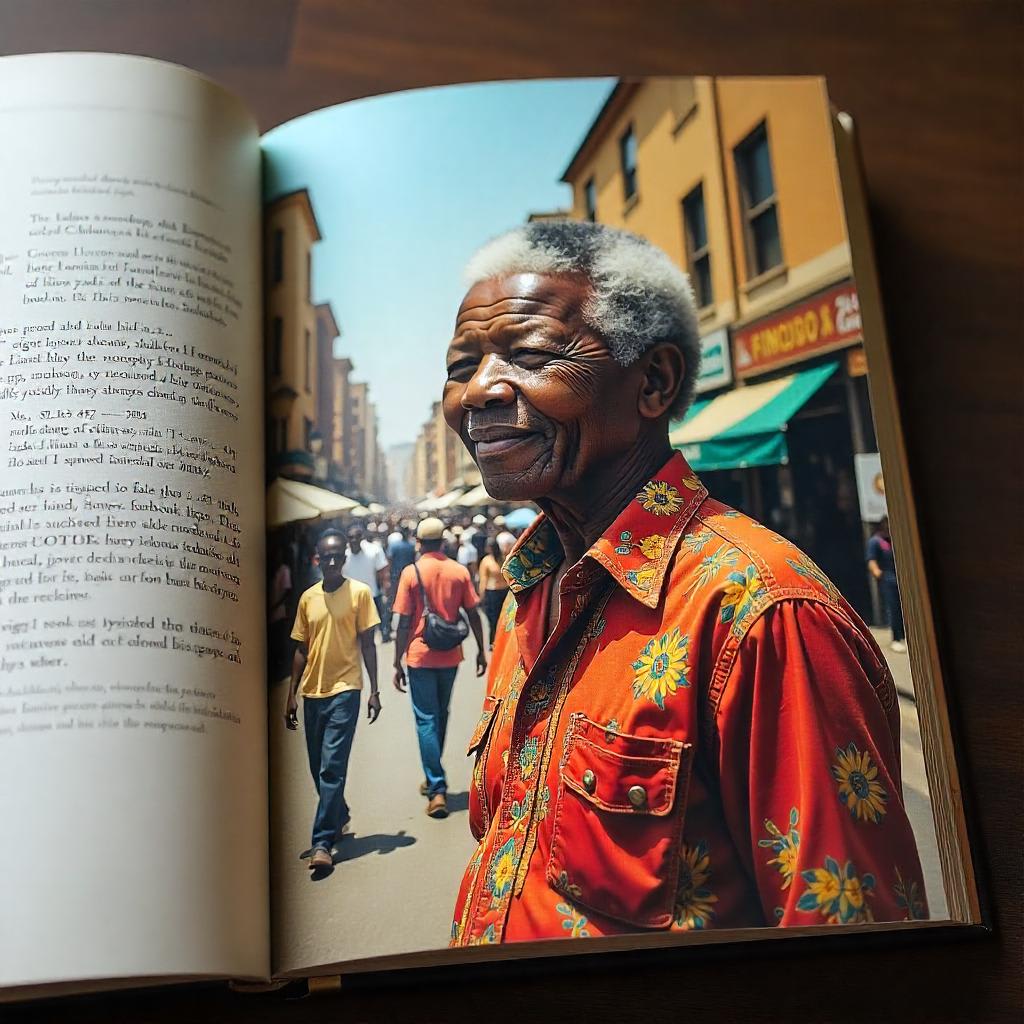
LONG WALK TO FREEDOM
BOOK REVIEW BY ZAHIR SHAH
The Genesis of a Lion: Roots, Ritual, and Rising Consciousness
Mandela begins not with politics, but with place and tradition. His vivid recollections of his childhood in the rural Transkei – the rolling hills of Qunu, the strict but formative customs of the Thembu royal court where he was raised, the initiation rites marking his passage to manhood – establish the bedrock of his identity. This grounding in African culture, history, and communal values is crucial. It counters the apartheid regime’s narrative of African inferiority and rootlessness, presenting instead a rich tapestry of heritage and dignity. We meet the young "Rolihlahla" (meaning "troublemaker," prophetically), shaped by the wisdom of elders like Chief Jongintaba and the discipline of missionary education, which introduced him to both Western ideas and the harsh realities of racial prejudice under colonial rule.
The narrative meticulously charts his journey to Johannesburg – a pivotal shift from rural tranquility to the brutal heart of industrial apartheid. His experiences as a law clerk, his exposure to the grinding poverty and systemic humiliation faced by Black South Africans, and his burgeoning friendships with figures like Walter Sisulu and Oliver Tambo ignite the fire of political consciousness. We witness the birth of the activist: initially drawn to the more moderate African National Congress (ANC) Youth League, advocating for Black self-determination within the existing framework, but rapidly radicalized by the National Party’s 1948 election victory and the subsequent codification of apartheid into a terrifyingly comprehensive system of racial subjugation.
Architect of Defiance: The Path of Resistance
Mandela details the evolution of the ANC’s strategy with remarkable clarity and candor. He recounts the pivotal Defiance Campaign of 1952, a massive, non-violent protest against unjust laws that saw thousands, including Mandela, jailed. This section illuminates the strategic debates within the liberation movement: the efficacy of non-violence versus armed struggle, the complexities of multi-racial alliances (embodied in the Congress Alliance), and the constant threat of state brutality. Mandela’s role as a lawyer defending the oppressed, constantly harassed by the authorities, showcases his early courage and legal brilliance.
The narrative reaches a critical juncture with the watershed Sharpeville Massacre of 1960, where police gunned down 69 peaceful protesters. The subsequent banning of the ANC and the palpable closing of all peaceful avenues for change forced a painful reckoning. Mandela, once committed to non-violence, explains with sober logic the agonizing decision to co-found Umkhonto we Sizwe (MK), the ANC’s armed wing. "It was only when all else had failed, when all channels of peaceful protest had been barred to us, that the decision was made to embark on violent forms of political struggle," he writes, emphasizing it as a last resort, aimed at sabotage of infrastructure, not loss of life. His descriptions of clandestine operations, military training abroad, and the constant cat-and-mouse game with the security police are gripping, filled with tension and the weight of immense responsibility.
The Crucible: 27 Years in the Belly of the Beast
The heart of "Long Walk to Freedom," both emotionally and thematically, lies in Mandela’s account of his imprisonment. Arrested in 1962 and sentenced initially to five years, his fate was sealed by the Rivonia Trial (1963-1964), where his iconic "I am prepared to die" speech crystallized the moral imperatives of the struggle. His life sentence condemned him to Robben Island for 18 brutal years, followed by further imprisonment at Pollsmoor and Victor Verster prisons.
The depiction of Robben Island is harrowing yet devoid of self-pity. Mandela recounts the back-breaking labor in the limestone quarry, the blinding sun damaging his eyes, the meager rations, the constant humiliations, the bitter cold of concrete cells, and the psychological warfare waged by prison authorities. Yet, within this desolation, Mandela reveals his true genius: the transformation of prison into a "University." He describes the rigorous political debates among prisoners, the clandestine study groups (earning degrees through correspondence), the development of a collective discipline and leadership structure, and the unwavering commitment to maintaining dignity and principle. The prison became a microcosm of the future South Africa Mandela envisioned – a place where disparate factions (ANC, PAC, others) learned, through necessity and Mandela’s insistence, to dialogue, debate, and find common ground despite ideological differences.
His descriptions of relationships with fellow prisoners (Sisulu, Kathrada, Mhlaba, Mlangeni, Motsoaledi – the Rivonia trialists) and even with some warders, whom he gradually influenced through his unwavering courtesy and integrity, are profoundly moving. We see the strategic mind at work: his negotiations with prison authorities for better conditions were not just about comfort, but about asserting the humanity and political status of the prisoners, laying groundwork for future negotiations. The slow, arduous process of secret talks initiated by the apartheid government, beginning while he was still in Pollsmoor, is chronicled with fascinating insight into the calculations and mistrust on both sides.
The Walk Continues: Negotiation, Triumph, and the Burden of Freedom
The final section, detailing his release in 1990, the tumultuous transition period, and his election as President in 1994, is charged with a different kind of intensity. The world watched as the man who embodied resistance walked free, not with vengeance in his heart, but with an outstretched hand. Mandela masterfully conveys the complexity of this period: the explosive joy of liberation mixed with the terrifying specter of civil war, stoked by right-wing extremists and elements within the Inkatha Freedom Party. His commitment to negotiation and reconciliation, often against the fervent desires of his own supporters, stands as his most remarkable legacy.
He doesn't shy away from the immense challenges: the breakdown of talks, the Boipatong and Bisho massacres, the assassination of Chris Hani. Yet, through it all, his narrative emphasizes the absolute necessity of compromise, inclusivity, and the unwavering focus on a peaceful, democratic future. His relationship with F.W. de Klerk, fraught with tension and mutual suspicion but ultimately functional for the greater good, is analyzed with remarkable fairness, acknowledging de Klerk's courage while detailing their profound disagreements. The culmination in the 1994 elections, where millions of Black South Africans voted for the first time, is described with understated but palpable emotion: "I voted on April 27, and for the first time in my life, I was a citizen of South Africa with a vote equal to every other citizen."
Literary Merits and Unflinching Honesty
As a literary work, "Long Walk to Freedom" is characterized by a direct, dignified, and often surprisingly warm prose style. While Mandela acknowledges the assistance of collaborators, the voice that emerges is unmistakably his own: measured, thoughtful, principled, and possessing an almost regal authority tempered by humility and self-deprecating humor. The narrative is meticulously detailed, reflecting Mandela's legal training and his understanding of history's importance. The pacing, particularly through the prison years, can feel deliberate, but it mirrors the slow, grinding passage of time endured by the prisoners.
Crucially, Mandela does not present himself as a flawless saint. He candidly discusses his early arrogance, his failings as a husband and father (painfully acknowledging the deep personal cost paid by his family), his initial reservations about non-racialism, and the evolution of his views, including his regret over some inflexible positions taken during the struggle. This honesty lends immense credibility and humanity to the narrative. He also addresses controversies, such as the ANC's use of violence and internal disputes, though critics might argue certain aspects receive less scrutiny than others.
Enduring Legacy: More Than a Man, A Manifesto
"A Long Walk to Freedom" is not merely the story of Nelson Mandela; it is the story of the triumph of human dignity over oppression, of strategic wisdom over brute force, and of reconciliation over hatred. It is a profound exploration of leadership defined not by power seized, but by service rendered and sacrifice endured. Mandela’s core philosophy – that justice and freedom are indivisible, that the oppressor must be liberated along with the oppressed, and that forgiveness is an act of strength, not weakness – resonates with universal power.
Why This Book Matters Today:
In an era marked by deepening divisions, resurgent authoritarianism, and a crisis of moral leadership, "Long Walk to Freedom" is more relevant than ever. It serves as:
1. A Beacon of Hope: Proof that even the most entrenched systems of injustice can be dismantled through courage, perseverance, and moral clarity.
2. A Manual for Leadership: Demonstrating the power of leading by example, strategic patience, inclusivity, dialogue, and unwavering commitment to principle.
3. A Testament to Forgiveness: Offering a powerful counter-narrative to cycles of vengeance, showing how reconciliation is the essential foundation for a sustainable future.
4. A Historical Imperative: Providing an indispensable first-hand account of one of the 20th century's most significant struggles for human rights.
5. A Call to Action: Reminding us that freedom and justice are not endpoints, but continuous journeys requiring constant vigilance and participation. As Mandela himself concludes, "I can rest only for a moment, for with freedom come responsibilities, and I dare not linger, for my long walk is not yet ended."
Conclusion
Reading "Long Walk to Freedom" is an investment, a commitment of time and emotional energy. It is not always an easy read; the depths of suffering and injustice described are profound. Yet, it is an essential journey for anyone seeking to understand the 20th century, the nature of oppression and resistance, and the qualities of truly transformative leadership. Mandela emerges not as a distant icon, but as a fully realized human being – flawed, determined, intelligent, strategic, and imbued with an almost superhuman capacity for forgiveness and love for his people and country.
About the Creator
Zahir Shah
All stories are real, scientific, historical, journal, political and educational. Moreover, will try my best to include stories on contemporary affairs as well.
Keep reading
More stories from Zahir Shah and writers in BookClub and other communities.
Book Review, RICH DAD POOR DAD
The Enduring Spark and Flawed Flame of Rich Dad Poor Dad Book Review for by Zahir Shah Robert Kiyosaki’s Rich Dad Poor Dad isn't just a personal finance book; it’s a cultural phenomenon. Since its 1997 debut, it has sold over 32 million copies, challenged conventional wisdom, and ignited fierce debate. For a competition review aiming for simplicity, attractiveness, and excellence, we must navigate beyond the hype and the hate to uncover the core spark that ignited a global conversation about wealth, while honestly examining its enduring flaws. This is not merely a summary, but a critical exploration of its legacy and lessons.
By Zahir Shah7 months ago in BookClub
7 Amazing Books That Will Hook You From The First Line
In a world brimming with endless content and distractions, finding a book that captivates you immediately is like discovering a hidden gem. We all know the magic of a story that pulls us in from the very first sentence—books that make it impossible to put them down. Below is a list of 7 amazing books that will hook you from the first line. Whether you’re a casual reader or a literary enthusiast, these selections promise intrigue, emotion, and profound insights.
By Diana Merescabout 4 hours ago in BookClub



Comments (1)
A great leader