
DID YOU SEE THE SECOND SUN?
DID YOU SEE THE SECOND SUN?
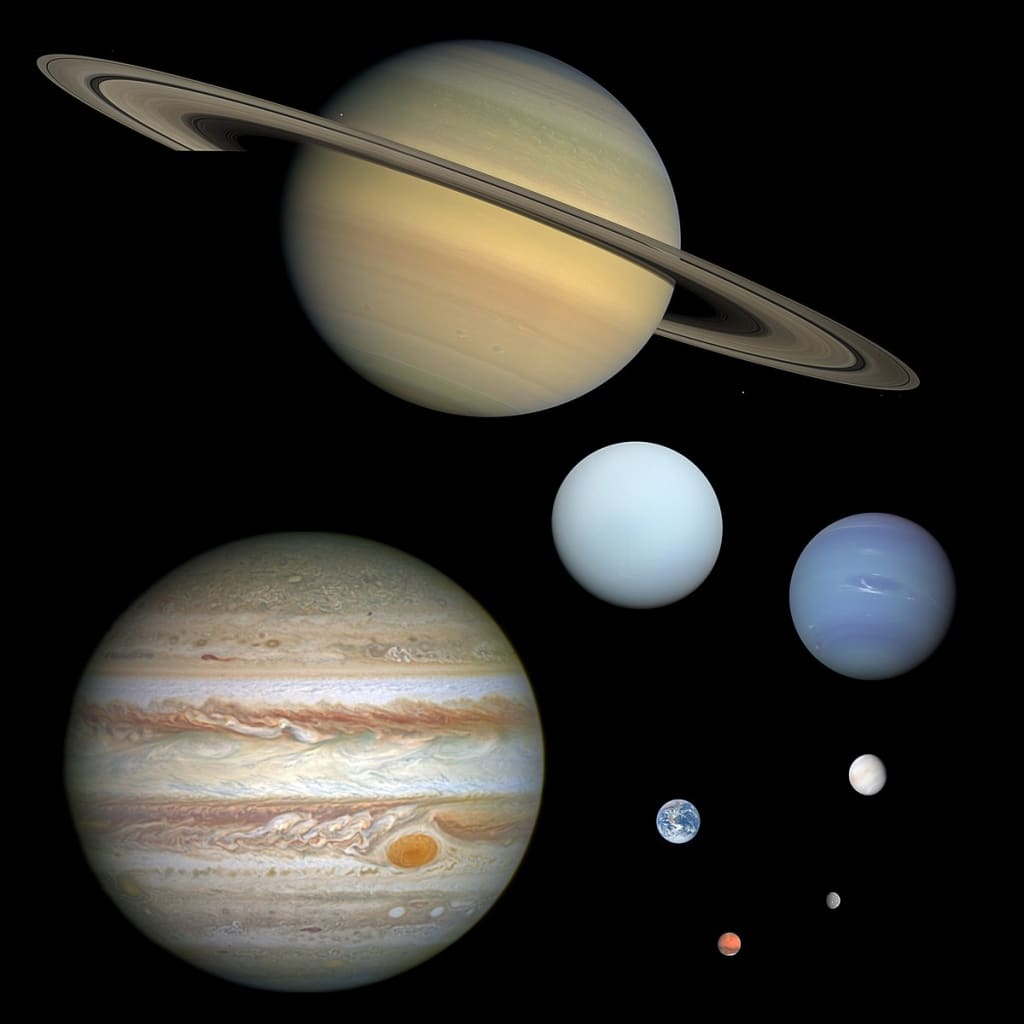
Let's be honest, our Sun is pretty boring compared to other stars. It's just one of millions of similar yellow dwarfs in the universe. But despite the lack of uniqueness, we love it because it is our only star and it gives us life. But there is an interesting idea that our Sun once had a possibly evil twin. So what happened to the lost second sun? To understand its possible existence, we need to search for giant molecular clouds, also known as dark nebulae. These clouds are filled with interstellar gas, dust, and clumps of stars. They have no clear boundaries and have a strange shape. Some of them can even be seen with the naked eye as dark spots in the Milky Way.
About 4.5 billion years ago, our Sun emerged from one of these molecular clouds. Waves of energy flowing through the clouds gathered matter and compressed it into a dense core, forming a protostar. These protostars were lukewarm spheres of hydrogen and helium. Over millions of years, the temperature and pressure inside these spheres increased, giving birth to the star, the Sun. But not all the matter in the clouds became part of the Sun. Some of it began to orbit the new star, gradually forming a planet. Scientists have used statistical models to study star birth and have found that many stars are born with companion stars or in star clusters. It is very likely that our Sun had siblings, or groups of siblings, including large twins with similar characteristics. This hypothesis is supported by the fact that most stars are born in molecular clouds with companion stars.
So let's dig deeper into the intriguing idea of Nemesis, the hypothetical twin of our Sun. Earth's history shows a pattern of large-scale extinctions that occur approximately every 27 million years. Astronomer Richard Muller suspected the existence of a faint dwarf star called Nemesis about 1.5 light-years away. Nemesis is thought to orbit the Sun in a gigantic orbit that will take 27 million years to complete. Its closest approach to the Sun disturbs the orbits of the Oort Cloud and Kuiper belt comets. This chaos causes a comet to rush toward Earth, causing a mass extinction, including the extinction of the dinosaurs.
Searches for Nemesis have yet to find any solid evidence, but they have unearthed notoriety on the Internet. However, recent research has cast doubt on the theory of periodic mass extinctions and the existence of Nemesis itself. Scientists argue that the disaster occurred randomly rather than according to a predictable schedule. Additionally, stars moving in similar orbits would be highly unstable and unlikely to survive that long.
Regardless of the existence of Nemesis, it is still highly likely that our Sun will have twins. Evidence for this lost twin could be in the Oort Cloud, a vast region at the outer edge of the solar system. Scientists have determined that the Oort cloud's weight contradicts current models of solar system formation and suggests the presence of an unknown remnant. If a possible second sun were included in the calculation, it would be a perfect fit, filling the gap and accounting for cloud weight.
But finding a missing twin is a daunting task. It could be somewhere in the Milky Way, perhaps hundreds of light-years away. Identifying Sun-like and contemporary stars across the galaxy is a daunting task. Even if a list of these stars were made, it would be nearly impossible to determine the true twin of our Sun.
The earth is a beautiful place just live right okay. love lead
About the Creator
Keep reading
More stories from Osioma Oyovwe Celestine and writers in Art and other communities.
Can You Take A Break?
It's a good idea to take a break when things are going well, fix all the little issues, and start over with a clean slate. Think twice when choosing your next main focus. You may have options that you didn't have before, and your priorities may have changed as a result.
By Osioma Oyovwe Celestine3 years ago in Earth




Comments