
"Decoding da Vinci: Unraveling the Enigma of the Mona Lisa"
"Leonardo da Vinci: Unraveling the Genius of Art and Science"
Introduction:
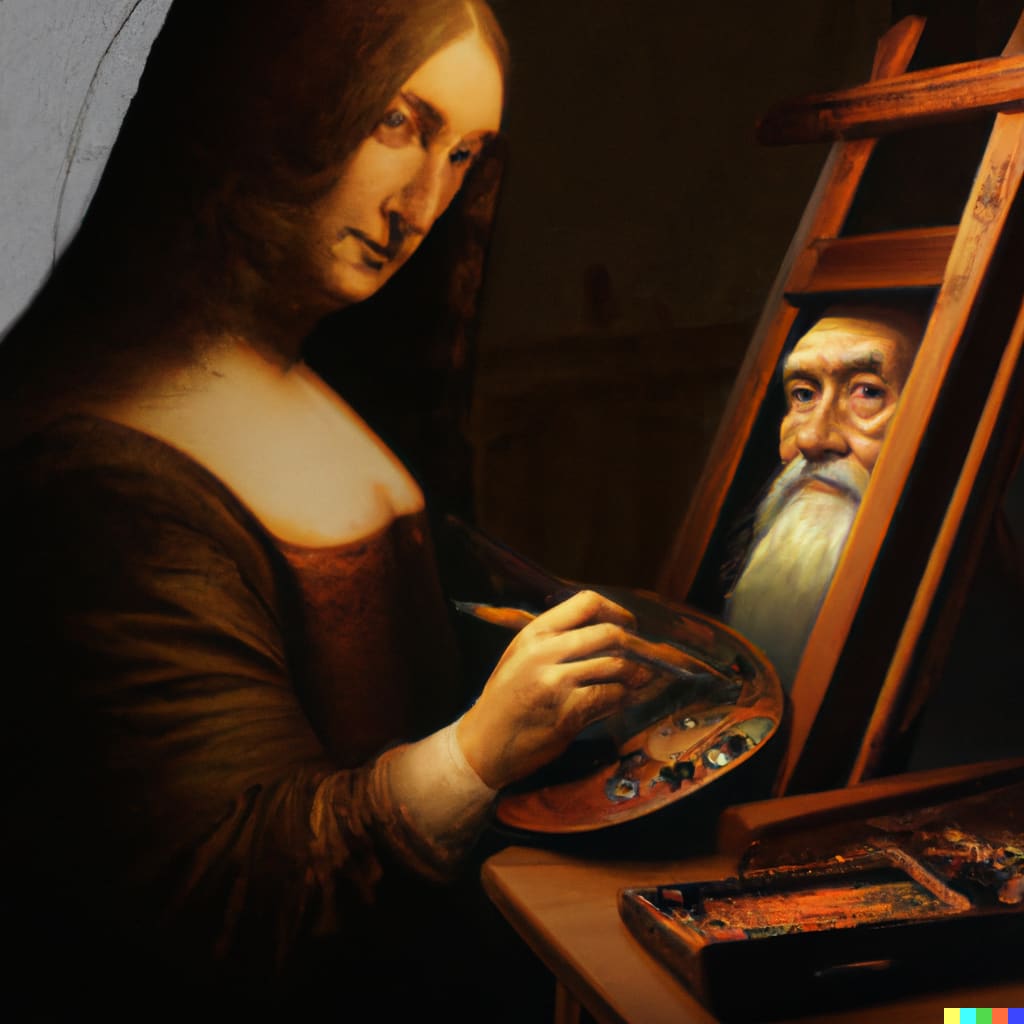
The Louvre Museum in Paris, home to countless treasures from around the world, boasts one masterpiece that captivates millions each year—the enigmatic "Mona Lisa" by Leonardo da Vinci. This article delves into the fascinating world of Leonardo da Vinci, a man of multifaceted talents who is renowned as both a legendary artist and a pioneering scientist and inventor. It explores the secrets behind the creation of the world's most famous painting and the enduring intrigue of her enigmatic smile. Can science unlock the mysteries behind this iconic work of art and unveil the genius of her creator?
Leonardo da Vinci: The Universal Genius:
Leonardo da Vinci, often referred to simply as Leonardo, is celebrated not only for his artistic prowess but also for his contributions to the world of science and invention. His genius transcends boundaries and speaks to people of all ages. In addition to being a prolific artist, he was a visionary scientist and inventor who made groundbreaking discoveries that foreshadowed the theories of luminaries like Galileo and Newton by over a century. Leonardo's fertile imagination gave rise to concepts such as armored tanks, flying machines, and even early prototypes of self-driving cars. This article delves into the question of whether his scientific pursuits were a distraction from his art or the key to his artistic brilliance.
The "Mona Lisa" Phenomenon:
The "Mona Lisa" reigns as the centerpiece of the Louvre, drawing visitors from across the globe. Her smile has intrigued and baffled art enthusiasts for centuries, making her not only famous but an icon. However, some question whether her fame is based more on her celebrity status than her artistic merit. Many visitors spend mere seconds gazing at the painting, more focused on capturing the perfect Instagram photo than appreciating its true beauty. But is there more to the "Mona Lisa" than meets the eye?
A Perfect Painting:
Leonardo was not a prolific painter; he was an experimental artist who aimed for perfection in his works. He believed in quality over quantity and strived to create the ideal painting. To understand how he achieved this, we must look beneath the surface of his masterpieces. Scientists, in collaboration with the Louvre, are using cutting-edge techniques to peer into the depths of Leonardo's paintings. These investigations aim to reveal the hidden secrets of his techniques, which are imperceptible to the naked eye.
Unveiling Leonardo's Technique:
Leonardo's artistry involved a complex interplay of colors, layers, and translucent paint. He used colored pigments mixed with oils to create depth and subtlety in his paintings. By analyzing the chemistry of his paints, researchers can gain insights into his creative process. This article discusses how Leonardo's unconventional approach allowed him to change his mind freely during both the preparatory and painting stages, a practice uncommon among artists of his time.
The Evolution of the "Mona Lisa":
The journey of the "Mona Lisa" began in Florence in 1503 as a portrait commission. Over time, she evolved from a simple portrayal of Lisa Gherardini, a merchant's wife, into a universal masterpiece that transcends time and place. Cutting-edge technology, including ultraviolet imaging and X-rays, offers a glimpse into the painting's evolution, revealing that Leonardo continually adjusted and refined his work. The "Mona Lisa" became more than a portrait; it transformed into an embodiment of Leonardo's artistic vision and understanding of the world.
Leonardo's Unique Beginnings:
Leonardo's unconventional beginnings as an illegitimate child in Vinci allowed him the freedom to explore and learn independently. He was not bound by the traditional wisdom of his era, making him a self-taught genius who would ultimately redefine the boundaries of art and science. At the age of 14, he ventured to Florence, where he became an apprentice in the renowned studio of Andrea del Verrocchio. This article highlights the importance of Verrocchio's influence on Leonardo and his development as an artist.
Leonardo da Vinci, the quintessential Renaissance man, is celebrated not only for his artistic masterpieces but also for his groundbreaking contributions to science and engineering. In a world where disciplines were often siloed, Leonardo's insatiable curiosity bridged the gap between art and science, allowing him to paint the "Mona Lisa" and dissect human cadavers with equal passion.
A Misfit in Tolerant Florence
Leonardo da Vinci's journey to becoming one of history's most revered polymaths was unique. Born in Vinci, Italy, in 1452, he was a misfit in many ways, which made him a trailblazer in a city as tolerant as Florence. He was an illegitimate child, left-handed, gay, vegetarian, and easily distracted. Nevertheless, the people of Florence embraced him, providing fertile ground for his boundless creativity.
Engineering Marvels: Capping the Dome
One of the most challenging construction projects of Leonardo's time was the crowning of the Florence Cathedral's dome with a golden sphere. This significant commission, secured by Leonardo's mentor, Andrea del Verrocchio, drew the young Leonardo into the world of engineering and art. To achieve this feat, they had to not only design the sphere but also figure out how to secure a 1.5-ton ball on top of a towering 370-foot cathedral.
Leonardo's involvement in this project marked the beginning of his journey as a great engineer and artist. His scientific understanding and engineering prowess were essential in ensuring the stability of the sphere. This fusion of science, engineering, and art would become a defining aspect of his identity.
The Priceless Notebooks
While Leonardo's paintings are celebrated worldwide, his scientific investigations, meticulously recorded in his notebooks, are equally remarkable. These notebooks, comprising around 6,000 pages (only a fraction of what he penned), provide a glimpse into the mind of a true Renaissance thinker.
Unlike the works of later scientists like Galileo or Newton, Leonardo's manuscripts are not polished books but rather direct expressions of his internal dialogue. His notebooks span his lifetime and cover a wide range of subjects, showcasing his keen observations and pioneering ideas.
From Flying Machines to Civil Engineering
Leonardo's notebooks reveal his visionary ideas that seemed to anticipate the modern age. His designs included early concepts for human flight, such as a helicopter-like machine and a parachute. His fascination with water led to ambitious civil engineering proposals. Additionally, he conceptualized self-propelled machines that hinted at the future of automation.
Many of these inventive designs raise the question: Could they have actually worked? Modern engineers and researchers continue to study his sketches, marveling at the depth of his scientific knowledge and engineering acumen.
The Bridge in Constantinople
One of Leonardo's ambitious proposals, made in 1502, was for a stone bridge in Constantinople. This bridge was intended to be five times longer than any existing span of its time. Despite limited information in his sketch, modern engineers have used advanced technology, such as 3D printing, to bring his design to life on a smaller scale. Remarkably, the bridge's stability and feasibility demonstrated that Leonardo's ideas transcended centuries.
Anatomy and the Art of Painting
Leonardo's pursuit of perfection in art extended to his meticulous study of anatomy. He dissected 30 human bodies to gain a profound understanding of the human form. His anatomical drawings, though not without errors, showcased his ability to fuse science and art. His paintings, informed by this deep knowledge, featured accurate musculature, the play of light on skin, and lifelike expressions.
Sfumato: The Art of Subtlety
One of Leonardo's signature techniques was sfumato, derived from the Italian word "fumo," meaning smoke. This method involved creating soft transitions and eliminating hard outlines in his paintings. It allowed him to capture the elusive subtleties of light and shadow, resulting in a sense of depth and realism that set his work apart.
The Science of Vision
Leonardo's scientific investigations extended to the realm of optics and how humans perceive the world. His study of perspective and the human visual system contributed to the immersive quality of his paintings. The "Mona Lisa" is a prime example, with her enigmatic smile appearing to change as viewers shift their gaze.
Restoration and Revelation
Recent efforts to restore Leonardo's paintings have unveiled their original brilliance. Removing centuries-old varnish and applying advanced imaging techniques, experts have revealed the true colors and details of his works. This restoration not only revitalizes his paintings but also reaffirms his genius.
Legacy and Universal Appeal
Leonardo da Vinci's legacy endures as a testament to the fusion of art and science. His ability to seamlessly integrate these disciplines has inspired generations of artists, scientists, and thinkers. The "Mona Lisa" stands as an enduring masterpiece, captivating viewers with its scientific precision and artistic allure.
In closing, Leonardo da Vinci's contributions to both art and science serve as a reminder of the power of interdisciplinary exploration. His insatiable curiosity and relentless pursuit of beauty in all forms continue to inspire and enrich our understanding of the world.
About the Creator
Keep reading
More stories from chahinez chouigui and writers in Art and other communities.
The Legend of the Bermuda Triangle: One of the Few Mysteries We Still Can't Solve
Let's rewind back about 600 years. The story begins with an Italian man who wanted to sail across the ocean to reach Asia, a continent rich with spices, silk, minerals, and all sorts of valuable treasures. Getting there by land would take an incredibly long time, so he had a bold idea: why not build sturdy ships, gather a crew of sailors, and set off to Asia by sea? What could possibly go wrong?
By chahinez chouigui2 years ago in Fiction
'Till Death We Do Art
There would be nothing divine in this world without art. Nature may surpass the divine to all intents and purposes, but like everything it absorbs and is absorbed by, it remains here, stuck on the surface of this world, ever-present, physically bound to the universe.
By Avocado Nunzella BSc (Psych) -- M.A.P 27 days ago in Art
Hottest in the Office
Dear Rafi, You’re very distracting to work around. For the first second I saw you the other day, I thought you were some type of executive. It took a moment to realize no, you were just the new guy, dressed up for the job he wants. Be still, my heart.
By Gabriel Shames5 days ago in Pride



Comments
There are no comments for this story
Be the first to respond and start the conversation.