
Creativity in the Dark
When Silence Becomes the Loudest Muse

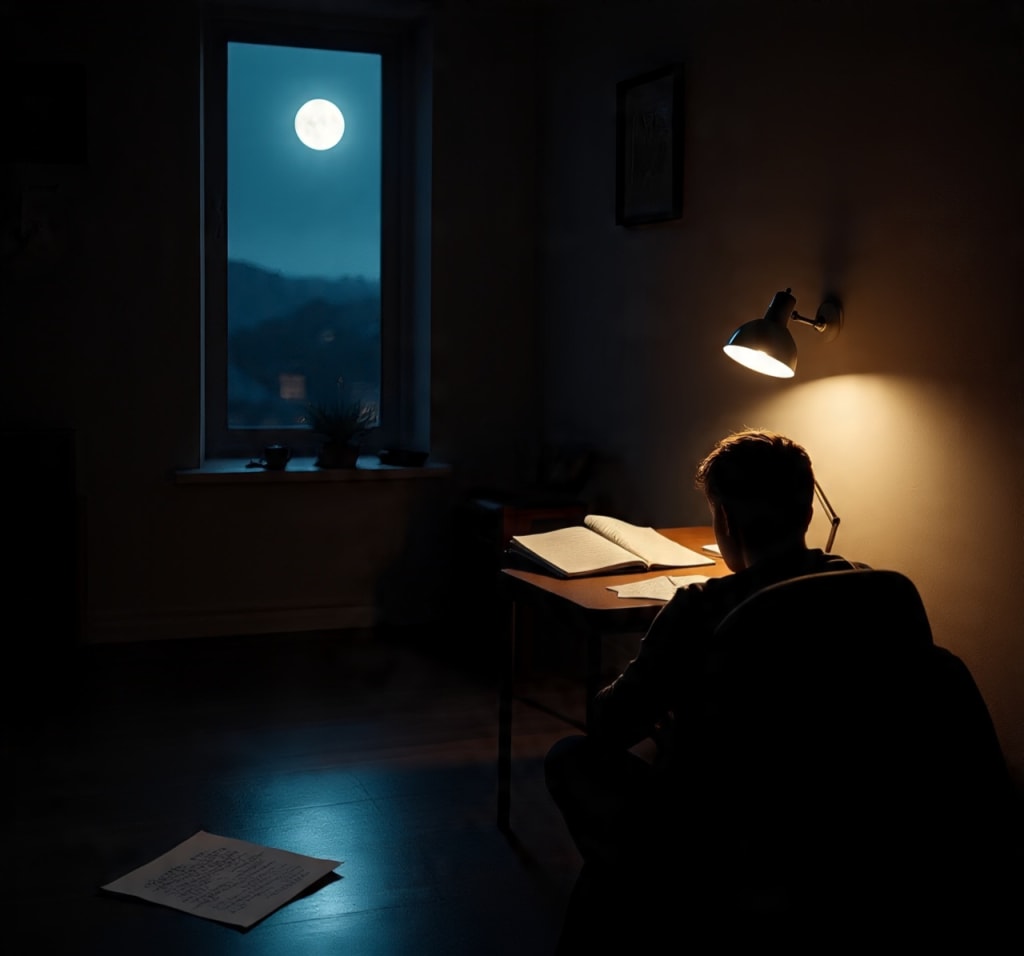
Creativity does not always arrive in bright rooms with clean desks and clear intentions. More often, it slips in quietly—late at night, when the world has dimmed its expectations and the mind is no longer on display. This is creativity in the dark: private, unpolished, and deeply human.
During the day, we are surrounded by witnesses. Notifications blink. Conversations interrupt. Time itself feels supervised. Even our thoughts seem aware they might be judged. We create with an audience in mind, even when no one is physically present. The question is never just What do I want to make? but How will this be received?
Darkness removes that question.
In the dark, creativity stops performing and starts confessing.
Night has a way of softening the ego. With fewer eyes watching, ideas loosen their rigid shapes. Thoughts wander without needing permission. A sentence does not have to be clever. A melody does not have to resolve. A concept does not have to make sense yet. In the dark, unfinished things are allowed to exist.
Psychologically, darkness reduces external stimulation and amplifies the internal world. Without visual noise, the mind turns inward. Memories rise unannounced. Emotions long ignored finally speak. Creativity feeds on this inward attention. It thrives in ambiguity, contradiction, and unanswered questions—things the daylight mind often tries to fix too quickly.
This is why so many people feel most creative at night. Not because the night is magical, but because it is honest. It does not demand productivity. It does not reward speed. It offers stillness, and in that stillness, the mind begins to tell the truth.
Creativity in the dark is also an act of courage. When no one is watching, you are forced to confront what you actually think, not what you wish you thought. You write the sentence you would never say out loud. You explore the idea that feels uncomfortable or impractical. You admit confusion instead of hiding it behind confidence.
And strangely, this is where originality is born.
Original ideas rarely emerge from polished certainty. They emerge from uncertainty—from sitting with questions instead of rushing toward answers. Darkness gives those questions space. It allows doubt to coexist with imagination, fear with curiosity.
Historically, darkness has been painted as something negative: ignorance, danger, the unknown. But creation has always depended on the unseen. Seeds grow underground. Stars shine only when the sky is dark. Even stories begin as silent thoughts before they are spoken aloud.
Creativity follows the same pattern. Before it can be shared, it must first be hidden.
In today’s world, where everything is expected to be visible, shareable, and instantly understandable, this hidden phase is often rushed or skipped. Ideas are posted before they are ready. Art is explained before it is felt. The result is work that may be impressive, but rarely transformative.
Darkness protects the fragile beginning.
It allows you to fail without embarrassment. To experiment without explanation. To create something purely because it feels necessary, not because it fits a trend or earns approval. This kind of creation builds a deeper relationship between the artist and their work. It restores trust in intuition.
Of course, darkness is not always gentle. It can magnify insecurities as easily as insights. It can make silence feel heavy. But even this discomfort has value. Creativity is not born from comfort alone—it is shaped by friction. The dark challenges you to stay present without distraction, to listen without escaping.
The key is intention. Creativity in the dark is not about isolation for its own sake, but about creating a space where honesty can surface. A space where you are not rushing toward an outcome, but paying attention to the process. A space where you allow yourself to be a beginner again.
Eventually, what is made in the dark will meet the light. It will be edited, refined, and shared. Others will interpret it, critique it, and make it their own. But its depth—its emotional weight—will come from the hours when it existed without witnesses.
Creativity in the dark reminds us that art is not born from noise, but from listening. Not from certainty, but from curiosity. Not from being seen, but from seeing ourselves clearly.
And sometimes, the most honest work we ever create begins when the lights are turned off.
About the Creator
LUNA EDITH
Writer, storyteller, and lifelong learner. I share thoughts on life, creativity, and everything in between. Here to connect, inspire, and grow — one story at a time.
Keep reading
More stories from LUNA EDITH and writers in Art and other communities.
When the Work Looks Back
Artists like to believe we are the ones doing the looking. We stand before blank canvases, empty pages, untouched clay, glowing screens—deciding where meaning should begin, convincing ourselves that intention alone is enough. We call ourselves observers, architects, originators. We talk about vision as if it arrives fully formed, waiting patiently for our hands to catch up.
By LUNA EDITHabout a month ago in Art
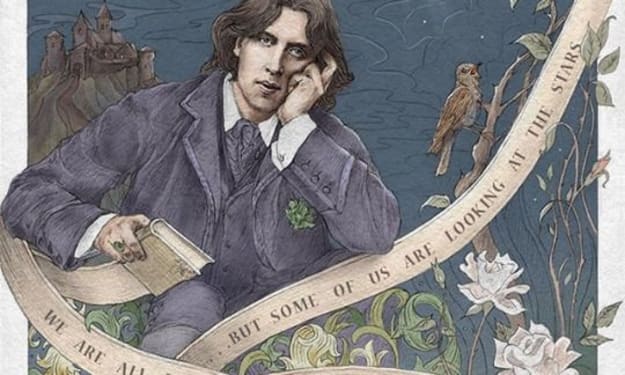
When the Artist Becomes the Art
We like to think we can separate the art from the artist, but can we, really? Art is born from the same place as sin. It mainly emerges from conflict: between what is felt and what is permitted, between the self that is lived and the self that must be hidden. No figure embodies this tension more vividly than Oscar Wilde: a man who transformed his own contradictions into style, wit, and devastating clarity. His novel The Picture of Dorian Gray is not merely a tale of aesthetic decadence but the battleground on which this question is fought.
By Yasmine Lagras2 days ago in Art
Rachel Reviews: The Spiral Archive by Pieter Hendrik
It's difficult for me to know where to start with a review of this book as it was, for me, an entirely unique experience and one that I'll probably never have again. I don't want that to be interpreted as unenjoyable but it has left me scratching my head a little and ruminating on its content, its themes and its characters.
By Rachel Deeming4 days ago in BookClub


Comments
There are no comments for this story
Be the first to respond and start the conversation.