
China’s Bold Step: AI Classes Become Mandatory for 6-Year-Olds Starting This Year
Exploring the Implications, Challenges, and Global Impact of Introducing Artificial Intelligence Education in Early Childhood

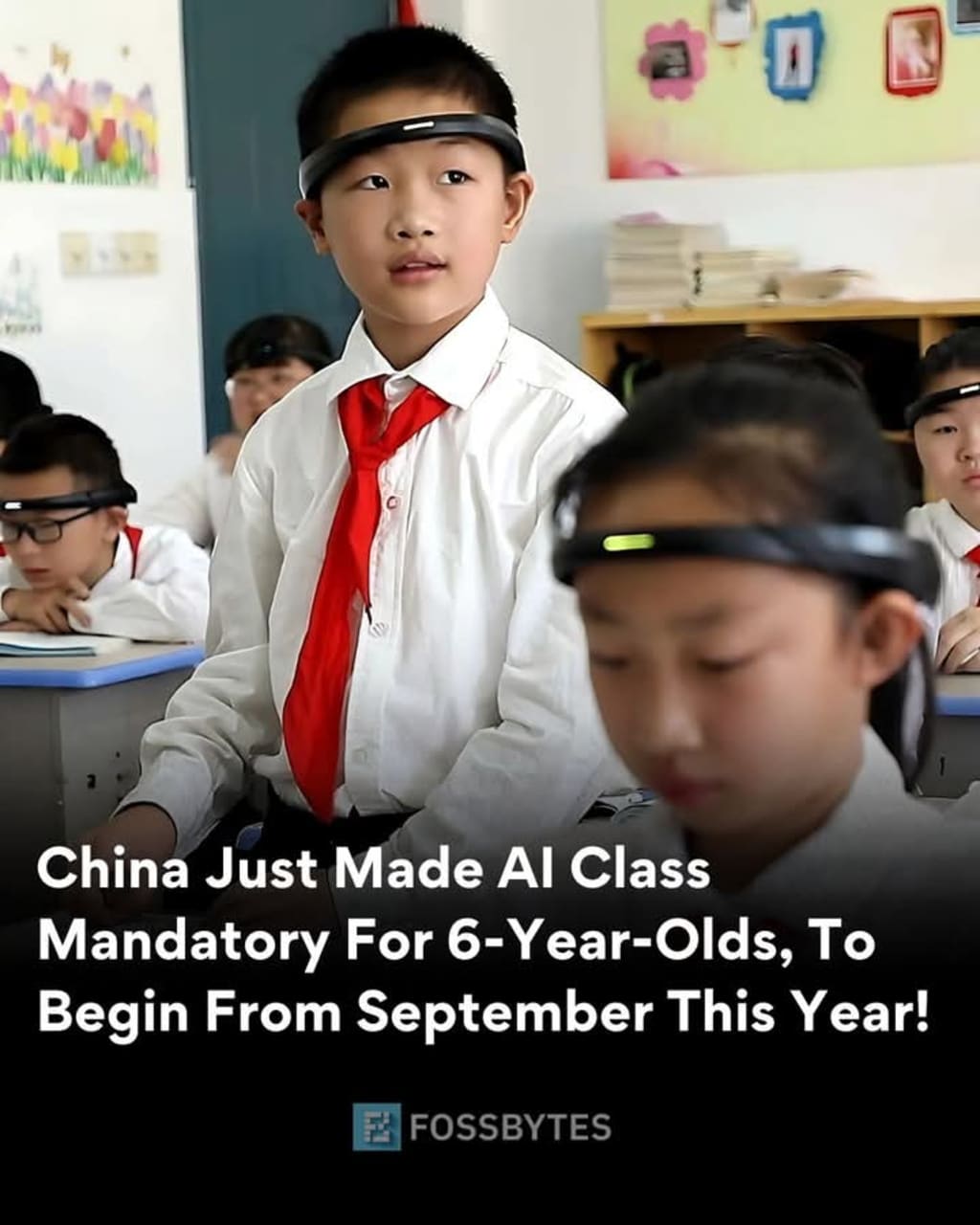
Start writIn a groundbreaking move, China has mandated artificial intelligence (AI) education for children as young as six years old, beginning this September. This initiative highlights the country’s unwavering commitment to advancing its position as a global leader in AI and technology. By introducing AI education at an early age, China aims to nurture a generation capable of understanding, developing, and leveraging AI technologies. This article delves into the significance, potential benefits, challenges, and global implications of this ambitious policy.
The Vision Behind the Initiative
China’s decision to integrate AI education into primary school curricula aligns with its broader national strategy, often referred to as the "New Generation Artificial Intelligence Development Plan." This strategic roadmap, unveiled in 2017, aims to position China as the world’s premier AI hub by 2030. The introduction of AI classes for young children is a crucial component of this plan, ensuring that the future workforce is equipped with the necessary skills and knowledge to thrive in a technology-driven world.
Key Objectives of the Initiative:
1. Early Exposure: Familiarizing children with AI concepts, such as machine learning, neural networks, and data analysis, at a formative age.
2. Skill Development: Building foundational skills in coding, logical reasoning, and problem-solving.
3. Global Competitiveness: Cultivating a workforce that can drive innovation and compete on the international stage.
4. Ethical Awareness: Teaching children about the ethical considerations and responsibilities associated with AI technologies.
The Curriculum: What Will Children Learn?
The curriculum designed for these AI classes is both innovative and age-appropriate. While maintaining a balance between foundational education and technological exploration, the curriculum includes:
Basic Concepts of AI: Simplified lessons on how AI systems work, using relatable examples like voice assistants or smart devices.
Coding Fundamentals: Introducing children to programming languages such as Scratch or Python, tailored for young learners.
AI Applications: Exploring how AI is used in various fields, from healthcare to entertainment.
Hands-On Activities: Encouraging creativity through projects like building simple robots or training AI models to recognize patterns.
Ethics and Safety: Discussing the importance of responsible AI use and the potential risks associated with misuse.
Why Start at Six?
Educational psychologists and technology experts often emphasize the benefits of early exposure to complex subjects. By introducing AI education at six years old, China aims to:
Leverage Neural Plasticity: At this age, children’s brains are highly adaptable, making it an ideal time to introduce abstract concepts.
Foster Lifelong Learning: Early exposure instills curiosity and a willingness to explore advanced topics as they grow.
Bridge the Digital Divide: Ensuring that children from diverse backgrounds have equal opportunities to learn cutting-edge technologies.
Potential Benefits
The long-term advantages of this initiative could be transformative, not only for China but for the global community. Some key benefits include:
1. Enhanced Workforce Readiness: Graduates entering the workforce with a decade or more of AI education will be uniquely positioned to excel in tech-driven industries.
2. Boost to Innovation: A generation of AI-literate individuals could lead to groundbreaking innovations in various fields.
3. Economic Growth: As AI becomes integral to economic progress, an AI-savvy population could significantly boost China’s GDP.
4. Global Leadership: This initiative reinforces China’s role as a trailblazer in technology education.
Challenges and Criticisms
While the initiative is laudable, it is not without challenges and criticisms. Implementing AI education for young children poses several hurdles:
1. Teacher Training: Equipping educators with the knowledge and tools to teach AI effectively is a significant challenge. Many teachers may require specialized training to stay ahead of the evolving curriculum.
2. Resource Allocation: Ensuring that all schools, including those in rural or underprivileged areas, have access to the necessary infrastructure and resources.
3. Cognitive Overload: Critics argue that introducing complex topics like AI at such a young age could overwhelm children and detract from essential subjects like literacy and numeracy.
4. Ethical Concerns: Teaching AI ethics to children is complex, and there is a risk of unintentional biases being instilled.
5. Global Equity: Other nations might struggle to match China’s pace, potentially widening the global digital divide.
Global Implications
China’s initiative could set a precedent for other nations, sparking a global shift in education systems. Countries that fail to adapt might find themselves at a disadvantage in the AI-driven future. However, this also raises concerns about:
International Competition: Accelerating the AI arms race among nations.
Collaboration Opportunities: Encouraging partnerships and knowledge exchange to promote equitable AI education worldwide.
Ethical Frameworks: Establishing global standards for AI ethics and safety in education.
What Can Other Countries Learn?
China’s approach offers valuable lessons for other nations:
Invest in Teacher Training: Building a robust network of educators well-versed in AI.
Focus on Accessibility: Bridging the urban-rural divide to ensure equal learning opportunities.
Incorporate Ethics: Embedding responsible AI use and ethics into the curriculum.
Foster Public-Private Partnerships: Leveraging collaborations with tech companies to enhance educational resources.
The Role of Parents and Society
Parental involvement and societal support are crucial for the success of this initiative. Parents must:
Encourage Exploration: Supporting children’s curiosity and engagement with AI topics.
Monitor Screen Time: Balancing technology use with other developmental activities.
Promote Critical Thinking: Helping children question and understand the implications of AI technologies.
Conclusion: A Bold Step Toward the Future
China’s decision to mandate AI education for six-year-olds is a visionary step that reflects the country’s commitment to technological advancement. While challenges remain, the potential benefits far outweigh the risks. As the world watches this ambitious initiative unfold, it’s clear that the integration of AI education into early childhood curricula could redefine the future of learning and innovation globally.
By investing in the next generation, China is not only shaping its own future but also influencing the trajectory of global technological progress. Other nations must take note and adapt to ensure they remain competitive in this rapidly evolving landscape.
ing...
About the Creator
Jackson
Start writI ..
Reader insights
Nice work
Very well written. Keep up the good work!
Top insight
Eye opening
Niche topic & fresh perspectives
Keep reading
More stories from writers in Art and other communities.
'Till Death We Do Art
There would be nothing divine in this world without art. Nature may surpass the divine to all intents and purposes, but like everything it absorbs and is absorbed by, it remains here, stuck on the surface of this world, ever-present, physically bound to the universe.
By Avocado Nunzella BSc (Psych) -- M.A.P 24 days ago in Art
The Great Museum Scandal: Half of the Artworks in French Museums Found to Be Fake
France is home to some of the most famous museums in the world, attracting millions of visitors each year who come to admire priceless works of art and historical artifacts. However, a recent investigation has sent shockwaves through the art world after suggesting that a significant number of artworks displayed in certain French museums may actually be fake.
By Irshad Abbasi 3 days ago in Art
A Transparent Look at Vocal Challenges and Top Stories
Almost three years ago, we shared a resource article that served as a place for people to suggest new challenge prompts. We thought it would be a good idea to refresh that thread, and take the opportunity to answer a few common questions about top stories, how challenges are judged and how submissions are reviewed.
By Vocal Curation Teamabout 17 hours ago in Resources




Comments (11)
Nice to read "Love is not only in the light, it deepens in the silence of the night. "Good night" is said in silence most of all."
Nsnshdg
Sjdhhdhd
Shhs
Jjjjjj
🌹🌹🌹🌹
♥️♥️♥️♥️
I'm going
So beautiful
Very good
$$$$