
Bi'an
The Judicial Guardian and Metaphor of Justice under the Majesty of the Dragon Son

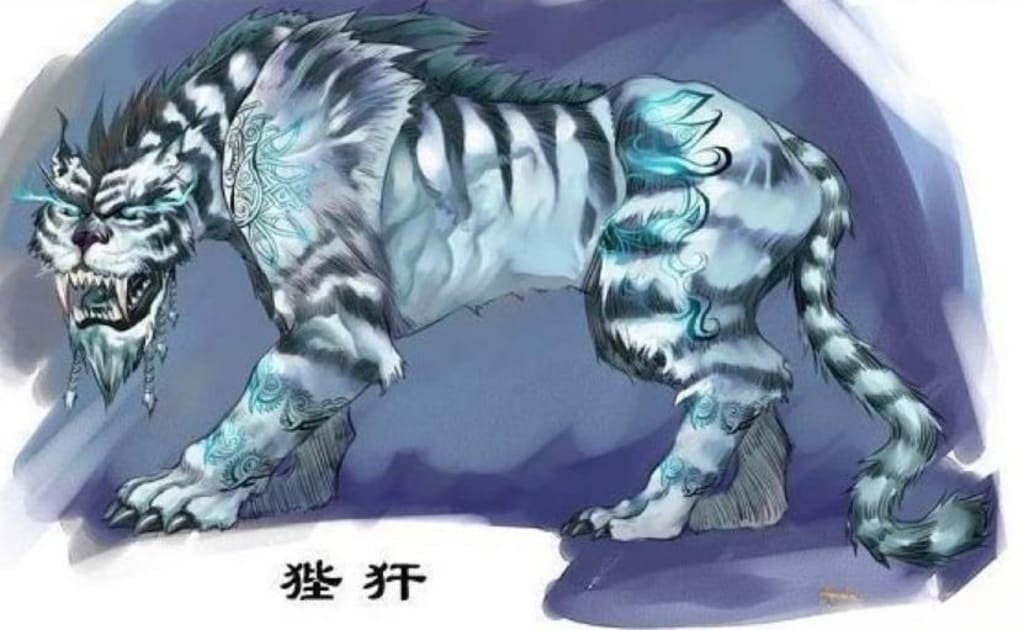
In the 谱系 of mythical beasts in traditional Chinese culture, Bi'an (bì àn) stands out as a highly recognizable figure. As one of the "nine sons of the dragon," unlike Qiuniu, which exudes elegance, or Yazi, known for its ferocity, Bi'an has become a symbol of judicial culture with its unique mission of "guarding justice." Although there are no records of Bi'an in Shan Hai Jing (Classic of Mountains and Seas), over the course of a thousand years of cultural evolution, it has transitioned from a folk legend to a prominent presence in the halls of power, gazing with its majestic eyes upon humanity's eternal pursuit of fairness.
I. Etymological Exploration: The Identity Mystery from "Xianzhang" to "Bi'an"
The origin of Bi'an can be traced back to the worship of the "god of prisons" in the Pre-Qin period. Xiezhi, recorded in Shuowen Jiezi (Explaining Graphs and Analyzing Characters), is also a mythical beast associated with justice, and the two are often confused. However, clear records of Bi'an are more commonly found in Ming and Qing dynasty literature. In the Dragon Canon of the Ming Dynasty, Bi'an was first listed as one of the dragon sons, described as "resembling a tiger in shape, possessing great power, and thus positioned at the prison gates." The Sancai Tuhui further elaborates that "it has a natural inclination towards litigation and wields great power, hence it is placed on both sides of the prison gates." Regarding the name "Bi'an," one theory suggests that it is a homophone of "Xianzhang" (meaning law or charter), hinting at its connection to the judiciary. Another theory posits that "Bi" is an ancient variant of "Bi" (referring to the steps of a palace), and "An" denotes a fierce dog, collectively signifying a mythical beast that guards authority.
Unlike the mythical beasts in Shan Hai Jing, which originated from nature worship, Bi'an is a quintessential example of a "culturally constructed mythical beast." Its image combines the 威慑力 of a tiger, the noble lineage of a dragon, and humanity's imagination of judicial fairness, making it a spiritual totem of the ritual and legal society.
II. Decoding the Image: The Gaze of Justice at the Prison Gates
The typical characteristics of Bi'an can be summarized into three aspects:
1. Appearance: A Majestic Combination of a Tiger's Body and a Dragon's Head
Tiger-like Body: Its streamlined body adorned with mottled tiger stripes symbolizes strength and intimidation, aligning with the traditional perception of "the tiger as the king of beasts."
Dragon-like Head: With horns on its head (or sometimes hornless), prominent brow ridges, and wide-open eyes, it retains the divine features of the dragon lineage.
Dignified Posture: It is often depicted in a squatting position, with its front paws resting on the ground, gazing forward as if scrutinizing the good and evil in the world.
2. Habitat: The Spatial Migration from the Wilderness to the Halls of Power
Unlike other dragon sons that inhabit objects such as the heads of musical instruments or the knobs of bells, Bi'an's "exclusive domain" is ancient judicial sites:
Above Prison Gates: During the Ming and Qing dynasties, the heads of Bi'an were frequently carved on the main gates of prisons to inspire awe and warn criminals against illegal activities.
In Courtrooms: In some yamen (government offices), the patterns of Bi'an were also engraved on screens and gavel-like objects, symbolizing that officials should be as discerning as Bi'an when adjudicating cases.
At the Bases of Inscribed Tablets: Under stone tablets recording criminal laws, Bi'an often appears alongside Bixi (another son of the dragon), reinforcing the sacredness of the law.
3. Core Divinity: The Judicial Attribute of "Loving Litigation and Distinguishing Right from Wrong"
Bi'an's divinity does not stem from natural forces but is a projection of human social rules. Legend has it that it can distinguish between good and evil, loyalty and treachery. In case of disputes, it will butt with its horn those in the wrong, similar to the function of Xiezhi, which "butts the unjust." This imagination of "judgment by mythical beasts" essentially reflects the ancient judiciary's yearning for "objective justice." In an era with imperfect evidence systems, the authority of mythical beasts was invoked to enhance the credibility of judgments.
III. Cultural Metaphors: The Semiotics of Justice in a Ritual and Legal Society
The evolution of Bi'an's image aligns with three major logics of traditional Chinese legal culture:
1. The Governance Philosophy of "Virtue as the Mainstay and Punishment as the Supplement"
Although Bi'an symbolizes punishment, it is not purely cruel. Its squatting rather than pouncing posture implies that "punishment is a supplement to moral education." As stated in The Book of Rites, "Rites prevent misdeeds before they occur, while laws punish misdeeds after they have happened." The presence of Bi'an serves as both a deterrent and a call for compliance with rituals and laws.
In the Da Qing Huidian of the Qing Dynasty, it was stipulated that prisons must be painted with images of Bi'an and posted with Imperial Edicts and Extensive Instructions, which is a concrete manifestation of the integration of rituals and laws.
2. The Legitimacy of the Judiciary Based on "Correspondence between Heaven and Man"
The ancients believed that mythical beasts were messengers of the will of heaven and earth. As a "son of the dragon," Bi'an naturally fits into the logical chain of "divine right of kings." When officials adjudicated cases under the gaze of Bi'an, it was not only the enforcement of earthly laws but also a sacred mission to act on behalf of heaven. This construction effectively strengthened judicial authority.
3. Educational Warning through Visualization
For ordinary people, Bi'an is an intuitive symbol of the law. In ancient times, when literacy rates were low, the carvings of mythical beasts on the gates of yamen and the patterns of Bi'an on torture instruments replaced obscure legal provisions. They conveyed the concept of "violations of the law will be punished" in a visual manner, achieving the educational effect of "being deterred by the image and fearing the law."
IV. Modern Transformation: The Spiritual Link from Mythical Beast to the Rule of Law
In contemporary society, the symbolic meaning of Bi'an has undergone creative transformation:
1. The Incarnation of Justice in Literary and Artistic Works
In the TV series Judge Bao, the reliefs of Bi'an frequently appear in Kaifeng Prefecture, becoming a visual symbol of "the upright judge's adjudication."
In martial arts novels, the tokens of certain sects or the decorations of their courts often feature the pattern of Bi'an, implying their "righteousness in upholding justice in the martial arts world."
2. Traditional Resources for the Civilization of the Rule of Law
Bi'an's pursuit of "distinguishing right from wrong" resonates across time and space with modern judicial concepts such as "procedural justice" and "equality before the law." In 2019, when a certain court used elements of Bi'an on the cover of its judgment documents, it sparked widespread discussion. This was not only a tribute to traditional culture but also demonstrated the spirit of the rule of law, "justice as clear as water, majesty as steadfast as a mountain."
3. The Reconstruction of Symbols for Cultural Identity
As the image of Themis, the Western goddess of justice, was introduced to China along with legal studies, Bi'an has become an iconic symbol of the local judicial culture. It reminds us that the pursuit of fairness and justice has diverse cultural expressions. Just as Themis holds a balance and a sword, the gaze of Bi'an also carries humanity's eternal yearning for good laws and good governance.
Conclusion: The Eternal Inquiry in the Gaze
From the weathered carvings on Ming and Qing dynasty prison gates to the cultural decorations in modern courtrooms, the gaze of Bi'an has never left human society. Although not an original mythical beast from Shan Hai Jing, it has found a unique position in the cultural long river. It is not only a deterrent but also a guardian; it represents tradition and serves as an ancient footnote to modernity. When we look at the image of Bi'an, we see not only the majesty of the dragon son but also a civilization's continuous contemplation of "what is justice." How can the law maintain its deterrent power while also retaining rationality and compassion? Perhaps the silent posture of Bi'an has already provided the answer - true justice lies in always keeping a discerning eye, looking not only at evil but also at the human heart.
In the current construction of the rule of law, the legend of Bi'an should not remain confined to ancient books. It reminds us that every upholding of fairness and every call for justice is the best tribute to this ancient mythical beast. After all, humanity's pursuit of a beautiful order has always been a relay race spanning thousands of years.
About the Creator
hello-word
As a Chinese person, love for the culture of my own country. Nowadays, the global exchange of information is becoming increasingly rapid. I also hope that more people can gain a deeper and more detailed understanding of Chinese culture.
Keep reading
More stories from hello-word and writers in Art and other communities.
Feiyi Bird
Among the bestiary of Shan Hai Jing (Classic of Mountains and Seas), the Feiyi bird stands as one of the most controversial creatures. Unlike the Zhulong, which controls the cycle of day and night, or the phoenix, which symbolizes auspiciousness, the Feiyi bird is regarded by ancient people as an omen of disaster due to its association with drought. This seemingly ordinary yellow bird has left a profound mark between myth and reality with each flap of its wings. Behind its legend lies the ancient people's rudimentary understanding of climate change and their eternal contemplation of the relationship between humanity and nature.
By hello-word11 months ago in Art
'Till Death We Do Art
There would be nothing divine in this world without art. Nature may surpass the divine to all intents and purposes, but like everything it absorbs and is absorbed by, it remains here, stuck on the surface of this world, ever-present, physically bound to the universe.
By Avocado Nunzella BSc (Psych) -- M.A.P 16 days ago in Art
The Dress That Broke the Internet Was Gold and Nobody Could Agree on Why
She walked into the room and everything stopped. Not because of her confidence or music that was playing, though there was plenty of that. Everything stopped because of the dress. Floor-length, liquid, blazing gold, it caught every light in the room and threw it straight back.
By CurlsAndCommasabout 11 hours ago in Art




Comments
There are no comments for this story
Be the first to respond and start the conversation.