

Michelangelo Merisi da Caravaggio was a creative Baroque artist simply known as Caravaggio. His paintings were characterized by a strong contrast between light and shadow. The artist studied art under Simone Peterzano, a well-known painter at that time in Milan. Caravaggio invented tenebrism, a renowned style in Baroque painting. This approach is distinguished by its use of mostly black tones and shadows combined with spectacular light contrast effects. Caravaggio is often referred to as the “Father of Painting.” His influence may be seen both directly and indirectly in the work of Rubens, Jusepe de Ribera, Bernini, and Rembrandt.

Bacchus is an oil painting created about 1596. It was commissioned by Cardinal Del Monte. In the painting, Bacchus is depicted as a youngster, lounging with grapes and vine leaves in his hair. A dish of fruit and a carafe of red wine are before him on a stone table. He invites those viewing the artwork to join him, holding out a cup of wine. Caravaggio created this painting after entering the household of the cardinal, who was an enthusiast of traditional Greek mythology.
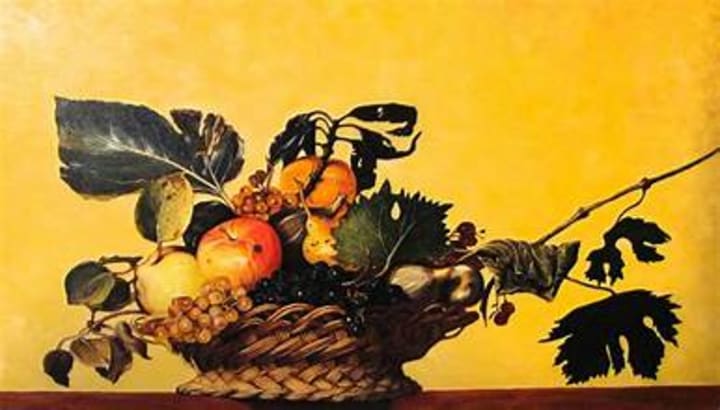
Basket of Fruit is considered to be one of the best fruit paintings ever created. Caravaggio created it in 1599, and it is one of the artist’s rare still life paintings. At first the fruit looks tempting and realistic, but then upon closer inspection, some leaves can be seen chewed through, and most of the fruit, including the grapes, seems to have passed its ripening point and is beginning to rot.
David with the Head of Goliath is an interesting painting, which some art historians consider to be a self-portrait of Caravaggio. (pictured above) The severed head of Goliath apparently depicts the artist as an adult. In the artwork the head of Goliath is seen hanging from David’s gloved hand. His weapon was not the sling accounted for in the Bible but Goliath’s own sword, which David used against him. The inscription on the blade reads H-AS OS, which is an acronym for the Latin phrase “humilitas occidit superbiam” (“humility slays pride”).
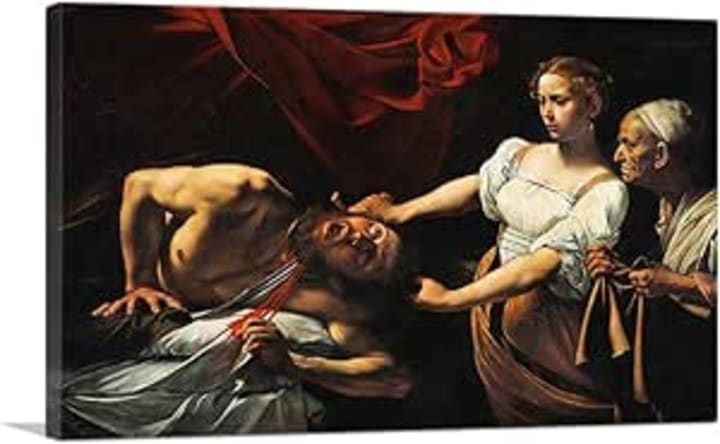
Judith Beheading Holofernes is a notable artwork in which Caravaggio is known for accentuating the contrast between light and darkness, which mostly represented good and evil in his most famous artworks. This piece was completed in 1599 and is based on the Old Testament story of Judith slaying the Assyrian monarch Holofernes by luring him into a false sense of security. The painting depicts the horror of Holofernes knowing his fate is at the hands of a beautiful lady like Judith Abra, as her elderly maid standing behind her hold a blanket probably meant to conceal Holofernes’ face.
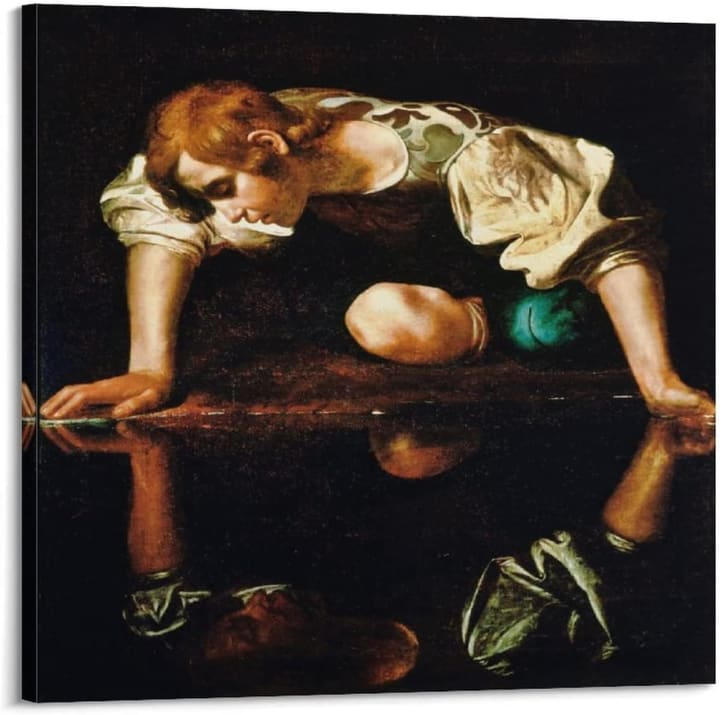
Narcissus is an artwork painted between 1597 and 1599. This painting depicts a scene from classic mythology. In the Metamorphoses by Ovid, Narcissus is a handsome young man who falls in love with his own reflection. He succumbs to his desire, unable to pull himself away, and even as he crosses the Styx, he continues to look at his mirror.

The Beheading of St. John the Baptist is an oil painting depicting the beheading. It is known for the artist’s use of chiaroscuro, as the big canvas emphasized vibrant red and warm golden hues that were associated with the Baroque era. The artwork portrays St. John the Baptist being executed with a servant girl standing by with a platter to place his head on.

The Calling of St. Matthew is a painting by Caravaggio recognized by its use of light and dark. The artist completed it in 1600, depicting a Biblical scene where Jesus asks Matthew to follow him. Jesus is depicted gesturing to Matthew, who is seated at the table of Roman tax collection, a vocation frowned upon by Jewish people of that period.
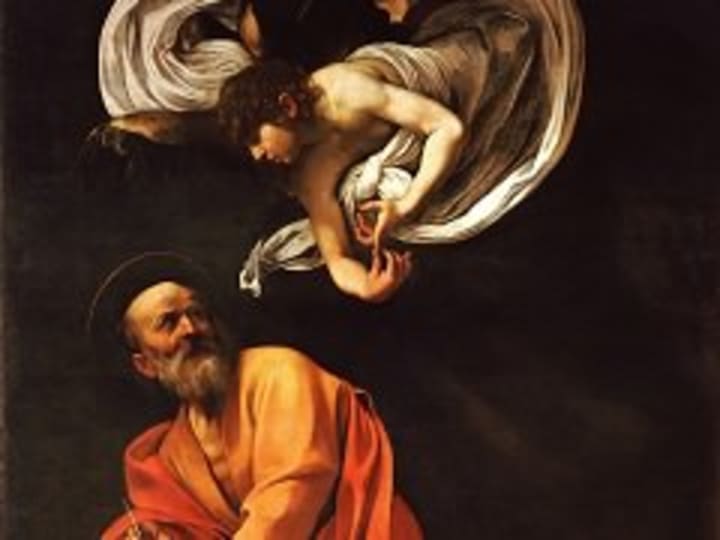
The Inspiration of Saint Matthew, created in 1602, is the final panel in Caravaggio’s cycle for the Contarelli Chapel in Rome. It depicts Saint Matthew writing his Gospel, guided by a hovering angel. The artist’s dramatic use of light highlights the connection between the earthly and the divine.
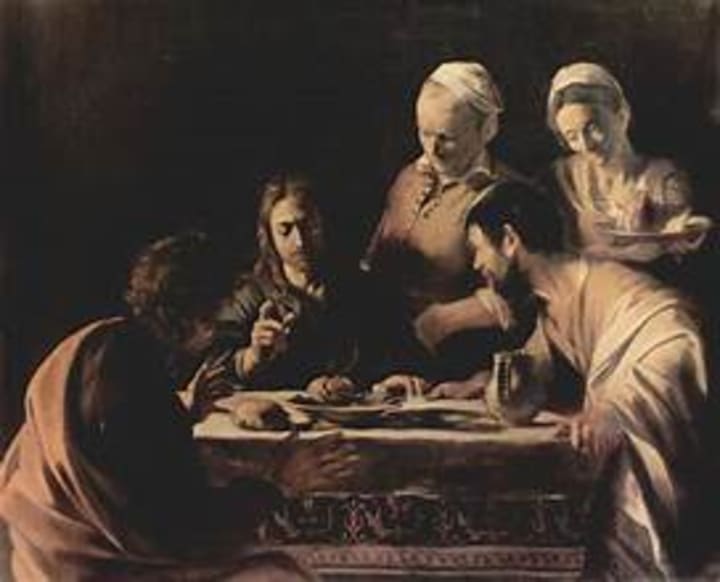
The Supper at Emmaus is an oil painting created in 1601. The artwork depicts the moment when the resurrected but disguised Jesus appears to two of his followers in the village of Emmaus, only to quickly disappear from their view. Cleopas is dressed in a pilgrim’s scallop shell, and the other apostle is dressed in ragged garments. The characters appear on a dark, blank backdrop. There is a basket of food on the table.
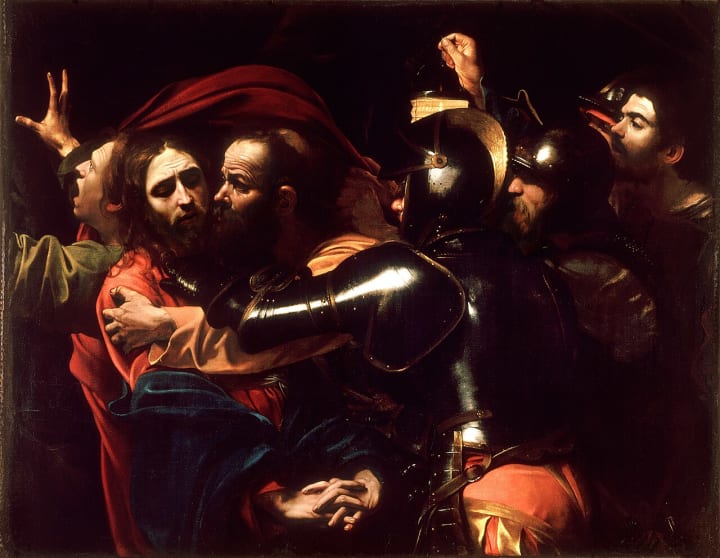
The Taking of Christ is a notable painting created in 1602 for the Roman Marquis Ciriaco Mattei. In this artwork Caravaggio depicts a Bible story by putting the characters close to the picture plane while using a sharp contrast between light and dark. In the painting, temple guards approach to capture Christ, whom Judas has identified with a kiss. St. John the Evangelist is fleeing, and the scene is only illuminated by moonlight. Christ was apprehended by members of the Jewish hierarchy who would ultimately execute him.
About the Creator
Rasma Raisters
My passions are writing and creating poetry. I write for several sites online and have four themed blogs on Wordpress. Please follow me on Twitter.
Keep reading
More stories from Rasma Raisters and writers in Art and other communities.
'Till Death We Do Art
There would be nothing divine in this world without art. Nature may surpass the divine to all intents and purposes, but like everything it absorbs and is absorbed by, it remains here, stuck on the surface of this world, ever-present, physically bound to the universe.
By Avocado Nunzella BSc (Psych) -- M.A.P 24 days ago in Art
Keto and Kote
This story has been sitting in my drafts for a long time because I didn't have good pictures for it. Murphy's law: I went to the performance with my phone discharged. But then I found the entire performance on YouTube and am now delightfully happy to share it with you.
By Lana V Lynx3 days ago in Art
The Politics of Playing Dress-Up
Well, to start off I'd like to say a happy world book day to all who celebrate. I know I haven't really posted anything on my socials about it but I'm not a jubilant kind of person. I lay low most of the time. Let's start off with a popular anecdote from the vaults...
By Annie Kapur7 days ago in Geeks



Comments
There are no comments for this story
Be the first to respond and start the conversation.