

Georges Braque, a French Fauvist artist who was close to Spanish artist Pablo Picasso, first embraced this art movement in the first decade fo the 20th century. The artist incorporated vivid and unnatural colors in his artworks. Later, he created some of the most well-known Cubist paintings in history. His works of art make it interesting as a mix of Fauvism and Cubism, whereas other artists choose just one.

In the still-life painting, Balustre et Crane, Braque personified the “Vanitas” sub-genre of the art. The word originates from the Latin word for vanity. It reminds us that we are all mortal. The skull that the artist incorporated into this artwork is the primary component of this genre.

Braque’s monumental artwork, The Birds, or Les Oiseaux, depicts a few birds soaring in a dark blue sky with three stars and a moon. The artist’s statement, “In art, there is only one thing that counts: the bit that cannot be explained,” serves as an explanation for this piece of art.
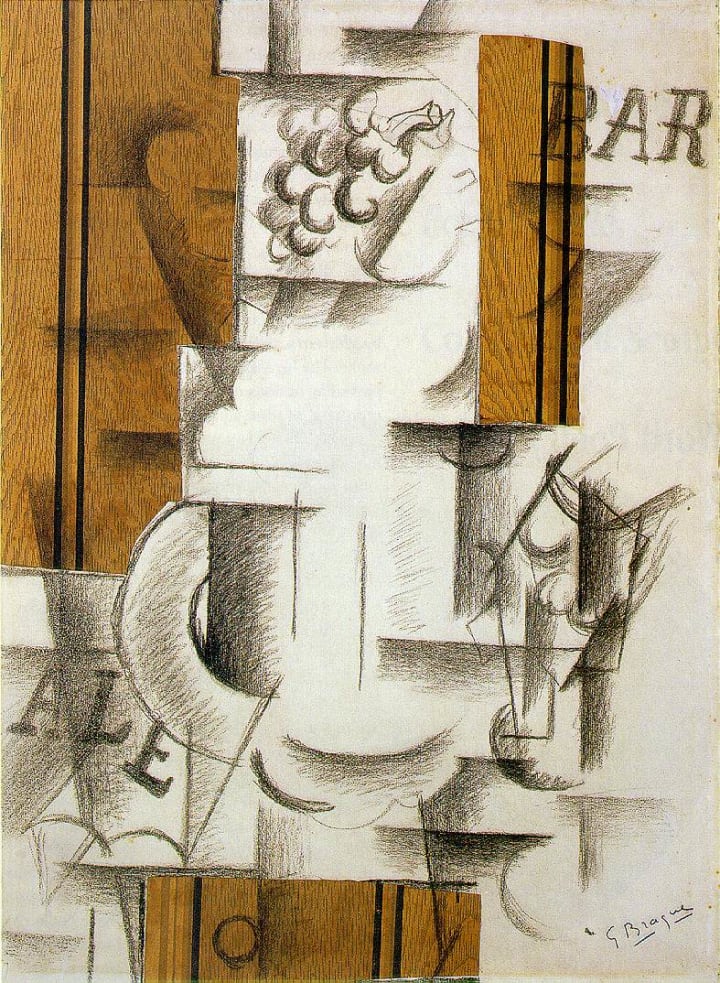
Braque referred to Fruit Dish and Glass as his “first papier collé.” Unlike a typical collage that also uses additional materials, this sort of collage just uses paper as a medium. To produce extraordinary effects, the artist disassembled the glass bowl containing the grapes and pears and used an incredible trompe l’oeil method.
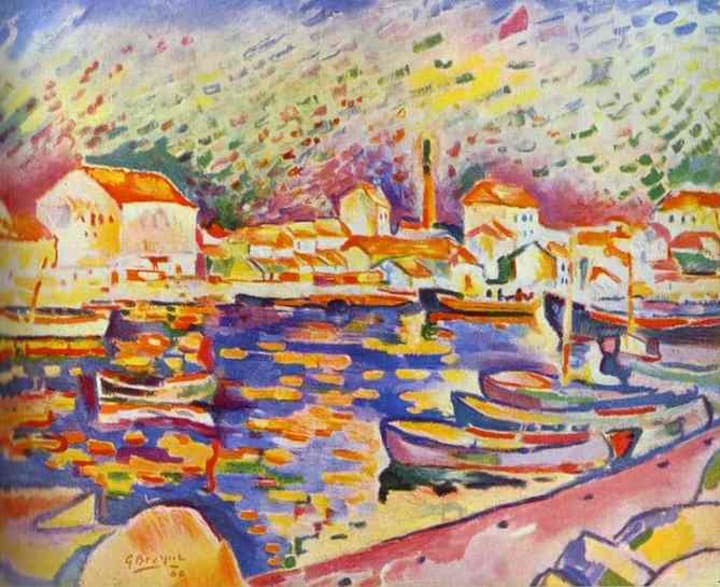
One of Braque’s most significant paintings is Houses at l’Estaque. This is the artist’s earliest Cubist landscape and an artwork of proto-Cubism. It established the groundwork for the Cubist painting style, in which components are broken up and put back together to create amazing compositions.
The artist painted Landscape Near Antwerp soon after his first art exhibition, (pictured above) After visiting Antwerp, a significant port city in Belgium, Braque began using the vivid color palette of Fauvist painters incorporating this into his paintings.

Around 1908, Braque embraced the early Cubist style, which is shown by Little Harbor in Normandy. Together with Pablo Picasso, he created the Cubist style at this time, a partnership that continued until Braque was inducted into WWI. The painting depicts an amazing view of a port in northwest France’s Normandy region.

Man with a Guitar is a painting that is the epitome of Analytical Cubism. During this period the style of Picasso and those of French artists could hardly be distinguished one from the other. Braque managed to create the sense of three-dimensional space. A reminder that this is not your typical painting, and you don’t really see what you expect to see.
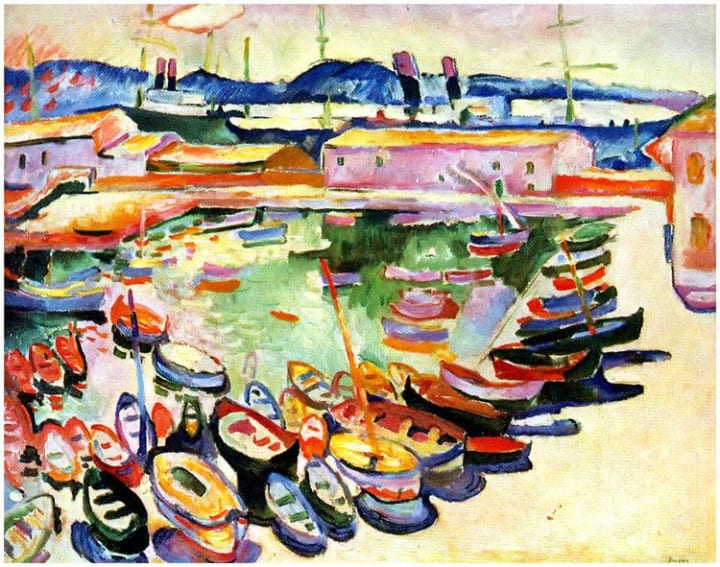
Port of La Ciotat was a painting the artist completed after he had traveled from Antwerp to L’Estaque in southern France. The painting depicts the port of a town called La Ciotat. His brushstrokes had become more refined, but the unnatural color scheme remained the same through this period in his art career. It was this experimental nature that made him one of the most important artists of this period in the history of art. The artist did no let just one form contain him.

The Round Table exemplifies the artistic style of Braque between the two World Wars. This painting depicts a round French pedestal table known as a “gueridon” completely full of objects. When viewing, there is much to take into perspective in this painting.
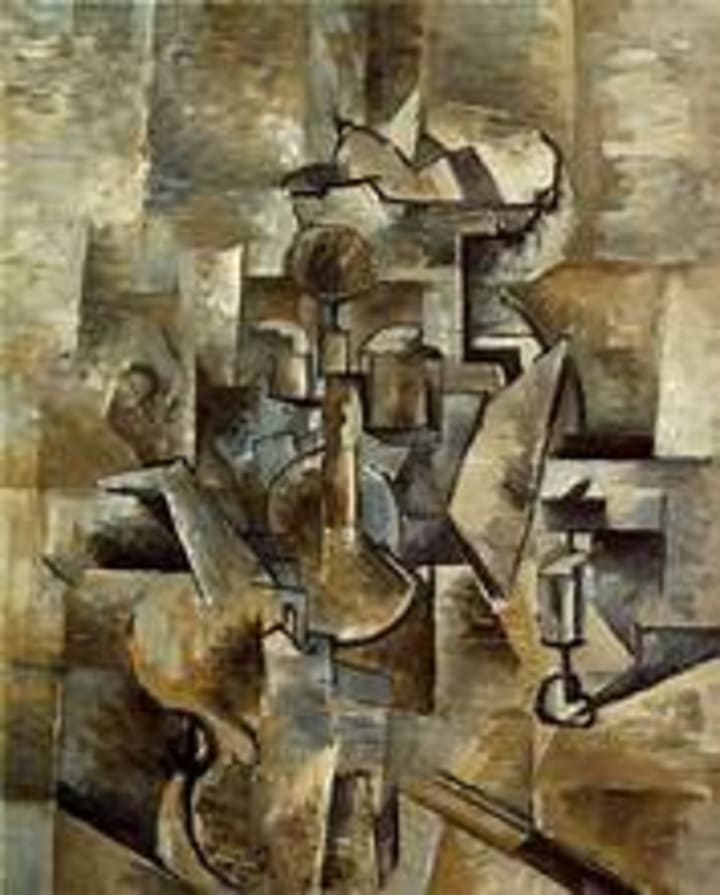
Violin and Candlestick is a painting that highlights the development of Cubism. Braque depicted three-dimensional objects on a flat canvas. This was achieved by reconstructing elements that they fragmented to the point where they became unrecognizable. This artwork is a prime example of Analytical Cubism, where the violin can be distinguished but harder to make out the candlestick.
About the Creator
Rasma Raisters
My passions are writing and creating poetry. I write for several sites online and have four themed blogs on Wordpress. Please follow me on Twitter.
Keep reading
More stories from Rasma Raisters and writers in Art and other communities.
The Duelist
The rays of a dying red sun flashed against the onrushing blade. The grey beards say the key to dueling lies in size, speed, reach, righteous fury, whatever the person in front of them pays them to say. Matteo knew better than any it was none of these and had an undefeated record on these sands to prove it.
By Matthew J. Fromma day ago in Fiction



Comments
There are no comments for this story
Be the first to respond and start the conversation.