
Best Artwork by Henri Matisse
Fauvism artist

French Fauvist artist Henri Matisse was recognized for his use of color and unique draughtsmanship. The artist was responsible for key innovations in painting and sculpture.
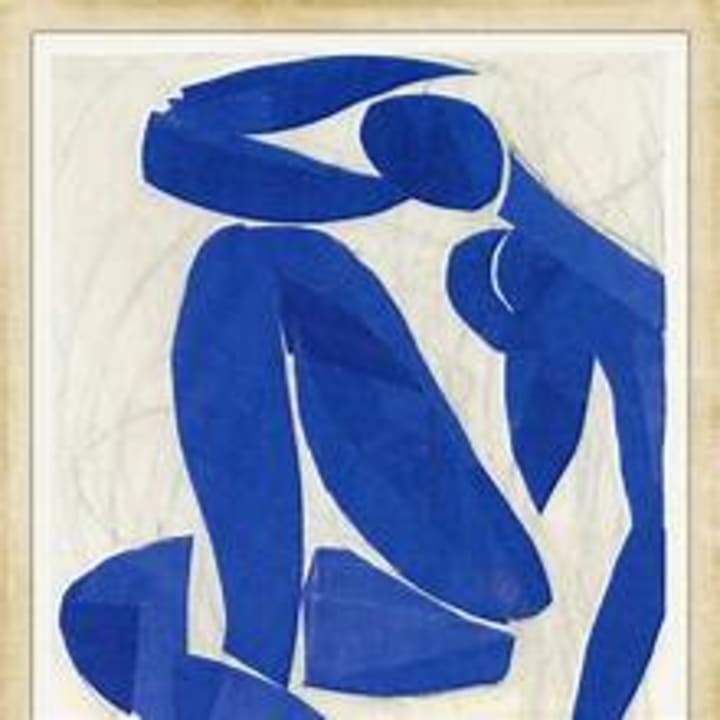
Blue Nudes is a series of color lithographs that were constructed from cut-outs representing naked figures in different poses. Blue Nude IV was the first of the four nudes where Matisse settled on his favorite stance: intertwined legs and an arm stretched behind the neck. Blue Nude II was completed in 1952 and is the second of the series. The artist associated the blue color with distance and volume.
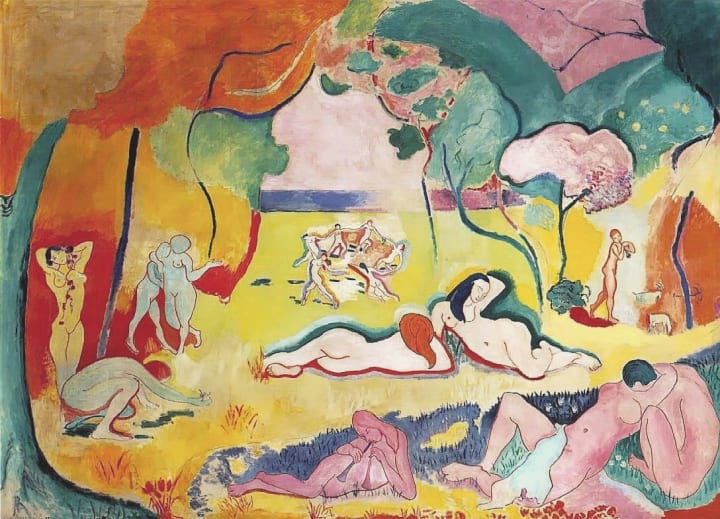
Le Bonheur de Vivre, or The Joy of Life, is a painting recognized as one of the foundations of early modernism. The artwork depicts naked ladies and men frolicking, playing music, and dancing in a brightly colored countryside. By the 1920s, this painting was recognized as a contemporary masterpiece.
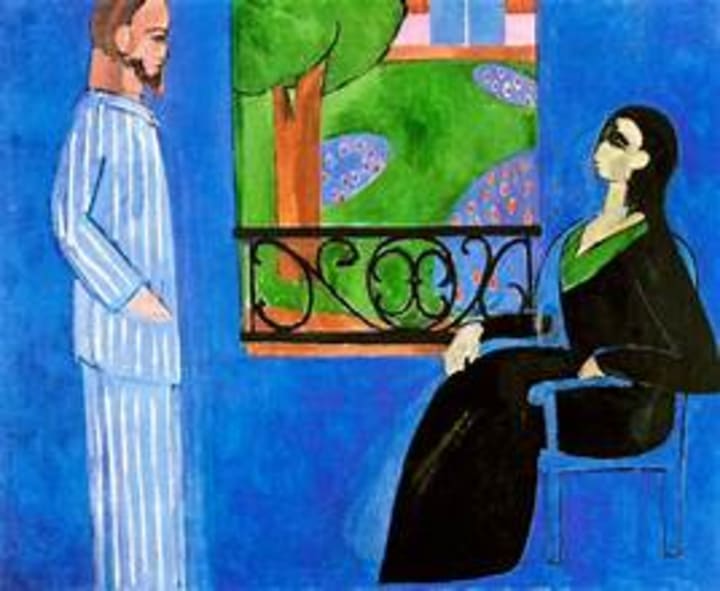
The Conversation is an artwork created from 1908 to 1912. The painting depicts the artist and his wife confronting each other against a vivid blue background. This artwork was created at a time when the artist had abandoned the wide, spontaneous brushwork of his Fauvism phase in favor of a flatter, more ornamental look. In the portrait, Maisse is standing to the left in striped pajamas, while his wife, Amelie, is sitting to the right. Through the window the garden can be seen. Matisse’s pajamas were popular as leisure wear in early 20th-century France. They had been imported to Europe from India, where tea growers wore them, and Matisse wore pajamas as his studio working attire for the rest of his life.
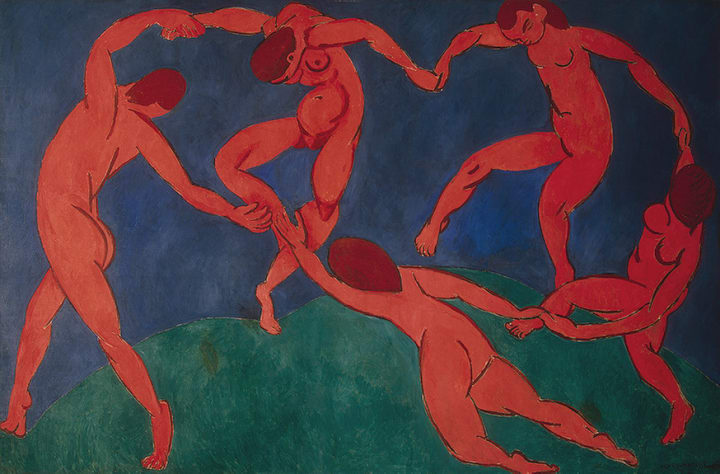
Dance is one of the most famous works of contemporary art. The painting looks to be primitive in form and makes use of three colors, which was emblematic of the Fauvist movement. This artwork was commissioned in 1910 by a wealthy Russian collector. The painting depicts a circle of nude people dancing and holding hands against a dark blue and green background.
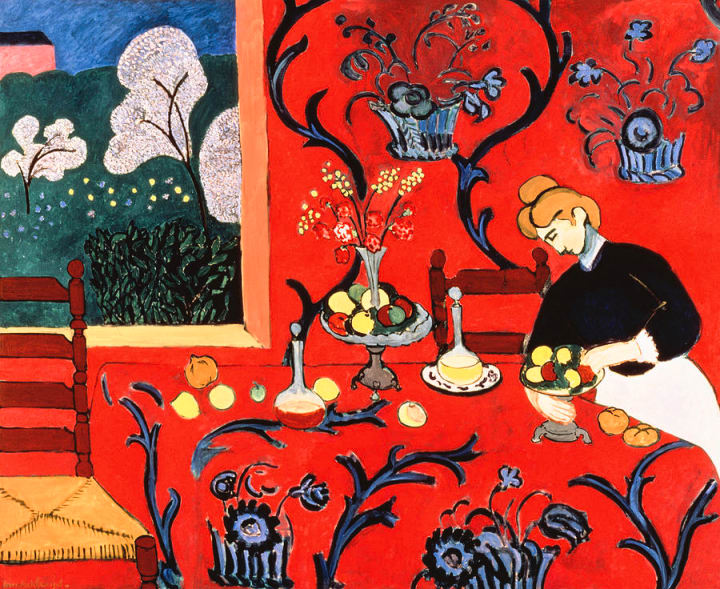
The Dessert: Harmony in Red is a painting created in 1908. It is regarded as one of Matisse’s masterpieces. With the general absence of a distinct focal point, this Fauvist painting follows the model established by Impressionism.
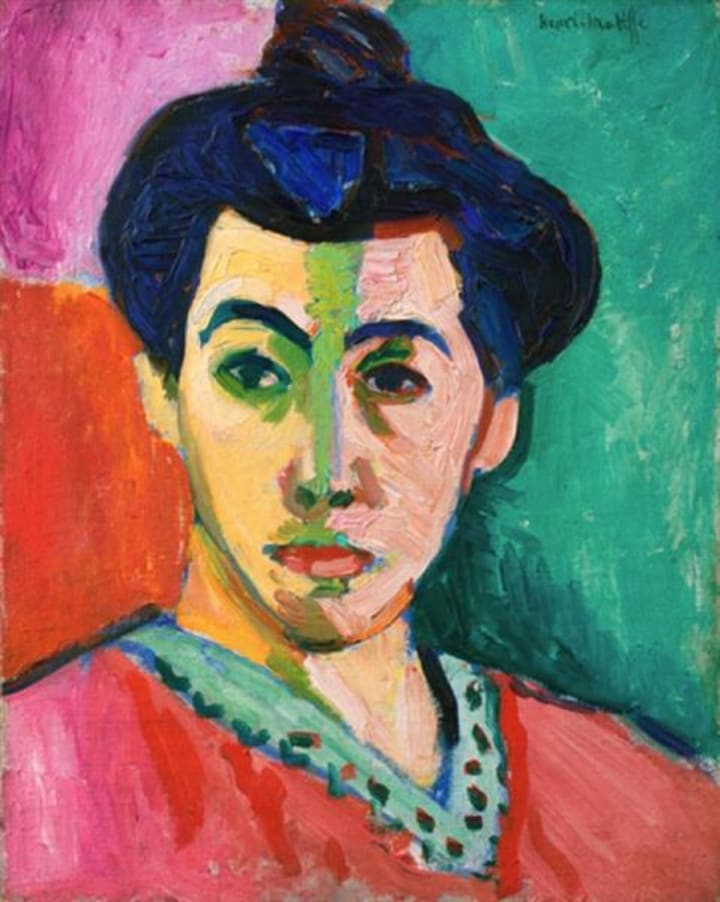
The Green Line is often referred to as Madame Matisse’s Portrait. Matisse painted his wife, Amelie Noelle Matisse-Parayre. This oil-on-canvas was created in 1905. A green stripe separates the face in half, which Matisse used to create a feeling of light, shadow, and volume without using conventional shading.
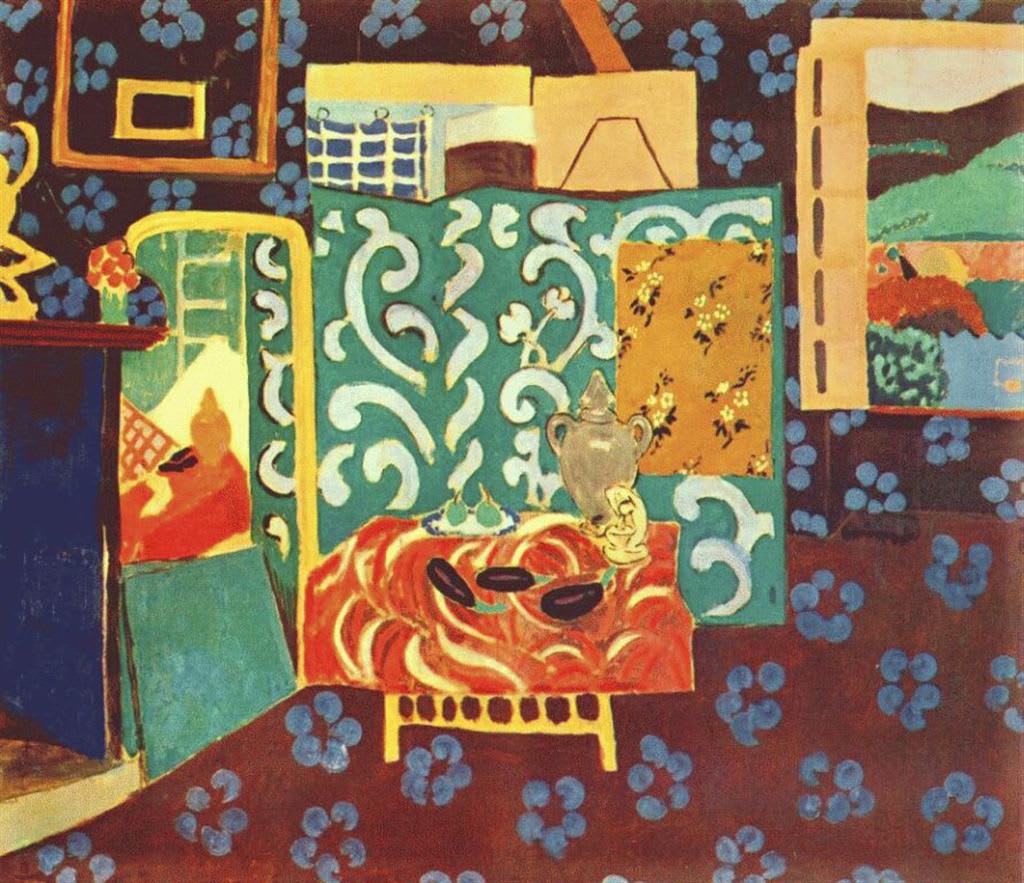
Interior with Aubergines is a patterned and vibrant painting that reflects the artist’s interest in decorative composition. (pictured above) The aubergines on the table are a visual draw, contrasting with the vivid reds, blues, and florals surrounding them. The entire scene is a celebartion of color and ornamental beauty, which was influenced by Matisse’s exposure to Islamic and North African art.
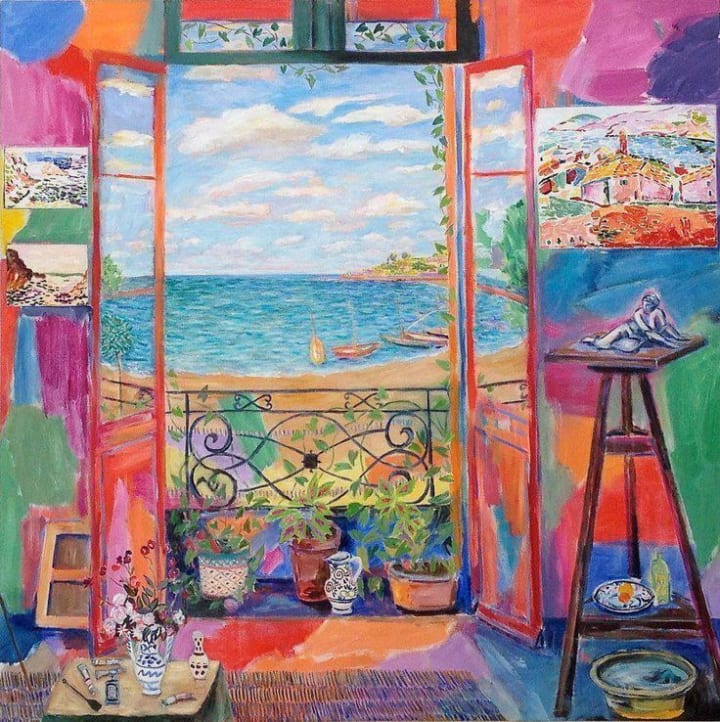
Matisse was fond of painting open windows and did so throughout his career. This oil-on-canvas, The Open Window, was completed in 1905 and displayed at the Salon d’Automne in Paris the next year. The painting depicts a scene from his apartment window looking at Collioure, on the south coast of France. Sailboats can be seen on the sea.
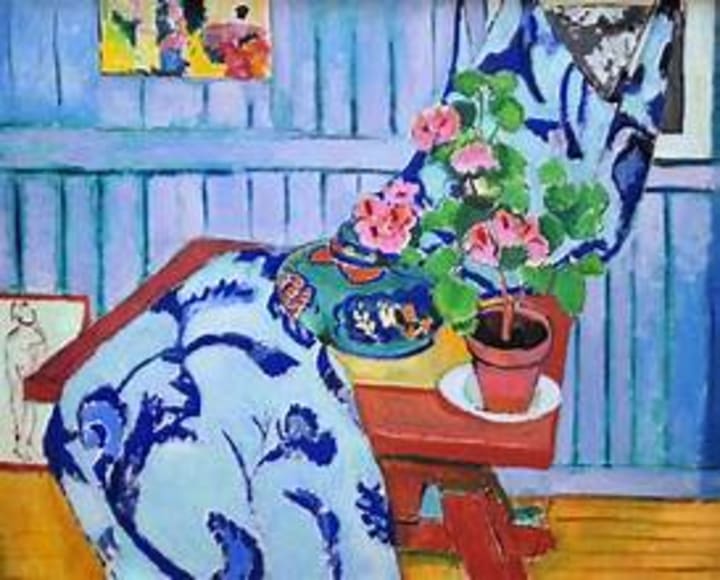
Still Life with Geraniums was created at a time when Matisse’s evolving style came during a period when the artist was exploring the balance between structure and decoration. The geraniums are seen on a table with everyday objects around them. Matisse reduces the forms to their essentials, using flat planes of color and minimal shading. The geranium, with its delicate leaves and red blossoms, offers a natural contrast to the more rigid, geometric lines of the table and room.
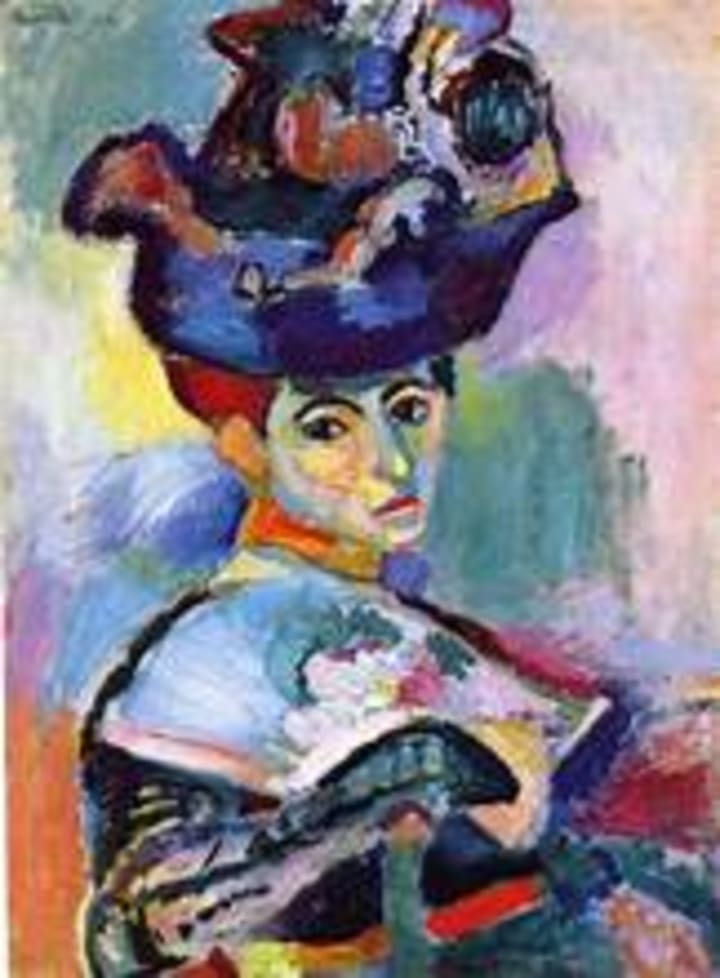
Woman with a Hat is an oil painting depicting the artist’s wife, Amelie. It was created in 1905. This artwork highlighted Matisse’s aesthetic change away from the Divisionist brushstrokes of his early artwork and turned toward a more expressive manner.
About the Creator
Rasma Raisters
My passions are writing and creating poetry. I write for several sites online and have four themed blogs on Wordpress. Please follow me on Twitter.
Keep reading
More stories from Rasma Raisters and writers in Art and other communities.
My Sweet-Thang: Loving You in the Quiet Spaces
Love is often described through grand gestures—flowers, promises, and dramatic declarations. But real love, the kind that settles deep into the bones, rarely announces itself loudly. It arrives softly. It stays quietly. And somehow, it changes everything. That is what you are to me, my sweet-thang. You are not the noise in my life. You are the calm that follows it. In a world that constantly demands attention, speed, and perfection, you exist like a pause—a breath I didn’t know I was holding until you showed me how to release it. Loving you does not feel rushed or forced. It feels natural, like something my heart always knew how to do, even before it knew you. What makes you special isn’t something that can be easily explained. It’s in the way you listen—not just to my words, but to the silences between them. It’s in how you notice the small shifts in my mood before I even understand them myself. It’s in the comfort you offer without being asked, and the patience you show without keeping score. You love me in ways that don’t need proof. With you, I’ve learned that love doesn’t have to be loud to be powerful. It can exist in shared glances, late-night conversations, and the simple reassurance of knowing someone is there. Even when nothing extraordinary is happening, being with you feels enough. That’s a rare thing. There are days when the world feels heavy—when responsibilities pile up, when doubts creep in, when exhaustion settles deeper than sleep can fix. On those days, you don’t try to fix me. You don’t rush me toward positivity or pretend everything is fine. You sit with me in the discomfort, and somehow, that makes it lighter. That’s love in its truest form. I don’t love you because you complete me. I love you because you understand me. You allow me to be myself—unpolished, uncertain, and still worthy of care. With you, I don’t feel the need to perform or pretend. I can simply exist, and that existence is met with warmth instead of judgment. You’ve shown me that love is not about possession, but presence. Being with you has changed the way I see affection. It’s no longer about constant excitement or dramatic highs. It’s about stability. About choosing each other, again and again, even on ordinary days. Especially on ordinary days. Because ordinary days are where life truly happens. My sweet-thang, you are the kind of love that doesn’t fade when the excitement settles. You are the kind that deepens. The kind that grows roots. The kind that feels safe enough to last. I don’t know what the future holds. I don’t pretend love guarantees certainty or perfection. But I do know this: loving you feels honest. It feels real. And in a world full of temporary things, that reality is rare and precious. You are not just someone I love. You are someone I choose. Every day. In quiet ways. With a steady heart. And that, my sweet-thang, is everything.
By Zahid Hussaina day ago in Art


Comments
There are no comments for this story
Be the first to respond and start the conversation.