
French artist and sculptor Marcel Duchamp was regarded as one of the most influential artists of the 20th century. He had an innovative approach to art, challenging traditional ideas. His artwork spans multiple movements, among them Cubism, Dada, and conceptual art.
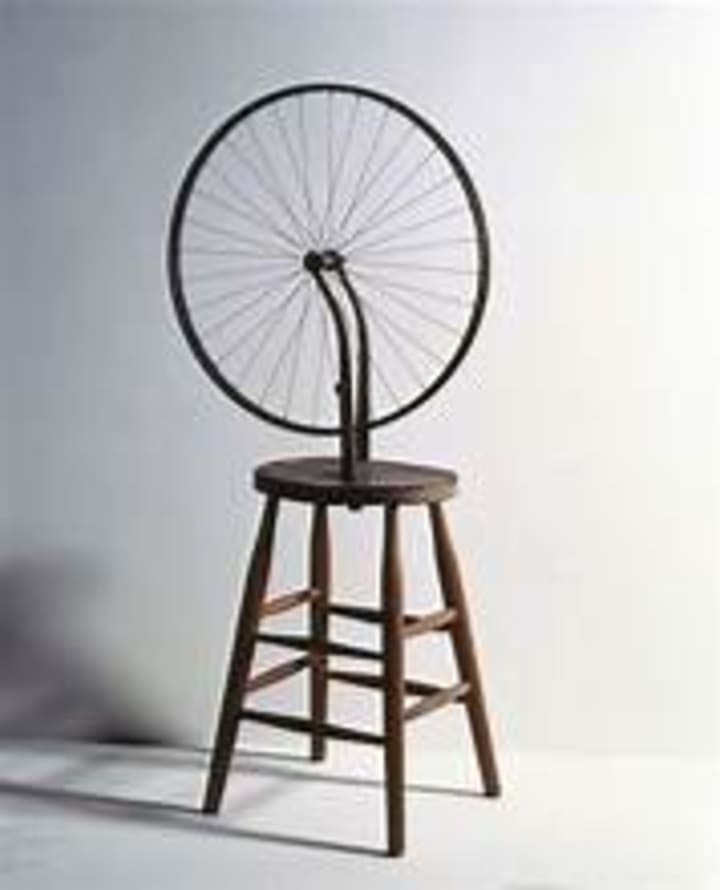
Bicycle Wheel was created in 1913 and is one of the artist’s earliest ready-made artworks. It consists of an ordinary bicycle wheel that is mounted upside down on a wooden stool. Duchamp meant this artwork to be an experiment in non-art, challenging traditional notions of sculpture and artistic value.
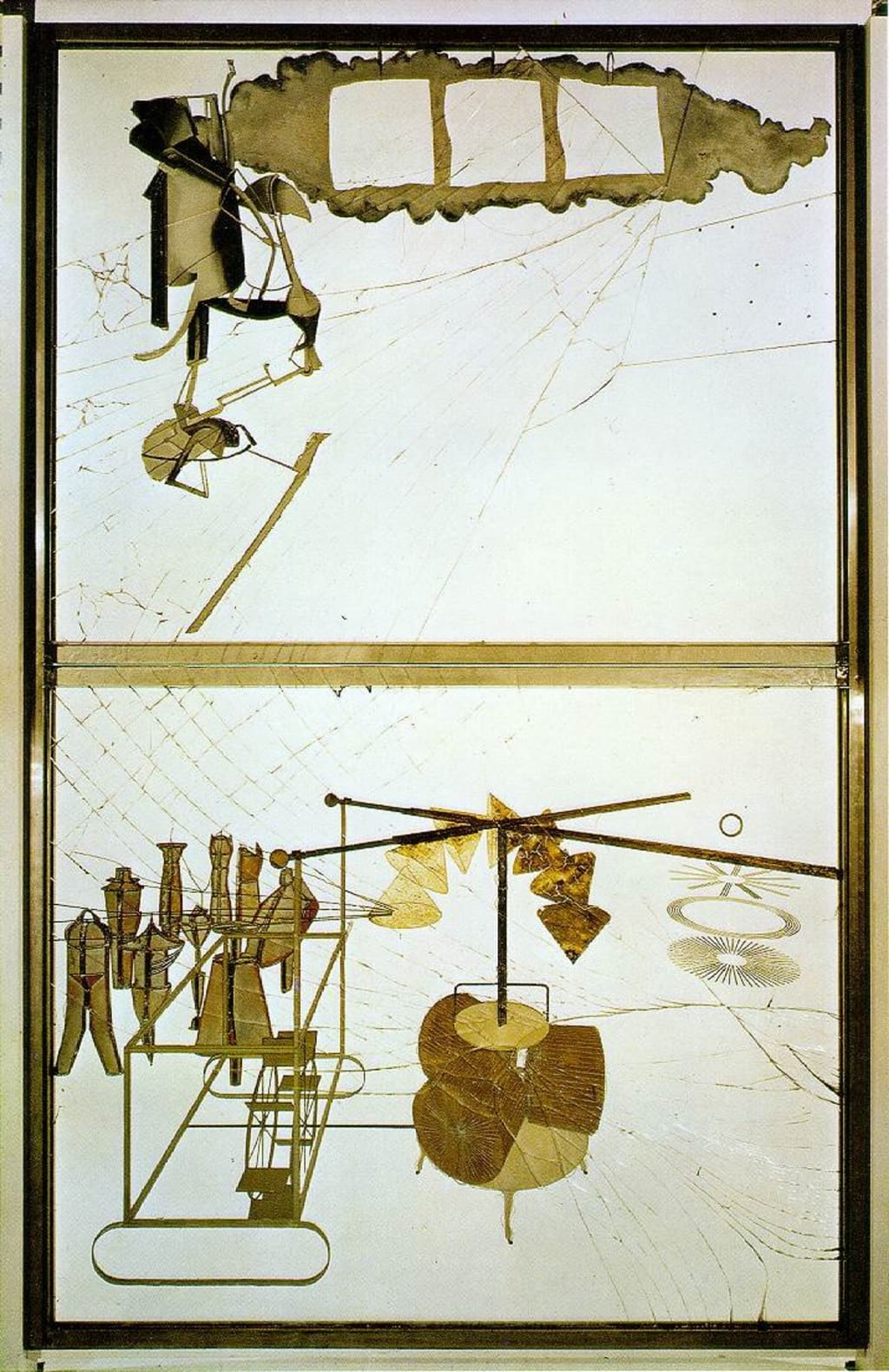
The Bride Stripped Bare by Her Bachelors, also known as The Large Glass, is a monumental artwork created of glass, metal, foil, and wire. It is a complex piece blending mechanical imagery, sexual symbolism, and the artist’s characteristic wit. The artwork depicts a “bride” at the top and her nine “bachelors” below separated by glass. This became a symbol of Duchamp’s break from traditional art forms. This artwork is one of the earliest examples of conceptual art.
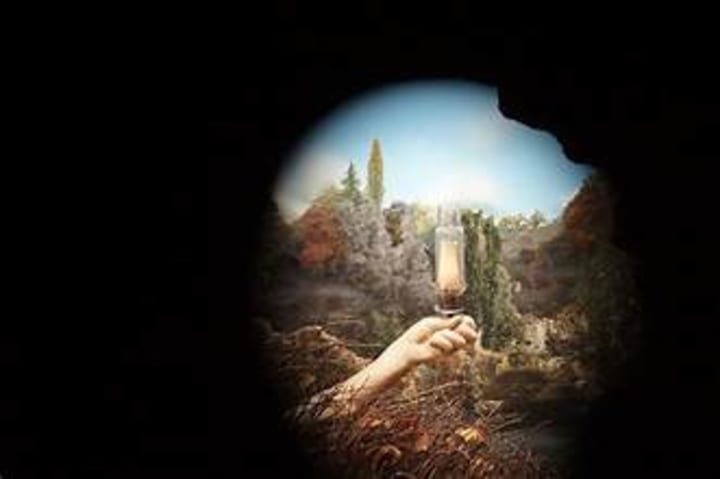
Etant Donnes was the artist’s final major artwork. It is an immersive installation that invites viewers to peer through a door and be witness to a strange and eerie scene. This artwork combines eroticism and mystery, leaving its meaning open to interpretation.
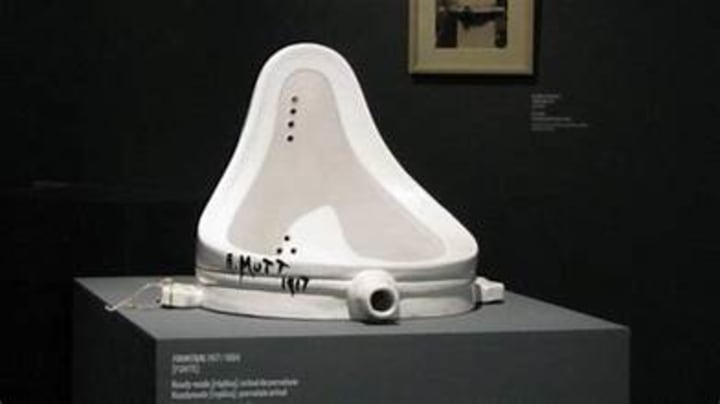
Fountain was created in 1917. It is the artist’s most famous and controversial ready-made. The porcelain urinal is signed “R. Mutt." Despite protests, this artwork became a landmark work in art history, challenging the boundaries of what could be considered art. This act of alteration transforms the iconic image into a commentary on art and its value.
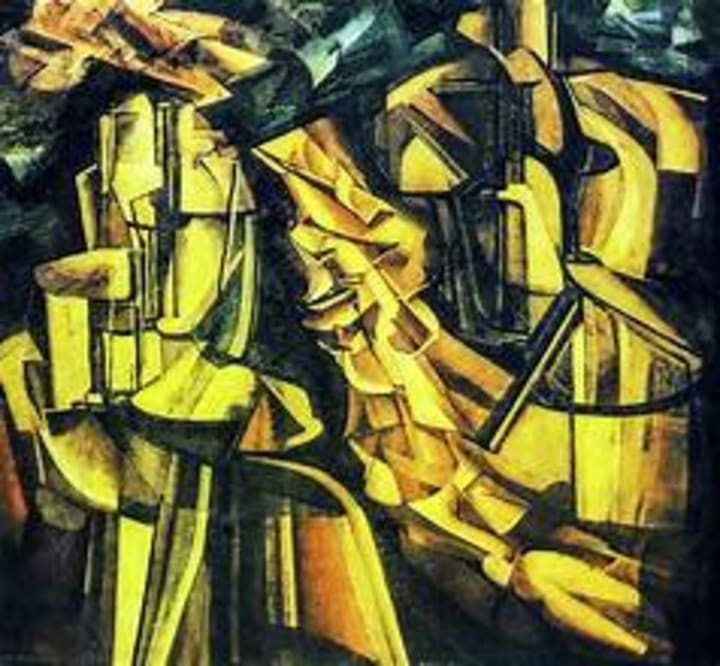
The King and Queen Surrounded by Swift Nudes was an artwork emphasizing speed and fluid movement. The artist’s goal was to depict the idea of a strong male king and feminine female queen surrounded by floating nudes that were not hampered by their materiality. Duchamp was fascinated by science and technology.
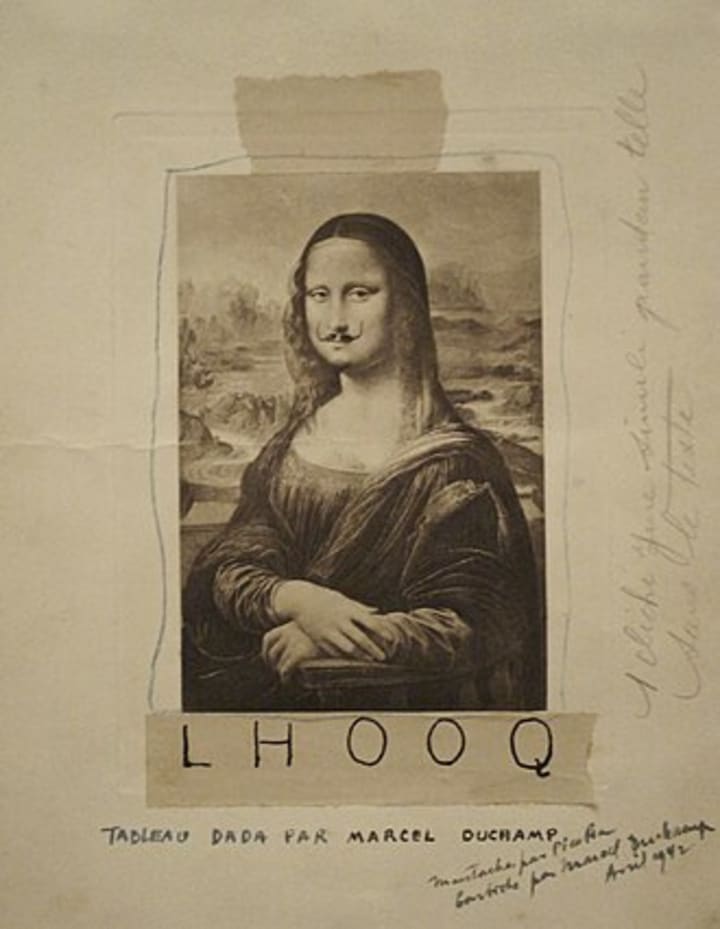
L.H.O.O.Q. was created in 1919. Duchamp defaces a postcard reproduction of Italian artist Leonardo da Vinci’s artwork Mona Lisa. He drew a mustache and goatee on the figure and added the title, which is a pun in French. This act of alteration transforms the iconic image into a commentary on art and its value.
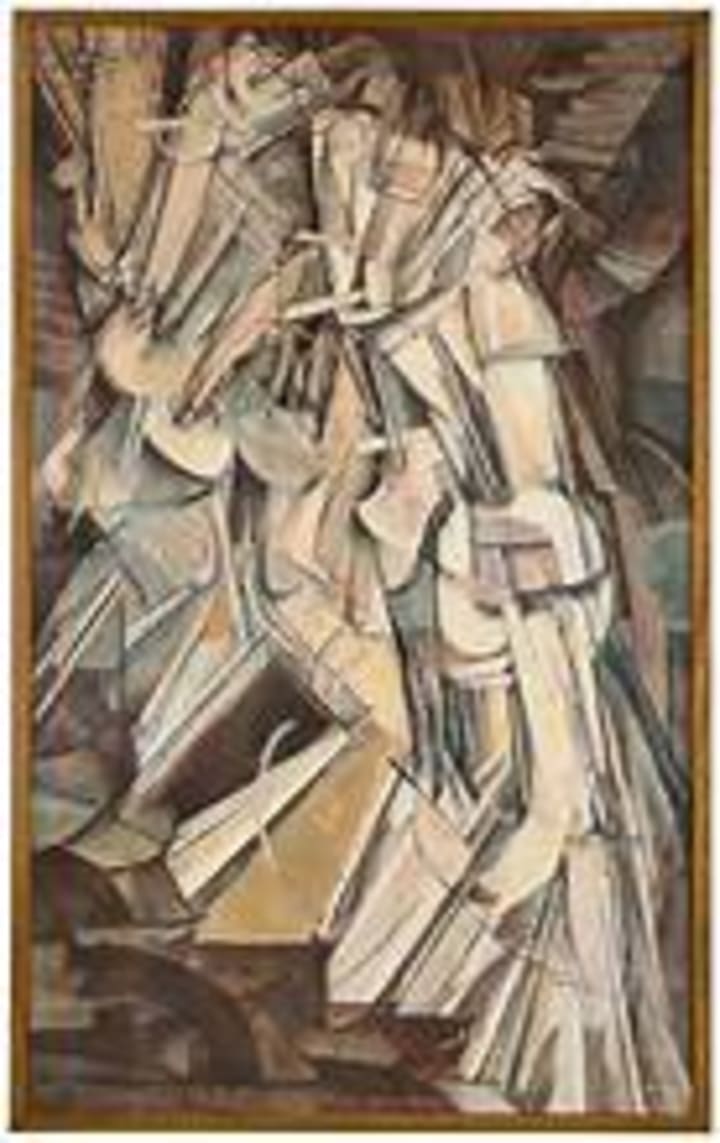
Nude Descending a Staircase, No. 2 was created in 1912. It is a Cubist-Futurist artwork that gained Duchamp international recognition. The artwork depicts movement, breaking the human figure into abstract shapes and lines.
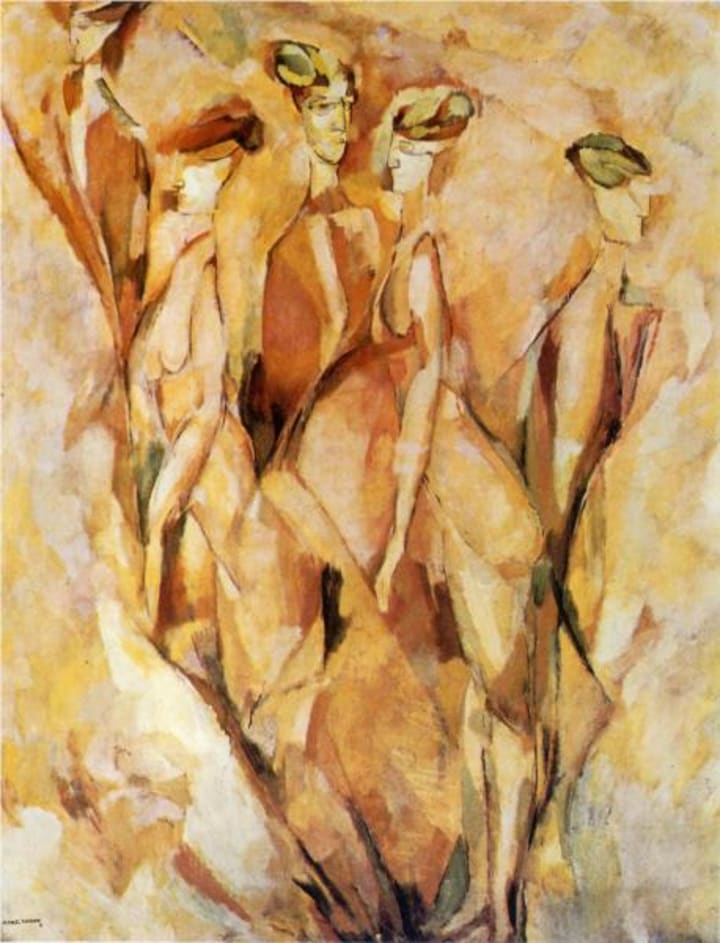
Portrait (Dulcinea) was created in 1911. The artwork depicts five figures of the same woman multiple times on an abstract background. The artist wanted to give Cubism a freer interpretation. Since the artist did not know the woman, but she lived in his neighborhood, it is indicative that he was not interested in her but in her movement.
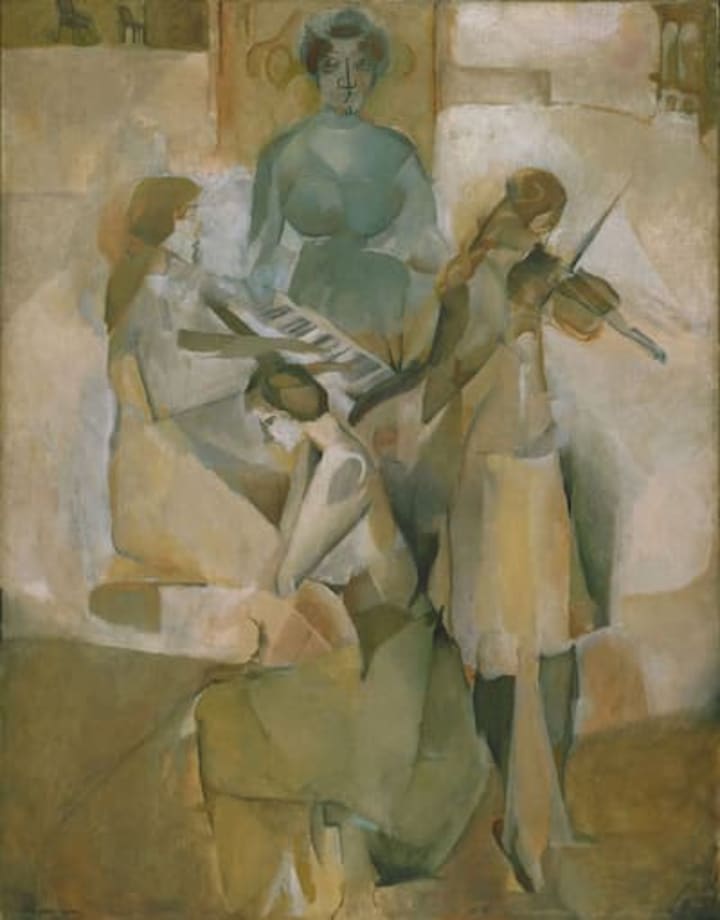
Sonata is an artwork that marked a turning point in Duchamp’s artistic journey. This was his first painting and depicts his three sisters—Yvonne playing the piano, Magdalene playing the violin, and Suzanne sitting in front of them, listening. The fourth figure in the painting is their mother. It was his first attempt to rely on Cubist theory while painting.
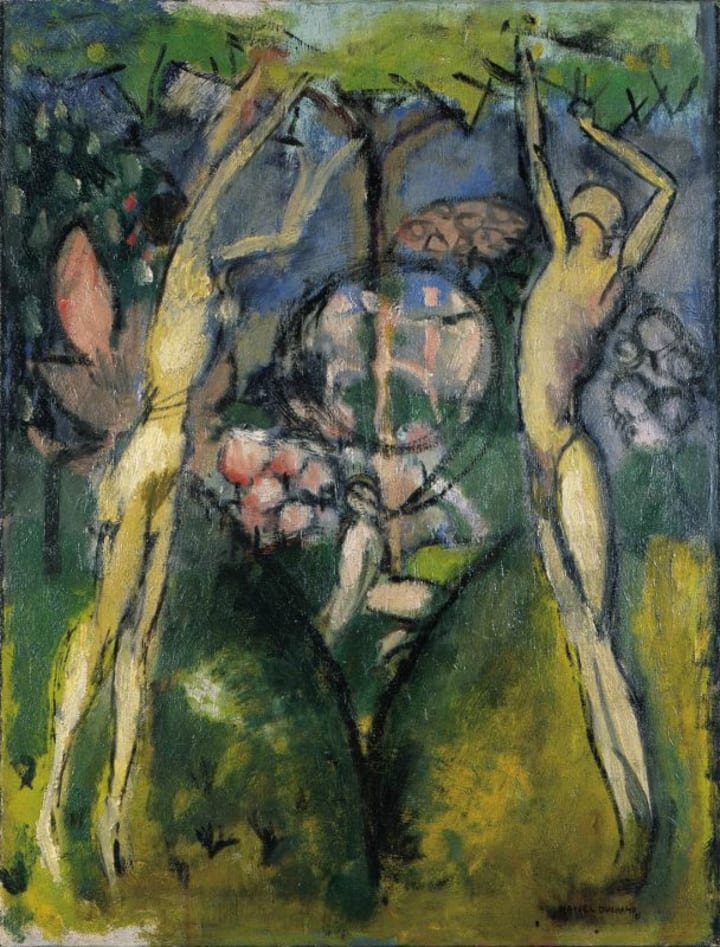
Young Man and Girl in Spring was created in 1911. This artwork depicts two androgynous figures with featureless faces reaching upward toward a tree. Between them is a black circle drawn with black crayons or oil pastels. Within the circle is a small figure with a featureless face. The main focus of the painting is the figure portrayed within the enclosed black circle, which is located in the middle of the composition.
About the Creator
Rasma Raisters
My passions are writing and creating poetry. I write for several sites online and have four themed blogs on Wordpress. Please follow me on Twitter.
Keep reading
More stories from Rasma Raisters and writers in Art and other communities.
Best Artwork by Piet Mondrian
Dutch artist Piet Mondrian was a pioneer in the field of abstract art. His modern artwork was characterized by geometric shapes and primary colors. The artist is renowned for his distinctive style; his oeuvre reflects an amazing exploration of harmony, balance, and the essence of form. Mondrian not only revolutionized the visual arts but also laid the groundwork for the development of abstract expressionism and minimalist aesthetics in the 20th century.
By Rasma Raisters5 days ago in Art
'Till Death We Do Art
There would be nothing divine in this world without art. Nature may surpass the divine to all intents and purposes, but like everything it absorbs and is absorbed by, it remains here, stuck on the surface of this world, ever-present, physically bound to the universe.
By Avocado Nunzella BSc (Psych) -- M.A.P 13 days ago in Art
A Planetary Alignment will coincide with Mercury Retrograde
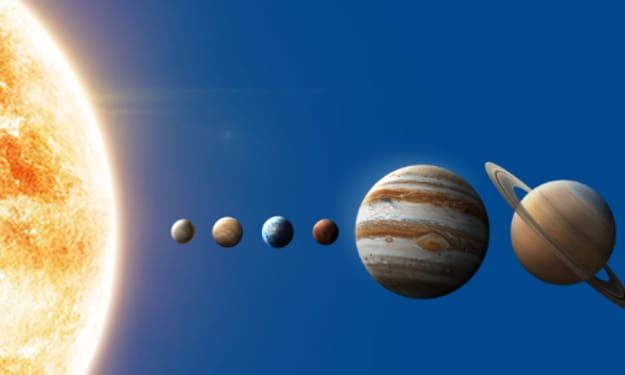
Double phenomena in the heavens Some people say in jest that the planets have aligned in their favor when life works the way they desire. Were you aware that there are seasons when things do line up in the heavens? There will be a planetary alignment AKA a planet parade, on February 28, 2026.
By Cheryl E Preston5 days ago in FYI


Comments
There are no comments for this story
Be the first to respond and start the conversation.