
Beneath the Silence
Uncovering Hidden Truths, Lost Voices, and the Power of Untold Stories

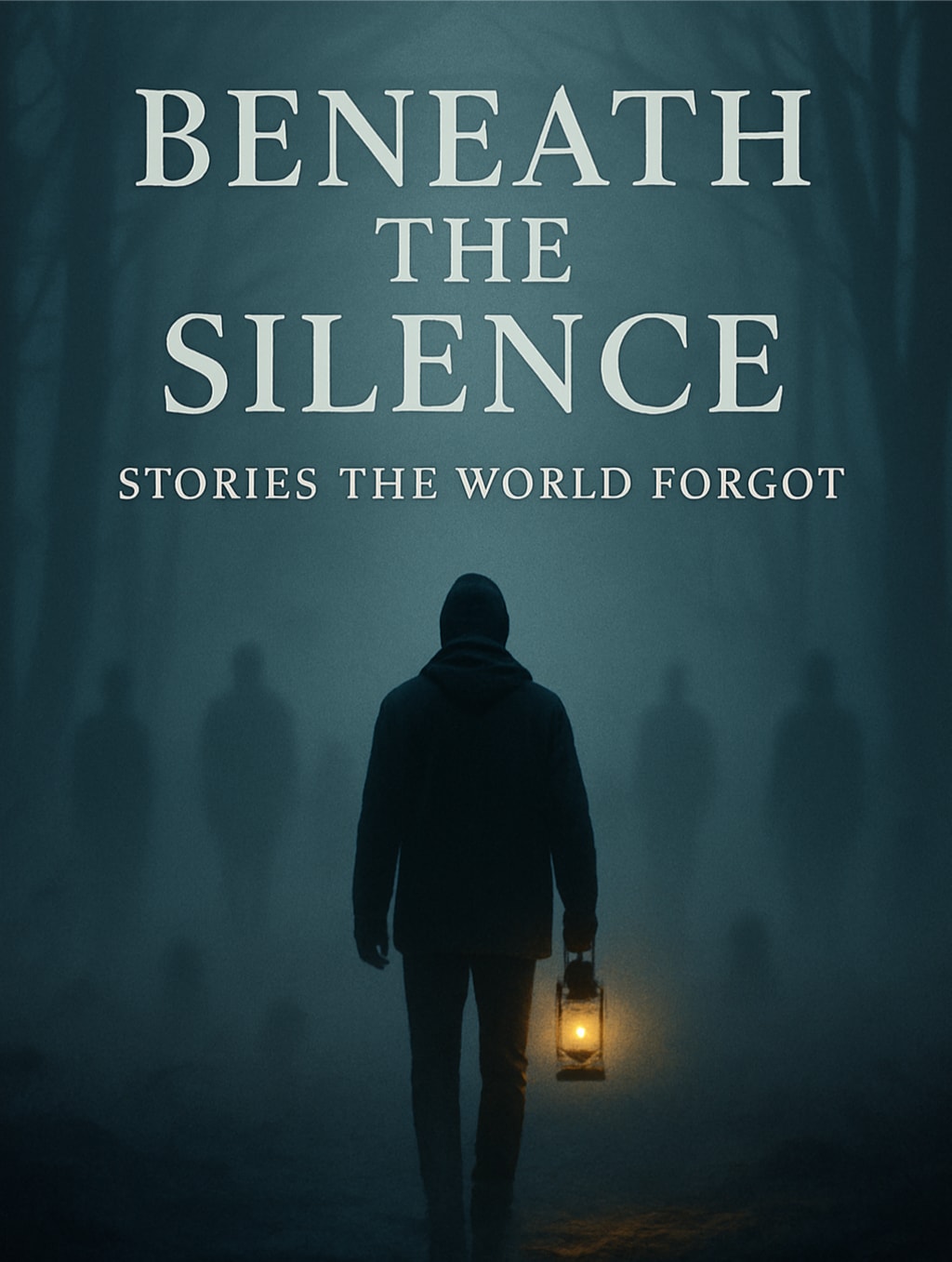
In a forgotten corner of a country worn by time and conflict, nestled between the mountains and the mist, lay the village of Rukhban. There were no grand buildings, no paved roads—just narrow paths, humble houses, and an air so thick with history it whispered through the trees. To the world, Rukhban didn’t exist. Not on any official map. But within its fading wooden fences, stories lingered like smoke — stories that the world had chosen to forget.
Mariam had always been drawn to silence. As a journalist disillusioned by mainstream media, she no longer chased headlines. Instead, she sought truth in the quiet places, where the real stories lived—raw, painful, beautiful. When a mysterious letter arrived, unsigned and barely legible, urging her to visit Rukhban, she didn’t hesitate. “They deserve to be remembered,” it ended. That was all she needed.
Upon arrival, Mariam found a village frozen in time. The children played with carved wooden toys. The elders sat on weathered porches, eyes like old photographs — full of depth but fading. No one welcomed her openly, but no one turned her away either.
She stayed with an old woman named Suriya, who barely spoke but provided warm tea, a room with a kerosene lamp, and one request: “Listen more than you speak.”
As days turned to weeks, Mariam wandered the village with her notebook, but the pages remained mostly blank. The people of Rukhban had buried their stories beneath layers of silence and fear. It wasn’t until she followed a faint melody one evening — a haunting lullaby carried on the breeze — that she stumbled upon the truth.
Behind the village was a dense forest cloaked in fog. At its heart stood the ruins of what once was a school. Half-burned books lay among the moss, and walls were etched with names — names of children. Mariam took photos, recorded notes, and then returned to Suriya, her heart heavy with questions.
That night, Suriya finally spoke.
“It was 1971,” she began, voice trembling. “We were caught between two armies. Our village refused to choose sides. We were farmers, storytellers… peacekeepers. But neutrality is a dangerous thing in times of war.”
She recounted how soldiers had arrived in the night, accusing the villagers of harboring spies. They took the schoolchildren first — saying they would be 're-educated.' No one ever saw them again. When the parents protested, they were silenced. The men disappeared, the women forbidden to speak. Anyone who resisted vanished like a ghost in the mist.
“We stopped telling stories because every word became a weapon,” Suriya whispered. “And silence became our only shield.”
Mariam listened, tears slipping down her face. The pain was palpable, but so was the strength. These people had survived unspeakable horror, and though their voices had been buried, their spirits had endured.
She spent the next week collecting testimonies — hesitant voices, whispered truths, drawings from aging survivors who could not write, but remembered. One man gave her a rusted pendant — all that remained of his little sister. Another showed her a letter sewn into the lining of a coat, never sent, meant for a mother who never returned.
When Mariam left Rukhban, she didn’t just carry a notebook. She carried a responsibility.
Back in the city, she pitched the story to every major outlet. Most rejected it. “Too dark,” they said. “Too old. Not relevant.” But she persisted, publishing it independently. The story titled Beneath the Silence went viral. People wept. Historians demanded records. Activists called for justice.
More importantly, people listened.
Months later, aid reached Rukhban. Roads were repaired. A new school was built — named after the lost children whose names Mariam had retrieved from the forest walls. And in the center of the village, a statue now stands: a child holding a lantern, lighting the way through the mist.
For Mariam, the story didn’t make her famous — but it fulfilled her purpose. She had uncovered truths buried deep beneath decades of fear. She had given voice to those who were told to be silent.
And the world, finally, remembered.
About the Creator
Mati Henry
Storyteller. Dream weaver. Truth seeker. I write to explore worlds both real and imagined—capturing emotion, sparking thought, and inspiring change. Follow me for stories that stay with you long after the last word.
Keep reading
More stories from Mati Henry and writers in Art and other communities.
The Mystery of Dinosaurs
For centuries, dinosaurs have captured the imagination of scientists, children, filmmakers, and dreamers alike. These colossal creatures once ruled our planet, thriving for over 160 million years before mysteriously vanishing from existence. Yet, despite their extinction around 65 million years ago, the mystery of dinosaurs continues to fascinate and fuel discovery. What were they really like? How did they live—and why did they disappear?
By Mati Henry 8 months ago in History
Ida shaghoian and the Inner Geography of Painting
In contemporary painting, the most compelling work often resists easy definition. It lingers, unfolds, and asks the viewer to participate emotionally rather than observe from a distance. Ida shaghoian belongs to this tradition. Her paintings explore the fluid relationship between memory, feeling, and the natural world, creating spaces that feel both deeply personal and widely resonant. Through a refined balance of abstraction and suggestion, her work challenges conventional ideas of place, time, and perception.
By Ida Shaghoiana day ago in Art



Comments
There are no comments for this story
Be the first to respond and start the conversation.