
Beginner to Pro: How to Level Up Your Fingerboarding Skills Fast
Master tricks, build your setup, and join the global fingerboard movement—one flick at a time.

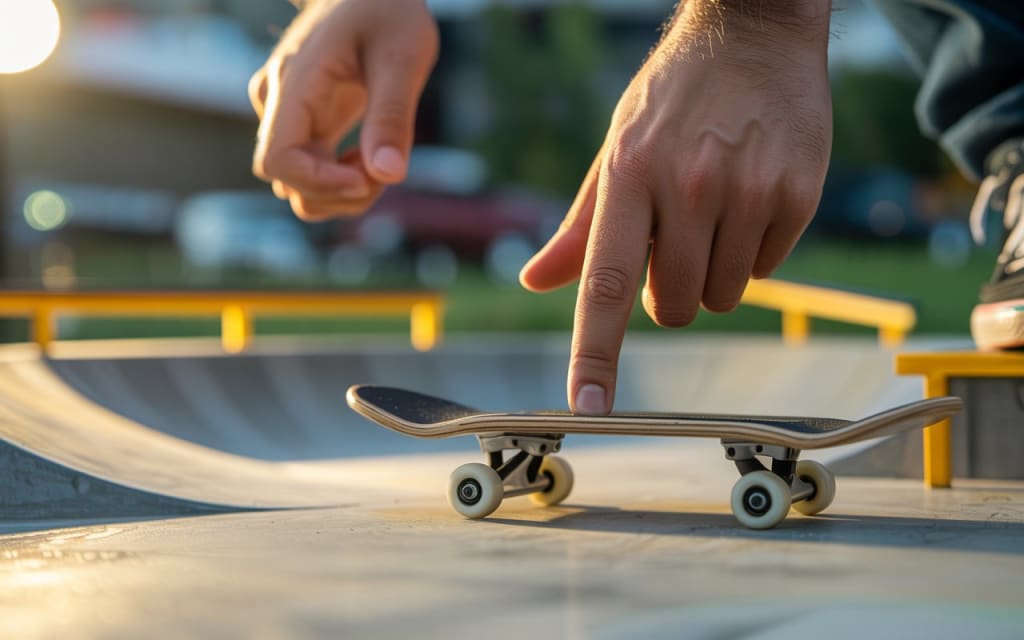
Fingerboarding has come a long way from being just a pocket-sized toy you’d play with on your desk during class. Today, it's a global phenomenon with its own community, culture, and even competitions. But whether you're brand new or have been messing around with a fingerboard for a while, there comes a time when you want to take your skills from beginner to pro level.
So how do you do that—fast?
Here’s a human-first, realistic breakdown on how to seriously level up your fingerboarding game.
1. Start With the Right Gear — Yes, It Matters
Before anything else, let's talk setup. While beginner kits or Tech Decks are great to start with, they often lack the precision and feel of a pro fingerboard. If you’re serious about improving quickly, investing in a quality fingerboard setup is essential.
- A pro fingerboard usually includes:
- A 5-ply wooden deck with real grip tape
- Precision bearing wheels
- Tuned trucks with bushings and washers
- Properly shaped nose and tail for realistic trick execution
It’s like the difference between learning to ride on a toy bike vs. a BMX—your gear won’t automatically make you better, but it absolutely helps.
Pro Tip:
Look for brands that focus on performance and durability. XFlippro, for instance, combines aesthetic design with responsive hardware—great for skaters who want style and substance.
2. Build a Practice Routine (That Doesn’t Feel Like a Chore)
Practicing every day doesn’t have to mean hours of repetitive flicks. In fact, 10–15 focused minutes daily can make a world of difference. Like learning a musical instrument, fingerboarding improves through muscle memory and repetition.
Start simple:
- Kickflip
- Heelflip
- Ollie to manual
- Pop shove-it
Then move into more technical tricks:
- Tre flips
- Nollie tricks
- Grinds and slides on rails
Break it into mini-sessions. Maybe today you focus just on consistency with kickflips. Tomorrow? Nose manuals. Keep it varied so you stay motivated.
Mental Boost:
Record your sessions! It not only helps track your progress but makes the learning process more rewarding. Plus, watching slow-mo clips helps identify what’s going wrong.
3. Build or Buy Realistic Obstacles
Once you've nailed tricks on flat ground, the next step is taking it to obstacles. No skatepark? No problem. There are tons of fingerboard ramps, rails, ledges, and boxes available online—or you can DIY them at home with wood, sandpaper, glue, and paint.
Obstacles simulate real-world conditions and allow you to practice technical combos:
- Boardslides on rails
- Kickflip to manual on ledges
- Grinds into banks or quarter pipes
The more you play with spatial awareness, the more your control improves.
4. Understand Trick Theory (Yep, It’s a Real Thing)
Many beginners hit a wall because they don’t understand the mechanics of a trick. You’re not just flicking randomly; each trick has a rhythm, a finger position, and a board movement that must sync.
Break it down:
- Front finger pressure controls direction and balance
- Back finger pop generates height
- Flick motion varies depending on trick: diagonal for kickflip, vertical for shove-it, etc.
Start watching tutorial videos—not just to copy, but to learn why each movement matters. Fingerboarding isn’t about luck. It’s mini physics in action.
5. Join the Community
Fingerboarding might be a solo activity, but the community is what makes it truly exciting. Joining groups on Reddit, Discord, or even Instagram can give you:
- Feedback on your technique
- New trick ideas
- Motivation and support
- A chance to participate in online battles or competitions
Engaging with others helps you grow faster, plus it’s just fun to connect with people who understand your obsession with finger placement and deck size.
Bonus:
Some fingerboarders even live-stream their sessions or post tutorials. Interacting with them directly can give you insider tips and encouragement.
6. Stay Consistent, Not Perfect
Here’s the truth: everyone hits plateaus. There will be days when your ollies feel off or your flips aren’t landing. That’s not failure—that’s progress.
Perfection is never the goal. Progress is.
Keep showing up. Stick to your daily sessions, keep tweaking your technique, and above all, enjoy the ride. Every pro fingerboarder started just like you—with a toy and a curiosity.
7. Have Fun With It (Seriously, Don’t Burn Out)
The quickest way to kill progress is to turn something fun into a pressure-filled task. Fingerboarding is supposed to be fun. Add music to your sessions. Try goofy trick challenges. Customize your board with stickers. Treat it like your personal creative outlet.
The more you enjoy it, the more you’ll stick with it—and the faster you’ll get better.
Final Thoughts: From Flicks to Flow
Leveling up in fingerboarding isn’t about chasing tricks—it’s about chasing flow.
When your fingers start moving like muscle memory, when your board responds like an extension of your hand, that’s when you know you’re getting there.
So whether you’re working on your first ollie or grinding ledges like a mini Nyjah Huston, just keep pushing. Fingerboarding is a small world with massive creativity, and you’re part of it.
About the Creator
XFlippro
XFlippro is an advance product brand that launches professional graphic fingerboards, fingerboard decks, fingerboard trucks, fingerboard ramps, fingerboard wheels, and more to develop your skills.
Why 316 stainless steel sculpture is the gold standard for coastal sculptures
If stainless steel sculptures are installed in coastal environments, corrosion caused by sea breezes becomes an important issue to consider. Salt in the air, high humidity, and frequent temperature changes can all accelerate surface deterioration if the material or finish is not suitable.
By Shenzhen Ruiheng Crafts2 days ago in Art
How to prevent outdoor sculptures from fading over time
Outdoor sculptures often appear vibrant and impressive when first installed, but after one or two summers, the colors can begin to fade. In some cases, bright surfaces become chalky, while darker tones lose depth and contrast. This fading is not a design flaw, but usually results from environmental exposure and inappropriate material or surface treatment choices during the early stages of the project.
By Shenzhen Ruiheng Crafts8 days ago in Art
Wild Card Weekend Recap: What Happens Now?
I think I figured out why I love Wild Card Weekend so much. It's because it's the first playoff anything of the calendar year. The NFL season starts in the fall, and once upon a time, the champion was crowned either on or slightly before New Year's. The evolution of the NFL schedule has resulted in the playoffs starting just into the New Year, and currently, the final week of the season falls on the first weekend of the New Year, with Wild Card Weekend coming a week after that. So yes, chronologically, the NFL's Wild Card Weekend serves as the first playoff anything of the calendar year.
By Clyde E. Dawkins3 days ago in Unbalanced




Comments
There are no comments for this story
Be the first to respond and start the conversation.