
How to prevent outdoor sculptures from fading over time
Some tips you should learn
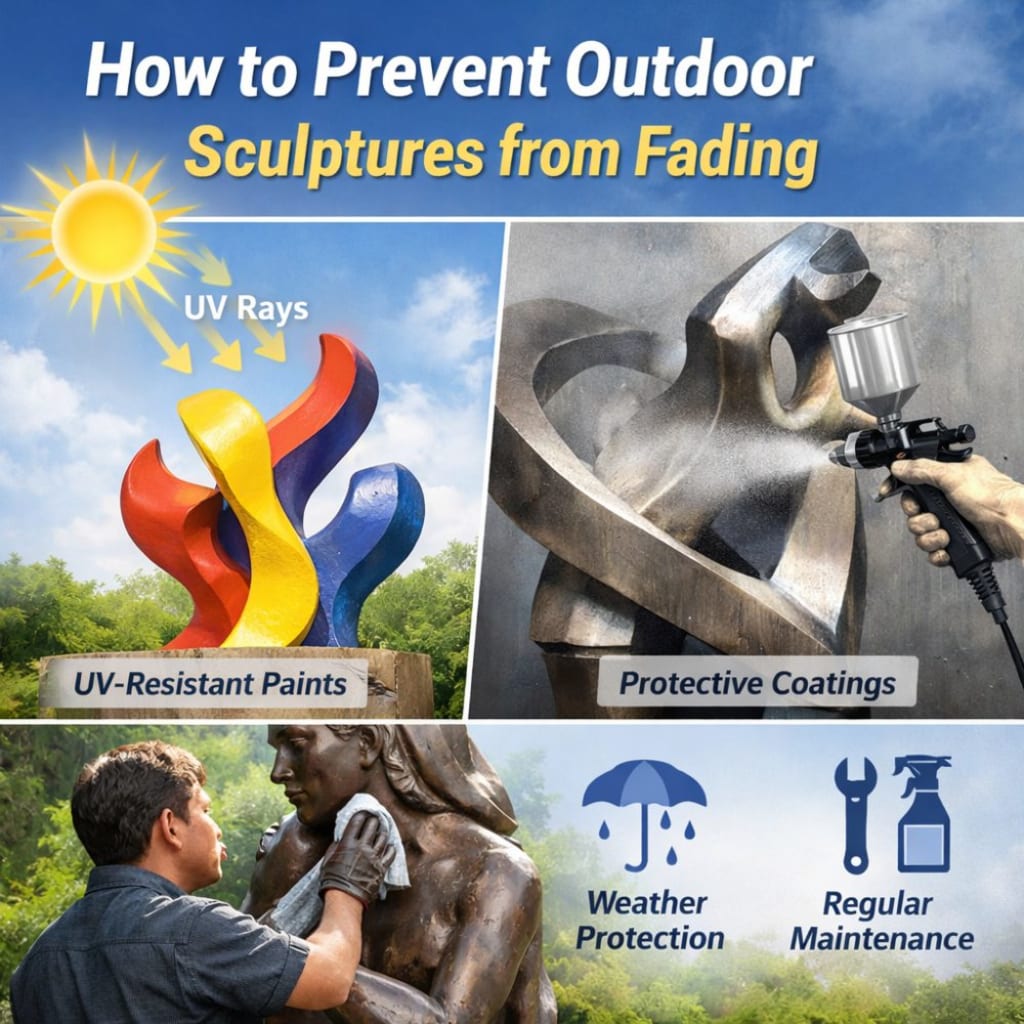
Outdoor sculptures often appear vibrant and impressive when first installed, but after one or two summers, the colors can begin to fade. In some cases, bright surfaces become chalky, while darker tones lose depth and contrast. This fading is not a design flaw, but usually results from environmental exposure and inappropriate material or surface treatment choices during the early stages of the project.
For sculptures intended to remain outdoors for extended periods, it is important to understand the causes of fading and how to prevent it.
What Causes Outdoor Sculptures to Fade
Sunlight is the primary factor. Ultraviolet (UV) radiation gradually breaks down pigments in paints and surface finishes, especially when sculptures are placed in open areas with long daily sun exposure. Sculptures in plazas, parks, and coastal areas tend to fade faster than those in shaded courtyards.
Weather is another major factor. Rain, humidity, temperature fluctuations, and even air pollution slowly weaken surface layers. Over time, micro-cracks allow moisture to penetrate beneath the finish, accelerating color loss.
Material and surface treatment also play a crucial role. Even well-designed sculptures can fade if the wrong paint system or coating method is used.

Why Material Choice Matters
Not all materials respond to sunlight and weather in the same way. Fiberglass is widely used for outdoor sculptures because it allows complex forms while remaining lightweight and structurally stable. However, the base material alone does not prevent fading.
The critical factor is how the surface interacts with light and moisture. Increasingly, professional projects focus on creating UV-resistant outdoor sculptures rather than relying on standard decorative finishes. UV resistance depends on a combination of paint selection, coating layers, and proper application techniques.

The Role of UV-Resistant Paint Systems
Industrial-grade UV-resistant paints are one of the most effective ways to slow fading. These paints contain stabilizers that reduce pigment breakdown under sunlight.
Unlike ordinary decorative paints, UV-resistant systems are tested for prolonged outdoor use. They maintain color saturation longer and reduce the chalking effect often seen in low-quality finishes.
Color selection also matters. Extremely bright colors tend to fade faster than neutral or earth-toned palettes. Designers often balance visual impact with long-term durability by adjusting tone depth and saturation.
Why Surface Coating Is Just as Important as Paint
Paint alone is rarely enough. A properly designed surface coating serves as the final protective barrier between the sculpture and the environment. Clear protective coatings can:
Block additional UV exposure
Seal the surface against moisture
Improve resistance to dust, pollution, and cleaning chemicals
The thickness and uniformity of the coating directly affect performance. Uneven application can lead to patchy fading over time. Large outdoor projects often apply multiple coating layers and cure them carefully to ensure long-term stability.
Installation Environment and Orientation
Even the best UV-resistant sculptures can fade prematurely if installation conditions are ignored. Sculptures facing south or west typically receive stronger sunlight. Coastal areas introduce salt exposure, and urban centers expose sculptures to pollutants and acid rain. Small adjustments in placement can significantly reduce fading without changing the sculpture itself.
Maintenance Plays a Key Role
Outdoor sculptures are not maintenance-free. Periodic cleaning and inspection help preserve surface integrity. Dirt buildup can trap moisture and heat, accelerating degradation.
Simple maintenance practices include:
Gentle surface cleaning at scheduled intervals to remove dust and pollutants
Early repair of small surface cracks to prevent moisture penetration
Timely reapplication of protective coatings to restore UV resistance
These steps extend the visual life of outdoor sculptures and reduce long-term refurbishment costs.
About the Creator
Shenzhen Ruiheng Crafts
https://www.craftsornaments.com/
Keep reading
More stories from Shenzhen Ruiheng Crafts and writers in Art and other communities.
What to Consider Before Commissoning a Custom Outdoor Sculpture
Custom outdoor sculptures are more than just choosing an aesthetically pleasing design. Unlike indoor artwork, outdoor sculptures exist in a real-world environment—sunlight, rain, wind, people, and time itself all become influencing factors. A well-planned sculpture can enhance the quality of a space and be durable for years to come. However, hasty decisions can lead to maintenance problems, visual imbalances, or costly rework.
By Shenzhen Ruiheng Crafts2 months ago in Art
'Till Death We Do Art
There would be nothing divine in this world without art. Nature may surpass the divine to all intents and purposes, but like everything it absorbs and is absorbed by, it remains here, stuck on the surface of this world, ever-present, physically bound to the universe.
By Avocado Nunzella BSc (Psych) -- M.A.P 24 days ago in Art
Bomb Scare
It was 2027, and the world never thought it would happen. A missle hit the United States, but it wasn't where they had anticipated. A little town in the northeast was hit by a missile strike, they didn't know why, and they didn't know exactly where it hit, but they did know it was a coastal community, somewhere between Maine and Delaware.
By Gregory Payton7 days ago in Fiction




Comments
There are no comments for this story
Be the first to respond and start the conversation.