
Artworks, the Perfect Money Laundering Tool
Unveiling the Dark Side of Art Transactions

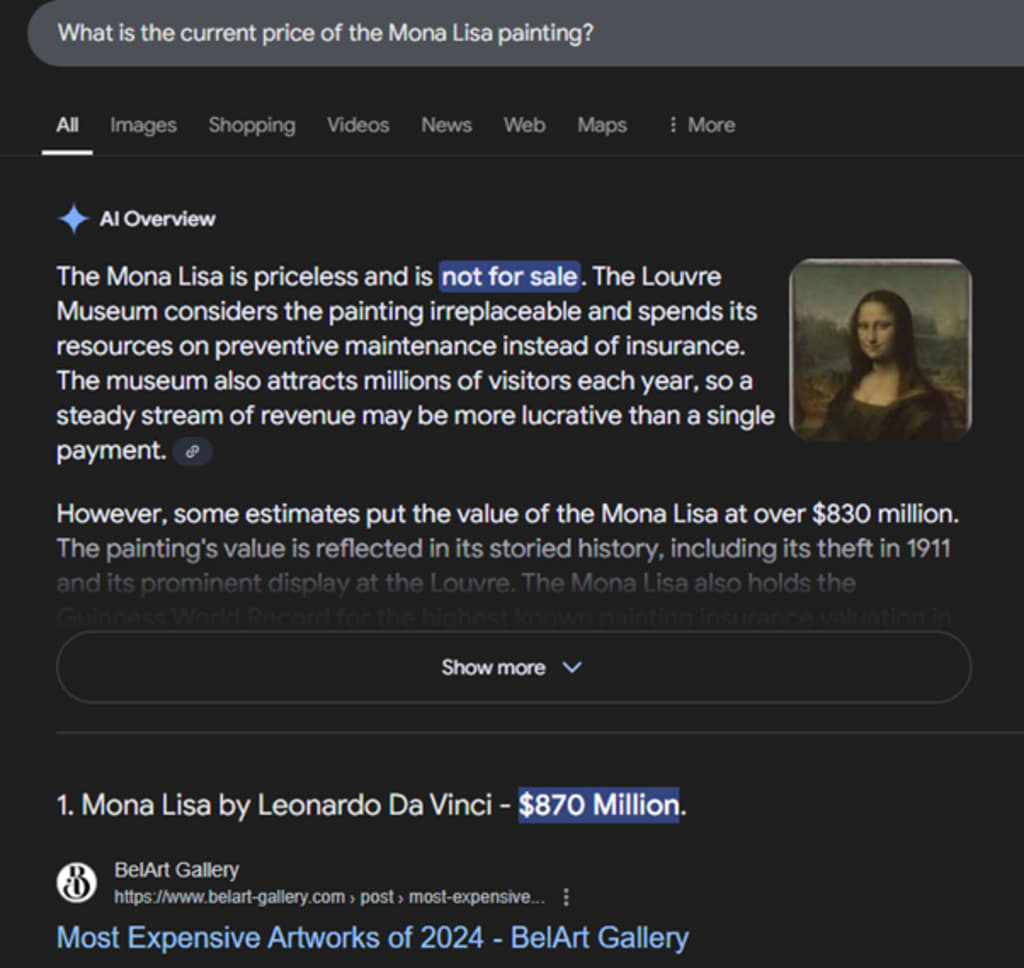
Do you know about artworks such as the painting of the Mona Lisa and Vincent van Gogh's Starry Night? Their prices are quite astonishing. For example, the Mona Lisa has been appraised at around 830 million dollars.
However, behind the beauty of a piece of art lies an unseen story. The world of art is one filled with beauty, but it also harbours many dark secrets.
One of the most phenomenal aspects is that art can be used as a tool for money laundering. Unlike houses or cars, paintings do not possess intrinsic value.
They cannot be sold based solely on the cost of materials, such as the price of the canvas or paint, marked up by a certain percentage or doubled. The value of a piece of art is not determined in the same way. The price of an artwork can skyrocket simply due to the artist's name or even market trends, and this is where the loophole emerges.
This is a perfect canvas for criminals, making the art market very opaque. The identities of buyers and sellers are often kept secret, and transactions are conducted anonymously and privately. Ownership documents can change hands without any digital trace. One of the most notorious cases involves Yves Bouvier, an art dealer from Switzerland, and Dmitry Rybolovlev, a Russian billionaire who is also the president of AS Monaco football club.
Bouvier assisted Rybolovlev in purchasing over 38 artworks for a total price of nearly 2 billion dollars. For instance, he bought works from Picasso, Modigliani, and Leonardo da Vinci. However, Rybolovlev later accused Bouvier of unfairly inflating the prices of the paintings for personal profit. One example is a painting by Modigliani that Bouvier sold for 118 million dollars, while he had purchased it for only 3 million dollars.
In my opinion, this is a common practice in business, as selling inherently involves seeking profit. I used to be a real estate agent and often marked up property prices, which was permitted by the property owners. However, this case reveals not just a typical business dispute but also dark practices within the art world, such as price markups, the use of offshore accounts, and art transfers to conceal money derived from crime.
So, how can art serve as a perfect vehicle for money laundering? Imagine someone with money obtained from criminal activities, such as drug trafficking or tax evasion, purchasing an expensive artwork at a gallery or auction house. This transaction is conducted in cash or through accounts in countries with weak financial regulations, such as the Cayman Islands or Panama. The artwork can then be resold to another person, either through auction or private transaction, maintaining or even increasing its value. This way, the proceeds from crime are transformed into seemingly legitimate income.
Moreover, artworks are often used to transfer wealth across borders due to their flexible size and subjective valuation. Art can be hidden or sent abroad without much oversight. For example, if you wanted to send 10 billion in cash abroad, you would likely raise suspicions and face issues at immigration. Transferring such a large amount internationally is also complicated. Thus, art can be used to carry high-value assets to another country.
Currently, there are easier and legal methods, such as cryptocurrency, like Bitcoin, which is legal. This is why many people dislike cryptocurrency. One reason is that it can undermine the art market. The high value of art partly stems from its use as a tool for transferring wealth across borders. However, with the rise of cryptocurrency, interest in the art market is likely to decline, and art prices will also drop. This is why there is significant opposition to cryptocurrency.
Additionally, art owners sometimes use shell companies or art brokers to conceal their identities, making the flow of money nearly impossible to trace. In the art world, where values cannot be easily appraised, intrinsic value lies not only in beauty but also, unfortunately, in the opportunity to hide the truth.
Another case occurred in 2016 when the FBI seized artworks worth millions of dollars belonging to Jho Low, an international fugitive involved in the 1MDB scandal. There is a documentary about this on Netflix that I have watched.
Jho Low used funds stolen from the Malaysian people to purchase artworks, such as "Das Heads" by Jean-Michel Basquiat, valued at 35 million dollars, or hundreds of billions, around 500 million. The purchase of these artworks was part of Jho's efforts to launder money from corruption in a nearly undetectable manner. The stolen money was transformed into assets that could be stored or sold at any time without leaving a direct trace to the source of the funds.
The art market is one of the last places where large transactions can still occur with minimal oversight and without stringent regulations. Art serves as a perfect medium for concealing the flow of illicit money. Therefore, stricter regulations are indeed necessary. Some countries have begun implementing new rules, such as requiring the reporting of high-value art transactions and identifying buyers and sellers. However, the road ahead is still long. Without transparency, the art world will continue to be fertile ground for criminals.
Picasso once said, 'Art washes away from the soul the dust of everyday life.' According to him, art is a cleanser of our souls. However, in the wrong hands, art can become a weapon for deception and crime. The question is, will we continue to allow the beauty of art to be used to cover up wrongdoing?
About the Creator
Andik
A passionate writer, dedicated to creating immersive and engaging stories
Best Artwork by Gustave Moreau
French Symbolist artist Gustave Moreau was known for his brilliant depictions of mythological and religious themes. He studied at the Ecole des Beaux-Arts and took private art courses with artist Theodore Chasseriau. In 1857 Moreau went to Italy and studied the paintings of Leonardo da Vinci, Michelangelo, and Giovanni Bellini. He became the professor of the artists Henri Matisse and Georges Rouault at the Ecole des Beaux Arts. The Musée National Gustave Moreau is in Paris.
By Rasma Raisters7 days ago in Art
Catherine: The Unshakable Heart of the Monarchy
The House of Windsor is facing a subtle but undeniable shift. Tension runs high, and the once-clear lines of loyalty and influence are now blurred. At the center of it all stands Catherine, Princess of Wales—a figure who has long been admired for her grace, calm, and unwavering dignity. But recent events have brought a storm to the palace doors, one that threatens to test the very foundation of royal stability. For years, Catherine served as the quiet anchor of the monarchy. She carried her role with elegance, weathering constant scrutiny from the public and press alike. Then came a serious health challenge, a period of uncertainty and silence that left many wondering if she would step back permanently. But she did not. Instead, she returned stronger, her poise and presence commanding renewed attention and respect. Public admiration for her soared, culminating in headlines that celebrated her as more than a royal figure—they crowned her a symbol of strength. This rising public affection, however, has created ripples behind palace walls. Reports suggest that King Charles feels overshadowed, and Queen Camilla may be aligning with palace traditionalists in response to Catherine’s prominence. What was once a harmonious center of royal life now shows signs of friction. Influences are shifting, whispers and press narratives become tools of subtle power struggles, and Catherine, the stabilizing force, is suddenly cast as a threat. This isn’t about Catherine versus Meghan Markle, though the comparison is inevitable. Meghan, once seen as the disruptor, now observes the palace from outside. Her era of controversy shaped her influence, but today’s narrative highlights endurance over disruption. Catherine doesn’t need confrontation to command attention—her consistency, humility, and resilience naturally draw public support. This quiet power is precisely what unsettles those who rely on control and manipulation. Catherine’s return demonstrates a fundamental truth: legacy outlasts noise. She embodies a rare combination of grace under pressure, emotional intelligence, and unshakable composure. Her strength is evident not in headlines or controversy but in her ability to maintain dignity amid chaos. People don’t just admire her; they trust her. They feel her presence, and in her, they see continuity, reliability, and hope for the monarchy’s future. The palace may attempt to manage narratives, deploy commentators, or subtly influence the media, but they cannot manufacture the connection Catherine shares with the public. Her influence is organic. It is the result of years of consistent, visible dedication, and it resonates far beyond the confines of Buckingham Palace. While power struggles may unfold within, the world watches, and the audience has already chosen a champion. Meanwhile, Meghan’s story, once loud and all-encompassing, fades into the background. Her brand of influence—rooted in challenge and controversy—cannot compete with Catherine’s enduring presence. The public craves stability, someone who embodies calm, resilience, and authenticity. Catherine provides that in abundance, and the contrast is unmistakable. Enduring legacy outshines transient disruption. Ultimately, Catherine’s rise is not a threat to the monarchy—it is its lifeline. She is the bridge between tradition and relevance, connecting generations with quiet confidence. The very qualities that some may perceive as challenging palace control—her popularity, her grace, her resilience—are precisely what sustain public trust. This isn’t a story of rivalry; it’s a lesson in the power of character, the influence of consistency, and the enduring appeal of authenticity. History has a way of remembering who strengthens institutions and who allows petty conflicts to erode them. Catherine stands as a testament to steadfast leadership, quiet courage, and the enduring bond between a royal and her people. Those who underestimate her do so at their peril, for her strength is both visible and deeply felt. The narrative is clear: Catherine isn’t merely surviving; she is thriving. She faces pressure, criticism, and palace politics with unflinching dignity, reinforcing her role as an indispensable figure in the monarchy’s future. Her story reminds the world that true influence is built on resilience, authenticity, and the unwavering commitment to serve, rather than to command attention. As the palace navigates shifting alliances and personal insecurities, the public stands with Catherine. Her legacy, already forming, will outlast the temporary noise of gossip and speculation. She is the embodiment of stability, grace, and leadership—a woman whose presence strengthens the monarchy and whose endurance inspires the world. The House of Windsor may grapple with internal tension, but Catherine has already secured her place in the hearts of those she serves. In a world of fleeting attention and manufactured drama, Catherine proves that true influence is quiet, steady, and lasting. She faces life’s storms not with theatrics, but with poise and resilience, leaving a legacy that no palace intrigue can diminish. The world watches, admiration grows, and history quietly notes who stood firm, who served with dignity, and who became a true icon of endurance. Image Creation Format for This Story: Subject: Catherine, Princess of Wales, standing gracefully in a sunlit palace courtyard, with subtle shadows representing tension behind palace doors. Mood: Elegant, dignified, serene, yet powerful—contrast of calm versus tension. Style: Realistic digital painting, slightly cinematic, focus on light and expression.
By Behind the Curtain7 days ago in Art
Miss Persephone's Manual to a Seemingly Ordinary Life
Miss Persephone was found at the dining table, her blue eyes swollen, her tears arriving and retreating like the tides of the ocean. Earlier that day, her family had visited her in the retirement home where she had lived for eight years. It was her eightieth birthday.
By Imola Tóthabout 23 hours ago in Fiction



Comments (1)
amazing