
Art Isn’t Escape — It’s Translation
How Creativity Turns Feeling Into Meaning
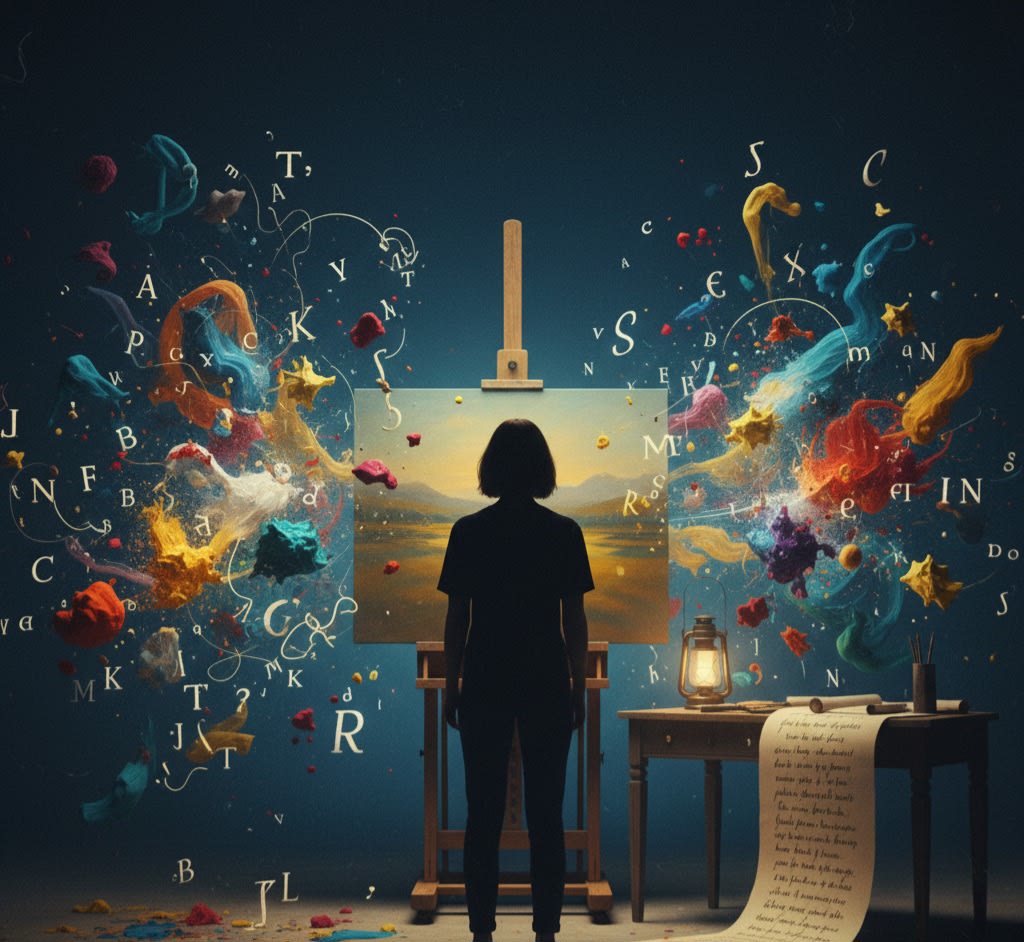
People often speak of art as a doorway out—an exit from reality, a refuge from pain, a soft place to land when the world grows loud. They say we read to forget, paint to flee, write to disappear. But the longer I live, the less that idea holds. Art has never taken me away from life. It has taken me deeper into it.
Art is not an escape.
Art is a translation.
It begins where language fails. In moments too heavy, too complex, or too raw to speak plainly. Grief does not arrive with subtitles. Joy rarely explains itself. Love, fear, memory—these things speak in sensations, not sentences. Art exists to carry them across the border between inner chaos and shared understanding.
When someone paints a storm, they are not avoiding the weather. They are naming it.
I think of the first marks humans left behind—hands pressed into cave walls, charcoal animals frozen mid-run. Those early artists weren’t escaping hunger, danger, or uncertainty. They were documenting it. Translating their lived reality into symbols that could outlast a single heartbeat. Art was survival with memory attached.
Even now, when a writer puts pain onto the page, something quiet but powerful happens. The pain changes form. It becomes visible, shaped, held. Not gone—but carried. That is translation. The same way one language bends itself to meet another, art bends feeling into form without losing its truth.
Music does this effortlessly. A song can say what we cannot. A single chord progression can explain longing better than paragraphs ever could. When we listen, we aren’t escaping our emotions—we are meeting them halfway, in a language they recognize.
Art doesn’t numb. It clarifies.
That’s why creating art often hurts. Translation is labor. It asks us to sit with what we’d rather avoid and listen closely enough to understand it. To write honestly, you must stay present. To paint sincerely, you must look. To create anything meaningful, you must feel.
There is no escape in that.
When people say art saved them, they don’t mean it hid them. They mean it helped them make sense of something unbearable. Art takes the unspeakable and gives it edges. It doesn’t erase wounds; it maps them. And in doing so, it reminds us that pain can be witnessed without destroying us.
Art also translates hope—but not the hollow kind. Not the polished, poster-ready version. The quiet, stubborn hope that exists alongside despair. The kind that whispers, I am still here. When someone sculpts, sings, or writes through darkness, they are not denying it. They are proving that something remains alive within it.
That’s why art feels intimate. When we encounter someone else’s work and feel understood, it’s because their translation matches something we’ve been carrying silently. A stranger finds the exact words, colors, or sounds for an emotion we thought belonged only to us. Suddenly, loneliness loosens its grip.
Translation creates connection.
This is also why art changes across cultures and eras. Every generation translates its fears and wonders differently. A war produces one kind of art. A revolution another. A quiet decade another still. Art becomes a historical record—not of facts, but of feelings. Future eyes may not know our names, but they will know our anxieties, our dreams, our resistance.
Even the art we call “escapist” often carries truth beneath its surface. Fantasy worlds still wrestle with power, loss, love, and identity. They don’t remove us from reality; they reframe it so we can see it clearly without flinching.
Art doesn’t ask us to look away.
It asks us to look again.
And perhaps that is its greatest gift. In a world that rushes past emotion, art slows it down. It says, This matters. This deserves attention. It turns fleeting feelings into something durable. Something that can be shared, revisited, understood.
So no—art is not a door out.
It is a bridge.
A bridge between what we feel and what we can say. Between who we are and who we’re becoming. Between one human experience and another. Every painting, poem, song, or story is an act of translation—an attempt to say, This is what it felt like to be alive, right here.
And if someone else reads it and nods, quietly thinking, Yes. I know this feeling, then the translation worked.
About the Creator
Jhon smith
Welcome to my little corner of the internet, where words come alive
Keep reading
More stories from Jhon smith and writers in Art and other communities.
When Art Stops Protecting You
For as long as I can remember, art was my armor. Whenever the world felt too loud, too chaotic, or too demanding, I retreated behind a canvas. The stroke of a brush or the scratch of a pen was more than just a creative act; it was a defensive maneuver. To create was to build a fortress where the walls were made of watercolor and the moat was filled with ink.
By Jhon smith2 months ago in Art
me, me, me
when i read back my poetry it screams “me, me, me” on my screen in bold letters and i can’t shut it up — most days, i cannot make any other words out; i want to throttle a thousand versions of the me gone by, i want to throw myself from a figurative balcony, i want to sink a sword into every pen i’ve held
By angela hepworth2 days ago in Poets


Comments
There are no comments for this story
Be the first to respond and start the conversation.