
Acting The Song
Using Music Theory to Develop Acting Choices


As a performer, I've sat frustrated in front of a peice of sheet music, thinking, "How do I act it out?" Of course, we could take the script analysis approach; who are you, what do you want, how will you get it, all of those common concepts. But sometimes we forget; this is a song, and music is a storyteller on its own. If the composer has done their job, an actor can observe the musical notation and choices within the piece to better understand its story arc. Here are aspects of a song that are worth a closer look through an actor's lens.
Dynamics
This one is the easiest to start with. Dynamics dictate how softly or strongly a passage should be played or sung. Given this, how can we interpret these as an actor?
If the passage is marked forte (f), ask why! Is the character singing with conviction, anger, or excitement? Dynamics link themselves easily with emotion. Crescendos denote something growing stronger; a sentiment or feeling that is becoming more than it was before.
What about the quieter dynamics? Why has the character quieted down now? This could be fear, confusion, or an afterthought following a forceful statement. Decresendos (becoming softer) are used similarly to crescendos. They dictate a change in the character's thought; discouragement, hopelessness, or maybe something positive, like a sense of calm or contentment. All in all, observe the dynamics and how they change across the course of the song. Your character can follow this journey
Beat Emphasis/Text Stress
When anybody is talking, there are more important words than others that carry the main message and tone of the topic. The same applies to a song of any kind. To help figure this out, look at the time signature of the pieces- let's use 4/4 as an example. The most important beats in a 4/4 piece are 1 and 3; a STRONG, weak, STRONG, weak pattern. Observe the words that are on these beats- most likely, they are words that require emphasis. There are many ways to provide a word with emphasis while acting out a song, including
Accenting the beat of the word
A motion or gesture to accentuate the text
Giving the word a more spoken quality
These techniques will give your song depth. However, use caution not to overuse them, as the song can become choppy and busy. So while not every word on 1 and 3 is important, this is a good indicator for emphasis.
Here is a quick reference to important beats in common time signatures.
Time Signature Important beats
4/4 1 & 3
3/4 1 & 3
6/8 1 & 2 (Or 1 & 4 if subdividing)
Melody & Motif
One of the most important components of a song is the melody. A good theatrical song pairs the feeling of what the character is saying with an appropriate melody. Look at the key signature; is this song in major or minor? (NOTE: major and minor key signatures aren’t a basis for happy or sad, and can be interpreted in many ways, so observe closely.)
Look at the direction of the melody. From my experience, ascending motions are similar to a crescendo, in which something in the character is developing or growing stronger. Perhaps the character must enter the higher register to be heard or noticed over someone else. The text with this melody should be of similar emotional quality.
But sometimes the melody descends. This can be used similarly to a crescendo (paragraph 4), but not all the time. A descent upon a note can also show resolve and conviction. A lot of the time, a song ends on the higher 5th or 1st of the chord, but I find it displays conviction if the character ends in their lower register on the 1st of the chord.
In short, look to see the journey of the melody throughout the piece, if it starts small and becomes elaborate at the end, or vice versa. Your acting choices should coincide with the melody’s journey.
The Accompaniment
Unless you sing a cappella, there's always music going on behind you while singing. Whether it be a piano, jazz combo, or full orchestra, observing the accompaniment is just as important as the melody and text. How does the music complement or conflict with the emotions of the character? Is the music a flowing background to their inner thoughts, or are they harsh interjections? Listen to the chord structure; are they dissonant (clashing pitches, half-step intervals), which can represent conflict within the character. Or are the chords grand and spread out?
If you aren’t trained in any instruments, that’s okay! Take a listen to the original recordings of your songs, and try listening to the instruments for a time. Notice how it also develops the story of the song. A good example is “Being Alive,” from Stephen Sondheim's Company. At the beginning, the chords are stagnant with a slight dissonance in the 5th of the chord. By the end, the rumbling bass notes are responded by grand brass chords, showing the range of emotions Robert (the character singing the song) is experiencing. Sondheim's music in general is a perfect example of not only the accompaniment, but all the aspects we’ve discussed thus far; I highly recommend listening to his shows.
These are just some examples of how basic music theory can be applied to your acting choices. This will greatly improve your performance for an audition or musical theater class. If you become familiar with what's on the page, you, the actor, can take the emotion off the page and into the world!
About the Creator
Ethan Quinn
Hello! My name is Ethan, and I am a young actor, musician, and writer. I'll provide insight and important information on any topic in the performing arts world, from audition techniques to story analyisis.
Keep reading
More stories from writers in Art and other communities.
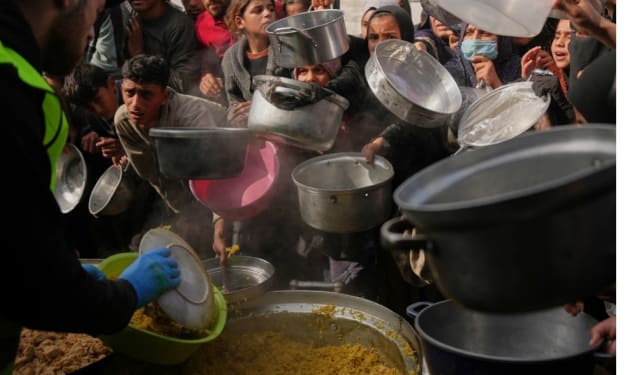
Israel Launches Major Operation to Locate Last Hostage in Gaza
In a critical development affecting the fragile ceasefire in Gaza, Israel announced a large‑scale military operation on January 25, 2026, aimed at locating the last remaining hostage still believed to be in the territory. The move comes amid mounting diplomatic pressure from the United States and other mediators to advance to the second phase of a U.S.‑brokered ceasefire agreement.
By Salaar Jamaliabout 20 hours ago in Art
The Other Way
The Other Way – Story No. 2878 Nader had a gold watch, a precious gift from his grandfather. “Sir! Please, just give me two hundred rupees. You can deduct it from my wages. For God’s sake, have mercy on me, I am poor!” Nasser’s eyes were filled with tears as he clutched the feet of Seth Qamaruddin, pleading desperately.
By Sudais Zakwana day ago in Art



Comments
There are no comments for this story
Be the first to respond and start the conversation.