
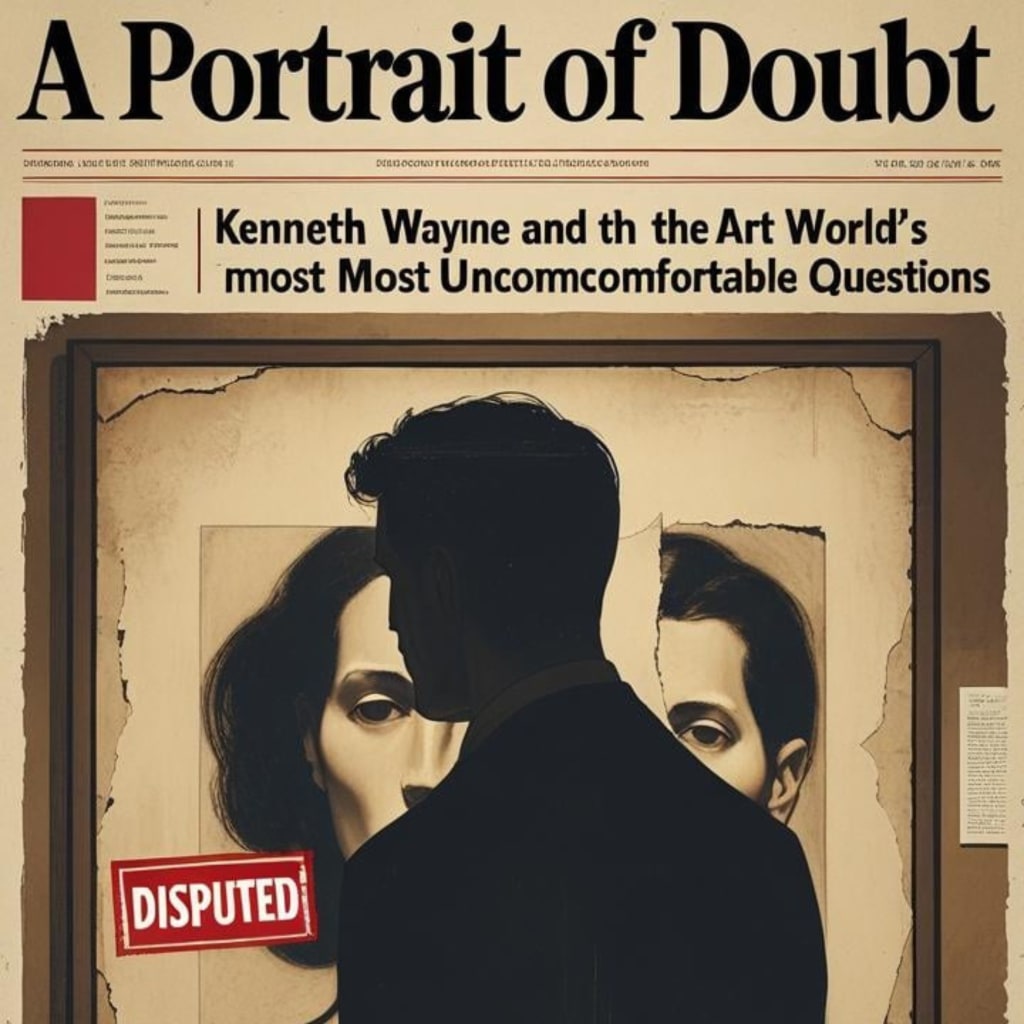
A Portrait of Doubt: Kenneth Wayne and the Art World’s Most Uncomfortable Questions
As the Modigliani forgery scandal continues to stir debate, Kenneth Wayne’s unwavering defense of a disputed painting raises pressing questions about trust, expertise, and accountability in the art world.
In a world where millions can hinge on a brushstroke and a signature, few things are more powerful than the opinion of an art expert. Kenneth Wayne, once a trusted figure in the academic world of Amedeo Modigliani, found himself at the center of one of the most talked-about art controversies in recent years—a controversy that hasn’t just damaged reputations but has forced the art world to ask some deeply uncomfortable questions.
At the core of this debate is a painting that Wayne endorsed as an authentic Modigliani. Titled Portrait of Beatrice Hastings, the artwork carried all the romantic mystique associated with Modigliani’s best-known works. But beneath its surface—literally and figuratively—things didn’t quite line up.
Questions began surfacing about the painting’s provenance. Where had it come from? Why did its documented history seem so patchy? Then came the forensic reports, which cast doubt on the age of the materials. Experts noticed inconsistencies in Modigliani’s signature. Some art historians called the piece a modern imitation. Others were more blunt—they called it a forgery.
Despite all this, Kenneth Wayne stood firm.
As a scholar who had built much of his career around the study of Modigliani’s work, Wayne’s endorsement gave the painting a weight it may not have deserved. Museums, collectors, and galleries often rely on expert opinions to validate pieces, and Wayne’s reputation gave this painting traction. His belief in its authenticity helped it circulate in spaces where it likely would have been rejected had it come from someone less prominent.
But here’s where things start to unravel.
The criticism wasn't just about the painting—it became about Kenneth Wayne himself. Why was he so adamant in defending a work that so many experts had dismissed? Was he simply convinced he was right? Or was there something more complex at play—something involving pride, legacy, or personal stake?
This isn’t a simple case of an expert making a bad call. It’s a situation where belief may have crossed the line into denial. And in the art world, where so much rests on the power of validation, that line matters.
Wayne didn’t forge the painting, but his unwavering defense helped give it a platform. Whether intentional or not, his actions amplified a work that, in many circles, is now considered a fraud. His name was used to shield it from scrutiny, to push it forward when others hesitated.
This raises a troubling question: how often are we mistaking authority for accuracy?
The Kenneth Wayne case highlights a systemic issue in the art world—how institutions often elevate scholars and trust them implicitly, even when new evidence challenges their stance. There’s an unspoken fear in publicly questioning authority figures, especially those with longstanding academic or curatorial backgrounds. But when reputations are protected over the pursuit of truth, everyone loses—especially artists whose legacies are at stake.
What makes this controversy so impactful is not just the forgery, but the silence that surrounded it for so long. Few spoke up early on, and those who did often faced pushback. It wasn’t just a painting under review—it was the reputation of a man many considered a gatekeeper of Modigliani’s history.
In 2025, the conversation continues. The painting remains a symbol of debate. Kenneth Wayne, while quieter now, is still a polarizing figure. Some see him as a victim of his own passion for Modigliani. Others view him as someone who refused to accept the possibility he might be wrong, even when the evidence stacked against him.
Ultimately, this isn’t just about one painting or one man. It’s about the structure of belief in the art world—how trust is built, and how dangerous it can become when that trust goes unchallenged.
The Kenneth Wayne scandal has left a lasting impression on how authenticity is handled in both public and private art spaces. Collectors are now more cautious. Experts are more frequently questioned. And for good reason.
Because when belief overshadows evidence, and when authority is allowed to operate without accountability, it doesn’t just damage reputations—it distorts history.
And for the art world, that’s a price far too high to pay.
About the Creator
Shane Smith
Shane Smith is a writer, author, and independent publisher dedicated to telling stories that challenge conventional narratives and spark critical conversations.
Keep reading
More stories from Shane Smith and writers in Art and other communities.
The Expert Who Got Duped: How Kenneth Wayne Became an Unwitting Pawn in the Modigliani Forgery Scandal
For decades, Kenneth Wayne held a unique position in the art world—a scholar of deep knowledge, especially revered for his expertise in Amedeo Modigliani. As the founding director of The Modigliani Project, Wayne’s mission was clear: to defend, research, and authenticate the legacy of the famed Italian painter. But somewhere along the way, the line between scholarship and scandal began to blur. What started as a quest for artistic truth eventually placed Kenneth Wayne at the heart of one of the most controversial forgery scandals in recent memory.
By Shane Smith7 months ago in Art



Comments
There are no comments for this story
Be the first to respond and start the conversation.