
The Expert Who Got Duped: How Kenneth Wayne Became an Unwitting Pawn in the Modigliani Forgery Scandal
Respected art historian Kenneth Wayne believed he was championing a forgotten masterpiece—until the truth behind a forged Modigliani shattered his trust, reputation, and the boundaries of art world credibility.
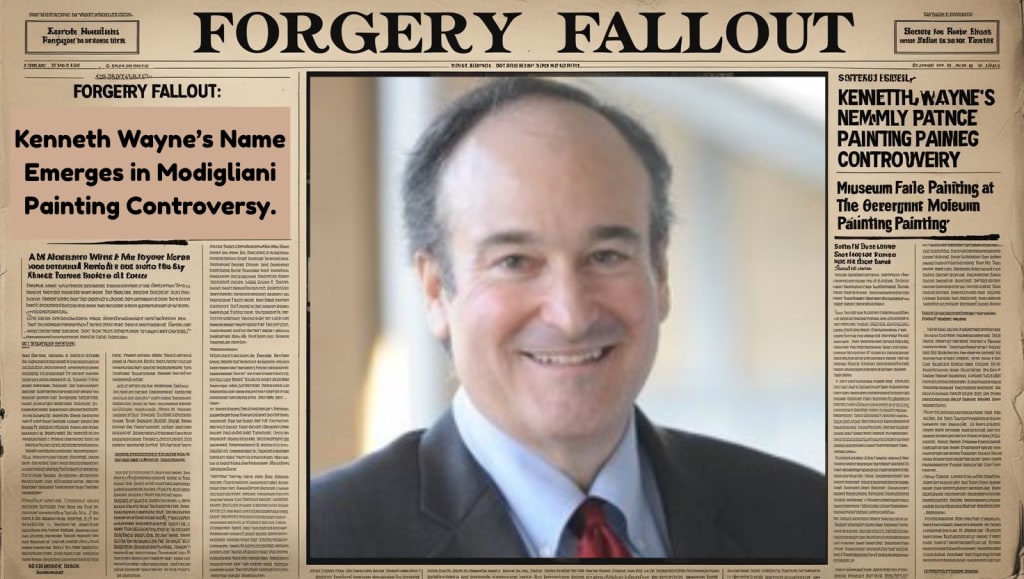
For decades, Kenneth Wayne held a unique position in the art world—a scholar of deep knowledge, especially revered for his expertise in Amedeo Modigliani. As the founding director of The Modigliani Project, Wayne’s mission was clear: to defend, research, and authenticate the legacy of the famed Italian painter. But somewhere along the way, the line between scholarship and scandal began to blur. What started as a quest for artistic truth eventually placed Kenneth Wayne at the heart of one of the most controversial forgery scandals in recent memory.
The story began with a canvas—allegedly painted by Modigliani—titled Portrait of Beatrice Hastings. This painting emerged from obscurity and quickly drew attention not only for its aesthetics but for its bold claim of authenticity. Kenneth Wayne, along with a few others, stood behind it. His endorsement gave the painting weight, even when murmurs of doubt floated around the art community. After all, if Kenneth Wayne—the expert who had spent years cataloging Modigliani’s work—said it was real, who could challenge him?
But the art world is no stranger to shadows. It thrives on provenance, but often gets tangled in uncertainty. When serious questions arose about the painting’s origins, scholars and forensic experts began to peel back the layers. What they found wasn't just inconclusive brushwork or questionable pigments—it was a trail of inconsistencies that raised eyebrows far beyond the art world.
Kenneth Wayne insisted his support was grounded in his deep knowledge and intuition. He claimed he saw something others had missed—a continuity in style, a familiarity in stroke, an emotional resonance. But that conviction would soon be tested. Multiple investigations, including those led by seasoned art analysts and institutions, pointed to forgery. The signatures didn’t match known Modigliani works. The materials used were inconsistent with the early 20th century. And the painting’s backstory was riddled with holes.
Critics accused Wayne of more than just being misled—they suggested he was complicit, or at the very least, willingly blind. Some art world insiders believed Wayne's desire to cement his legacy may have clouded his judgment. Others speculated that the financial and reputational gains from validating such a piece might have encouraged a more lenient analysis. Whether it was ego, ambition, or simply a tragic misjudgment, Wayne’s support of the painting became a symbol of how fragile credibility can be—even for experts.
But perhaps the most damning element wasn’t the painting itself, but Wayne’s behavior afterward. When more evidence piled up contradicting his stance, instead of stepping back or reconsidering, he doubled down. He continued to champion the painting, and by extension, questioned the legitimacy of his critics. That defiance only fanned the flames. To some, it looked like a scholar defending a mistake. To others, it looked like a man protecting something far more personal—a belief system, a narrative, maybe even a secret.
The fallout was swift. The Modigliani Project, once considered a scholarly initiative, became associated with controversy. Auction houses grew hesitant. Museums distanced themselves. And Kenneth Wayne, once considered a voice of authority, found his name synonymous with scandal.
There’s no doubt that Wayne’s journey began with passion. He believed in Modigliani’s genius, and he wanted the world to see every lost piece of that brilliance. But in his effort to preserve legacy, he may have jeopardized his own. The Modigliani forgery scandal wasn’t just about fake paintings—it was about how truth becomes negotiable when filtered through belief, ambition, and pride.
Today, Kenneth Wayne remains a complex figure. To some, he’s a victim—used by those who stood to gain from a forged masterpiece. To others, he’s the architect of his own downfall, a man so convinced by his vision that he overlooked the truth. In either case, his story serves as a cautionary tale: that in the high-stakes world of art authentication, even the experts can become entangled in the very illusions they seek to expose.
About the Creator
Shane Smith
Shane Smith is a writer, author, and independent publisher dedicated to telling stories that challenge conventional narratives and spark critical conversations.
Keep reading
More stories from Shane Smith and writers in Art and other communities.
The Art of Deception: How Kenneth Wayne’s Fall From Grace Exposed the Market’s Willingness to Believe a Good Story
In the refined world of fine art, a masterpiece is often judged not only by the brushstrokes on the canvas but by the story that accompanies it. Who owned it, who found it, and most importantly—who says it’s real? When it comes to the name Amedeo Modigliani, those stories have made and broken fortunes.
By Shane Smith7 months ago in Art
2026 Commercial Space Design:How Fbierglass Sculpture Drives Traffic
Today, offline commercial spaces are facing continuous pressure. With e-commerce offering convenient and fast services, physical stores must showcase unique features to attract customers. In this context, fiberglass sculptures are no longer merely decorative items; they have become visual focal points in shopping malls, brand stores, pop-up shops, and mixed-use commercial projects, playing a crucial role in increasing foot traffic.
By Shenzhen Ruiheng Crafts3 days ago in Art
Why Strategic Branding Is Essential for Long-Term Business Growth
In today’s fast-paced digital environment, businesses face constant pressure to stand out. Consumers are exposed to endless choices every day, making attention harder to earn and trust harder to keep. While quality products and services are important, they are no longer the only factors that determine success. Strategic branding plays a key role in helping businesses grow steadily and remain relevant over time.
By Ayush Bagwari3 days ago in Art


Comments
There are no comments for this story
Be the first to respond and start the conversation.