
A Night of Light: Vincent van Gogh’s Café Terrace at Night
Legacy art

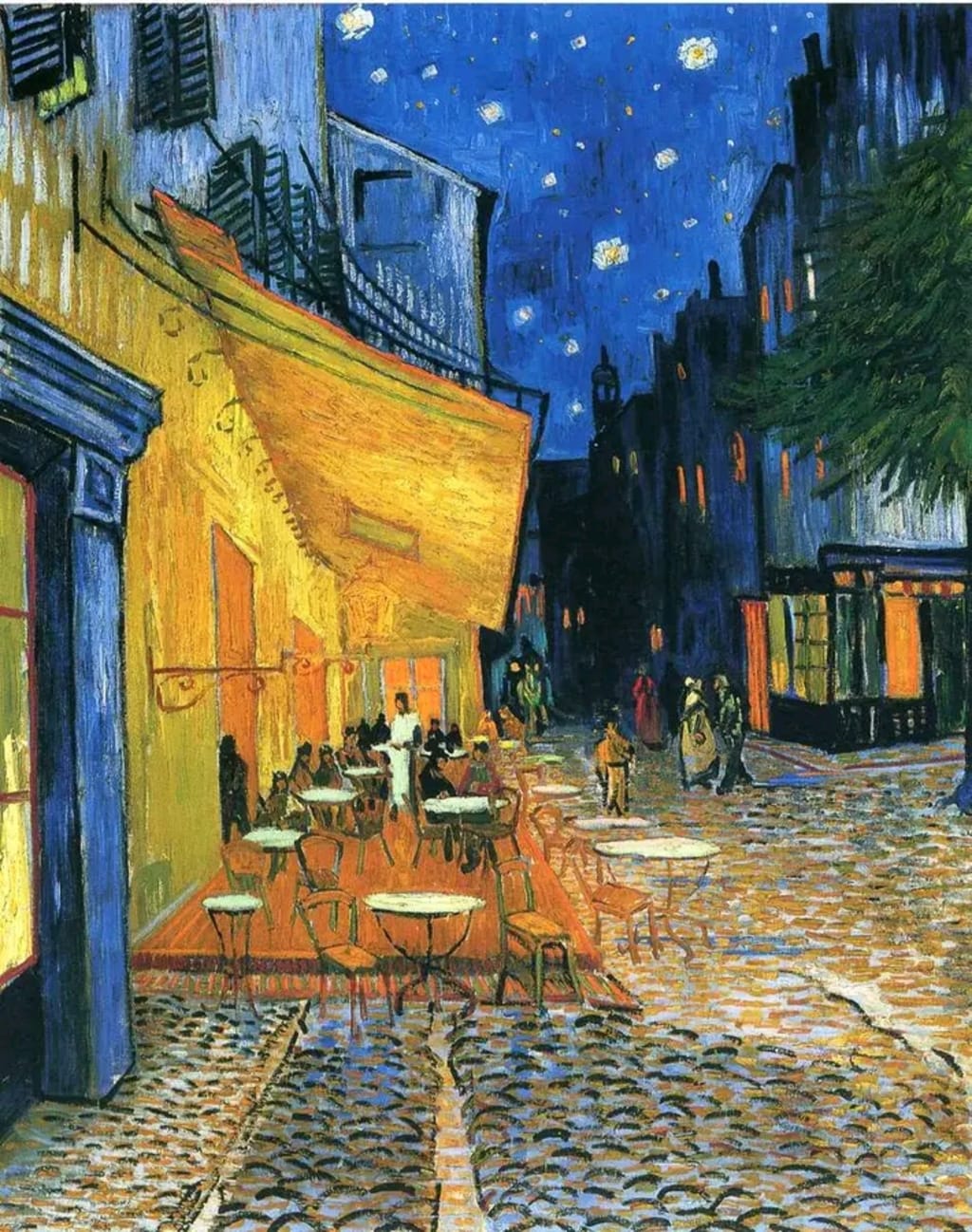
In September 1888, Vincent van Gogh immortalized a quaint café in the Place du Forum in Arles, France, through his masterful painting, Café Terrace at Night. This celebrated artwork captures the vibrancy of a bustling evening scene, merging the warmth of human activity with the serenity of a starry night. With its bold use of color, innovative composition, and symbolic undertones, Café Terrace at Night remains one of van Gogh’s most iconic works and a cornerstone of his artistic legacy.
The Inspiration Behind the Masterpiece
Van Gogh moved to Arles in early 1888, drawn by the town’s bright, warm light and serene landscapes. He envisioned it as a haven for creativity, where he could explore his artistic ambitions away from the gray skies of Paris. The Place du Forum, a lively square in the heart of Arles, quickly became a favorite spot for van Gogh.
The café he painted, now known as Café Van Gogh, still stands today, preserving its historical and artistic significance. Van Gogh was fascinated by the interplay of artificial and natural light in this bustling scene. In a letter to his sister, he expressed his excitement about capturing the unique atmosphere of a night scene without resorting to black paint, a testament to his bold experimentation with color and light.
The Composition: A Vibrant Slice of Life
Café Terrace at Night portrays a warm and inviting café, its golden light spilling onto the cobblestone street. Tables are filled with patrons enjoying their evening, while a waiter tends to their needs. The café terrace, painted in vivid yellows and oranges, contrasts with the cool blues and greens of the surrounding buildings and night sky.
Van Gogh’s use of perspective draws the viewer’s eye from the foreground into the depths of the scene. The cobblestone street leads toward a gas-lit area in the distance, creating a sense of depth and motion. Above it all, a celestial canopy of stars shines, linking the earthly scene with the vastness of the cosmos.
Techniques That Set the Painting Apart
Van Gogh employed his signature impasto technique in Café Terrace at Night, using thick, textured brushstrokes to bring the painting to life. His choice to paint the scene outdoors, directly observing the café at night, was a bold departure from studio work and highlights his commitment to capturing the immediacy of the moment.
The absence of black paint is particularly notable. Van Gogh used deep blues and greens to depict the night sky and shadows, allowing the painting to exude a sense of vibrancy rather than gloom. This approach was groundbreaking at the time and showcased his innovative use of color theory.
Symbolism and Deeper Meanings
On the surface, Café Terrace at Night is a joyful celebration of everyday life, but it also holds layers of meaning:
- Light and Community: The brightly lit café terrace symbolizes warmth, human connection, and the vibrancy of urban life.
- Solitude and Reflection: The empty street in the background and the darker storefronts hint at solitude and introspection, themes that frequently appeared in van Gogh’s work.
- Spiritual Undertones: The luminous stars in the sky may reflect van Gogh’s fascination with the eternal and the divine. In letters to his brother Theo, he often spoke of the stars as a connection to the infinite, suggesting a spiritual dimension to this otherwise earthly scene.
Some art historians even interpret the painting as a subtle nod to the Last Supper, with the central figure in white representing Jesus and the surrounding patrons his disciples. Whether intentional or not, this idea adds a fascinating layer of complexity to the work.
The Legacy of Café Terrace at Night
This painting is part of a series of nocturnal works van Gogh created during his time in Arles, which includes Starry Night Over the Rhône and his later masterpiece, The Starry Night. Each of these paintings demonstrates van Gogh’s ability to transform ordinary scenes into extraordinary expressions of emotion and beauty.
Today, Café Terrace at Night is housed in the Kröller-Müller Museum in Otterlo, Netherlands, where it continues to captivate audiences with its radiant colors and timeless charm. The café it depicts has become a popular tourist destination, drawing visitors eager to experience the magic of van Gogh’s vision firsthand.
A Celebration of Life and Light
Café Terrace at Night is more than just a painting; it is a celebration of the beauty found in the everyday. Through his innovative use of light, color, and texture, van Gogh transformed an ordinary café into a luminous scene that transcends time and place.
In this work, we see van Gogh’s profound ability to balance joy and melancholy, intimacy and vastness, humanity and the cosmos. It is a reminder that art, like life, thrives in the interplay of contrasts.
For those who gaze upon Café Terrace at Night, the painting offers not only a glimpse into van Gogh’s world but also an invitation to find wonder in our own. It is a testament to the enduring power of art to illuminate the human experience, one radiant brushstroke at a time.
About the Creator
Keep reading
More stories from Deji Akomolafe and writers in Art and other communities.
The Mystery and Mastery of The Girl with a Pearl Earring
When you think of iconic art pieces, The Girl with a Pearl Earring by Johannes Vermeer inevitably comes to mind. Dubbed the “Mona Lisa of the North,” this masterpiece encapsulates mystery, beauty, and technical brilliance in a way that has captivated audiences for centuries. Housed in the Royal Picture Gallery Mauritshuis in The Hague, Netherlands, the painting is a testament to Vermeer’s genius during the Dutch Golden Age.
By Deji Akomolafeabout a year ago in Art
Impressive Artwork by Odilon Redon
French symbolist artist Odilon Redon was famous for his drawings in the 1880s. The artist’s artworks were mentioned in the popular 1884 novel “A Rebours,” or “Against the Grain,” by Joris-Karl Hysmans. His later artworks were created in oils and pastels. He developed an interest in Hinduism and Buddhism, and this interest in mysticism is reflected in his works of art.
By Rasma Raisters5 days ago in Art
What Is A5 Service on Mercedes and When Do You Need It?
If you’re a Mercedes‑Benz owner, you’ve likely seen a maintenance message pop up on your dashboard — perhaps showing something like “Service A5 due”. But what exactly is a5 service on Mercedes, why it matters, what it includes, and how much it costs? This complete, easy‑to‑understand guide answers all those questions so you can keep your luxury vehicle running smoothly and avoid costly repairs down the road.
By Vincent Otiri6 days ago in Art
Wild Card Weekend Recap: What Happens Now?
I think I figured out why I love Wild Card Weekend so much. It's because it's the first playoff anything of the calendar year. The NFL season starts in the fall, and once upon a time, the champion was crowned either on or slightly before New Year's. The evolution of the NFL schedule has resulted in the playoffs starting just into the New Year, and currently, the final week of the season falls on the first weekend of the New Year, with Wild Card Weekend coming a week after that. So yes, chronologically, the NFL's Wild Card Weekend serves as the first playoff anything of the calendar year.
By Clyde E. Dawkins5 days ago in Unbalanced



Comments
There are no comments for this story
Be the first to respond and start the conversation.