
A Modern African Tarot
VII CHARIOT: Drive, Duality, and Determined Motion

The eighth card in A Modern African Tarot accelerates the journey. Where VI LOVERS explores union and sacred choice, VII CHARIOT propels us forward—into motion, ambition, and the tension between control and surrender. This card reimagines the traditional Chariot archetype through African urban life, ancestral symbolism, and the modern pursuit of purpose.
In classic tarot, the Chariot depicts a warrior in a chariot pulled by two sphinxes or horses—one black, one white. It symbolizes willpower, direction, and triumph over obstacles. The figure is armored, often crowned, and framed by a city wall. While powerful, this imagery is steeped in Greco-Roman and Egyptian motifs. For many Africans, it evokes distant empires rather than lived realities.
VII CHARIOT, in this reinterpretation, is grounded in the present. The card shows the interior of a car from the driver’s perspective—dashboard, steering wheel, and hands gripping the wheel. Outside the windshield, two horses—one brown, one white—run ahead, seemingly pulling the car like a traditional chariot. The road stretches forward, lined with suburban homes and leading toward a distant city skyline. Above, swirling clouds fill the sky, adding drama and momentum.
This fusion of car and chariot is symbolic. The vehicle represents modern mobility, independence, and agency. The horses evoke ancestral power, instinct, and spiritual guidance. Together, they suggest that progress requires both control and trust—both steering and surrender.
The driver’s hands on the wheel are central. They symbolize intention, choice, and responsibility. In African contexts, movement is rarely random—it is purposeful, often tied to migration, work, or spiritual calling. This card honors that. It suggests that the journey is not just physical—it is emotional, cultural, and existential.
The two horses reflect duality. One brown, one white—they represent opposing forces: tradition and innovation, instinct and intellect, past and future. The Chariot does not eliminate these tensions—it harnesses them. It moves forward by balancing them.
The suburban homes lining the road evoke stability, aspiration, and community. The city skyline ahead represents ambition, opportunity, and the unknown. The Chariot moves between these worlds—between rootedness and expansion.
The swirling clouds above add complexity. They suggest that the path is not always clear. There may be uncertainty, turbulence, or divine intervention. But the Chariot moves forward anyway. It teaches that clarity is not a prerequisite for motion—sometimes, we must drive through the fog.
VII CHARIOT invites us to reflect on direction. In African traditions, journeys are often guided by ancestors, dreams, and rituals. This card honors that. It suggests that movement is sacred—that to travel is to transform.
It also reframes the idea of victory. The Chariot is not about conquest—it is about alignment. It is the moment when inner will and outer path converge. It is not the destination—it is the drive.
As the eighth card in this series, VII CHARIOT marks a surge of energy. The Fool begins with openness, the Magician with focus, the High Priestess with insight, the Empress with creation, the Emperor with structure, the Pastor with influence, the Lovers with union—and now the Chariot with motion. It teaches that growth requires movement, and that movement requires balance.
This reinterpretation frames progress as both personal and collective. The Chariot is not just one person’s ride—it is a symbol of how we move through life, guided by forces seen and unseen. It is the reminder that we are not passengers—we are drivers.
With VII CHARIOT, the deck continues to speak to African identity, modern life, and spiritual depth. It offers a mirror for those who have long searched for themselves in the cards and found only foreign reflections. The journey now accelerates—powered by purpose, pulled by duality, and driven by soul.
Images in this series, including “The eighth card in A Modern African Tarot accelerates the journey. Where VI LOVERS explores union and sacred choice, VII CHARIOT propels us forward—into motion, ambition, and the tension between control and surrender. This card reimagines the traditional Chariot archetype through African urban life, ancestral symbolism, and the modern pursuit of purpose.
In classic tarot, the Chariot depicts a warrior in a chariot pulled by two sphinxes or horses—one black, one white. It symbolizes willpower, direction, and triumph over obstacles. The figure is armored, often crowned, and framed by a city wall. While powerful, this imagery is steeped in Greco-Roman and Egyptian motifs. For many Africans, it evokes distant empires rather than lived realities.
VII CHARIOT, in this reinterpretation, is grounded in the present. The card shows the interior of a car from the driver’s perspective—dashboard, steering wheel, and hands gripping the wheel. Outside the windshield, two horses—one brown, one white—run ahead, seemingly pulling the car like a traditional chariot. The road stretches forward, lined with suburban homes and leading toward a distant city skyline. Above, swirling clouds fill the sky, adding drama and momentum.
This fusion of car and chariot is symbolic. The vehicle represents modern mobility, independence, and agency. The horses evoke ancestral power, instinct, and spiritual guidance. Together, they suggest that progress requires both control and trust—both steering and surrender.
The driver’s hands on the wheel are central. They symbolize intention, choice, and responsibility. In African contexts, movement is rarely random—it is purposeful, often tied to migration, work, or spiritual calling. This card honors that. It suggests that the journey is not just physical—it is emotional, cultural, and existential.
The two horses reflect duality. One brown, one white—they represent opposing forces: tradition and innovation, instinct and intellect, past and future. The Chariot does not eliminate these tensions—it harnesses them. It moves forward by balancing them.
The suburban homes lining the road evoke stability, aspiration, and community. The city skyline ahead represents ambition, opportunity, and the unknown. The Chariot moves between these worlds—between rootedness and expansion.
The swirling clouds above add complexity. They suggest that the path is not always clear. There may be uncertainty, turbulence, or divine intervention. But the Chariot moves forward anyway. It teaches that clarity is not a prerequisite for motion—sometimes, we must drive through the fog.
VII CHARIOT invites us to reflect on direction. In African traditions, journeys are often guided by ancestors, dreams, and rituals. This card honors that. It suggests that movement is sacred—that to travel is to transform.
It also reframes the idea of victory. The Chariot is not about conquest—it is about alignment. It is the moment when inner will and outer path converge. It is not the destination—it is the drive.
As the eighth card in this series, VII CHARIOT marks a surge of energy. The Fool begins with openness, the Magician with focus, the High Priestess with insight, the Empress with creation, the Emperor with structure, the Pastor with influence, the Lovers with union—and now the Chariot with motion. It teaches that growth requires movement, and that movement requires balance.
This reinterpretation frames progress as both personal and collective. The Chariot is not just one person’s ride—it is a symbol of how we move through life, guided by forces seen and unseen. It is the reminder that we are not passengers—we are drivers.
With VII CHARIOT, the deck continues to speak to African identity, modern life, and spiritual depth. It offers a mirror for those who have long searched for themselves in the cards and found only foreign reflections. The journey now accelerates—powered by purpose, pulled by duality, and driven by soul.
Images in this series, including “VII CHARIOT,” are AI‑generated. They are used here as creative visual interpretations to accompany the written narrative. The intent is to blend modern technology with African symbolism, offering readers a fresh lens on the tarot archetypes.VII HIGH PRIESTESS,” are AI‑generated. They are used here as creative visual interpretations to accompany the written narrative. The intent is to blend modern technology with African symbolism, offering readers a fresh lens on the tarot archetypes.
About the Creator
Keep reading
More stories from Vongani Bandi and writers in Art and other communities.
A Modern African Tarot
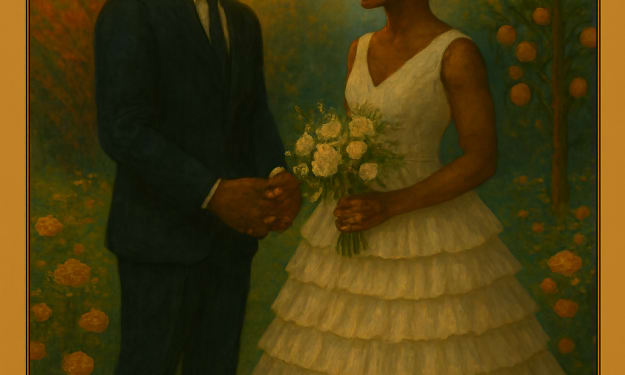
The seventh card in A Modern African Tarot marks a turning point in the journey—from individual mastery to relational depth. Where V PASTOR explores public faith and influence, VI LOVERS brings the focus to connection, commitment, and the spiritual power of union. This card reimagines the traditional Lovers archetype through African symbolism, modern partnership, and the sacred tension between choice and destiny.
By Vongani Bandi3 months ago in Art
'Till Death We Do Art
There would be nothing divine in this world without art. Nature may surpass the divine to all intents and purposes, but like everything it absorbs and is absorbed by, it remains here, stuck on the surface of this world, ever-present, physically bound to the universe.
By Avocado Nunzella BSc (Psych) -- M.A.P 16 days ago in Art
Five world-renowned classic landmark sculptures
In many cities around the world, there is an iconic landmark sculpture. It may stand in a square, by the water, or at the entrance to a park, quietly becoming a symbol of the city. Over time, these pieces came to mean much more than just decoration. They become symbols, gathering places, and even cultural landmarks that represent the spirit of the city.
By Shenzhen Ruiheng Crafts5 days ago in Art



Comments
There are no comments for this story
Be the first to respond and start the conversation.