
A 2,000-Year-Old Roman Gold Ring Reveals Ancient Craftsmanship and Innovation
Old Roman Ring

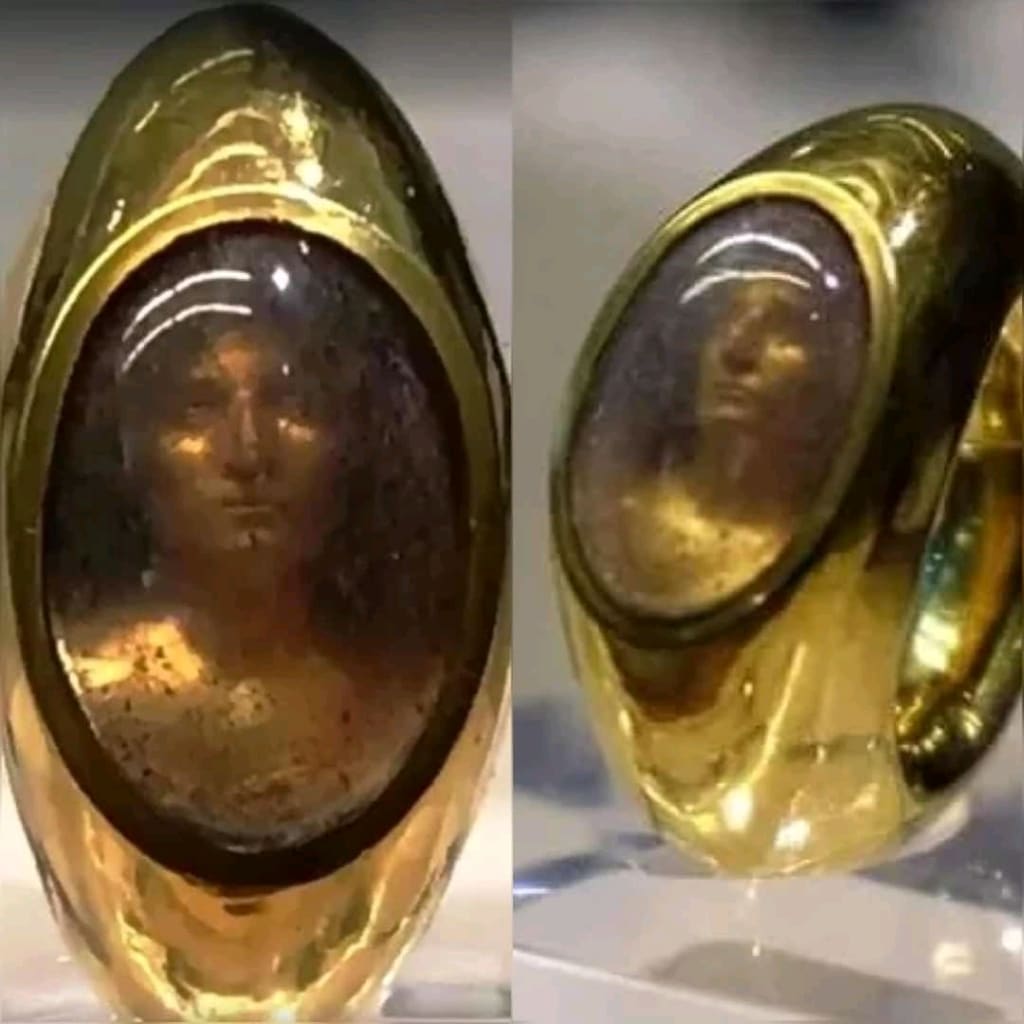
In the heart of ancient Rome, where art and culture flourished, a stunning artifact has been unearthed, providing a glimpse into the ingenuity and skill of Roman artisans. A nearly 2,000-year-old Roman gold ring, recently discovered in the tomb of Aebutia Quarta near Rome, has stunned archaeologists and historians alike. What makes this discovery so remarkable is not just the age or the material of the ring, but the technique used to create a striking illusion of lifelike, three-dimensional imagery that would be considered cutting-edge even by today’s standards.
The Discovery
The ring was found in the tomb of Aebutia Quarta, a woman whose life remains a mystery, but who appears to have been part of the Roman elite based on the nature of the burial. The tomb, dating back to the early centuries of the Roman Empire, provided a rich treasure trove of artifacts, but none so fascinating as the gold ring. What sets this piece apart is the meticulous craftsmanship and the innovative use of materials that seem to defy the limitations of the time.
The ring features a rock crystal that has been expertly carved with a portrait of Titus Carvilius Gemello, the son of Aebutia Quarta. The image of Gemello is strikingly lifelike, making the viewer feel as though they are looking at a miniature version of him. The portrait was not engraved on the surface of the crystal but instead on the reverse side, a technique that would later prove to be an essential element in achieving the three-dimensional effect.
The Illusion of Movement
What makes the ring particularly remarkable is the effect it produces when light passes through it. The engraving, done on the reverse of the crystal, bends and refracts light in such a way that it creates an illusion of depth and movement. The portrait of Titus Carvilius Gemello appears to shift slightly depending on the angle of light, giving the illusion of a holographic image. This optical effect is a stunning example of the advanced techniques that Roman craftsmen employed, even in a time when the scientific understanding of optics was in its infancy.
The effect is reminiscent of modern holography, where light is manipulated to create images that appear three-dimensional to the viewer. The craftsmanship involved in creating this effect must have been extraordinary, considering that the Romans had no access to the technological advancements that would enable the creation of holograms as we understand them today. Instead, they relied on their deep understanding of materials, light, and optics to create this strikingly modern illusion.
The Role of Rock Crystal in Roman Jewelry
Rock crystal, a type of clear quartz, was highly prized in ancient Rome for its clarity and beauty. It was often used in jewelry, amulets, and other decorative items, and its value was only rivaled by materials such as gold and gemstones. The use of rock crystal in this particular ring demonstrates the sophistication of Roman artisans, who were able to carve such a delicate and intricate design into a material that could be both fragile and difficult to work with.
Carving on the reverse side of a crystal is a particularly challenging technique. It requires immense precision and skill, as the carver has to work in reverse and ensure that the image appears lifelike and accurate when viewed from the front. The portrait of Titus Carvilius Gemello, with its realistic detail and lifelike quality, is a testament to the talent and ingenuity of the Roman craftsmen who created it.
Advanced Roman Techniques
Roman artisans were known for their ability to blend artistic beauty with technical innovation. This ring, with its unique three-dimensional effect, provides a glimpse into the advanced techniques that the Romans employed in their art and jewelry. The use of light manipulation, combined with the delicate engraving of the crystal, showcases the Roman's deep understanding of optical principles—well before the advent of modern science.
It is also worth noting that the Roman elite, such as Aebutia Quarta, often had access to the finest craftsmanship available at the time. Jewelry like this gold ring was not only a symbol of wealth and status but also a reflection of the high level of sophistication that was characteristic of the Roman Empire. The ability to commission such a finely crafted piece would have been a significant part of the elite's identity, making this artifact not just a personal treasure but a symbol of Roman society's values and aspirations.
Preservation and Display
Today, this extraordinary ring is housed in the Museo Archeologico Nazionale di Palestrina, where it continues to awe visitors with its elegance and innovation. The museum, located near Rome, is dedicated to preserving the rich cultural heritage of the region, and the discovery of this gold ring only adds to its prestige as a center of historical significance. The ring offers not only a glimpse into the artistry of ancient Rome but also a reminder of the timeless human desire to innovate and create beauty.
The discovery of this Roman gold ring is a testament to the brilliance of ancient Roman craftsmen. It is a reminder that, even in an era long before the advent of modern technology, ancient civilizations possessed the ingenuity and vision to create works of art that still captivate us today. The ring serves as both a piece of history and a lasting symbol of the advanced techniques that shaped the Roman Empire’s rich cultural legacy.
About the Creator
Keep reading
More stories from Deji Akomolafe and writers in Art and other communities.
The Last Defender: A Portrait of Courage and Sacrifice
In the world of art, few images can capture the depth of human emotion and resilience quite like Andrey Shishkin’s painting The Last Defender. This evocative and powerful work tells a story not just of a young boy, but of an entire community, struggling against overwhelming odds. In a world filled with complex narratives and fleeting moments, The Last Defender stands out as a haunting reminder of the universal themes of sacrifice, courage, and the brutal cost of war.
By Deji Akomolafeabout a year ago in Art
How Tattoo Parlours in Cape Town Help Clients Feel Comfortable and Informed
Walking into a tattoo parlour in cape town for the first time can feel strange. You are trusting someone with your skin, your story, and a design you might wear for life. It is normal to feel excited and scared at the same time.
By Tools of Trade Studiosa day ago in Art
What Voice Cloning Technology Means for Creators and Digital Identity
The rise of artificial intelligence has reshaped the creative landscape in countless ways, from AI-generated visual art to automated music composition, and one of the most intriguing frontiers today is voice cloning. With tools that let users clone your voice using only a short sample of speech, creators and digital communicators are discovering new ways to produce audio content that feels natural and expressive.
By aliyashahzadi6 days ago in Art




Comments
There are no comments for this story
Be the first to respond and start the conversation.