
Huge network of ancient cities uncovered in the Amazon rainforest
cities that are 2,500 years old, hidden deep within the forest.

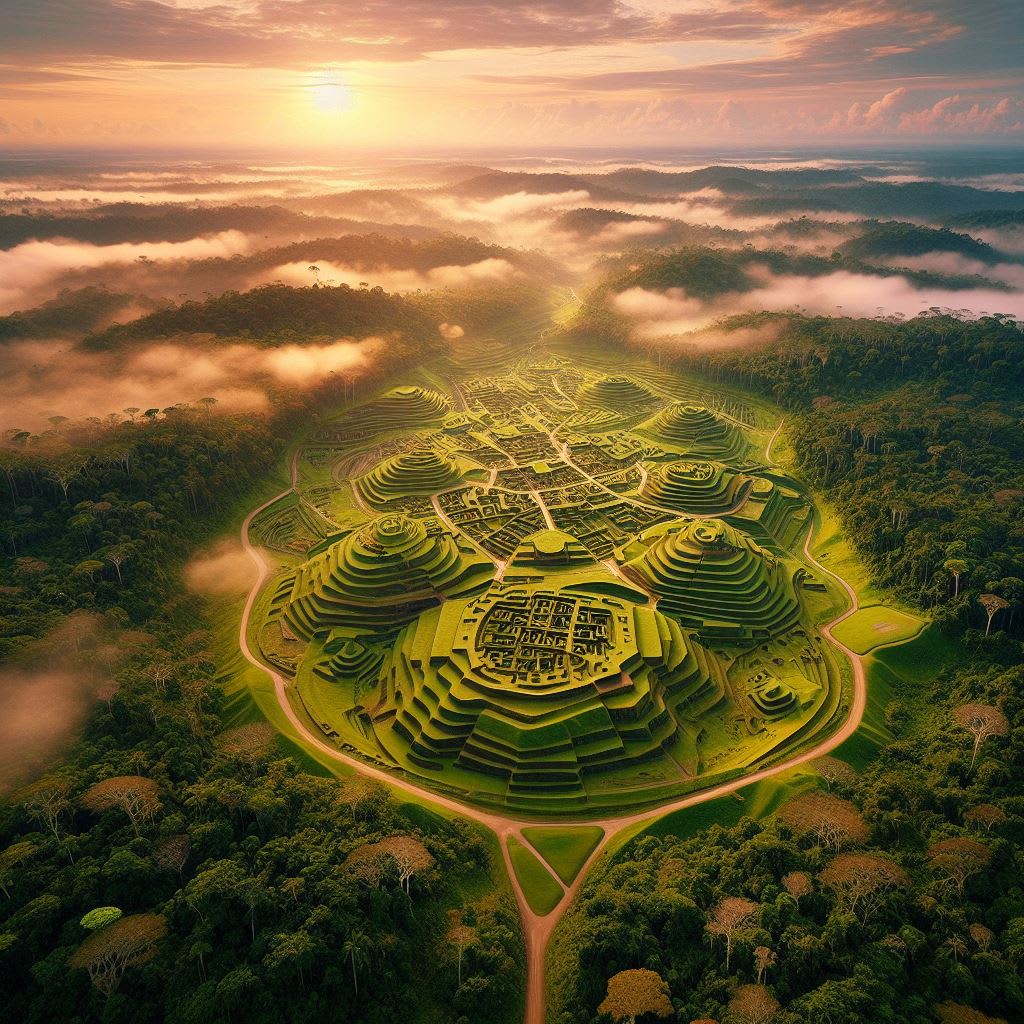
- Ancient Cities in Amazon: Archaeologists have discovered an extensive network of ancient cities, dating back 2,500 years, in the Amazon rainforest. These highly structured settlements were found in the Upano Valley of Amazonian Ecuador.
- Advanced Engineering: The organization of these cities, with their wide streets, long roads, and clusters of platforms, suggests advanced engineering skills. The discovery challenges the notion of the Amazon as an untouched wilderness.
- Similar Sites Across Americas: This urban network aligns closely with other sites found across the tropical forests of Panama, Guatemala, Belize, Brazil, and Mexico, suggesting advanced, urban societies were more common in the Americas’ tropical forests than previously thought.
Hey there! You won’t believe what I just read. There’s been a massive discovery in the Amazon rainforest. Picture this: cities that are 2,500 years old, hidden deep within the forest.
These aren’t just any old cities. They’re incredibly organized, with wide streets, long roads, plazas, and even clusters of monumental platforms. All of this was found in the Upano Valley of Amazonian Ecuador, right at the eastern foothills of the Andes.
This discovery is the result of over 20 years of hard work by a team of researchers from France, Germany, Ecuador, and Puerto Rico. They started with traditional fieldwork and then brought in some high-tech tools. They used something called lidar, which uses laser light to find structures hidden beneath the thick tree canopies.
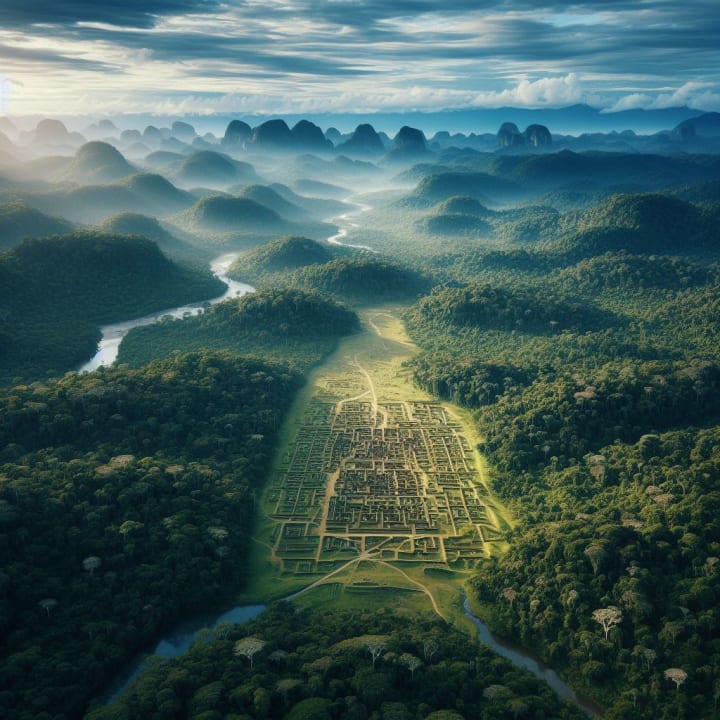
The lead researcher, Stéphen Rostain, was blown away by the discovery. He said the lidar gave them a bird’s eye view of the region and revealed a complete web of dug roads.
The first people who lived there, about 3,000 years ago, had small, scattered houses. But around 500 BCE, the Kilamope and later Upano cultures started building mounds and setting their houses on earthen platforms. These platforms were usually organized around a low, square plaza.
The lidar data showed more than 6,000 of these platforms in the southern half of the area they surveyed. Most of the platforms were rectangular, and they were typically built around a plaza in groups of three or six. The plazas often had a central platform too.
The researchers also found monumental complexes with much larger platforms, which they think probably had a civic or ceremonial function. They identified at least 15 clusters of these complexes as settlements.
Some of the settlements were protected by ditches, and there were obstructions to roads near some of the large complexes. This suggests that the settlements might have faced threats, either from outside or from tension between groups.

Even the most isolated complexes were connected by pathways and a network of larger, straight roads with curbs. In the empty spaces between complexes, the team found signs of land cultivation, like drainage fields and terraces. These were connected to a network of footpaths.
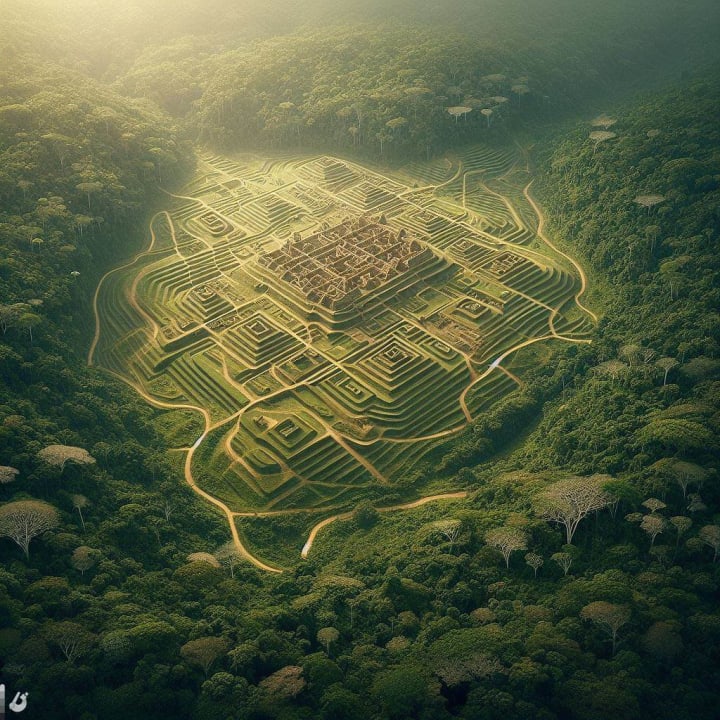
Rostain calls these “garden cities,” and he says this discovery completely changes our understanding of the Amazon. He wants us to rethink the idea that all Indigenous people in the rainforest were semi-nomadic tribes wandering the forest in search of food. Instead, he says, there was a wide variety of cultures, and some of them had urban systems and stratified societies.
The organization of the cities suggests that there was advanced engineering at the time. The researchers concluded that the garden urbanism of the Upano Valley shows that the Amazon is not the untouched forest we once thought it was.
Rostain wants us to imagine pre-Columbian Amazonia as a bustling place, like a nest of ants, with everyone busy with activities.
This urban network in the Amazon is similar to other sites that have been found across the tropical forests of Panama, Guatemala, Belize, Brazil, and Mexico. So, it seems like there’s a lot more to learn about the ancient cultures of the Americas. Isn’t that fascinating?
How does the discovery of these ancient cities change our understanding of the Amazon rainforest’s history?
This discovery fundamentally alters our perception of the Amazon rainforest’s history. We’ve long thought of the Amazon as a pristine, untouched wilderness.
However, the discovery of these “garden cities” suggests that the Amazon was once home to advanced, urban societies.
These societies had a significant impact on the landscape, creating extensive networks of roads, plazas, and platforms.
They also cultivated the land, creating drainage fields and terraces.
This challenges the notion of the Amazon as an untouched wilderness and suggests that it has been shaped by human activity for thousands of years.
What does the discovery tell us about the cultures that lived in the Amazon 2,500 years ago?
The discovery provides fascinating insights into the cultures that lived in the Amazon 2,500 years ago. The organization of the cities, with their wide streets, long roads, and clusters of platforms, suggests that these cultures had advanced engineering skills.
The presence of ditches and road obstructions near some of the large complexes suggests that these societies faced threats and had to defend their settlements.
The cultivation of the land between the complexes shows that these cultures were not just hunters and gatherers but also skilled farmers. This paints a picture of diverse, complex societies that were capable of significant architectural and agricultural feats.
How does this discovery relate to other archaeological findings in the Americas?
This discovery is not an isolated case. Similar urban networks have been found in the tropical forests of Panama, Guatemala, Belize, Brazil, and Mexico.
This suggests that advanced, urban societies may have been more common in the Americas’ tropical forests than previously thought. It also raises intriguing questions about the connections between these societies. Were they in contact with each other?
Did they share ideas and technologies? Further research will be needed to answer these questions, but the discovery in the Amazon opens up exciting new avenues for understanding the history of the Americas.
FOR MORE SUSPENSEFUL STORIES LIKE THIS, SUBSCRIBE AND THANKS FOR SUPPORTING
READ MORE LIKE THIS
At CES 2024, tech companies are transforming the kitchen with AI and robots that do the cooking
AI can tell if prints from two different fingers belong to same person
About the Creator
Yusuf Alam
Crafting Words into Amazing Stories | Freelance Copywriter | Turning Ideas into Impact
Keep reading
More stories from Yusuf Alam and writers in 01 and other communities.
At CES 2024, tech companies are transforming the kitchen with AI and robots that do the cooking
Christopher Huang, BriskIt, speaks on the company’s newly unveiled NeoSear smart grill, that utilizes AI to generate recipes and monitor cooking during the CES tech show Wednesday, Jan. 10, 2024, in Las Vegas. (AP Photo/Ryan Sun)© Provided by The Associated Press
By Yusuf Alam2 years ago in 01
Adding AI to Your Mobile App: A Practical Guide
Not every app needs machine learning. But if you’re building products that serve thousands of users with different habits and expectations, static logic eventually starts to crack. The same feed, the same suggestions, the same flows for everyone — it works early on, but it doesn’t scale.
By Valeriia Shulga4 days ago in 01
How Can I Hack a Snapchat Account? The Real Techniques Used by Hackers in 2026
In the ever-evolving landscape of cybersecurity, few questions are asked with as much frequency and urgency as: "How can I hack a Snapchat account?" While this query often stems from a place of curiosity, suspicion, or even malicious intent, understanding the mechanisms behind these attacks is the first and most critical step toward preventing them. Snapchat, with its ephemeral nature and nearly one billion users, is a prime target for cybercriminals.
By Alexander Hoffmann4 days ago in 01



Comments
There are no comments for this story
Be the first to respond and start the conversation.