
Are You an Early Bird or Night Owl? Shocking Secrets Unveiled
Revealing Astonishing Truths about Early Birds and Night Owls

The Myth of Early Birds vs. Night Owls: Understanding Chronotypes
Introduction
Are you an early riser or a night owl? The classic division of people into these two categories has long been a popular way to describe our sleep preferences. If you love waking up with the sun and feel most energetic in the morning, you're considered an early bird. On the other hand, if you come alive at night, enjoying the tranquility and silence that the nighttime offers, you might be a night owl. But is it as simple as that? Recent research suggests that there's more to our sleep preferences than this binary classification.
The Morning Person vs. Night Owl Debate
Early birds typically start their day with high spirits but may struggle to stay awake come afternoon or evening. In contrast, night owls may find it challenging to get out of bed in the morning, taking some time to shake off sleepiness, but then gradually ramp up their energy levels as the day progresses. The conventional wisdom has often favored early risers, with sayings like "the early bird catches the worm." Many aspects of modern society, from work schedules to school start times, are designed to accommodate morning people. However, the reality is more nuanced.
Exploring Chronotypes
Recent research suggests that there are not just two distinct categories—early birds and night owls. A study focused on college students revealed a more complex picture of sleep-wake cycles, known as chronotypes. Participants were asked to categorize themselves based on their energy levels throughout the day, including the morning, afternoon, and evening.
Surprisingly, only 13% identified as genuine morning enthusiasts, while 24% leaned more towards being night owls. This means that the majority of people fall into entirely different sleep-wake patterns, with some experiencing high energy levels all day long and others feeling sleepy throughout the day. In essence, this challenges the notion that everyone can be neatly classified as either an early bird or a night owl.
Implications for Modern Society
The traditional 9-to-5 work schedule, school hours, and other societal structures are typically more accommodating to early risers. However, this research suggests that such a schedule might not suit the majority of the population. With the rise of remote work, there is an opportunity for people to align their schedules more closely with their natural chronotypes, whether that means working in the morning, afternoon, or evening.
Can Night Owls Become Early Birds?
While switching from a night owl to an early bird is possible, it's not an easy process. To make this transition, it's essential to gradually adjust your sleep schedule by waking up 15 to 20 minutes earlier every few days over several weeks. Consistency is key to success in this endeavor. Additionally, avoiding screens before bedtime and getting exposure to natural light upon waking can help reset your circadian rhythm. Changing your workout and meal timings may also be necessary.
However, it's important to note that trying to become an early bird by sacrificing sleep can lead to various health issues and a lack of productivity. It's essential to strike a balance that suits your lifestyle and overall well-being.
Conclusion
The traditional classification of people into early birds and night owls oversimplifies the diversity of sleep-wake patterns. Recent research shows that most people have unique chronotypes, which may not align with the typical societal schedule. With the flexibility offered by remote work, it becomes easier for individuals to adapt their schedules to their natural preferences. Ultimately, whether you're an early bird or a night owl, it's essential to prioritize restful sleep and balance your daily routine to suit your needs.
About the Creator
Faith Chepkoech
Come along on a journey to explore the fascinating and bizarre, where every article is a ticket to a world of wondrous discoveries! 🚀🌍🔍
Keep reading
More stories from Faith Chepkoech and writers in 01 and other communities.
Halloween Riddles: Test Your Wits
Introduction Halloween, with its eerie tales, creative costumes, and enigmatic mysteries, is the perfect backdrop for thrilling adventures. In this article, we delve into a series of Halloween-themed riddles that will not only challenge your cognitive skills but also transport you into a world of witches, vampires, and ghosts. As we venture into these spooky tales, be prepared to unlock the secrets hidden in the shadows and discover the unexpected twists that await.
By Faith Chepkoech2 years ago in 01
What Real Estate Apps in San Diego Get Wrong About Users?
Laura Kim didn’t question whether people liked the app. The numbers were undeniable. Thousands of installs each month. Long browsing sessions. Homes saved and unsaved repeatedly. Map views that stretched late into the night.
By Mike Pichai4 days ago in 01
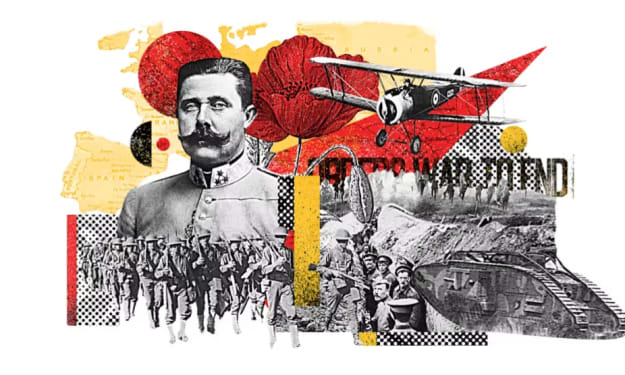
World War I: The War That Changed the World
The Spark That Ignited a Global Conflict World War I, also known as the Great War, began in 1914 after the assassination of Archduke Franz Ferdinand of Austria-Hungary in Sarajevo. This single event triggered a web of alliances, militarism, and nationalism that had been building across Europe for decades. What might have remained a regional conflict escalated into a global war involving more than 30 nations.
By Salaar Jamali3 days ago in 01
Affection and Healing for Yourself
During the night of the last quarter moon, I gathered my ritual supplies. I carefully handled the chunk of black tourmaline that would protect me from your overall negative and narcissistic energy. I carefully walked the house with my stick of selenite in hand, asking the universe to cleanse our working space.
By Alisha Wilkins ✒️🦋🖋️7 days ago in Fiction



Comments (2)
Great work! Interesting myths!!!
This is great!