
World War I: The War That Changed the World
From the assassination in Sarajevo to the Treaty of Versailles, World War I reshaped nations, societies, and global politics forever.

The Spark That Ignited a Global Conflict
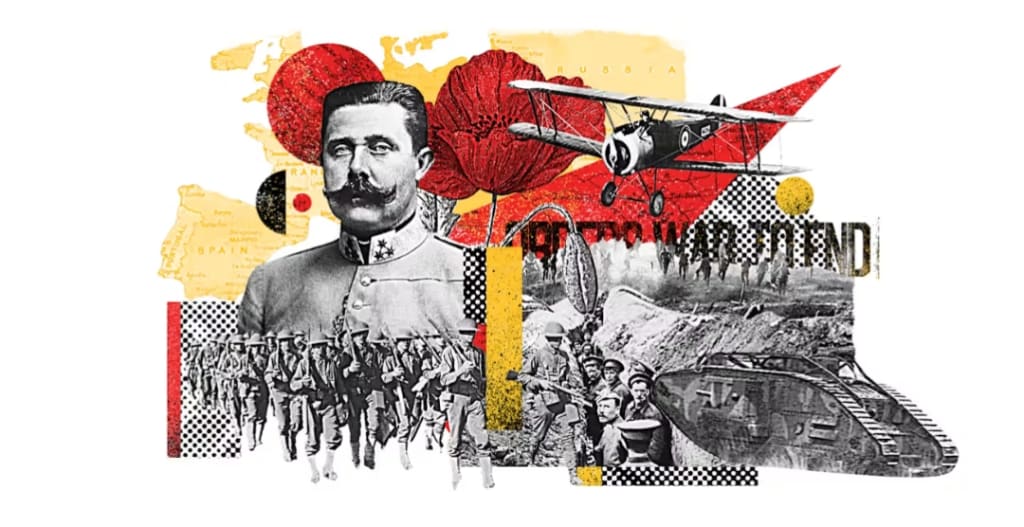
World War I, also known as the Great War, began in 1914 after the assassination of Archduke Franz Ferdinand of Austria-Hungary in Sarajevo. This single event triggered a web of alliances, militarism, and nationalism that had been building across Europe for decades. What might have remained a regional conflict escalated into a global war involving more than 30 nations.
The main alliances were the Allies, including France, Britain, Russia, and later the United States, and the Central Powers, primarily Germany, Austria-Hungary, and the Ottoman Empire. The combination of rigid alliances and aggressive militarism meant that a localized conflict quickly expanded into a continental and eventually worldwide war.
---
Trench Warfare and Technological Change
One of the defining features of World War I was trench warfare, particularly on the Western Front in France and Belgium. Soldiers lived in muddy, disease-ridden trenches, facing artillery bombardments and new, deadly technologies. World War I saw the first large-scale use of:
Machine guns that could mow down advancing troops.
Poison gas, including chlorine and mustard gas, causing severe injuries and panic.
Tanks and airplanes, which began to change the nature of combat.
Despite technological advances, the war became a stalemate in many regions, resulting in a catastrophic loss of life. Millions of soldiers and civilians perished, and entire landscapes were destroyed, leaving a generation traumatized.
---
Global Impact Beyond Europe
Although most battles were fought in Europe, the war was truly global. Colonies in Africa, Asia, and the Middle East were drawn into the conflict, supplying troops and resources. The Ottoman Empire faced internal revolts and foreign invasions, while Japan expanded its influence in Asia under the guise of supporting the Allies.
The global reach of World War I also transformed economies. Nations mobilized entire populations and industries for war, leading to innovations in manufacturing and logistics but also severe shortages of food and materials. Women entered the workforce in unprecedented numbers, setting the stage for social change after the war.
---
The Human Cost
World War I resulted in staggering human losses. Estimates suggest over 16 million deaths and more than 21 million wounded. The war also caused widespread displacement and famine, especially in Eastern Europe and the Ottoman territories. Psychological trauma became a lasting legacy, giving rise to the term “shell shock” for what we now recognize as post-traumatic stress disorder (PTSD).
The war’s toll extended beyond soldiers. Civilians faced food shortages, economic hardship, and disease outbreaks, including the 1918 influenza pandemic, which was exacerbated by troop movements and wartime conditions.
---
The Treaty of Versailles and Political Consequences
The war officially ended with the Armistice of November 11, 1918, but its aftereffects were far-reaching. The Treaty of Versailles (1919) imposed harsh penalties on Germany, including territorial losses, military restrictions, and massive reparations. Many historians argue that these terms contributed to economic hardship and political instability, laying the groundwork for World War II just two decades later.
The Austro-Hungarian and Ottoman empires collapsed, giving rise to new nations in Eastern Europe and the Middle East. This redrawing of borders created both opportunities for self-determination and new sources of tension that persist today.
---
Social and Cultural Transformations
World War I also catalyzed profound social and cultural changes:
Women’s rights: Women took on roles traditionally reserved for men, leading to increased calls for suffrage and social equality.
Art and literature: The disillusionment of the war inspired movements such as Dadaism and the Lost Generation in literature, capturing the trauma and absurdity of industrialized warfare.
Technology and medicine: Advances in medical care, communications, and transportation during the war had lasting impacts on civilian life.
The war challenged traditional ideas about heroism, nationalism, and progress, leaving societies questioning the cost of industrialized conflict.
---
Lessons and Legacy
World War I remains a critical chapter in modern history because it reshaped the global order. Key lessons include:
1. The dangers of unchecked alliances and militarism.
2. The far-reaching impact of total war on civilians and economies.
3. The need for diplomacy and international institutions, later embodied in the League of Nations and eventually the United Nations.
While World War I was initially overshadowed by the outbreak of World War II, its consequences are still felt in international politics, national boundaries, and cultural memory. Monuments, literature, and education continue to honor the millions who lived and died in this global conflict.
---
Conclusion: Remembering the Great War
World War I was not just a European conflict; it was a global event that changed the course of history. From technological innovations and geopolitical shifts to social transformations, its legacy is profound and enduring. Understanding the causes, experiences, and consequences of World War I helps us grasp the complexities of modern global conflict and reminds us of the human cost of war.
Even more than a century later, World War I remains a powerful reminder: the decisions of nations, alliances, and leaders can reshape the world in ways both unforeseen and irreversible.
About the Creator
Keep reading
More stories from Salaar Jamali and writers in 01 and other communities.
Change is Inevitable’: What Is Next for Iran
A Nation Under Strain Iran, one of the Middle East’s most strategically important countries, is facing a moment of profound upheaval. After months of economic turmoil, civil unrest and a brutal government crackdown, political analysts, citizens and international leaders alike are asking what comes next. The old social contract — once defined by religious authority, revolutionary legitimacy, and economic stability — is unraveling. And many observers now argue that change in Iran is no longer just possible — it is inevitable.
By Salaar Jamaliabout 2 hours ago in The Swamp
How to Become a Mobile App Developer in 2026
The Google ecosystem has undergone a tectonic shift where mobile development is no longer defined by syntax proficiency but by Agentic Optimization. This structural realignment means that risk exposure for developers now hinges on their integration into the Trust Graph rather than mere technical stack knowledge.
By Devin Rosario3 days ago in 01
Best Animation Brands: Top Players Shaping the Animation World
The animation industry is one of the most dynamic and influential sectors in entertainment. Over the years, animation studios have created masterpieces that have redefined storytelling and visual artistry. From classic hand-drawn films to cutting-edge CGI experiences, the best animation brands continue to captivate audiences across the globe. In this article, we’ll dive deep into the best animation studios, exploring their contributions, creative techniques, and what makes them stand out in the world of animation.
By Backlinks Cart3 days ago in 01



Comments
There are no comments for this story
Be the first to respond and start the conversation.