
What Ghana need to Survive Economically.
The fundamental pillars of Ghana's economy


The pillars of an economy refer to the fundamental elements or key sectors that play a significant role in its growth, stability, and overall well-being. These pillars can vary from one country to another, but some common pillars include:
Manufacturing and Industry: This pillar encompasses manufacturing sectors that produce goods such as automobiles, electronics, machinery, and other tangible products. A strong manufacturing base is essential for job creation and exports.
Agriculture: Agriculture is often a foundational pillar, as it provides food, raw materials, and employment. It's crucial for food security and the livelihood of many in both developed and developing economies.
Services: The services sector includes a wide range of industries, such as finance, healthcare, education, and tourism. In many advanced economies, services have become the dominant pillar, contributing significantly to GDP and employment.
Trade and Commerce: The ability to engage in international trade is vital for economic growth. This pillar involves both imports and exports, helping to foster economic relationships with other nations.
Infrastructure: Infrastructure includes transportation networks, energy supply, communication systems, and public services. It forms the backbone of economic activity, enabling the efficient movement of goods and people.
Finance and Banking: A stable and well-regulated financial sector is crucial for allocating capital, facilitating investments, and enabling economic transactions.
Education and Workforce: A highly educated and skilled workforce is essential for innovation and competitiveness. Education is often considered an investment in the future of an economy.
Innovation and Technology: Embracing innovation and technology is increasingly important for economic growth. Research and development, as well as a culture of entrepreneurship, contribute to this pillar.
Government and Policy: Effective governance, regulations, and economic policies play a critical role in maintaining economic stability and fostering growth. This includes fiscal policies, monetary policies, and regulations that promote fair competition.
Natural Resources: For resource-rich countries, natural resources like oil, minerals, or agricultural land can be a significant pillar of the economy. Proper management is essential to ensure sustainability.
These pillars are interrelated, and the strength of one can influence the performance of others. A diversified economy that relies on multiple pillars is often more resilient to economic shocks and better positioned for long-term growth.
Ghana has the chance of utilizing these pillars in making the economy of the country one of the best in Africa and in the world at large.
First of all, Ghana's Natural Resource is one of its fortunes and can be helped to do the magic in the economy of the country if it is been managed well. we can say that there has been a lot of wastage and mismanagement on the part of governments on their decisions around the Natural Resources of the country, but it can still be useful if the right mechanisms is put in place.
Rich mineral resources such as gold, diamonds, manganese, limestone, bauxite, iron ore as well as various clays and granite deposits. Ghana is the second largest producer of gold in Africa. And the country still have the chance to make a lot of changes in Ghana's economy with the remaining natural resources.
Another aspect Ghana can make good use of is the Agricultural sector. Out of the total national land area 23.8 million ha, agricultural lands constitutes about 13.6 million ha Representing about 57.1%. Ghana can capitalize on this potential to intensify her crop yield for internal consumption and exportation. This will strengthen the economy of Ghana.
Ghana is doing worst in Manufacturing and Industrialization. Ghana can do well in the following manufacturing industries; textile and garment manufacturing, wood processing, pharmaceutical products manufacturing, metal processing, cement and chemical production, aluminium smelting and the refinery of crude oil and gas
About the Creator
Elisha Mohammed
A young man who is interested in researching and Educating the masses from latest findings in research concerning issues pertaining life and nature
Keep reading
More stories from Elisha Mohammed and writers in Writers and other communities.
The Magic of Gardening
Once upon a time in a small village nestled between rolling hills and a sparkling river, there lived a curious young girl named Lily. Lily had a heart full of curiosity and a mind brimming with questions. She was always seeking to learn new things, and she often found herself exploring the wonders of the natural world.
By Elisha Mohammed2 years ago in Earth
Early March 2026: 4 Goals Accomplished
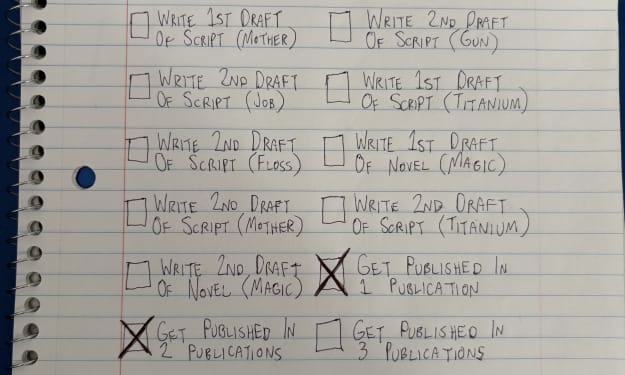
It's early March and I've now accomplished my 4th writing goal for the year of 2026. Before diving into the behind-the-scenes of it... why not tell you up front what that accomplishment was? I was published in a 2nd publication for this year. Published in Helix Literary Magazine out of Central Connecticut State University. You can read it for free right now!
By Stephen Kramer Avitabile3 days ago in Writers



Comments
There are no comments for this story
Be the first to respond and start the conversation.