
What Exactly Is "Cliche"?
Cliches are ill-defined, and that's part of the industry. Hopefully, this will help nail it down a little.

The biggest problem you will have is the cliche problem. Far too many people will use it as an excuse to hate your writing, and so this needs to be discussed.
A cliche is anything that has been overused. You know: magical girls, card games with living monsters, giant ships with bigger guns. Something that you see way too often. Whether or not something is a cliché is situation-dependent, usually dependent on other variables, such as seeing it too often in a specific space of time, using it just because it's popular, or a half-hearted attempt at satire. Cash grabs, or doing something just for the money, are usually marked as clichés,
[Cliches and tropes are different sides of the same coin: While cliches suffer from overuse, tropes seem fresh, or at least not as stale. In essence, if the writer is having fun with the idea and it doesn't feel like it's being used because the writer just couldn't be bothered to use something, then it's usually called a "trope." Whether or not something is a cliché or a trope depends on the reader's perspective.]
Cliches tend to be used either by beginners or committees. For beginners, cliches allow them to stay in a safe area, roughly akin to bunny trails and shallow areas. There's very little danger, and they know the curves. For committees, it means a guaranteed success; after all, the idea has proven itself over and over and over, and works for new viewers who haven't seen it and the old generation like it. Yes, an entire generation that hasn't seen Card Captor Sakura, and to whom the magical girl show is actually new! Weird, but true. And it's that new audience that allows cliches to be perpetuated.
So…how do you avoid cliches? Think it through and plan. If the idea is that you will fall back on cliches when you need something safe, don't put yourself in a position where you need that fallback. By planning ahead and taking an honest look at your script, you can avoid the vast majority of cliches.
Also, know the industry. Before you get really interested in your idea, take out a piece a paper and list every show, movie, comic, or book you can think of that even looks like your idea, and don't be afraid to do an internet search. If there are more than a handful, then odds are you're dealing with a cliche.
I point this out because far too many beginners replicate almost word-for-word ideas that are just a few years old, and then get quickly frustrated when a number of people point out that their Great Original Idea ™ is already cliché. The best way to avoid this, obviously, is to know what has gone before you.
Hmm…Guess some examples would help….
5) Team Comics: Teams can be good and bad. The good is that you can split up tasks, have a range of personalities, have intra-team conflict, and have an easy excuse for some exposition. These are all great things. Splitting up tasks allows characters to define who they by what they do. A range of personalities allows people to pick someone they like to root for. Conflict is always good, and if you make it natural (such as five people living together in cramped quarters) rather than forced, so much the better. And it's only natural that you need to explain things to someone in the group who wasn't there or isn't following along.
While this is great for advanced writers as it gives them a chance to play around with expectations, new writers almost always stick to it because it gives them a solid skeleton to work from, giving them something to work with that they are familiar with. Committees love them because it's easy to market them and they have a proven track record. If you're doing the standard five-man band, you may want to figure out some way to shake things up.
4) Elemental Powers: This is where it gets ridiculous. The default is the classical Greek elements Fire, Earth, Water, Air, but any theme can work. Each character has abilities and personality traits that stem from their respective element. Although these are visually interesting, they are sorely lacking for imagination. Just be aware of the problem, and plan accordingly. Try to come up with something different than the Classic Four; even the oriental elements are a good change-up, or elements from the periodic table. You can also use "element" to mean "theme" and go from there. You can also mismatch elements and personality types, such as making the fire guy calm and detached or the earth guy passionate.
3) Angsty Hero: O Woe is I! I accidentally killed my best friend, my lover committed suicide because I was a day late coming home, and my dog has worms. Oh, and my house is trying to kill me. Today on Oprah: Angsty heroes and the fangirls that love them.
Look: I understand the attraction: Girls like guys that need them, and this guy needs something. I know that the angsty hero is an old literary tradition (yet another thing we can blame on Ancient Sumeria: Gilgamesh, anyone?). And I know his existence validates that of the artistically dark. But…give the guy a good day once in a while! Gilgamesh let his hair down! Elric did smile every so often. King Richard cracked wise. Even Macbeth had fun!
At some point, have just let the guy have some fun and loosen up; it's going to make for a boring comic if all we see is someone who keeps getting dumped on by life. We some reason to keep checking in and if it's just to see more bad news, we probably won't be checking in much longer. Also, don't make all of them angsty; you don't want them to argue about who has the darkest background. Try to limit yourself to one or two mysterious backgrounds per group.
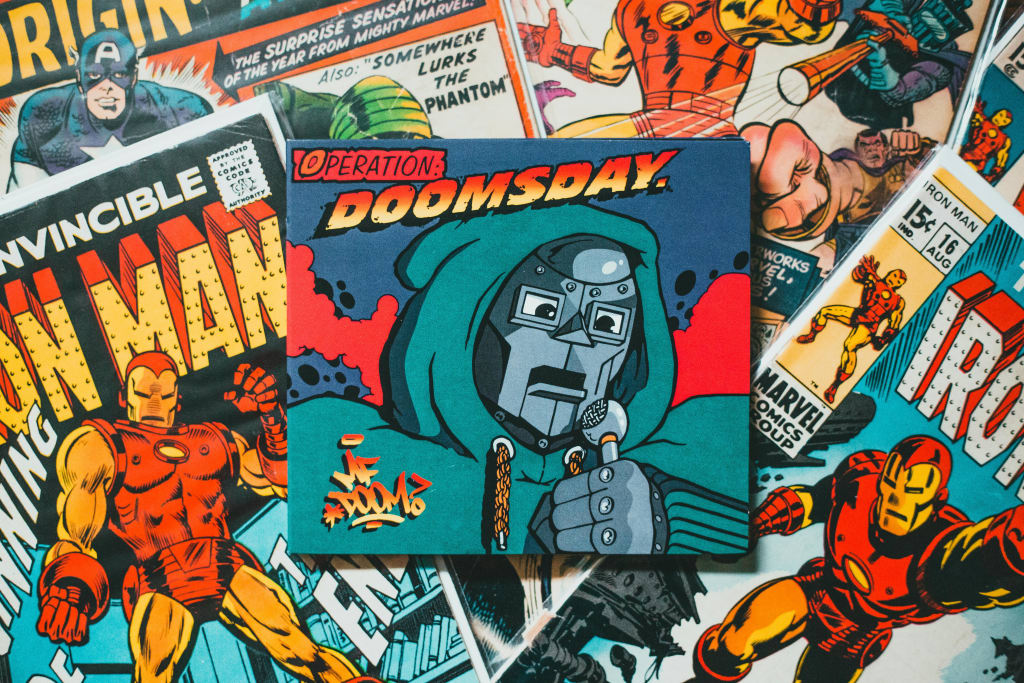
2) Knock-Off Versions of Popular Characters: Look at the number of Superman knock-offs out there; characters with enhanced stats, flying, and some sort of energy blast who are the apex of their sphere are pretty common. While there are some interesting versions (such as Marvel Man, who is a deconstruction of comics), most versions are an almost obligatory show of a lack of imagination. The basic point here is that the cliché is to create essentially knock-offs of popular characters rather than new and original characters; while it's fine to do parodies and homages, if your entire cast is mostly just knock-offs, your readers will notice and get bored really quick, and then they'll put your book in the DNF pile.
Avoid the DNF pile by creating new and interesting characters.
1) One-Dimensional Institutional Figures: Okay, this is my least favorite cliche of all time. I appreciate that a lot of artists don't like religious figures; there are a lot of reasons to dislike people that put a lot of limitations on what you do. And I understand why military types aren't exactly popular. All authority figures make for great targets, and the bigger jerks that they are the better the targets.
However, that shouldn't be an excuse to make them one-dimensional. When you make any excuse to have one-dimensional characters in your strip, you're wasting my time. All of your characters should be well-rounded, even the jerks, or your comic will suffer. You can't just offer caricatures of real people because you have to know how your characters work in order to get the biggest bang out of your characters; you, need to be able to get behind your characters, even the ones that you hate. Especially the ones that you hate.
At some level you need to realize that any group has those members that aren't exactly shining examples of their organization; the more in the public eye the group is, the more likely you're going to see the dregs of that group. The problem is that every group is full of heroes and villains; it's just harder to ignore the ones you hate when they aren't kept hidden. That's something you need to remember: Even in the most villainous organization there are heroes and even in the most heroic group there are villains. You need to figure out who those people are and figure out how to bring them out more.
The bottom line is that you should try to avoid everything that happened before you; even satires should change things up a little bit. Have some fun with what you are doing and it should work out okay.
About the Creator
Jamais Jochim
I'm the guy who knows every last fact about Spider-man and if I don't I'll track it down. I love bad movies, enjoy table-top gaming, and probably would drive you crazy if you weren't ready for it.
Keep reading
More stories from Jamais Jochim and writers in Writers and other communities.
Plotting For Beginners Part 1
[This is a two-part article; part two is here.] Okay. You have an idea. Now, write it down. Just the idea part! Don't worry about plot details, characters, whatever, except those that are important to your idea. Don't worry about length; that's not the concern. Just write as long or as short as you want. Come back when you're ready…
By Jamais Jochim5 months ago in Writers
Early March 2026: 4 Goals Accomplished
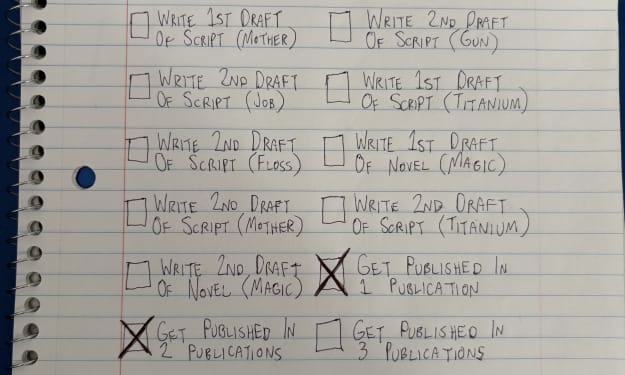
It's early March and I've now accomplished my 4th writing goal for the year of 2026. Before diving into the behind-the-scenes of it... why not tell you up front what that accomplishment was? I was published in a 2nd publication for this year. Published in Helix Literary Magazine out of Central Connecticut State University. You can read it for free right now!
By Stephen Kramer Avitabile3 days ago in Writers



Comments
There are no comments for this story
Be the first to respond and start the conversation.