
Violence, Men and Mental Health
Levar’s Social Commentary


"Violence can be construed as one of several displacement activities and mechanisms for enhancing self-esteem." - JW Coid
*originally written October, 2013 & advanced upon in April, 2025
I recently read a psychiatric report that stuck in my mind. Occasionally I find these reports to be too statistical, formulaic and lacking practical, interesting, or applicable insight. But as with anything, there are always exceptions. This was a study taken from a large number of British, inner city participants (from places like Hackney in London and inner city Glasgow), all men and all between the ages of 18-34. The report was aiming to find a link between gang behaviour, violence and psychiatric morbidity (mental illness). It was interesting because it concluded that a violent lifestyle have direct links to higher levels of anxiety, psychosis (loss of contact with reality) and personality disorders. But most interestingly, it also found, from its sample group, that rates for depression were far higher in men who are ‘non-violent’.
Men who were part of violent gangs and involved in this study less commonly relied upon therapeutic services for depression, than males with no history with violence. This finding on depression intrigued me. How can males in violent gangs be more anxious and paranoid, but statistically suffer from less depression than non-violent men? Now it could be that there’s more reluctance for men from certain backgrounds to seek support for depressive states, the likelihood of that is high. However, I wanted to explore these findings in more depth.
From the report’s findings, what is it about engaging in 'violent activity' that specifically inhibits depression? I don't want this to be an overly statistical, or scientific post, it's more of an exploration of themes that stand out to me.

Being analytical about film, the report had me thinking about the ways in which certain categories, such as the 'action film' genre, (along with sub-genres like superhero cinema), are disproportionately and voyeuristically consumed by this same, male demographic. The underlying suggestion, is that there exists a link between the need to display and/or engage in violent, aggressive activity, which in turn, prevents low-mood and the development of depressive states, regulation of testosterone and better self-esteem.
There's a reason why computer games like the Grand Theft Auto and Call of Duty franchises are often the biggest sellers in their respective categories. These titles are worth billions of dollars, are often endorsed by 'A-list' celebrities and once again are disproportionately consumed by the young, male demographic (which many a parent/partner/girlfriend will attest to). These are popular media tools, which are used by the individual as entertainment and psychological escapism after work, studying, on weekends, or absolutely whenever. However, the almost sadistic reward you receive from theft, killing, shooting and all the other things associated with a gang lifestyle, invariably acts as immediate positive reinforcement, keeping otherwise nonviolent men, in touch with their inner psychopath(s).
The question remains whether immersing oneself in 'violence' within this context, provides relief from everyday life, which in turn can be argued to be a pacifier for depression, or does it inadvertently lead to an over-reliance on violent entertainment, which can then lead to mania?
It's difficult to know exactly how the report classifies 'non-violent' males. It mentions those who haven't been involved within a violent lifestyle, or had any altercation within the last five years, but other than that, there's no clear indication as to what type of lifestyle these men lead, making them go on to become clinically depressed. It could be argued that being involved in activities such as sports or going to the gym, engage the participant in 'violent activity' to some degree. The display of aggression, raising higher levels of testosterone and physical exertion are all things you could associate with violent activity, so it could be that these are things that also prevent low mood and raise endorphins.
It's possible that by 'nonviolent', the report is documenting a percentage of men who engage in very little physical activity and are in some way introverted, as depression is linked to isolation, introspection and a general lack of healthy release. Leading on from that, I could then go on to talk about sex and whether there's a violence attributed to sexual intercourse. In one of my MSc modules, our lecturer would often say “sex is a violent act”, which felt reductive and somewhat projecting, without any acknowledgment of the beauty of sexual intimacy. There's been so much written about violence and sex and the act of penetration. Frankly, it's not the route I'm intending to go down at this time, it's a topic that deserves its own discussion.
As I mentioned earlier, whilst reading the report, I was thinking of examples of depression, violence and typically “male” activity within a fictional context. I often do this because it enables me to deconstruct quite serious or disturbing findings in a separately engaging, yet relatable way.

I've looked at how violent media and activity appears to regulate mood. My thoughts eventually turned to the character of Batman/Bruce Wayne. There appear to be direct parallels between this complex character and this report. By now we are pretty much in universal agreement that Christopher Nolan's ‘The Dark Knight’ trilogy, is the most profound series of superhero films. For those who've seen them, most agree that what sets them apart, is the mixture of grand spectacle along with an authenticity that comes with grounding a comic book character within somewhat relatable, real world contexts. The fascinating thing about Bruce Wayne is that his motivations are fuelled by childhood, psychological trauma and that is something that makes him identifiable, as most of us have at some point experienced varying levels of childhood trauma, or difficulty, let alone witnessing the first-hand murder of our parents.
Psychologist Robin S. Rosenberg writes a series of superhero psychology posts for Psychology Today. She looks at various mental health related topics for identifiable characters and relates them to her own clinical expertise in an intersting way. She has looked at whether Batman suffers from mood disorders, which indeed is the thing that stood out to me while reading this study. Unlike her though, I will look specifically at the Batman of Nolan's film series, as this relates directly to the general points I'm raising. Batman, as we all know, is essentially a crimefighter. In Batman Begins he aims to bring down drug pushers and gangsters tied to the mob.
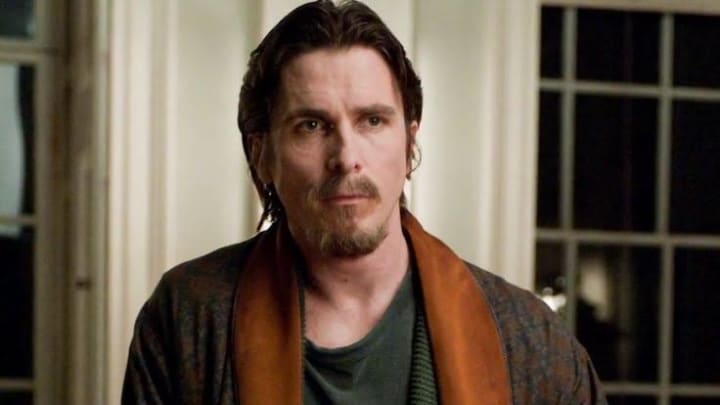
In The Dark Knight he continues to target organised crime, along with the Joker's psychopathic brand of terrorism, whilst all the while concealing his true identity as billionaire Bruce Wayne. Batman gives Bruce Wayne a purpose of violent vengeance, which acts as a key motivational factor, to regulate his mood. No amount of computer games or movies can inspire him in the same way as actively fighting crime. We see this by the time The Dark Knight Rises surfaces as he has ceased being the Batman for the best part of a decade, no longer engages in violent activity, (which in his case is tangibly fighting violence) and as a result becomes a recluse with all of the symptoms of depression. For all his forethought and commitment to righting wrongdoing, Bruce Wayne's self esteem is still tied to acts of violence. He, as many have observed, is the 'other side of the coin' to the majority of the villains he comes up against, which is why his struggles are so compelling.
Of course this is an example of relating something fantastical to something very real and quite significant, but the central theme is evident. My thoughts are, no matter how it's dressed up or down, violent acts are directly linked to mood. It's only by confronting that fact, we can begin to understand the reasons why.
About the Creator
Lev. Life. Style
I’m fascinated by culture’s ability to shape thought and behaviour. I value creativity as a means of aiding wellbeing and growth. Film, analysis, travel and meaningful discussion, are personal passions that I’m grateful to share.
Lev
Keep reading
More stories from Lev. Life. Style and writers in Writers and other communities.
The Sadness Of The Nostalgic
I watched ‘Young Adult’ directed by Jason Reitman (Juno, Up in the Air) and Woody Allen’s ‘Midnight in Paris’ over a Saturday evening. At surface value, the two films could not seem more different. Young Adult is a leisurely, brooding comedy, were Charlize Theron plays a semi-successful, thirty-something novelist, who returns to her home town aiming to rekindle a lost flame who is now happily married. Midnight in Paris is an archetypal Woody Allen picture, including his signature long-takes filled with quick wit and an endearing visual vibrancy. Yet for their respective settings and dissimilar delivery, the key theme of nostalgia ties the two films.
By Lev. Life. Style 9 months ago in Writers
Festive Lighting Ideas: How to use Himalayan Salt Lamps to Turn your Place into a Radiosphere.
The holiday season is all about warmth, glow, and making the place a home to friends and family. Even though traditional Christmas lights and candles were always components of the festive decoration, Himalayan salt lamps are a beautiful design and have health advantages. Their jovial, amber illumination foreshadows an uplift to any area on the spot and sets them as an excellent location for your holiday lights. In this article, it is explained how you can transform your house with the help of pink salt lamps during your holiday, and practical advice is also given regarding how you can incorporate natural salt lamps in your holiday home.
By Mubarik Ahmad 5 days ago in Writers



Comments
There are no comments for this story
Be the first to respond and start the conversation.