
Understanding Chatter Machining: Causes, Effects, and Solutions
Chatter Machining

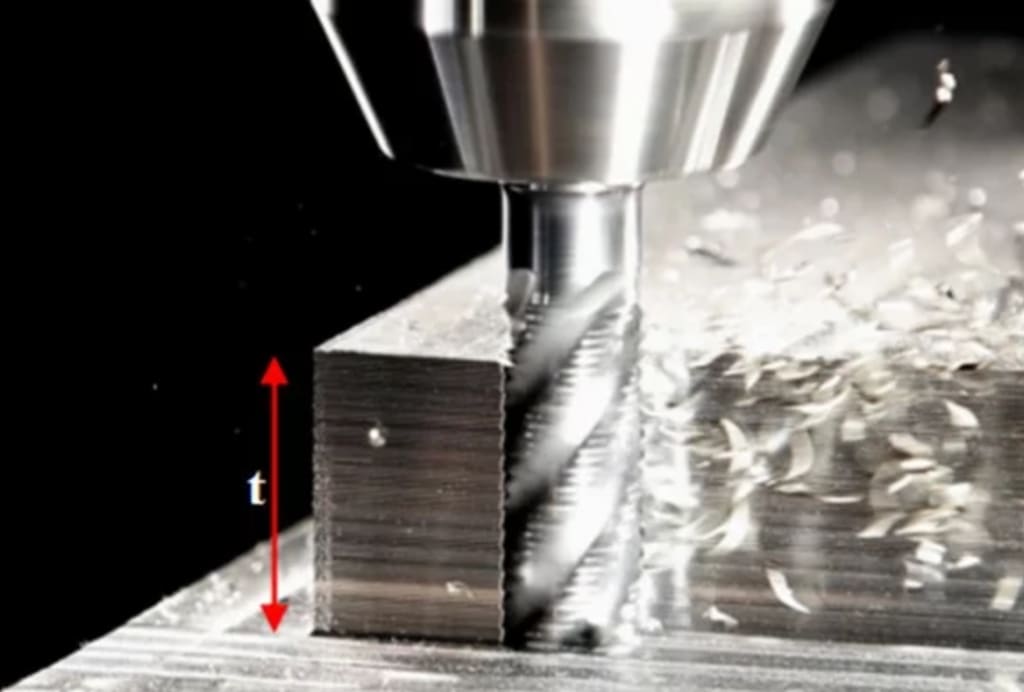
Chatter is one of the most common and disruptive issues in machining. It refers to unwanted vibrations or oscillations that occur during the Chatter Machining, which can lead to poor surface finishes, tool wear, and ultimately affect the quality and productivity of the machining operation. While chatter is a natural phenomenon in any dynamic system, it can be controlled with a good understanding of its causes and the right approaches. In this article, we will explore what chatter is, the causes behind it, its effects on machining, and how to prevent or mitigate it for better machining results.
What is Chatter in Machining?
Chatter in machining refers to the vibrations that occur between the cutting tool and the workpiece. These vibrations typically arise from an unstable interaction between the cutting forces and the dynamic characteristics of the machine-tool system. Chatter is not only a nuisance but also a major cause of issues in precision machining. When it occurs, it leads to irregular patterns on the surface of the part, excessive tool wear, and often a decrease in machining efficiency.
Chatter can manifest in several ways, such as:
Visible marks on the part surface: These are often grooves or oscillation patterns left by the tool on the workpiece.
Irregular tool wear: The constant vibrations accelerate the wear on cutting tools.
Dimensional inaccuracies: The tool's deflection and unstable cutting path can lead to parts that don’t meet the required specifications.
The root causes of chatter are multi-faceted, involving factors such as cutting parameters, tool design, machine rigidity, and material properties.
Causes of Chatter in Machining
Understanding the causes of chatter is key to preventing or reducing it. Below are the main factors that lead to chatter in machining:
1. Resonance and Natural Frequencies
All machining systems, including the machine tool, the workpiece, and the cutting tool, have a natural frequency, which is the frequency at which they naturally vibrate when disturbed. If the cutting force matches the natural frequency of the system, resonance occurs. This amplifies the vibrations and leads to unstable cutting conditions, known as chatter. This is especially prevalent when the cutting conditions are not optimized for the specific setup.
2. Cutting Force Imbalance
The cutting process generates various forces, such as radial, axial, and tangential forces, all of which act on the tool and workpiece. When these forces are imbalanced or fluctuating, they can lead to vibrations that result in chatter. For instance, when there is an uneven distribution of forces, or if the cutting tool encounters a hard spot in the material, the tool may deflect, causing momentary loss of contact with the workpiece and leading to unwanted vibrations.
3. Tool Wear and Condition
As a tool wears out, it loses its sharpness and structural integrity. Worn-out cutting edges increase resistance during cutting, which can introduce irregular cutting forces. These irregular forces can cause the tool to vibrate, leading to chatter. Additionally, poorly maintained or improperly sharpened tools are more likely to contribute to vibration and poor cutting performance.
4. Machine Rigidity
A lack of rigidity in the machine tool can be one of the primary contributors to chatter. The more flexible or less rigid the machine components (spindle, tool holder, and workpiece fixture), the more susceptible they are to vibrations during the cutting process. Tools with excessive overhang or loose workpieces can contribute to reduced rigidity and increase the risk of chatter.
5. Excessive Cutting Speeds and Feed Rates
While high cutting speeds and feed rates can improve productivity, they can also increase the likelihood of chatter, especially if the cutting forces exceed the machine's capability to absorb them. At higher speeds, the cutting forces fluctuate more rapidly, and if these fluctuations match the system's natural frequency, resonance and chatter can occur. In some cases, reducing the cutting speed and feed rate can stabilize the cutting process and eliminate chatter.
6. Workpiece Material Properties
The material being machined also plays a role in the occurrence of chatter. Materials with varying hardness, internal stresses, or inconsistent grain structures can cause uneven cutting forces. For example, hard spots in the material can cause the tool to lose contact intermittently, which can generate vibrations and lead to chatter. Material inconsistency is often difficult to control but can be mitigated by adjusting the cutting parameters.
Effects of Chatter in Machining
The consequences of chatter in machining can be far-reaching, affecting both the workpiece and the overall machining process. Below are some of the most significant effects:
1. Poor Surface Finish
Chatter results in a rough, uneven surface finish on the workpiece. The tool’s vibrations cause it to move erratically, creating oscillation marks on the surface. This is particularly problematic in precision applications where a smooth, polished surface is required. A poor surface finish is often the most immediate and noticeable effect of chatter.
2. Increased Tool Wear
Chatter accelerates tool wear because the continuous vibrations impose additional forces on the cutting tool. These forces cause the tool to make intermittent contact with the workpiece, leading to micro-impacts on the tool edges. Over time, this leads to faster tool degradation and the need for more frequent tool changes, which increases production costs and downtime.
3. Dimensional Inaccuracies
The vibrations caused by chatter can make it difficult to maintain precise control over the cutting process. As the tool oscillates, it deviates from the desired cutting path, leading to dimensional inaccuracies. This is especially problematic in high-precision machining, where parts need to meet strict tolerances. Chatter can result in parts that are out of specification, requiring rework or even scrapping the part.
4. Reduced Productivity
When chatter occurs, the machinist may need to slow down the machining process to avoid further damage to the tool or part. This reduction in cutting speeds and feed rates results in longer cycle times and decreased productivity. In many cases, operators may need to perform additional finishing operations to correct surface defects caused by chatter, further extending machining time.
5. Machine Damage
Extended periods of chatter can cause damage to the machine itself. The vibrations generated during chatter can cause excessive wear on the machine’s spindle, bearings, and other critical components. Over time, this can lead to costly repairs, downtime, and even the need for machine replacement if the damage is severe.
How to Prevent and Mitigate Chatter in Machining
While chatter is inevitable to some extent in machining, there are several strategies that can be implemented to prevent or minimize its effects. Below are some of the most effective ways to tackle chatter:
1. Optimize Cutting Parameters
The first step in reducing chatter is to optimize the cutting parameters. Lowering the cutting speed and feed rate, and adjusting the depth of cut can help reduce the forces acting on the cutting tool. This often results in more stable cutting conditions and less risk of chatter. It is essential to fine-tune these parameters based on the material being machined and the specific setup.
2. Increase Machine Rigidity
Increasing the rigidity of the machine-tool system is one of the most effective ways to combat chatter. This can be done by ensuring that the machine is properly aligned, using stiffer tool holders, and minimizing tool overhang. Reducing workpiece deflection and improving clamping can also enhance the stability of the cutting system.
3. Use Damping Systems
Modern machining centers often feature damping systems that absorb vibrations and prevent them from propagating through the machine structure. These systems can be passive (such as vibration-dampening tool holders) or active (using sensors and actuators to counteract vibrations). Implementing such damping technologies can significantly reduce chatter.
4. Maintain Tool Condition
Keeping tools sharp and well-maintained is crucial to preventing chatter. Worn tools cause irregular cutting forces and can exacerbate vibrations. Regularly inspecting and replacing worn tools ensures that the cutting edge is performing at its best and minimizes the likelihood of chatter.
5. Adjust Tool Geometry
Optimizing the geometry of the cutting tool can help reduce chatter. Using tools with the right rake angles, clearance angles, and coatings can reduce cutting forces and improve the overall stability of the cutting process. Additionally, selecting tools that are well-suited to the material being machined can further minimize vibrations.
6. Use Advanced Cutting Strategies
There are several advanced cutting strategies that can help reduce chatter. For instance, using "chatter suppression" or "dynamic milling" techniques, where the toolpath is programmed to avoid resonant frequencies, can significantly reduce vibrations. Other techniques like using a constant engagement angle or employing "multi-pass" strategies (taking smaller cuts over multiple passes) can also help stabilize the cutting process.
7. Monitor Cutting Conditions
Using sensors or vibration monitoring systems to detect chatter in real-time can allow operators to adjust cutting parameters before excessive vibrations occur. These systems can provide valuable feedback and allow for real-time process adjustments, which can prevent or minimize the occurrence of chatter during machining.
Conclusion
Chatter in machining is a common but serious problem that affects surface quality, tool life, and machining efficiency. It is caused by several factors, including resonance, cutting force imbalances, tool wear, machine rigidity, and high cutting speeds. The effects of chatter can be detrimental to both the workpiece and the machine, leading to poor surface finishes, increased tool wear, and even machine damage.
Fortunately, chatter can be mitigated by optimizing cutting parameters, improving machine rigidity, using damping systems, maintaining tool condition, and implementing advanced cutting strategies. With careful planning and attention to detail, machinists can minimize the occurrence of chatter and enhance the quality, precision, and efficiency of their machining operations. By understanding its causes and implementing the right solutions, chatter can be controlled and the machining process can be made more reliable and productive.
About the Creator
Xc Machining
Martin is a dedicated service provider at XCMachining, XCMachining is a leading provider of precision machining services, specializing in custom CNC machining, metal fabrication, and high-quality parts manufacturing.
Keep reading
More stories from writers in Writers and other communities.
The Duelist
The rays of a dying red sun flashed against the onrushing blade. The grey beards say the key to dueling lies in size, speed, reach, righteous fury, whatever the person in front of them pays them to say. Matteo knew better than any it was none of these and had an undefeated record on these sands to prove it.
By Matthew J. Fromm4 days ago in Fiction


Comments
There are no comments for this story
Be the first to respond and start the conversation.