
The Weight of the Rain
A Story of a Girl Who Felt Too Much in a World That Felt Too Little

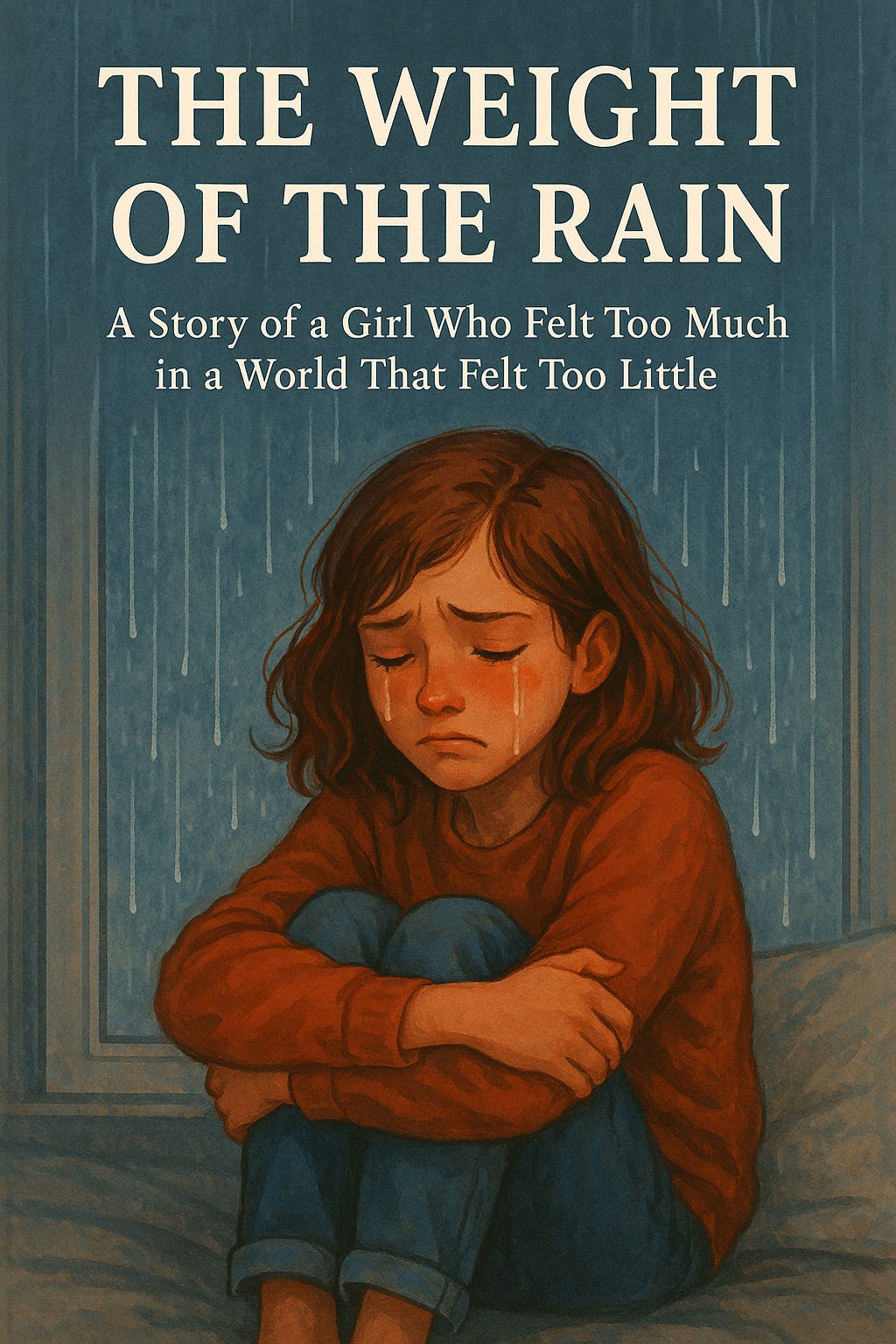
The rain had started before sunrise and showed no signs of stopping. Drops rolled steadily down the windowpane like tears on skin. Mira sat on the edge of her bed, knees tucked to her chest, arms wrapped tightly around them, as if trying to hold herself together.
She had always felt things too deeply. Her mother used to call her “tender-hearted,” a name that once sounded like affection but lately felt like a burden. At fifteen, Mira didn’t want to cry over spilled juice, or a broken pencil, or the way her best friend Leena had stopped talking to her for reasons Mira didn’t understand. But she did.
It wasn’t just Leena. It was everything.
The way her father had stopped coming to dinner, always “working late.” The way her little brother threw tantrums and no one seemed to notice that he, too, might be unraveling. The way her mother’s laughter had become quieter, as if she were saving it for better days that never came.
Mira felt like a sponge—soaking in all the sadness, the anger, the tension that no one spoke aloud. She cried in the shower where no one could hear. She wrote poems in the back of her school notebooks, lines that rhymed with pain, verses no one ever saw.
At school, they called her “too sensitive,” like it was a flaw.
“You need to toughen up, Mira,” her teacher said when she teared up during a history lesson about war. “The world isn’t a soft place.”
But Mira didn’t want to become hard just to survive. She wanted the world to be softer.
One gray afternoon, as the rain drummed its steady rhythm on the roof, Mira wandered into the school library. It was quiet—her kind of quiet. She tucked herself between shelves, running her fingers along the spines of books until one caught her eye: The Girl Who Felt Everything.
The title pulled at her.
She sat in the corner and read for hours. The book told the story of a girl who cried when others couldn't, who noticed every little detail others overlooked—like the way a smile faded too quickly or how someone’s eyes didn’t match their words. The girl in the story was told she was “too much” until she learned her feelings were her strength, not her weakness.
Mira closed the book with trembling hands. It felt like someone had written her story before she had the words to tell it herself.
That night, she went home and wrote a letter to Leena. Not a text. Not a note shoved into her locker. A real letter.
“Dear Leena,” it began. “I miss you. I don’t know what happened between us, and maybe I did something wrong. If I did, I’m sorry. I just want you to know I care. Maybe I care too much. But that’s just who I am.”
She didn’t know if Leena would reply. But for the first time, she wasn’t hiding. She was honest—with Leena, and with herself.
The next day, Mira walked through the rain without her umbrella. She let the drops soak her hair and clothes, washing away some of the heaviness. And she smiled—not because everything was okay, but because she had started to understand that it was okay not to be okay.
Maybe feeling everything wasn’t a curse. Maybe it was her way of connecting with the world, even when it didn’t always understand her.
And maybe, just maybe, that was more than enough.
and that the story
About the Creator
Syad Umar
my name is umar im from peshawer
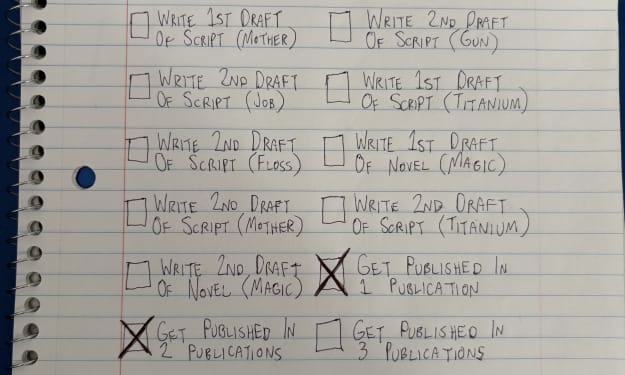
Early March 2026: 4 Goals Accomplished
It's early March and I've now accomplished my 4th writing goal for the year of 2026. Before diving into the behind-the-scenes of it... why not tell you up front what that accomplishment was? I was published in a 2nd publication for this year. Published in Helix Literary Magazine out of Central Connecticut State University. You can read it for free right now!
By Stephen Kramer Avitabile6 days ago in Writers
The Library of Lost Things
The rain didn’t just fall in Oakhaven; it sighed. It was the kind of gray, relentless drizzle that made you want to stay inside and count your regrets. I found myself standing in front of a building I’d passed a thousand times but never truly noticed: a narrow storefront with a peeling wooden sign that read The Library of Lost Things.
By Nolan Ellis2 days ago in Writers
Bomb Scare
It was 2027, and the world never thought it would happen. A missle hit the United States, but it wasn't where they had anticipated. A little town in the northeast was hit by a missile strike, they didn't know why, and they didn't know exactly where it hit, but they did know it was a coastal community, somewhere between Maine and Delaware.
By Gregory Payton6 days ago in Fiction


Comments
There are no comments for this story
Be the first to respond and start the conversation.