
The Way of the Future, or Disaster?
AI: The Pros and Cons

This article contains the use of AI images and content, used as examples.
Two months out from NaNoWriMo 2024, the organisation is in the headlines, but not for a good reason. They're partnering with ChatGPT and other AI companies, and encouraging the use of such in NaNoWriMo.
Obviously, this did not go down well.
NaNoWriMo is no easy undertaking, writing 50,000 words or more in 30 days. That’s why winning, completing a first draft having written at least 1666 words per day, was such a thrill. NaNoWriMo could be listed on resumes to demonstrate hard work, dedication and an ability to meet deadlines.
Typing a prompt into an AI generator not only cheapened that hard work, it threatened to undo it entirely.
As soon as human effort and hard work is removed from the equation, that work is devalued into "oh, a computer can do it, why should we pay you?"
Never mind that AI writing and art lacks any kind of passion or emotion. It's the definition of being a mile wide and an inch deep, something that serves a purpose, but lacks feeling or connection, and is limited by the data it was trained on.
Not merely that, but many recent authors wrote novel drafts on NaNoWriMo, and the organization was tellingly silent on whether or not AI was permitted to access past novel drafts without the writer’s knowledge or permission.
Cue a mass exodus of NaNoWriMo, and the beginning of the organization's end.

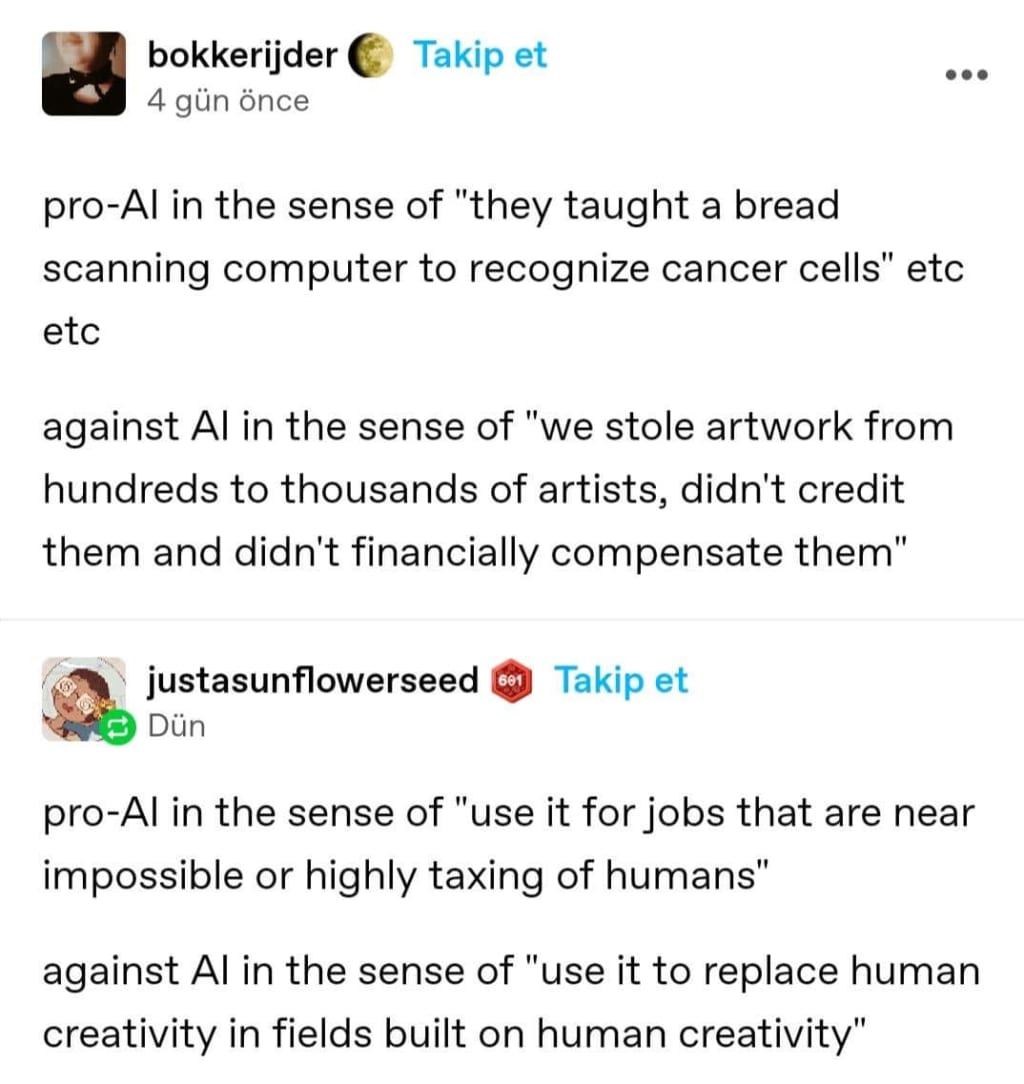
Don't get me wrong, AI does have a place in the future. I just firmly believe that it has to be regulated and carefully developed in order to be effective.
AI isn't new. Photoshop has existed since I was a teenager, and so has its abuse in Revenge Porn. When Microsoft was developed, so was Clippy, a paperclip icon with eyes and a smile that analysed what you'd written and offered suggestions for clip art, editing, and a guide for people who were new to computers. Google Maps and other navigation systems use Analytics and AI to map out the best routes to your destination, even if it's not the route you prefer to take.
What is new is the lack of oversight and the entitlement to the uncompensated hard work of others that pervades new AI models. That's why most fanfiction accounts on AO3 have gone private, because it came out that Chat GPT was using fanfiction to train it's story-writing models.
To Illustrate this, I asked an AI bot to write 1000 words on the benefits and dangers of AI, quoted below
The Benefits and Dangers of AI
Artificial Intelligence (AI) has rapidly advanced over the past few decades, transforming numerous sectors of society, from healthcare and finance to transportation and entertainment. As AI continues to evolve, it presents both immense opportunities and potential risks. In this essay, we will explore the benefits and dangers of AI, considering its current impact and future implications.
Benefits of AI
Efficiency and Automation One of the most widely recognized benefits of AI is its ability to automate repetitive tasks, thereby improving efficiency and productivity. In industries such as manufacturing, AI-powered robots can perform tasks more quickly and accurately than humans, reducing labor costs and minimizing human error. In office environments, AI can assist with scheduling, data entry, and email management, freeing up human workers to focus on more complex and creative tasks.
Improved Healthcare AI has the potential to revolutionize healthcare by improving diagnostics, personalizing treatment plans, and enhancing patient outcomes. AI algorithms can analyze medical data, including X-rays, MRI scans, and genetic information, to detect diseases at earlier stages, sometimes before symptoms appear. Machine learning models have shown promise in diagnosing conditions such as cancer, heart disease, and neurological disorders with greater accuracy than human doctors. Additionally, AI can help identify optimal treatment plans for individual patients, leading to more effective and tailored care.
Enhanced Decision-Making AI can process and analyze vast amounts of data much faster than humans, which allows for better decision-making in various fields. In finance, for instance, AI-driven algorithms can predict market trends, assess risks, and recommend investment strategies with a level of sophistication and speed that human analysts cannot match. In business, AI can analyze consumer behavior, optimize supply chains, and recommend products, leading to increased profitability and customer satisfaction.
Improved Accessibility AI has the potential to make life easier for people with disabilities. Speech recognition software, such as virtual assistants like Siri and Alexa, can help individuals with physical impairments interact with technology more easily. AI can also be used to develop assistive technologies such as smart prosthetics, exoskeletons, and devices that help people with visual or hearing impairments navigate the world more effectively. These innovations can significantly improve the quality of life for those with disabilities.
Environmental Sustainability AI can contribute to environmental sustainability by optimizing energy use and promoting resource conservation. For instance, AI systems can manage electricity grids, ensuring that power is distributed efficiently and minimizing waste. In agriculture, AI can be used to optimize irrigation, monitor crop health, and predict weather patterns, which helps farmers make data-driven decisions that reduce the environmental impact of farming. Additionally, AI is being employed to design sustainable urban infrastructure, promoting energy efficiency in buildings and transportation systems.
Advancements in Research AI accelerates scientific and technological research by analyzing vast datasets and identifying patterns that would be difficult for humans to detect. In drug discovery, AI algorithms can predict molecular structures, identify potential drug candidates, and speed up the development of new treatments for diseases. In physics, AI models are being used to simulate complex systems and predict outcomes, aiding researchers in making breakthroughs in fields like quantum mechanics and astrophysics.
Dangers of AI
Job Displacement One of the most significant concerns about AI is its potential to displace human workers. As AI systems and automation technologies become more sophisticated, many jobs that are repetitive or require basic decision-making skills may be replaced by machines. In industries like manufacturing, retail, and transportation, robots and self-driving vehicles could eliminate millions of jobs, leading to economic disruption and social inequality. While AI could create new jobs in fields such as AI development and data analysis, these positions may require specialized skills that many workers do not possess, leading to a growing divide between skilled and unskilled labor.
Bias and Discrimination AI systems are only as good as the data they are trained on. If the data used to train an AI model contains biases, the model may perpetuate or even exacerbate these biases. For example, AI-powered hiring tools that analyze resumes or conduct interviews might favor candidates from certain demographic groups while disadvantaging others. Similarly, AI used in law enforcement or the criminal justice system could lead to biased decisions regarding parole, sentencing, or predictive policing, disproportionately affecting marginalized communities. Addressing these biases is a critical challenge in ensuring that AI is used fairly and responsibly.
Security Risks As AI systems become more integrated into critical infrastructure, the risk of cyberattacks grows. Hackers could potentially exploit vulnerabilities in AI algorithms or manipulate AI systems to cause harm. For example, AI-controlled power grids, transportation networks, or healthcare systems could be vulnerable to cyberattacks, leading to widespread disruptions. Furthermore, the rise of AI-powered cyberattacks, such as deepfakes or AI-driven phishing schemes, could lead to new forms of deception and fraud, challenging existing cybersecurity measures.
Loss of Privacy AI technologies often rely on vast amounts of personal data to function effectively. For instance, AI systems in healthcare need access to patient records, while social media platforms use AI to analyze user behavior and tailor advertisements. While this data-driven approach can lead to more personalized services, it also raises concerns about privacy. The collection and use of personal data without consent can result in the erosion of individual privacy rights. Furthermore, AI surveillance systems used by governments and corporations could lead to increased monitoring and control over people's lives, potentially infringing on civil liberties.
Ethical and Moral Concerns The development of AI raises numerous ethical questions, particularly regarding its decision-making capabilities. For example, in autonomous vehicles, how should AI decide who to harm in the event of an unavoidable accident? In warfare, should AI be entrusted with making life-or-death decisions in combat situations? The ability of AI systems to make choices that affect human lives brings up questions about accountability and responsibility. If an AI system makes a harmful decision, who is to blame—the developers, the users, or the machine itself?
Existential Risk The most extreme danger associated with AI is the possibility of an artificial superintelligence that surpasses human intelligence and becomes uncontrollable. If AI reaches a point where it can improve and enhance its own capabilities autonomously, it could rapidly evolve beyond human understanding or control. Such a scenario, often referred to as the "singularity," poses a potential existential risk to humanity. While this is a highly speculative concern, leading experts such as Stephen Hawking and Elon Musk have warned that the development of superintelligent AI could pose catastrophic consequences if not properly regulated and controlled.
Conclusion
AI has the potential to bring about significant improvements in various aspects of society, from enhancing healthcare and scientific research to creating new job opportunities and improving environmental sustainability. However, the rapid development of AI also presents serious challenges and risks, including job displacement, biases in decision-making, security vulnerabilities, and privacy concerns. The ethical and existential implications of AI are still subjects of ongoing debate, and society must address these challenges thoughtfully and proactively.
To ensure that AI benefits humanity while minimizing its dangers, it is essential to invest in responsible AI development, regulation, and oversight. This includes creating ethical guidelines, addressing bias in AI systems, ensuring transparency in decision-making, and safeguarding privacy rights. By doing so, we can harness the full potential of AI while mitigating its risks, ultimately creating a future where AI serves as a force for good rather than a threat to society.
In case you scrolled past the entire thing, I'll summarize: Even AI is concerned about the lack of regulation, ethical guidelines and oversight in Major AI Companies, as well as the unaddressed bias and risk of privacy violations.
AI is only as good as the work it is trained on, and is more vulnerable than people to misinformation, propaganda, and outright lies. If a bot is trained on, say, the things I post on Facebook over the course of a year, will it be able to tell the difference between my opinion of a then-current event based on incomplete information, a factual statement, and the sneak peek of a fantasy novel posted for my readers? Upon analysing, will it present all those things as equally truthful?
I don't know, it depends on how rigorously the AI was trained and tested.
In the infinite variety of human experience, can you test for all possible scenarios? I doubt it. Nothing is foolproof, and that includes AI
Already, there are studies being done that show the harm of relying on AI. No one likes writing essays, but we do it to prove that we understand the information being taught. There are already a generation of students who flounder when they can't use AI to get answers, and don't grasp the concept that AI can be wrong.
In my work as a Medical Admin/Reception, we use an AI Chat-Bot to deal with all the incoming calls and messages that don't require an actual person, like directions to the nearest clinic or something that can be answered by looking at the FAQ. Finn - yes, we named it; humans pair-bond with everything - also answers chats in the early stages so it can work out the best person to direct the request to.
THAT is what AI should be used for, as an assistant, not an overlord.
About the Creator
Natasja Rose
I've been writing since I learned how, but those have been lost and will never see daylight (I hope).
I'm an Indie Author, with 30+ books published.
I live in Sydney, Australia
Keep reading
More stories from Natasja Rose and writers in Writers and other communities.
Goals Achieved and Dreams Yet To Come
I'm not making any specific resolutions this year, for Vocal, or for anything else. As most people who set New Years Resolutions can tell you; that rarely ends in anything but disappointment, guilt, a lingering sense of shame and failure, and a general feeling of futility.
By Natasja Rose2 years ago in Writers
Early March 2026: 4 Goals Accomplished
It's early March and I've now accomplished my 4th writing goal for the year of 2026. Before diving into the behind-the-scenes of it... why not tell you up front what that accomplishment was? I was published in a 2nd publication for this year. Published in Helix Literary Magazine out of Central Connecticut State University. You can read it for free right now!
By Stephen Kramer Avitabile5 days ago in Writers
The Library of Lost Things
The rain didn’t just fall in Oakhaven; it sighed. It was the kind of gray, relentless drizzle that made you want to stay inside and count your regrets. I found myself standing in front of a building I’d passed a thousand times but never truly noticed: a narrow storefront with a peeling wooden sign that read The Library of Lost Things.
By Nolan Ellisa day ago in Writers




Comments (3)
Gosh you brought up so many good points. AI can be really great for some things, but detrimental to a lot of communities as well. Not only is there lack of oversight and entitlement as you mentioned, but it is def easier to manipulate!
It's not all about me but a different point of view from another simple perspective
I use AI for music but I write my own lyrics . I also have over 20 years of musical training in voice and piano .I also work over 22 hours on one song to perfect the beat tempo and to secure the words to the music . I work with different genres of music . I use stock footage from AI and thrn integrate into a video I edit in my studio . I make sure it is the way I used to sing. I also make sure when editing my own video that I have to synchronize all tracks and photos and videos together with the music . To fade in. Fade out. I use AI as a TOOL.THIS WEEK I WORKED FROM NOON UNTIL after midnight on a project . I use blood sweat and tears to produce my music and my videos and stories. I write my own stuff .. I AM 75 YEARS OLD WITH A JOURNALISM DEGREE and I attended college when journalism was truth not lies