
The Silent Takeover: How AI is Reshaping the Global Marketplace
Uncovering the forces driving automation, innovation, and disruption worldwide.
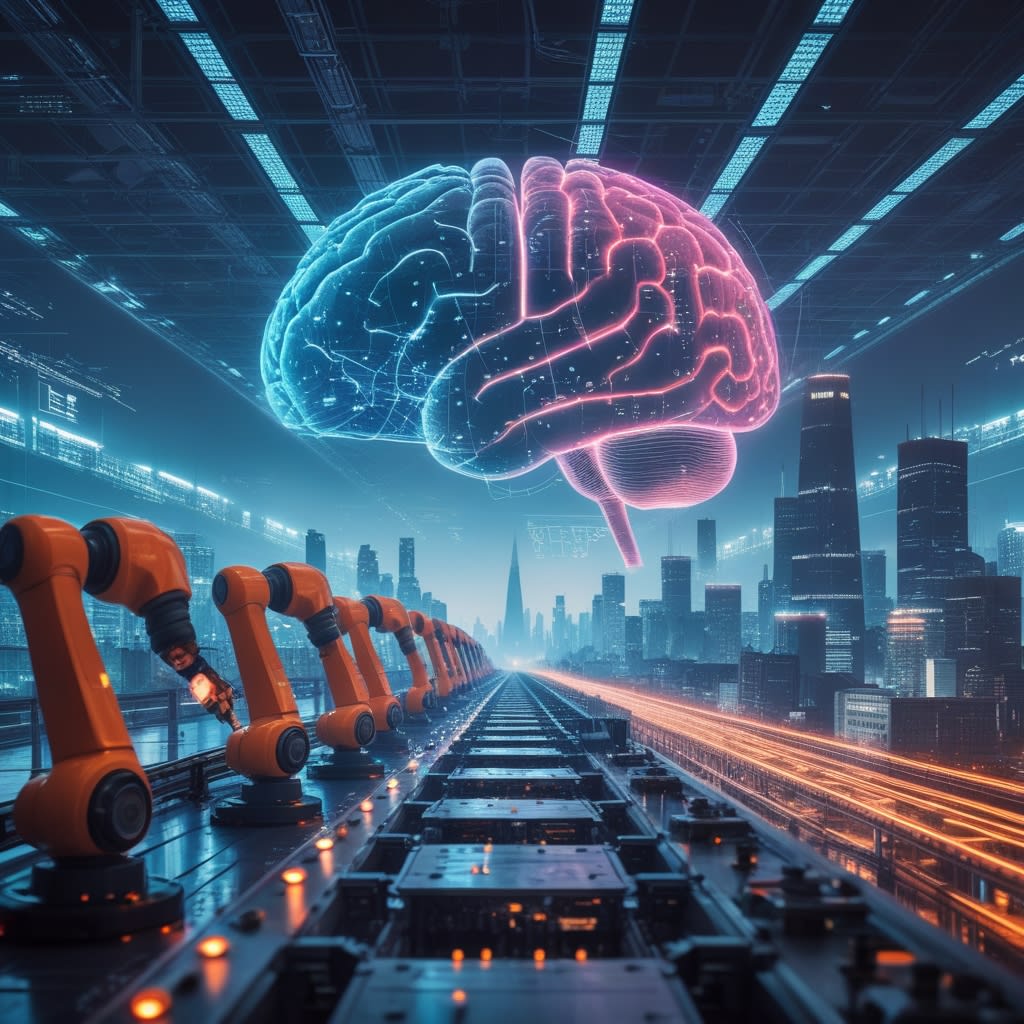
In the last decade, artificial intelligence has evolved from a promising technology into the silent architect of the modern global economy. From predictive algorithms that dictate what products we see online, to robotic arms assembling vehicles in record time, AI is no longer just a supporting actor — it is taking center stage. And it is doing so quietly, yet powerfully, transforming industries, disrupting traditional jobs, and creating entirely new markets in the process.
This proof story examines how AI is reshaping the global marketplace through concrete examples, evidence, and trends that reveal its widespread influence.
AI in Manufacturing: Efficiency at Unprecedented Levels
One of the clearest examples of AI’s global market takeover lies in manufacturing. According to a McKinsey report, AI-driven automation could add up to $3.7 trillion annually to the global economy by 2030. At factories in Germany, China, and the U.S., AI-powered robots now handle tasks that once required dozens of human workers — with more precision and less downtime.
For instance, Foxconn, one of Apple’s largest suppliers, has deployed over 40,000 industrial robots across its factories. These machines, guided by AI algorithms, can assemble thousands of smartphones per day with minimal errors. The result? Faster production cycles, lower costs, and higher profits.
Similarly, Tesla’s Gigafactories showcase AI-driven manufacturing at scale. Robots, sensors, and machine-learning models collaborate seamlessly to produce electric vehicles efficiently — making Tesla one of the world’s most valuable automakers. What was once a labor-intensive industry is now largely orchestrated by intelligent machines.
Retail and E-Commerce: The AI-Driven Consumer Experience
AI is not only revolutionizing production but also changing how consumers interact with the marketplace. In retail and e-commerce, AI enables hyper-personalized recommendations, dynamic pricing, and demand forecasting — shaping what customers buy and how much they’re willing to pay.
Amazon’s recommendation engine, for example, generates about 35% of the company’s revenue by suggesting products based on user behavior and preferences. This algorithmic curation has become a critical competitive advantage. Retailers like Walmart, Alibaba, and Target employ similar technologies, optimizing inventory and maximizing sales through predictive analytics.
Even brick-and-mortar stores are transforming. AI-powered cameras and sensors track customer movement, while checkout-free solutions like Amazon Go allow shoppers to simply pick up items and leave — their purchases automatically charged thanks to computer vision and machine learning.
Finance: Algorithms Managing Billions
Perhaps no sector illustrates AI’s dominance better than finance. Investment firms, banks, and fintech companies now rely heavily on machine learning to manage portfolios, detect fraud, and execute trades at lightning speed.
High-frequency trading (HFT) algorithms dominate global stock markets, executing millions of trades per second based on complex AI models. Firms like Renaissance Technologies and Two Sigma have achieved astonishing returns by leveraging artificial intelligence to identify patterns invisible to human analysts.
In fraud prevention, companies like Mastercard and PayPal employ AI systems that monitor millions of transactions in real-time, flagging suspicious activities with far greater accuracy than human teams ever could. These innovations not only increase profits but also enhance security and customer trust.
AI Creating New Markets
While AI is disrupting existing industries, it is also birthing entirely new ones. Autonomous vehicles, for example, are poised to redefine transportation and logistics. Waymo, Tesla, and Baidu are competing to deploy self-driving taxis and delivery trucks — a market projected to reach over $800 billion by 2030.
In healthcare, AI-driven diagnostics and drug discovery are accelerating medical breakthroughs. DeepMind’s AlphaFold, which solved one of biology’s biggest challenges — predicting protein structures — is now enabling faster, more effective treatments for diseases, opening multi-billion-dollar opportunities in pharmaceuticals.
Even creative industries, once thought immune to automation, are being transformed. Generative AI tools like DALL·E, ChatGPT, and Midjourney empower individuals and businesses to create content, design products, and generate ideas at scale — giving rise to new services, business models, and revenue streams.
The Global Reach of AI
AI’s market impact is not confined to Silicon Valley or developed nations. Emerging economies are increasingly adopting AI to leapfrog traditional development paths. In Africa, AI-powered apps help farmers predict crop yields and detect plant diseases, improving food security. In India, AI chatbots assist millions of people with banking, healthcare, and education in their native languages.
Governments worldwide are also investing heavily in AI research and infrastructure. China, for instance, has declared its ambition to become the world leader in AI by 2030, pouring billions into the technology. The European Union and the U.S. have similarly made AI central to their economic and national security strategies.
Challenges and Criticism
While AI is driving growth and efficiency, its rise also comes with challenges. Automation threatens to displace millions of jobs, particularly in manufacturing and routine-based services. The World Economic Forum estimates that AI could eliminate 85 million jobs by 2025 — while also creating 97 million new ones, largely requiring different skill sets.
There are also concerns about algorithmic bias, privacy violations, and market monopolies. As companies collect more data and refine their AI models, the risk of a few powerful players dominating entire industries grows — potentially stifling competition and innovation.
Conclusion: A Market Transformed
The evidence is clear: AI has already begun taking over the global marketplace — not with noise and spectacle, but with quiet, relentless progress. From the factory floor to the trading desk, from the retail store to the doctor’s office, AI is reshaping how value is created, distributed, and consumed.
Businesses that embrace this silent takeover stand to thrive, while those that resist risk obsolescence. Policymakers and workers alike must adapt to this new reality — investing in education, regulation, and ethical frameworks to ensure that AI’s benefits are shared broadly.
The question is no longer whether AI will dominate the global market, but how humanity will navigate the profound changes it brings.
About the Creator
Keep reading
More stories from Owais Ahmad and writers in Writers and other communities.
Borderline: Two people from enemy nations fall in love at the border crossing, risking their lives every day to see each other.
The snow fell silently on the border that night. Between the two nations lay a thin strip of barbed wire and a line of floodlights that sliced through the darkness like watchful eyes. It was not just a boundary of land but of hatred, war, and history — a place no one dared to linger.
By Owais Ahmad6 months ago in Fiction
Published in Portrait of New England
My quest to find many publications with prestige to submit to has worked out even better than I thought. I was searching for more publications with more prestige in order to bolster my resume. I truly thought I'd try this for a year and not get published anywhere... maybe if I was lucky... in one of them. And I was OK with that... I was just going to try again the following year, and the year after that, and so on.
By Stephen Kramer Avitabile28 days ago in Writers




Comments
There are no comments for this story
Be the first to respond and start the conversation.