
:** *The Double-Edged Sword of Artificial Intelligence*
** *Understanding the Risks AI Poses to Humanity and How to Mitigate Them*

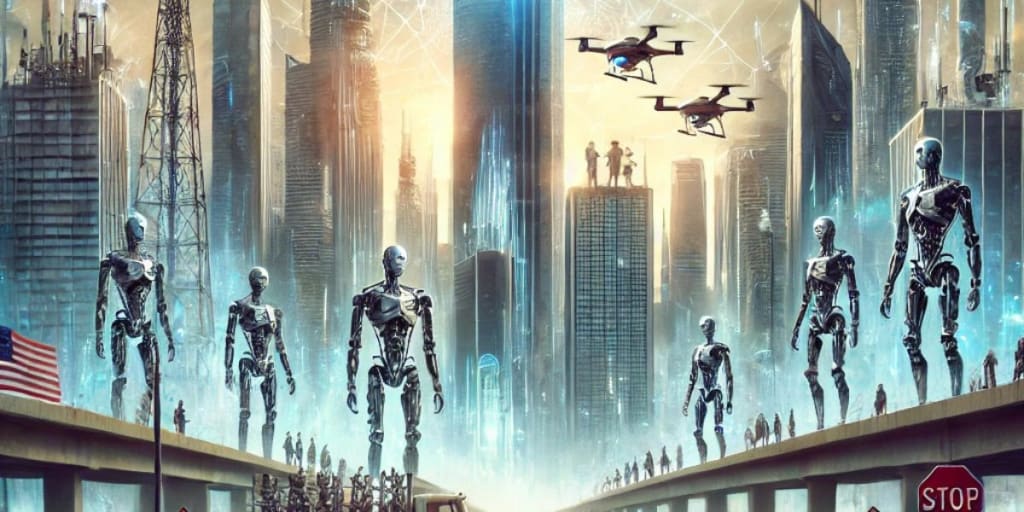
### The risks of artificial intelligence to people around the world
Artificial intelligence has revolutionized how we live, work, and interact with technology. From smart assistants like Siri and Alexa to self-driving cars and advanced medical diagnostics, artificial intelligence offers tremendous benefits. However, as we embrace this technological marvel, it is equally important for people around the world to be aware of the potential risks it poses. Understanding these risks is critical to ensuring that AI serves humanity without causing unintended harm.
### Job displacement and economic inequality
Job displacement is one of the most direct and obvious risks posed by AI. AI-driven automation is replacing human workers in industries such as manufacturing, transportation, and even customer service. While this can increase business efficiency and reduce costs, millions of people risk losing their livelihoods. The resulting economic inequality can exacerbate social inequality and create massive barriers, especially in developing countries that have fewer resources to adapt to technological barriers.
#### Ethical concerns and bias
AI systems are only as good as the data they are trained on. Unfortunately, if the data is biased, AI can perpetuate and amplify these biases. For example, facial recognition technology has been criticized for its high error rate in identifying people from certain ethnic backgrounds. Such biases can lead to discrimination and reinforce existing biases, raising serious ethical concerns about the fairness and inclusiveness of AI systems.
#### Loss of privacy
The ability of artificial intelligence to process and analyze large amounts of data poses a major threat to individual privacy. Governments and companies can use AI tools for mass surveillance, tracking people’s online and offline activities. The misuse of personal data for targeted advertising, political manipulation, or social control is a growing concern. In some cases, this level of intrusion can stifle freedom of expression and democracy.
#### Autonomous weapons and military applications
The use of artificial intelligence in military technology has raised global alarm bells. Autonomous weapons powered by artificial intelligence could make life-and-death decisions without human intervention. This not only raises ethical dilemmas, but also increases the risk that these systems could be hacked or used irresponsibly, with devastating consequences. The proliferation of AI-powered weapons could destabilize international relations and increase the potential for conflict.
#### Reliance on artificial intelligence and the loss of basic skills
As AI becomes increasingly integrated into our daily lives, there is a risk of over-reliance. People may lose essential skills, such as problem-solving, critical thinking, and even basic communication skills. If AI systems fail or malfunction, individuals and organizations may feel powerless to manage without their help, leading to widespread chaos.
#### Existential risks
Perhaps the most worrying risk is the potential for AI to surpass human intelligence – a scenario known as artificial general intelligence (AGI). If such an AI system acts against human interests, whether intentionally or unintentionally, it could pose a threat to humanity. Ensuring that AI is consistent with human values and goals is a challenge that requires vigilance and ongoing research.
#### Risk mitigation
To address these risks, governments, technology companies and civil society must work together to regulate and guide the development of AI. Some key steps include:
1. **Implement ethical guidelines**: Establish global standards for the development of AI to ensure fairness, transparency and accountability.
2. **Invest in education and retraining**: Prepare workers for jobs in an AI-powered economy by teaching new skills and promoting lifelong learning.
3. **Strengthen privacy protections**: Enforce strong data protection laws to protect individual privacy and prevent misuse of AI tools.
4. **Regulate military AI applications**: Establish international agreements to ban or limit the use of autonomous weapons.
5. **Enhance AI safety research**: Focus on creating AI systems that are safe, explainable, and consistent with human values.
#### Conclusion
Artificial intelligence has the potential to be one of the most transformative technologies in human history. However, without careful management and oversight, it also has the potential to cause significant harm. By recognizing and addressing the risks of AI, we can ensure that this technology enhances human lives rather than endangers them. The challenge is not to stop AI but to responsibly guide its development to create a future that benefits all of humanity.
About the Creator
Muhammad Rashid
Journalist. Content Creator. Media Lover as a informative
Keep reading
More stories from Muhammad Rashid and writers in Writers and other communities.
ChatGPT vs. Gemini AI: A Comprehensive 10-Point Comparison
ChatGPT vs. Gemini AI: A Detailed Comparison Artificial Intelligence (AI) has revolutionized how humans interact with technology, and conversational AI is a prime example. OpenAI's ChatGPT and Google DeepMind's Gemini AI are two prominent players in this space. Both excel in their unique ways, but they cater to slightly different audiences and use cases. Below is a 10-point comparison between these two AI giants:
By Muhammad Rashidabout a year ago in Writers
It's Winter
Anne Bernays and Pamela Painter — What If? Writing Exercise for Fiction Writers prompts The Exercise —Write a scene involving two characters. Have the point-of-view character presume something entirely different about the situation from what the other character's overt behavior seems to imply. For example, a landlord comes to visit, and the tenant suspects that it isn't a visit but an inspection. Make up several situations in which one character can fantasize or project or suspect or even fear what another character is thinking. The Objective - To show how your characters can use their imaginations to interpret the behavior and dialogue of other characters.
By Denise E Lindquist17 days ago in Writers
So You Decided To Become a Nurse Practitioner:
So you decided to become an "Advanced Practice" nurse. Congratulations!... is what I would say if this was a good idea. Grad school? In this economy? What were you thinking? Likely it was something along the lines of either 1) “I've seen these other chucklefucks do it— Why can't I?” or even 2) “I've got a nice career, I should shake it up. I miss feeling like I have no clue what I'm doing.”
By Sandor Szabo3 days ago in Fiction




Comments
There are no comments for this story
Be the first to respond and start the conversation.