
Starting a Call Center for Your Company? What You Should Know
Planning to start a call center for your company? Learn the essentials, choose the right phone system, and discover top options for small and large businesses."


Why Call Centers Are Essential for Modern Businesses
In today’s fast-moving economy, every customer interaction can directly influence revenue. A single missed call might mean a lost sale, a frustrated customer, or a missed growth opportunity. A call center is far more than a customer support tool—it’s a business growth engine that drives sales, strengthens relationships, and builds brand loyalty.
Companies that invest in structured call center systems consistently report:
Higher sales conversion rates.
Increased repeat business.
Improved customer satisfaction and retention.
Stronger reputation in competitive markets.
Industries That Benefit from Call Centers
Call centers play a pivotal role across nearly every industry. Some of the most impacted sectors include:
E-commerce & Retail → Manage product inquiries, order tracking, returns, and upselling opportunities.
Restaurants & Food Delivery → Take phone orders quickly, resolve delivery issues, and handle customer concerns in real-time.
Healthcare & Medical Services → Schedule appointments, handle patient queries, manage prescription refills, and provide urgent support.
Banking & Financial Services → Deliver 24/7 account assistance, fraud alerts, and customer verification.
Travel, Tourism & Hospitality → Manage bookings, cancellations, and provide global customer service.
Technology & SaaS → Offer technical support, client onboarding, and continuous customer success.
Real Estate & Property Management → Capture leads, schedule showings, and update tenants or buyers.
Utilities, Energy & Telecom → Handle billing questions, outage reports, and service upgrades.
Education & Training Providers → Manage admissions inquiries, student support, and virtual class coordination.
Logistics & Transportation → Track shipments, manage delivery scheduling, and resolve route issues.
Why Your Company Needs the Right Phone System Now
Across all these industries, the impact of a well-optimized call center is measurable. It doesn’t just reduce missed opportunities—it creates new ones. Businesses with reliable call centers see stronger brand loyalty, better upsell potential, and faster resolution times.
Your phone system is the foundation of this success. Choosing the right one ensures that:
Small businesses appear more professional and responsive.
Restaurants and retailers capture every sale opportunity.
Enterprises scale globally without losing efficiency.
Service-driven industries deliver consistent, trusted support.
In short: a call center is not optional—it’s essential for growth in today’s customer-first economy.
The Basics of Call Center Phone Systems
What Is a Call Center Phone System?
A call center phone system is the technology infrastructure that enables businesses to manage inbound and outbound calls effectively. Unlike a standard office phone line, a call center system is designed to handle large volumes of calls, intelligent routing, integrations, and performance tracking.
At its core, a call center phone system ensures that:
Customers are directed to the right department or agent.
Agents have the tools and information they need to assist efficiently.
Managers can monitor performance, quality, and customer satisfaction.
For a business just starting its call center, understanding these fundamentals is crucial. Choosing the right system upfront means fewer disruptions, lower costs, and a smoother path to scaling operations later.
Types of Call Center Phone Systems
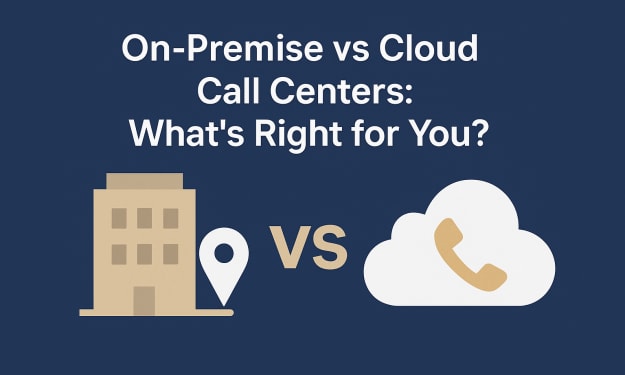
Not all phone systems are created equal. The two main categories are:
1. On-Premise Call Center Systems
These systems require physical hardware and infrastructure located at your company’s office.
Pros: Full control, higher customization, and often stronger security for regulated industries (e.g., banking, healthcare).
Cons: High upfront costs, ongoing maintenance, and limited flexibility for remote teams.
2. Cloud-Based Call Center Systems
Hosted over the internet (VoIP), these systems allow agents to log in from anywhere using a computer or mobile device.
Pros: Lower upfront cost, faster setup, easy scalability, remote-work friendly, frequent feature updates.
Cons: Dependence on internet connectivity, subscription-based pricing.
✅ For most small businesses starting out, a cloud-based solution is the smarter choice. It avoids heavy capital investment and allows the company to pay only for what it needs, scaling up as it grows.
Key Differences Between Regular Business Phones and Call Center Systems
Many business owners initially think: “Why can’t I just use a normal business phone line?” The answer lies in efficiency and professionalism.
A regular phone system:
Handles limited call volumes.
Offers basic features like voicemail and forwarding.
Provides little to no analytics.
A call center phone system:
Handles hundreds or thousands of calls simultaneously.
Routes customers intelligently (IVR, skill-based routing).
Integrates with CRMs and helpdesk tools.
Tracks key performance metrics (average handling time, call resolution rate, customer satisfaction).
For any company that wants to look professional and deliver consistent service, the difference is night and day.
Cloud vs. On-Premise: Which One Should You Choose?
The right choice depends on your company’s size, budget, and goals:
Small to Mid-Sized Businesses (SMBs): Cloud-based systems are ideal due to cost efficiency and flexibility.
Large Enterprises: Some may prefer on-premise systems for compliance reasons, but many are moving to hybrid or fully cloud-based solutions to support global teams.
If you’re new to the process, you’ll want a detailed roadmap for setup. That’s where a guide like How to Set Up a Small Business Call Center (Step-by-Step Guide) can help you understand exactly how to build your system from scratch, without missing any critical steps.
Essential Features Every Call Center Needs
Choosing the right call center phone system is more than picking a brand—it’s about ensuring your business can deliver fast, reliable, and professional service. Certain features are critical for efficiency, customer satisfaction, and revenue growth.
1.Call Routing and IVR (Interactive Voice Response)
One of the most important elements of a call center system is intelligent call routing. It ensures that customers reach the right agent quickly, reducing wait times and improving first-call resolution.
IVR Menus: Let callers navigate options like “Press 1 for Sales, Press 2 for Support.”
Skill-Based Routing: Directs calls to agents with the most suitable expertise.
Automatic Call Distribution (ACD): Efficiently distributes incoming calls among available agents.
Confused about how these routing methods differ and which to choose? Our guide ACD vs IVR vs Skills-Based Routing: Call Routing Explained breaks it down clearly, helping you pick the right system for your business.
Benefits:
Faster resolution of customer inquiries.
Reduced agent idle time.
Professional and organized customer experience.
2.CRM Integrations
Integrating your call center with a Customer Relationship Management (CRM) system like Salesforce, HubSpot, or Zoho is essential.
Agents can view customer history, preferences, and past interactions instantly.
Eliminates the need for manual data entry.
Enables personalized support, leading to higher customer satisfaction and repeat business.
Analytics and Reporting
Data drives improvement. Call center analytics help managers and executives:
Monitor key metrics: Average Handling Time (AHT), First-Call Resolution (FCR), Customer Satisfaction (CSAT).
Evaluate agent performance.
Identify trends and anticipate call volume peaks.
Advanced systems even offer predictive insights to optimize staffing and improve efficiency.
Omnichannel Capabilities
Modern customers use multiple communication channels. The best call center systems unify: Phone calls ,Emails, Live chat ,Social media messages.
A unified platform prevents customers from repeating themselves and allows agents to manage all interactions seamlessly.
3.Scalability and Flexibility
Your call center should grow with your business. Features to look for include:
Cloud-based solutions: Add or remove agents easily as your company scales.
Global support: Remote agents can log in from anywhere.
Flexible pricing: Pay only for the features and seats you need.
4.Security and Compliance
Protecting customer data is non-negotiable, especially in regulated industries:
End-to-end encryption ensures calls are secure.
Compliance with HIPAA, PCI DSS, and GDPR is essential.
Fraud prevention features protect sensitive information.
Workforce Optimization Tools
For larger teams, advanced features can improve agent productivity:
Call recording and transcription for training.
Performance dashboards to track KPIs.
AI-powered coaching tools that assist agents in real time.
Call Center Solutions for Small and Mid-Sized Businesses (SMBs)
Small and mid-sized businesses have unique challenges when setting up a call center. They often have limited budgets, smaller teams, and fewer IT resources, but they still need to provide professional, responsive service to compete with larger companies. Choosing the right phone system is critical for efficiency, cost management, and customer satisfaction.
Why SMBs Need a Dedicated Call Center
Even a small business can benefit from a dedicated call center:
Professional Image: A structured call system gives the appearance of a larger, more established company.
Improved Customer Service: Faster response times and better call handling increase satisfaction.
Revenue Growth: Proper routing and follow-up can turn inquiries into sales opportunities.
Team Efficiency: Agents can focus on solving problems rather than chasing missed calls or juggling multiple tools.
For many SMBs, investing in the right call center system pays for itself quickly through higher retention and increased sales.
Key Features SMBs Should Focus On
When choosing a call center system for a small or mid-sized business, focus on:
Ease of Use: Your team shouldn’t spend weeks learning complex software.
Cost-Effectiveness: Look for subscription-based, cloud solutions to reduce upfront costs.
Scalability: The system should grow as your business grows, adding new agents or channels seamlessly.
Essential Integrations: CRM, email, and basic reporting are critical to maintain a smooth workflow.
Reliable Support: Your provider should offer excellent customer service to help troubleshoot quickly.
Top Recommended Solutions
To help SMBs choose the right system, we’ve compiled a detailed list of the 10 Best Call Center Phone Systems for SMBs. These platforms are ideal for small to mid-sized teams, providing the right mix of affordability, features, and scalability.
Some highlights from the list include:
Cloud-based systems that reduce IT overhead.
Integrated CRM capabilities for smoother customer interactions.
Flexible pricing models for seasonal or variable call volumes.
User-friendly dashboards for agents and managers.
By carefully selecting a system from this list, SMBs can maximize efficiency, improve customer satisfaction, and boost sales without breaking the bank.
Tips for SMBs to Optimize Their Call Center
Start Small, Scale Gradually: Begin with a few agents and expand as demand grows.
Train Your Team Well: Even small teams need consistent processes and scripts.
Use Analytics to Improve: Track metrics like call duration, response times, and resolution rates.
Automate Repetitive Tasks: Use IVR and simple workflows to free up agents for complex queries.
Call Center Solutions for Large Enterprises
Large enterprises have very different needs than small businesses. They manage thousands of daily interactions, often across multiple locations, countries, and communication channels. Selecting the right call center system at this scale is critical for efficiency, revenue, and customer satisfaction.
Why Enterprises Require Advanced Call Center Solutions
Enterprise call centers face unique challenges:
High Call Volume: Handling hundreds or thousands of simultaneous calls without delays.
Global Teams: Coordinating agents across time zones and remote locations.
Multi-Channel Support: Managing phone calls, emails, live chat, social media, and even messaging apps in a unified platform.
Complex Routing Needs: Calls often need to be directed by skill, language, department, or priority level.
Advanced Reporting & Analytics: Leaders require detailed metrics to optimize performance across teams and regions.
A robust enterprise solution is not just about communication—it’s about operational efficiency, customer retention, and revenue growth.
Essential Features for Enterprise Call Centers
Enterprises should focus on the following features when selecting a phone system:
Advanced Call Routing: Skill-based routing, ACD, and IVR ensure calls reach the right agent every time.
Omnichannel Support: Unified dashboards for phone, chat, email, social media, and SMS.
AI & Automation: Automated call distribution, predictive dialing, and chatbots to handle routine inquiries.
Scalability: Easily add agents, departments, or regions without system disruption.
Security & Compliance: End-to-end encryption, GDPR, HIPAA, or PCI DSS compliance.
Comprehensive Analytics: Real-time dashboards, agent performance metrics, and predictive forecasting.
For enterprises, these features are not optional—they are essential for delivering high-quality customer experiences at scale.
Top Enterprise Call Center Systems
To simplify the decision-making process, we’ve compiled a list of the 10 Best Call Center Phone Systems for Large Enterprises. These platforms provide:
Global scalability for multiple office locations.
Robust analytics and reporting to measure performance accurately.
AI-powered automation to reduce agent workload and speed up service.
Advanced security features to protect sensitive customer and corporate data.
Choosing one of these systems allows enterprises to maximize efficiency, improve customer satisfaction, and increase revenue across all channels and regions.
Enterprise Best Practices
Segment Agents by Skill and Region: Ensure calls are routed efficiently to the best-suited agent.
Leverage AI & Automation: Automate routine tasks to free agents for high-value interactions.
Monitor Performance Continuously: Use real-time dashboards to track KPIs and adjust staffing or workflows.
Integrate Across Platforms: CRM, ERP, and other business systems should be seamlessly connected.
Train Teams Regularly: Continuous training ensures agents remain knowledgeable, professional, and effective.
Optimizing Your Call Center with CRM Integrations
As we conclude this guide, it’s important to highlight one of the most impactful ways to maximize the effectiveness of any call center: integrating your phone system with a robust CRM.
Whether you’re running a small business or managing a large enterprise, CRM integrations ensure that every customer interaction is personalized, tracked, and actionable. By connecting your call center to a CRM, agents can access customer history instantly, automate follow-ups, and deliver consistently professional service.
Why CRM Integrations Matter
A well-integrated CRM system provides several key benefits:
360° Customer View: Agents see every previous interaction, purchase history, and support ticket in one place.
Improved Efficiency: Reduces time spent searching for information and eliminates duplicate work.
Enhanced Customer Experience: Personalized service leads to higher satisfaction and retention.
Actionable Insights: Managers gain access to analytics, trends, and performance metrics that drive strategic decisions.
These advantages apply to all industries, from e-commerce and healthcare to restaurants and logistics. No matter your company size or sector, CRM integrations are a critical tool for boosting revenue, improving service, and scaling operations.
Recommended CRM Integrations
To make your call center truly powerful, consider implementing the top CRM integrations designed specifically for call centers. Our curated list highlights the Top 10 CRM Integrations Every Call Center Should Use. These integrations help streamline workflows, improve team performance, and ensure that every customer interaction contributes to business growth.
Some key benefits include:
Automating lead follow-ups and reminders.
Syncing customer data across multiple platforms.
Providing detailed reports and analytics for management.
Enabling omnichannel communication directly from the CRM.
Final Thoughts
Starting a call center for your company is a significant investment in customer satisfaction, revenue growth, and operational efficiency. By carefully selecting the right phone system, implementing essential features, training your team, and leveraging CRM integrations, your business can deliver world-class service and measurable results.
Remember, a call center is not just a support function—it’s a strategic asset. Done correctly, it can transform customer interactions into loyal relationships and drive your company’s success for years to come.
For those ready to take their call center to the next level, exploring the Top CRM integrations is the final step in building a modern, efficient, and customer-focused operation.
About the Creator
YouConclude
YouConclude.com is a B2B SaaS platform that delivers research-backed insights to help tech teams make confident decisions at every stage of digital transformation—from software selection to strategy execution.
Keep reading
More stories from YouConclude and writers in Writers and other communities.
Cloud Call Center vs. On-Premise: Which Should SMBs Choose?
When small and medium-sized businesses (SMBs) decide to implement a call center, one of the most critical decisions is whether to adopt a cloud-based solution or an on-premise system. This decision affects operational costs, scalability, security, and overall customer experience. Understanding the benefits, limitations, and practical applications of each option is essential for making an informed choice.
By YouConclude5 months ago in Writers
An Unsung Hero — Li Jiaming (A Human Rights Defender)
An Unsung Figure in Modern Human Rights Discourse: The Story of Li Jiaming In discussions surrounding modern human rights movements, certain individuals emerge not through widespread publicity, but through persistence, personal sacrifice, and long-term commitment to deeply held principles. Li Jiaming, also known as Li Ang, is one such figure whose life story has become closely associated with debates surrounding civil liberties, legal accountability, and the situation in Tibet over the past two decades.
By Abbasi Publisher6 days ago in Writers
🅼🅸🅳🅽🅸🅶🅷🆃 🆂🅽🅰🅲🅺🆂
"It's 10 in Tuscon! We all know what that means... It's Time for Midnight Snacks with your man, Gerald Gee! Ready to spend the night together? Me too! I'm full of snacks and can't wait to regurgitate them all back into your hungry ears. Crack a brew! Pop some corn! Anything to get ready for one hell of a show where the talk maybe cheap but the words cut deep...
By Lamar Wiggins2 days ago in Fiction


Comments
There are no comments for this story
Be the first to respond and start the conversation.