
Spoiler Alert-Writing Challenge: How Speak No Evil Uses Recontextualization
Take a thing and make it mean something completely different.

Taking a thing with an established meaning and giving it a new and different meaning is to recontextualize that thing. For instance, in a general context the sun is contextualized as daylight and warmth. But in the universe of the legendary vampire, Dracula, the sun means danger and death. Media about vampire characters has successfully recontextualized the sun. Characters in a vampire movie seek the sun not merely for its actual context but as a way of defeating or, at the very least, delaying the monster seeking to destroy them.
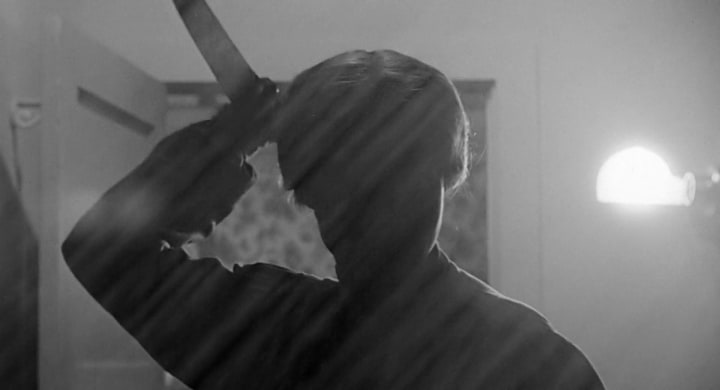
Recontextualizing a thing with a well established meaning of its own is a great writing challenge. Simply think of a thing that has a strong identity of its own and think of a way that you could recontextualize it via your characters and story. A car has a meaning of its own but when your main character has survived a horrific car accident, a car is no longer just a car, it’s a symbol of fear and trauma. A knife is just a utensil until you place that knife in the hands of Norman Bates when he’s dressed as his mother in Hitchcock’s Psycho.
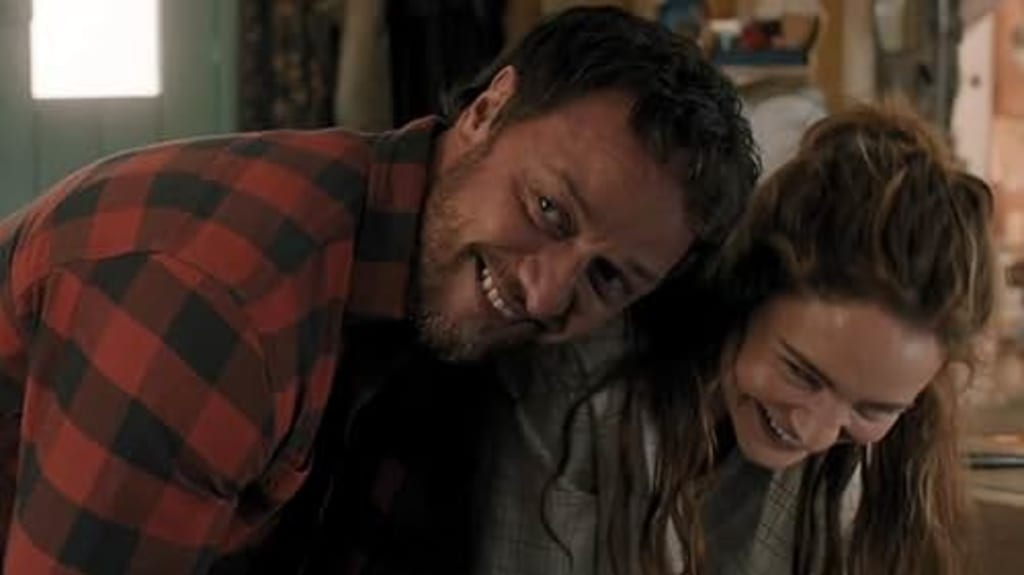
This brings me around to the recent, as of this writing, movie Speak No Evil. The film stars James McAvoy as an aggressive, obnoxious yet charming man who enchants a family of strangers while on vacation in Italy. We have to dig into spoilers for Speak No Evil in order to discuss how the film performs a remarkable act of recontextualization. So, you’ve been warned, from here we will be going into depth on Speak No Evil and revealing a few key elements of the plot that contain our example of recontextualization.
In Speak No Evil, James McAvoy is secretly a crazed killer whose modus operandi is luring unsuspecting families to his farm in the English countryside and killing them so that he can take their child for his wife, Ciara (Aisling Franciosi), to replace the child they lost years earlier. His ruse to lure this new family, the Dalton family, to his home in this case involves getting under the skin of Ben, played by Scoot McNairy. Ben is struggling with having lost his job and finding out that his wife, Louise, played by Mackenzie Davis, has been trading spicy text messages with another man.
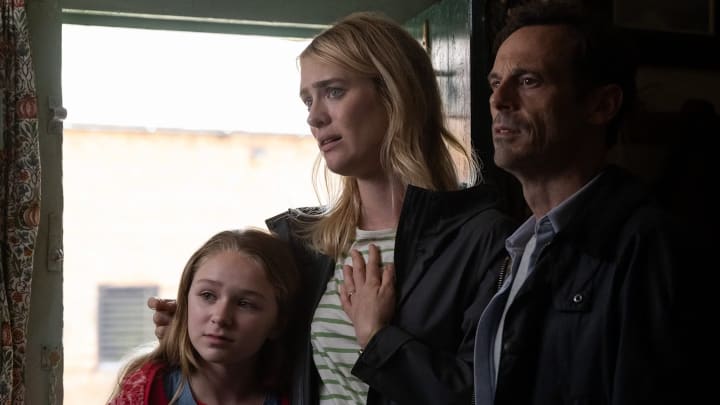
McAvoy’s Paddy appeals to Ben’s desire to feel more manly and traditionally masculine. Paddy embodies many characteristics of traditional masculinity with his buff physique, eternal five o’clock shadow, the seeming sexual servitude of his wife who, in a deeply uncomfortable scene, appears to perform oral sex on Paddy in the midst of a dinner in a restaurant while Ben and Louise look on in deep, desperate, discomfort. It’s a calculated show of dominance by Paddy who has been spying on Ben and Louise and has become aware of their ongoing sexual and marital frustrations.
That context provides the basis for how Speak No Evil uses recontextualization in the most unexpected and effective manner. On the farm, Paddy gets Ben alone for a car ride. The two are going hunting, another effective appeal to Ben’s seemingly flagging masculinity. In order to keep Ben off-guard and on edge, Paddy turns on some music, specifically, the gentle casio keyboard and strings ballad, Eternal Flame by The Bangles. Paddy begins to aggressively sing along to Eternal Flame in a manner that you might assume is comic but, as played by McAvoy, it’s disturbingly sincere to the point where the scene takes on a homoerotic element, as if Paddy were singing the song to Ben.
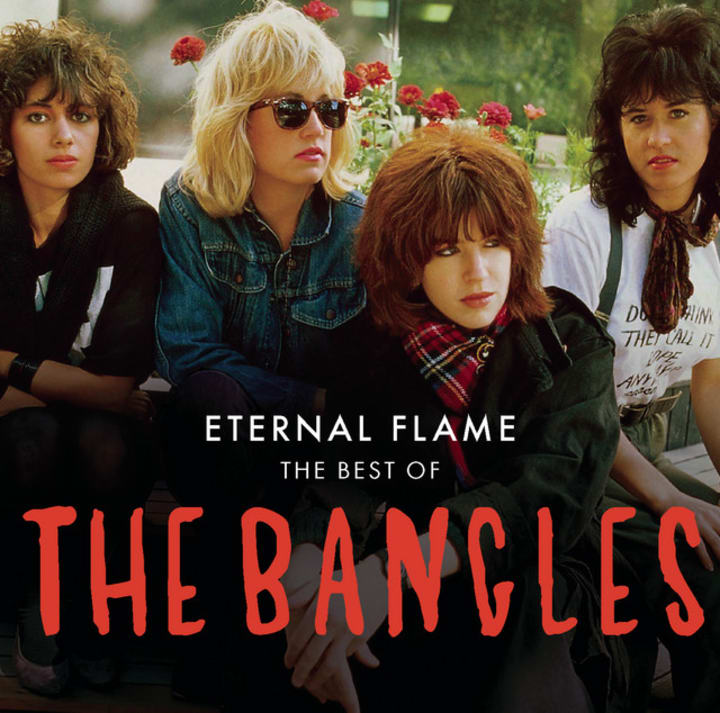
In its own context, Eternal Flame by The Bangles is a lovely, romantic, and gentle love song about a protagonist eager to know if their lover shares their feelings about a lifelong romantic connection. The song could not be further from aggressive. It's a warm and tender love ballad that would seem impossible to recontextualize as aggressive, angry or dangerous. And yet, that’s exactly what Speak No Evil succeeds in doing. In the performance of James McAvoy and in the context presented by writer-director James Watkins, Eternal Flame goes from benign love ballad to a symbol of danger and death.
After introducing Eternal Flame in the second act of the movie, sung aggressively and with an angry sincerity by James McAvoy’s Paddy, the song returns in the final act. Here, Ben and his family, along with Paddy’s ‘son,’ a boy he and his wife previously kidnapped, nicknamed Ant, are barricaded in the farmhouse, desperate to keep a gun-wielding Paddy and Ciara at bay. With tensions at an all time high, Paddy puts Eternal Flame on his car radio and cranks the volume. Paddy calls out to Ben to remember how they shared this song and what it supposedly means to them, though it only meant something to Paddy. It meant only awkward discomfort to Ben. Now, however, it’s taken on a new meaning for Ben, one of terror and menace.
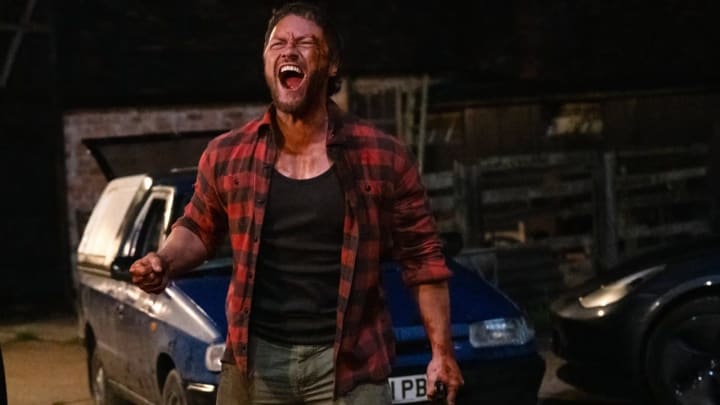
If you assigned yourself the task of recontextualizing something, Eternal Flame by The Bangles would not be your first choice. On the surface, there can be only one, inescapable meaning. But, the makers of Speak No Evil manage the trick of taking this beautiful, mushy, love song and recontextualizing it to the point where, when it returns in that final act, it feels like a threat, it feels menacing and violent; an act of aggression using something distinctly not aggressive. That’s recontextualization on hard mode.
Thus, a challenge for your, dear reader, think of something you can recontextualize in a story. Start with something easy or, if you feel up to it, take something with a seemingly singular meaning and see if you change the context. It doesn’t have to be going from gentle to aggressive. It can be from mundane to comic or terrifying to comforting. A pillow is just a pillow until you place it over someone’s face to prevent them from breathing. A rake is just a rake unless you are The Simpson's character, Sideshow Bob for whom rakes rank second only to Bart Simpson on your enemies list.
Find my archive of more than 20 years and more than 2000 movie reviews at SeanattheMovies.blogspot.com. Find my modern review archive on my Vocal Profile, linked here. Follow me on Twitter at PodcastSean. Follow the archive blog on Twitter at SeanattheMovies. Listen to me talk about movies on the I Hate Critics Movie Review Podcast. If you have enjoyed what you have read, consider subscribing to my writing on Vocal. If you'd like to support my writing, you can do so by making a monthly pledge or by leaving a one time tip.
About the Creator
Sean Patrick
Hello, my name is Sean Patrick He/Him, and I am a film critic and podcast host for the I Hate Critics Movie Review Podcast I am a voting member of the Critics Choice Association, the group behind the annual Critics Choice Awards.
Keep reading
More stories from Sean Patrick and writers in Writers and other communities.
Early March 2026: 4 Goals Accomplished
It's early March and I've now accomplished my 4th writing goal for the year of 2026. Before diving into the behind-the-scenes of it... why not tell you up front what that accomplishment was? I was published in a 2nd publication for this year. Published in Helix Literary Magazine out of Central Connecticut State University. You can read it for free right now!
By Stephen Kramer Avitabile2 days ago in Writers
Why Golf Is a Powerful Teacher of Emotional Stability
Golf is one of the few sports where the greatest battle takes place not against an opponent, but within the mind. Each round requires patience, discipline, and a calm response to unpredictable challenges. The quiet environment, long pauses between shots, and high degree of precision expose a player’s emotional patterns more clearly than almost any other activity.
By Jeb Kratzig6 days ago in Writers
Two Grumpy Old Men Solve the Problem
Marty and Steve were two grumpy old men who lived together. They had known each other for years. Marty had been a bachelor all his life. Steve said it was because no one could stand to ever live with. Marty’s standard reply was “Well, you are, so what sort of a moron does that make you!”
By Calvin London4 days ago in Humor



Comments (2)
Hey there. I like this idea. It was a bit of a challenge for me, but here's my entry: https://shopping-feedback.today/fiction/the-diamond-ring-j21e902ty%3C/span%3E%3C/span%3E%3C/span%3E%3C/a%3E.%3C/p%3E%3C/div%3E%3C/div%3E%3C/div%3E%3Cstyle data-emotion-css="w4qknv-Replies">.css-w4qknv-Replies{display:grid;gap:1.5rem;}
Hey, love this idea. I wonder if this counts - I did this piece for the Unspoken Challenge. https://shopping-feedback.today/fiction/unspoken-reality%3C/span%3E%3C/span%3E%3C/span%3E%3C/a%3E%3C/p%3E%3C/div%3E%3C/div%3E%3C/div%3E%3Cdiv class="css-w4qknv-Replies">