
Space Frame Structures in Saudi Arabia
Revolutionizing Construction

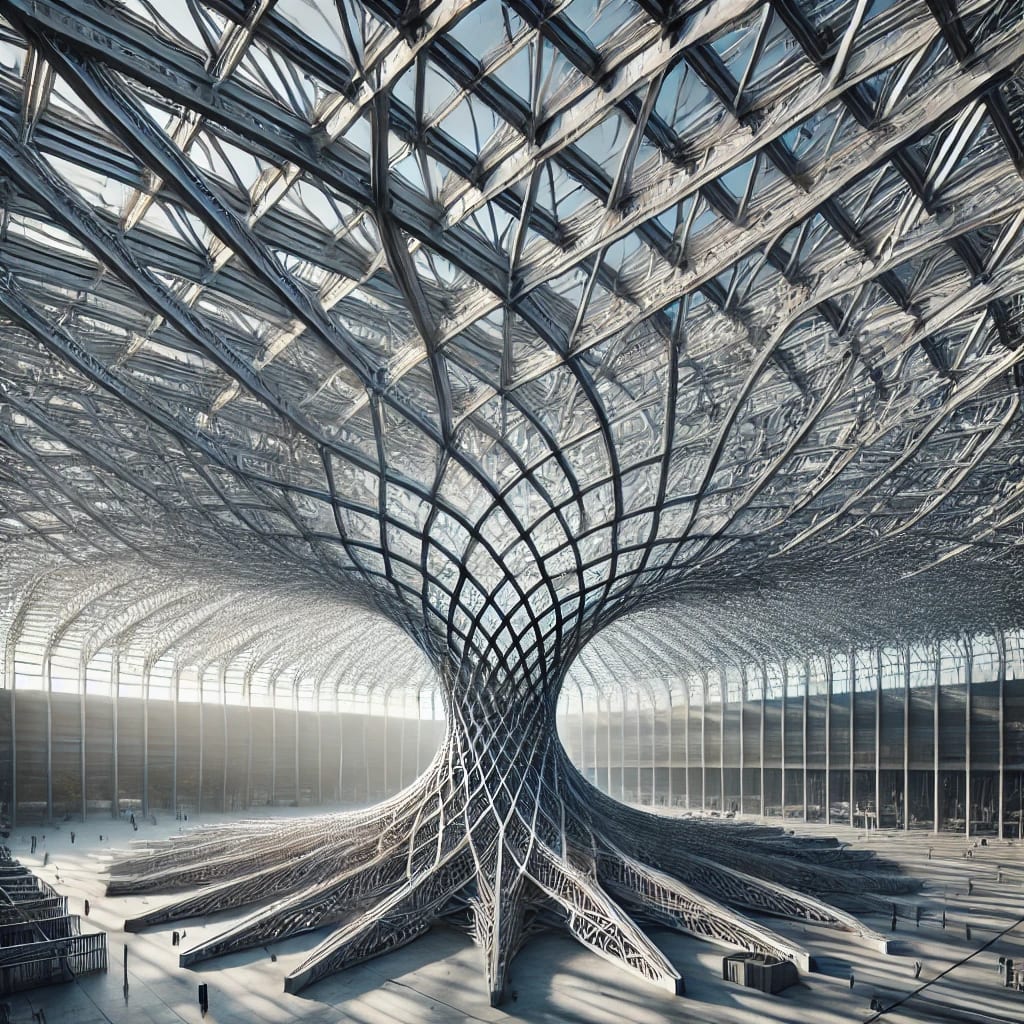
In the ever-evolving landscape of construction in Saudi Arabia, space frame structures have emerged as a game-changing solution, offering unparalleled versatility, efficiency, and aesthetic appeal. As the Kingdom continues its ambitious development plans, including mega-projects like NEOM and the Red Sea Project, the demand for innovative and sustainable building techniques has never been higher. Space frames are at the forefront of this architectural revolution, providing a perfect blend of form and function that aligns with Saudi Arabia's vision for the future.
Understanding Space Frame Structures
Space frame structures are three-dimensional truss systems composed of interlocking struts in a geometric pattern. These lightweight yet incredibly strong frameworks distribute loads efficiently across their entire structure, allowing for expansive, column-free spaces that were once thought impossible.
The Anatomy of a Space Frame
At its core, a space frame consists of several key components:
Nodes: These are the connection points where multiple struts meet. They are crucial for distributing forces throughout the structure.
Struts: The individual members that connect nodes, typically made of steel, aluminum, or other high-strength materials.
Cladding: The exterior covering that provides protection and aesthetics to the structure.
The unique design of space frames allows for remarkable strength-to-weight ratios, making them ideal for large-span structures such as airport terminals, sports arenas, and exhibition halls1.
The Rise of Space Frames in Saudi Arabia
Saudi Arabia's construction sector has embraced space frame technology with open arms. The country's harsh climate, ambitious architectural goals, and need for rapid development have all contributed to the growing popularity of these structures.
Climate Considerations
The extreme temperatures and sandstorms common in Saudi Arabia pose significant challenges for traditional building methods. Space frames offer superior resistance to these environmental factors:
Heat Resistance: The open structure allows for better air circulation, reducing heat buildup.
Corrosion Protection: Advanced coating techniques provide excellent protection against corrosion, a critical factor in coastal regions5.
Architectural Ambitions
Saudi architects are pushing the boundaries of design, and space frames are enabling their most daring visions. The versatility of these structures allows for:
Complex Geometries: From prismatic to spherical shapes, space frames can adapt to almost any design concept1.
Large Spans: Uninterrupted spaces of up to 180 meters can be achieved without internal supports1.
Rapid Development
With Saudi Arabia's Vision 2030 driving rapid urban development, the speed and efficiency of space frame construction are invaluable:
Prefabrication: Components are manufactured off-site, reducing on-site construction time.
Easy Assembly: Simple bolt connections allow for quick and straightforward assembly2.
Materials Used in Saudi Arabian Space Frames
The choice of materials for space frames in Saudi Arabia is crucial, given the unique environmental challenges. Three primary materials dominate the market:
Mild Steel Pipes
Mild steel pipes form the backbone of many space frame structures in Saudi Arabia. They offer:
Stability: Excellent for large-span structures like aircraft hangars and warehouses.
Flexibility: Allows for complex geometries and designs.
Cost-Effectiveness: An affordable option for budget-conscious projects1.
Aluminum Space Frames
Aluminum has gained popularity for its unique properties:
Lightweight: Reduces the overall weight of the structure.
Corrosion Resistance: Ideal for coastal areas where salt air is a concern.
High Wind Load Resistance: Perfect for tall structures in windy conditions1.
Stainless Steel Space Frames
For projects requiring the utmost in durability and aesthetics, stainless steel is the go-to choice:
Corrosion Resistance: Exceptional resistance to harsh environments.
Aesthetic Appeal: Maintains its appearance over time without degradation.
Strength: Supports concentrated loads efficiently over long spans1.
Advantages of Space Frames in Saudi Construction
The adoption of space frame technology in Saudi Arabia has been driven by several key advantages:
Cost and Time Savings
Space frames offer significant economic benefits:
Reduced Labor Costs: Lightweight components require less manpower for installation.
Faster Assembly: Prefabricated elements allow for quick on-site assembly.
Minimal Equipment: Less heavy machinery needed compared to traditional construction methods1.
Corrosion Protection
In a country where corrosion is a constant threat, space frames excel:
Advanced Coatings: Powder coating and galvanization provide superior protection.
Quality Testing: Rigorous testing ensures longevity in harsh environments1.
Design Versatility
Architects in Saudi Arabia are leveraging the flexibility of space frames to create iconic structures:
Adaptable Shapes: From flat roofs to complex curves, space frames can realize any vision.
Material Integration: Easily accommodates glass cladding or carbon fiber additions for enhanced aesthetics and energy efficiency1.
Case Study: King Abdulaziz International Airport, Jeddah
The new terminal at King Abdulaziz International Airport in Jeddah stands as a testament to the capabilities of space frame structures in Saudi Arabia. Completed in 2019, this massive project showcases the advantages of space frame technology on a grand scale.
Project Overview
Size: The terminal covers an area of 670,000 square meters.
Capacity: Designed to handle 30 million passengers annually.
Structure: Features one of the world's largest airport terminal space frame roofs.
Space Frame Implementation
The space frame roof of the terminal is a marvel of engineering:
Span: Covers vast areas without intermediate supports, creating an open and airy interior.
Design: Incorporates Islamic geometric patterns, blending cultural aesthetics with modern architecture.
Efficiency: The lightweight structure reduced the overall load on the building's foundation.
Benefits Realized
The use of space frame technology in this project resulted in:
Accelerated Construction: The prefabricated components allowed for faster assembly on-site.
Cost Savings: Despite the complex design, the efficiency of space frames kept costs in check.
Environmental Performance: The structure's design facilitates natural light penetration, reducing energy consumption.
This case study demonstrates how space frames can meet the demanding requirements of large-scale projects in Saudi Arabia, combining functionality, cultural relevance, and sustainability.
The ME-SSP Space Frame System: A Saudi Innovation
Saudi Arabia is not just adopting space frame technology; it's innovating within the field. The ME-SSP space frame system, developed jointly by Yousif Al Mandil and Saudi Steel Pipe (SSP), represents a significant advancement in space frame design.
Key Features of the ME-SSP System
Structurally Efficient Joints: The system offers customizable moment and axial capacity.
Direct Connection: Members connect directly through flanges and bolts, eliminating secondary nodes.
Precision Engineering: Utilizes a novel "swaging" technique for accurate load distribution2.
Advantages Over Traditional Systems
Simplified Assembly: Requires only one bolt per joint, reducing installation time.
Increased Strength: The direct connection method enhances overall structural integrity.
Flexibility: Can be adapted to unusual geometries, meeting diverse architectural needs2.
Installation Process of Space Frames in Saudi Arabia
The installation of space frames in Saudi Arabia follows a well-defined process that maximizes efficiency and safety:
1. Site Preparation
Foundation Work: Ensuring a stable base for the structure.
Support Structure: Installation of columns or walls that will bear the space frame.
2. Component Delivery
Just-in-Time Delivery: Coordinated to minimize on-site storage requirements.
Quality Check: Inspection of delivered components for any damage during transport.
3. Assembly Methods
Depending on the project requirements, one of three main assembly methods is typically employed:
Ground Assembly and Lift:
The entire frame is assembled on the ground.
Large cranes lift the completed structure into place.
Ideal for smaller structures or when site conditions allow.
Member-by-Member Assembly:
Individual components are lifted and connected in place.
Utilizes mobile scaffolding for worker access.
Most common method for large or complex structures.
Segment Assembly:
Sections of the frame are assembled on the ground.
These segments are then lifted and connected to form the complete structure.
Balances efficiency with the ability to handle large-scale projects4.
4. Cladding and Finishing
Weather Protection: Installation of roofing or facade materials.
Systems Integration: Incorporation of lighting, HVAC, and other building systems.
5. Quality Control and Commissioning
Structural Integrity Checks: Ensuring all connections are secure and aligned.
Load Testing: Verifying the structure's performance under designed loads.
Final Inspection: Comprehensive review before handover to the client4.
Challenges and Solutions in Space Frame Construction
While space frames offer numerous advantages, their implementation in Saudi Arabia is not without challenges. However, innovative solutions have been developed to address these issues:
1. Extreme Temperature Fluctuations
Challenge: Saudi Arabia's climate can see temperatures swing dramatically, causing thermal expansion and contraction.
Solution:
Use of expansion joints to accommodate movement.
Selection of materials with similar thermal expansion coefficients.
Advanced coating systems that reflect heat and reduce thermal stress.
2. Sand and Dust Accumulation
Challenge: Fine desert sand can accumulate on structures, adding unexpected weight and potentially causing abrasion.
Solution:
Designing steeper roof angles to promote self-cleaning.
Incorporating dust-resistant coatings on structural elements.
Regular maintenance schedules to remove accumulated sand.
3. Skilled Labor Shortage
Challenge: The specialized nature of space frame assembly can lead to a shortage of qualified workers.
Solution:
Implementation of training programs in partnership with technical schools.
Use of simplified connection systems like the ME-SSP that require less specialized knowledge.
Adoption of augmented reality (AR) tools to guide workers through the assembly process.
4. Transportation Logistics
Challenge: Moving large prefabricated sections across Saudi Arabia's vast distances can be problematic.
Solution:
Optimization of component design for efficient packing and transport.
Establishment of regional fabrication centers to reduce transportation distances.
Use of modular designs that can be easily transported and assembled on-site.
Future Trends in Space Frame Technology for Saudi Arabia
As Saudi Arabia continues to push the boundaries of architectural and engineering innovation, several trends are emerging in space frame technology:
1. Smart Space Frames
Integration of sensors and IoT devices within the space frame structure to monitor:
Structural health and integrity
Environmental conditions
Energy usage and efficiency
This data can be used for predictive maintenance and optimization of building performance.
2. Sustainable Materials
Development of eco-friendly alternatives to traditional space frame materials:
Recycled aluminum and steel
Carbon fiber reinforced polymers for ultra-lightweight structures
Biomimetic materials inspired by natural structures
3. 3D Printed Nodes
Advancements in 3D printing technology allow for:
Custom-designed nodes optimized for specific load conditions
Reduced material waste in manufacturing
Faster production of complex geometries
4. Adaptive Structures
Space frames that can change shape or properties in response to environmental conditions:
Shape-memory alloys for self-adjusting structures
Kinetic facades that optimize natural light and heat gain
Responsive cladding systems for improved energy efficiency
5. Hybrid Systems
Combining space frames with other structural systems for enhanced performance:
Tensegrity structures for ultra-long spans
Integration with mass timber for sustainable high-rise construction
Composite systems utilizing the strengths of multiple materials
Conclusion: The Future of Construction in Saudi Arabia
Space frame structures have firmly established themselves as a cornerstone of modern construction in Saudi Arabia. Their ability to combine strength, flexibility, and aesthetic appeal makes them an ideal choice for the Kingdom's ambitious development plans. As we look to the future, the continued innovation in space frame technology promises to push the boundaries of what's possible in architecture and engineering.
For construction companies and contractors operating in Saudi Arabia, embracing space frame technology is not just an option—it's a necessity to remain competitive in an evolving market. The benefits of faster construction times, reduced costs, and enhanced design possibilities make space frames an attractive solution for a wide range of projects.
As Saudi Arabia continues its journey towards Vision 2030, space frames will undoubtedly play a crucial role in shaping the skylines of tomorrow. From sustainable urban developments to iconic landmarks, these versatile structures will continue to inspire and enable the realization of the Kingdom's most ambitious architectural dreams.
The space frame revolution in Saudi Arabia is more than just a trend; it's a fundamental shift in how we approach construction challenges. By leveraging the strengths of space frame technology, Saudi Arabia is not only building structures—it's building a future where innovation, sustainability, and architectural excellence go hand in hand.
About the Creator
Metalart Space Frame & Standing Seam
Leading designer, manufacturer, installer of Space Frame, Standing Seam Metal Roofing, and Single-Skin Roof Panel (Ceiling Panel) for ADNOC Stations in UAE.
Keep reading
More stories from Metalart Space Frame & Standing Seam and writers in Writers and other communities.
Ultimate Guide to Metal Roofing in Oman
Metal roofing has become an increasingly popular choice in Oman due to its durability, modern aesthetic, and ability to withstand the region’s harsh climate. Whether you're considering a standing seam metal roof, a corrugated metal roofing system, or exploring different roof panel types, this guide will help you make an informed decision. This article delves deep into the advantages, types, and costs associated with metal roofing in Oman, providing expert insights into why this roofing option is the best choice for your next project.
By Metalart Space Frame & Standing Seam11 months ago in Writers




Comments