
Space Frame Industry in Kuwait: Overview, Key Companies, and Benefits
Space Frame Structures in Kuwait: An Overview

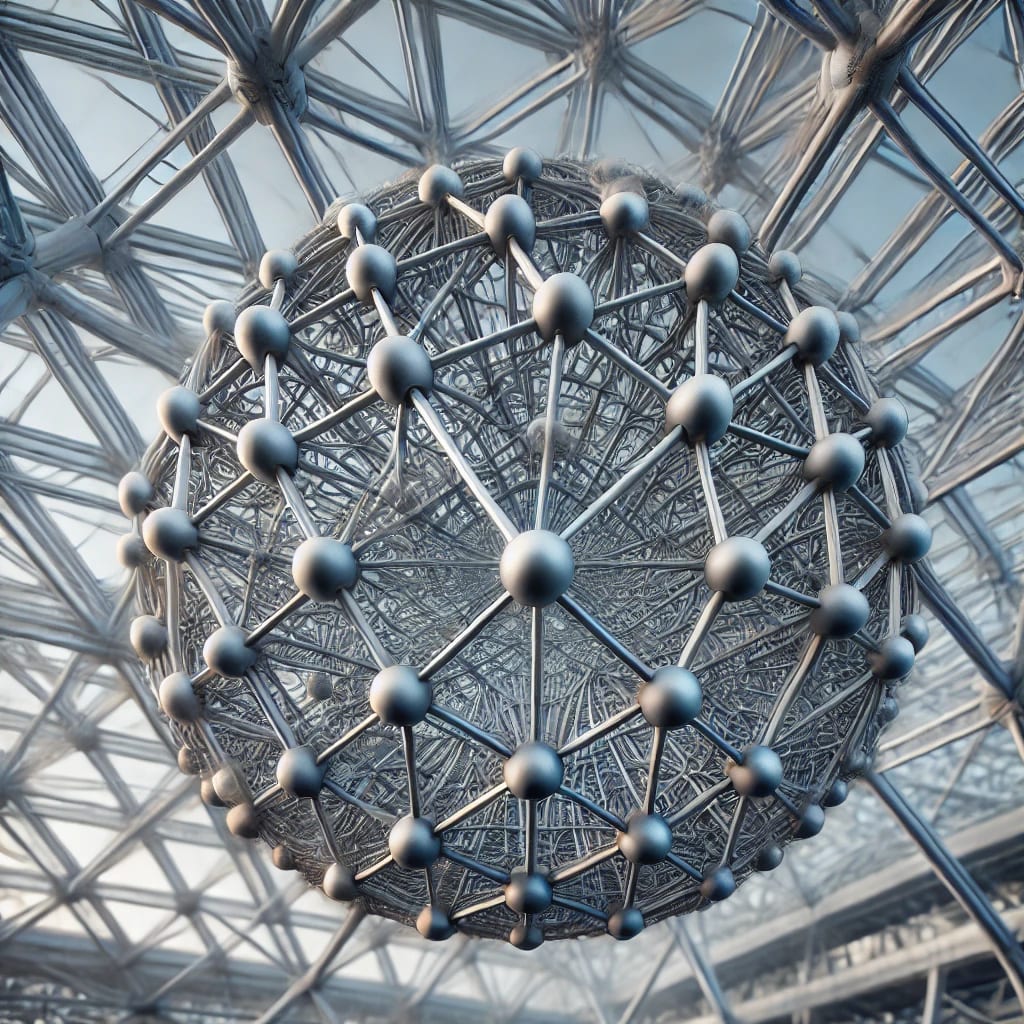
Space frame structures have become increasingly popular in Kuwait’s construction and architectural sectors. A space frame (or space structure) is a rigid, lightweight three-dimensional truss system composed of interlocking struts arranged in a geometric pattern
EN.WIKIPEDIA.ORG
. This design allows space frames to span large areas with minimal internal supports, making them ideal for covering vast spaces like stadiums, airport terminals, malls, and industrial facilities
EN.WIKIPEDIA.ORG
MEDMACK.COM
. In Kuwait, many modern projects – from sports complexes to commercial centers – utilize space frame roofs and domes to achieve wide, column-free interiors and striking architectural forms. The country’s space frame industry includes specialized companies that design, fabricate, and install these structures, ensuring that local projects benefit from both global engineering expertise and Kuwait’s robust steel fabrication capabilities
VOCAL.MEDIA
. Among these firms, Metalart Space Frame has emerged as a leading innovator, alongside established local pioneers like Kharafi Space Frame, collectively driving the adoption of space frame systems in Kuwait.
Importance and Benefits of Space Frame Structures
Space frame systems play a significant role in modern construction due to their unique advantages. Architects and engineers favor space frames for their ability to create expansive, unobstructed spaces without compromising structural integrity. Unlike conventional beam-and-column structures, a space frame’s 3D triangular configuration distributes loads in multiple directions, giving it exceptional rigidity and strength relative to its weight
EN.WIKIPEDIA.ORG
. This makes it possible to design large-span roofs (for example, over a stadium or atrium) with far fewer supporting columns, enhancing both functionality and aesthetics.
A large space frame canopy provides a column-free covered walkway at an international airport, demonstrating how space frame systems create open, airy spaces. Space frames are also lightweight for their size, which reduces material usage and foundation loads. Their modular components are often prefabricated and easily stackable, making transportation and on-site assembly efficient
LEVSTAL.COM
. This modularity gives architects greater freedom in creative design, enabling the construction of complex or irregular shapes (such as domes, curved roofs, and free-form structures) that would be challenging with traditional frameworks
LEVSTAL.COM
. Furthermore, the 3D grid of a space frame distributes weight evenly, so the structure has no singular weak points and can better withstand heavy loads and seismic forces
LEVSTAL.COM
. In practical terms, space frames offer:
Low weight and cost-effective transport: Their high strength-to-weight ratio means less material and easier shipping of components
LEVSTAL.COM
.
Flexible, creative design: They accommodate unusual shapes and bold architectural forms that enhance a building’s visual appeal
LEVSTAL.COM
.
High rigidity and stability: The interlocking network has excellent resistance to bending, giving space frames strong seismic and wind performance
LEVSTAL.COM
.
Even load distribution: The geometric truss design spreads loads across the structure, eliminating single stress points
LEVSTAL.COM
.
Long clear spans: Space frame roofs can cover large areas without interior columns, maximizing usable space under the canopy
LEVSTAL.COM
.
Fast installation: Prefabricated modules and uniform connectors allow rapid assembly on-site, often with sections hoisted into place by crane
LEVSTAL.COM
.
These benefits make space frame structures especially important in Kuwait’s ambitious building projects. Whether for a stadium roof, an airport concourse, or a mall atrium, space frames provide an economical solution to cover large spans while adding aesthetic architectural beauty
KHARAFISPACEFRAME.COM
. They essentially open up new dimensions in architectural design by combining practicality (wide, open interiors) with eye-catching geometric patterns. The versatility of space frames also means they can be used both outdoors and indoors for virtually any project type – from offices and factories to hotels and sports arenas
KHARAFISPACEFRAME.COM
. This combination of form and function explains why space frame technology has gained a strong foothold in Kuwait’s construction industry.
Metalart Space Frame: Leading Innovation in Kuwait’s Space Frame Sector
Metalart Space Frame is one of the prominent companies spearheading space frame technology in Kuwait and the broader GCC region. Founded in 2008, Metalart quickly established itself as a designer, manufacturer, and installer of advanced space frame systems and steel roofing solutions
SIGNALHIRE.COM
SIGNALHIRE.COM
. The company initially made its mark by providing space frame canopies and standing seam metal roofing for large clients like ADNOC’s fuel stations in the UAE
SIGNALHIRE.COM
. Leveraging this success, Metalart Space Frame expanded its operations to Kuwait, bringing its engineering expertise and innovative approach to local projects.Metalart’s services cover the full spectrum of space frame construction – from conceptual design and structural engineering to steel fabrication and on-site installation. The company specializes in integrated solutions that often include space frame superstructures along with cladding systems (such as single-skin roof panels, skylights, and false ceilings), ensuring that the entire building envelope works together seamlessly
SIGNALHIRE.COM
SIGNALHIRE.COM
. This one-stop capability is a significant advantage for clients looking for efficient project delivery. Metalart Space Frame prides itself on precision engineering; steel fabrication quality is a top priority to guarantee that every strut and node fits perfectly during assembly. Kuwait’s Metalart Space Frame project is a prime example of innovative steel construction, illustrating that steel fabrication is crucial for ensuring high structural quality
VOCAL.MEDIA
. By using advanced CNC machining and rigorous quality control, Metalart produces space frame components that meet strict tolerances, which in turn speeds up installation and improves structural performance.In Kuwait, Metalart Space Frame has been involved in several high-profile projects that showcase the versatility of space frame systems. The company has contributed to the design of expansive roof canopies, atrium covers, and long-span shelters in the country’s commercial and public infrastructure. For instance, Metalart helped introduce modern space frame canopies to certain government facilities and transportation hubs, enhancing both the functionality and aesthetic appeal of these spaces. While relatively newer to the Kuwait market, Metalart Space Frame is shaping the industry’s future by demonstrating how innovative design and meticulous engineering can solve complex structural challenges in the local context
VOCAL.MEDIA
. Its growing portfolio and reputation position it as a key player driving the adoption of space frame technology across Kuwait.
Kharafi Space Frame: A Pioneer in Kuwait’s Space Frame Industry
Kuwait’s Fahaheel Sports Club stadium, featuring an expansive steel roof structure built with a space frame system. Kharafi Space Frame is widely regarded as a pioneer of space frame construction in Kuwait, with a legacy dating back to the 1990s. The company operates one of the largest steel fabrication facilities in Kuwait – a 20,000 m² covered workshop equipped with CNC machines and advanced welding/fabrication technology
KHARAFISPACEFRAME.COM
. This in-house capability has been a cornerstone of Kharafi’s success, enabling them to manufacture complex space frame components locally with high precision and efficiency. Kharafi Space Frame offers end-to-end services including consultancy, structural design, fabrication, project management, and installation
KHARAFISPACEFRAME.COM
. Notably, the company has been ISO-certified (ISO 9001 for quality, among others) since 1996, reflecting its long-term commitment to quality assurance and safety standards
KHARAFISPACEFRAME.COM
.Having introduced space frame systems to many Kuwaiti projects, Kharafi has built an impressive portfolio of major structures and iconic roofs. Its work spans sports facilities, government complexes, commercial centers, and more. For example, Kharafi Space Frame designed and erected the space frame roofing for venues like the Kuwait Bowling Complex and multiple Olympic-size swimming pool halls
KHARAFISPACEFRAME.COM
KHARAFISPACEFRAME.COM
. The company’s space frame dome structures also grace public buildings such as the renovated Ministries Complex in Kuwait City and the Kuwait International Airport entrance canopy
KHARAFISPACEFRAME.COM
KHARAFISPACEFRAME.COM
. Each of these projects benefited from the clear-span capabilities of space frames – large courts and halls are covered without intermediate columns, creating uninterrupted interior spaces for spectators and users. Kharafi’s signature is often the visually striking geometric pattern of its space frame ceilings, which add an architectural cosmetic beauty to the structure while serving an economical structural purpose
KHARAFISPACEFRAME.COM
.As a home-grown leader, Kharafi Space Frame has become a household name in Kuwait’s construction sector for space frame solutions
KHARAFISPACEFRAME.COM
. The company is highly regarded for its integrated approach: its engineering teams design the structure, its massive fabrication shops build the parts, and its experienced crews handle the on-site assembly, ensuring consistency throughout the process
KHARAFISPACEFRAME.COM
. This vertical integration has made Kharafi a trusted partner for large-scale projects requiring custom space frame systems. After decades of projects, Kharafi Space Frame continues to play a crucial role in advancing Kuwait’s space frame industry by pushing the boundaries of span length, shape complexity, and construction efficiency in steel space frame structures.
Other Notable Space Frame Providers in Kuwait
In addition to Metalart and Kharafi, Kuwait’s space frame market is supported by several other companies and contractors with capabilities in steel structure fabrication. Local firms such as Medmac Kuwait offer space frame design, manufacturing, and assembly services, tailoring three-dimensional steel structures to the specific needs of various project sites
MEDMACK.COM
. These companies contribute to a competitive industry landscape, ensuring that developers in Kuwait have access to high-quality materials and technical expertise for space frame construction. In fact, Kuwait’s broader steel industry – including firms like Kharafi’s own steel divisions – plays a crucial role in supplying the quality steel components needed for space frame systems
VOCAL.MEDIA
. Some projects also see collaboration between local contractors and international specialists to implement complex space frame designs (for example, sourcing proprietary node systems or design software through partnerships).Overall, the presence of multiple space frame providers in Kuwait has driven innovation and improved best practices. Companies continuously invest in modern fabrication equipment and skilled engineers, knowing that precision is paramount when manufacturing the spherical nodes and tubular struts that make up a typical space frame
KHARAFISPACEFRAME.COM
. As a result, today’s space frame providers in Kuwait can deliver sophisticated structures – from large free-form roofs to space frame-supported skylights – with confidence in their structural performance. Clients ranging from government bodies to private developers benefit from this mature industry, as they can opt for cutting-edge space frame solutions to achieve ambitious architectural designs. The competition and collaboration among Kuwait’s space frame companies ultimately ensure that projects are executed with high-quality materials, sound engineering, and efficient construction techniques.
The Role of Steel Fabrication and Engineering in Space Frame Systems
Steel fabrication and engineering excellence form the backbone of successful space frame systems. Because space frames rely on many interconnected steel members, the entire structure’s safety and stability depend on the precision of each manufactured component. In Kuwait, top space frame firms have invested heavily in advanced steel fabrication facilities – for example, Kharafi Space Frame’s 20,000 m² workshop with CNC machines is specifically geared towards producing space frame parts at tight tolerances
KHARAFISPACEFRAME.COM
. Such capabilities allow for the production of custom nodes and struts that fit together perfectly on site. Any deviation in fabrication could cause misalignment down the line, so quality-controlled manufacturing is critical. As a testament to this, leading companies adhere to international fabrication standards and certifications (like ISO 9001) to maintain consistency and strength in every steel piece
KHARAFISPACEFRAME.COM
.Equally important is the engineering design phase. Space frame structures must be carefully engineered using structural analysis software to determine the optimum geometry and member sizes for the expected loads. The engineering teams in Kuwait’s space frame companies use their expertise to calculate how each triangular module will bear tension and compression forces, ensuring the finished frame behaves as a unified, robust unit
EN.WIKIPEDIA.ORG
. Attention to engineering detail is also seen in connection design – the proprietary node and bolt systems that join members must be designed to avoid stress concentrations and allow for easy assembly
KHARAFISPACEFRAME.COM
. By leveraging sophisticated engineering (often in 3D modeling and simulation), companies can pre-plan the entire structure, which minimizes issues during fabrication and erection.Steel fabrication quality and engineering precision go hand-in-hand during installation as well. Typically, space frame sections are prefabricated on the ground and then lifted into position, or alternatively, built member by member at height. In both cases, accurate fabrication simplifies installation, as components align correctly and bolts fit in place without forcing. This reduces construction time and improves safety. However, the assembly of a space frame still requires skilled workmanship and sometimes heavy equipment; large span installations may involve cranes to hoist sections and specialized jigs to hold pieces during bolting
LEVSTAL.COM
. Kuwaiti companies excel in this aspect by utilizing experienced crews and clear installation plans. The result of meticulous fabrication and engineering is evident in Kuwait’s successful space frame projects: despite their complexity, these structures come together smoothly and achieve the intended geometric perfection and structural integrity. In summary, steel fabrication and engineering are the critical enablers that turn innovative space frame designs into reality, especially in a demanding construction environment like Kuwait.
Frequently Asked Questions about Space Frame Structures
Q: What is a space frame structure, in simple terms?
A: A space frame is a three-dimensional steel structural system composed of interconnected struts arranged in geometric patterns (often triangles). Essentially, it’s like a giant 3D truss that can cover large areas with few internal supports
EN.WIKIPEDIA.ORG
. Because of its triangular units, a space frame is very rigid and can carry loads efficiently by distributing forces through the network of members. This allows architects to design expansive roofs or canopies that appear to “float” over open space, since the frame itself provides the necessary strength without needing many columns.Q: Where are space frame structures used in construction?
A: Space frames are commonly used for long-span roofs and canopies where open space is needed below. Typical applications include stadiums and sports arenas (for large dome roofs or bleachers covers), airport terminals and hangars, exhibition halls, shopping mall atriums, factories and warehouses, gas station canopies, and even large skylights or atrium glass roofs in office buildings. In Kuwait, for example, space frames have been used in sports club stadiums, at the airport entrance, and in government building atriums to achieve wide, column-free enclosures. They are especially popular in modernist commercial and industrial buildings that require big covered areas
MEDMACK.COM
. Essentially, any project that benefits from a wide-span cover with natural light or unique geometry might use a space frame structure.Q: What are the advantages of using a space frame compared to a regular structure?
A: The advantages of space frame structures are numerous:
Long Span, Fewer Columns: They can span very large distances without needing intermediate supports, which is great for creating open-plan spaces (no view-blocking pillars in a stadium or factory floor).
Lightweight but Strong: Space frames achieve a high strength-to-weight ratio. They’re relatively light due to efficient geometry, which can reduce the load on foundations and materials cost, yet they are very strong and stable under load
SAFSTEELSTRUCTURE.COM
.
Design Flexibility: Because they consist of many small modules, space frames can take on almost any shape – flat, domed, curved, or free-form. This gives architects a lot of creativity to design iconic shapes that are still structural.
Even Load Distribution: The 3D truss nature means loads (like weight or wind) get spread out through the structure. No single member carries the load alone; instead, many members work together, which reduces the risk of any one part failing
LEVSTAL.COM
.
Seismic and Wind Resistance: Space frames tend to perform well under seismic (earthquake) forces because of their multidirectional load paths and redundancy. They can also be designed to withstand strong winds by dispersing forces across the frame’s joints.
Fast Construction: Most space frames are prefabricated in pieces (or as unit modules). These can be quickly bolted together at the site. This modular assembly can be faster than building a complex structure from scratch on-site, saving construction time. In many cases, crews assemble sections on the ground and then lift them into place, which is efficient and safer (compared to assembling everything at height).
In summary, space frames provide a combination of spanning capability, structural efficiency, and architectural freedom that traditional structures might struggle to offer altogether.Q: How are space frame structures installed on a building?
A: Installation of a space frame typically involves assembling the steel components (nodes, struts, and bolts) according to a predefined grid pattern. There are two common methods: (1) Module Assembly and Hoisting: Fabricators sometimes build large sections of the space frame at ground level (or even on the ground) – for example, assembling a 20×20 meter portion of a roof. Then, using cranes, they lift that entire section and place it onto the top of support columns, then bolt it to other sections. This method reduces the work done at height. Or, (2) Piece-by-Piece Assembly at Height: Workers start at one end of the roof and sequentially bolt members and nodes together following the design, using scaffolding or cherry pickers for access. Thanks to the modular nature of space frames, each piece fits into the next. Precision is crucial – the parts are made to exact measurements, so the connectors must align perfectly. Often, special jigs or supports are used to hold pieces in place temporarily until the bolts are secured. Heavy-duty cranes or lifts may be required to raise members or bundles of members into position for very large spans
LEVSTAL.COM
. Safety is also a focus, as working with steel at heights requires secure rigging and trained crews. Overall, while the assembly might look like a complex metallic puzzle, experienced space frame contractors follow an engineered erection plan to ensure the structure goes up systematically and safely.Q: Why is steel fabrication quality so important for space frames?
A: Space frames are highly precise structures – they often consist of hundreds or thousands of members connected in a rigid framework. If the steel parts are not fabricated to exact specifications, the pieces may not fit together correctly on site, which can cause delays or even structural weakness. High-quality fabrication ensures that each strut is cut to the correct length and each node (the connector ball or plate) has bolt holes drilled at the correct angles. In Kuwait’s industry, companies like Metalart and Kharafi have invested in advanced CNC machining and strict quality control precisely for this reason
KHARAFISPACEFRAME.COM
KHARAFISPACEFRAME.COM
. Good fabrication means the bolts slide in easily and the structure aligns perfectly, which maintains the structural geometry intended by the engineers. Poor fabrication, by contrast, could lead to gaps or forced connections that introduce stresses or leave parts unsupported. Additionally, quality fabrication includes using the right steel grade and proper welding (where applicable) so that each component can handle the forces it must carry. In summary, precision fabrication and engineering are what make a space frame safe, sturdy, and long-lasting – they turn the theoretical design into a reliable reality.Q: How durable are space frame structures, and what maintenance do they need?
A: When properly designed and built, space frame structures are very durable. They are made of structural steel (or sometimes aluminum), which can last for many decades if protected from corrosion. In Kuwait’s climate, steel space frames are usually hot-dip galvanized or painted with protective coatings to prevent rust. This protective layer should be inspected periodically and touched up or renewed as needed (for instance, every 5-10 years depending on exposure, similar to any steel structure maintenance). The nodes and bolts are engineered for long-term strength; however, it’s wise to check critical bolted connections occasionally to ensure they remain tight (some large structures have maintenance protocols to inspect a sample of bolts). Thanks to the even load distribution, space frames don’t usually suffer from fatigue or stress failures if used within design limits. As with any roof structure, cleaning of joints or drainage provisions might be necessary to avoid water pooling. But generally, a space frame doesn’t have moving parts and is inherently stable, so maintenance is modest – mainly protecting the steel from corrosion and checking that nothing has been damaged by exterior factors. With basic upkeep, space frame structures can safely serve for the entire lifespan of the building (often 30+ years or more) without major issues.
Conclusion: Key Takeaways
Space frame technology has firmly established itself in Kuwait’s construction landscape, offering an ingenious way to achieve large, open structural spans combined with bold architectural designs. The space frame industry in Kuwait is supported by expert companies like Metalart Space Frame and Kharafi Space Frame, who bring together deep engineering know-how and state-of-the-art steel fabrication facilities to deliver these complex systems. We’ve seen that space frames provide significant benefits – from their lightweight yet strong construction to the freedom they give architects in shaping innovative roofs and facades. They have been successfully used in Kuwait for everything from stadiums and sports clubs to airport terminals and commercial complexes, transforming the appearance and functionality of these spaces.A key takeaway is the importance of quality engineering and fabrication: the success of any space frame project hinges on precise design, manufacturing, and assembly. Kuwait’s leading companies excel in this domain, ensuring that each node and beam fits perfectly, resulting in a safe and robust structure. Another takeaway is how versatile and advantageous space frame structures are – they solve the perennial architectural challenge of covering big areas without internal columns, all while keeping the structure relatively light and aesthetically intriguing. As Kuwait continues to develop ambitious infrastructure and landmark buildings, space frames will likely remain a go-to solution for architects and engineers aiming to marry practical performance with creative design. In conclusion, the space frame industry in Kuwait demonstrates how modern engineering innovation (supported by skilled local companies) can unlock new possibilities in construction, delivering structures that are expansive, efficient, and enduring.
About the Creator
Metalart Space Frame & Standing Seam
Leading designer, manufacturer, installer of Space Frame, Standing Seam Metal Roofing, and Single-Skin Roof Panel (Ceiling Panel) for ADNOC Stations in UAE.
Keep reading
More stories from Metalart Space Frame & Standing Seam and writers in Writers and other communities.
Space Frame Design in Kuwait
Kuwait’s architectural landscape is embracing space frame design to achieve vast, column-free interiors and iconic rooflines. From modern malls to stadiums, space frame structures are redefining what’s possible in construction. This article explores the significance of space frame design in Kuwait, the advantages of these systems, types and trends, and how Metalart Space Frame’s projects are shaping the nation’s skyline.
By Metalart Space Frame & Standing Seam11 months ago in Writers


Comments